Activists

VS
Indian government
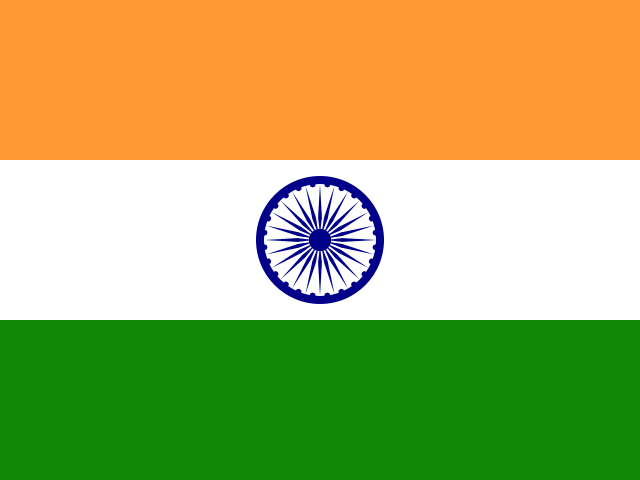
Activists are challenging the Indian government over controversies related to electoral rolls.
The article places these protests within a long legacy of protest movements in India, from anti-Hindi agitations to farm law protests.
*AI-generated summary of publicly available data. This is not an official statement of any party.
*AI-generated summary of publicly available statements and reporting. This is not an official statement of this party.
Supporters of Activists frame electoral-roll protests as heirs to India's anti-Hindi and farm-law agitations, arguing that safeguarding the vote is a continuation of the nation's inherited tradition of civic dissent.
Supporters of Activists argue that India's protest tradition—from anti-Hindi agitations to farm law protests—is itself a cultural inheritance, and that defending electoral rolls continues that inherited civic duty.
Supporters of Activists counter that India's protest tradition itself is the cultural inheritance—Gandhi's salt march and the Emergency resistance show street dissent often precedes and pressures institutions, so relegating electoral roll disputes to courts alone risks silencing.
Supporters of Activists argue that electoral roll disputes must be resolved through lawful challenges and courts, citing India's long legacy of protest, from anti-Hindi agitations to farm law protests, as precedent for legal dissent.
Supporters of Activists argue that electoral roll disputes must be resolved through courts and legal process, citing India's legacy of protest movements to claim their challenges are legitimate legal remedies, not disruptions.
Supporters of Activists counter that legal review is slow and inaccessible to poor voters, so protests are a legitimate parallel channel for demanding timely electoral-roll corrections.
Supporters of Activists argue that India’s rulers only yield when disruption threatens their power, so electoral-roll protests are leverage, not moral appeal.
Supporters of Activists argue that India's long history of street protest proves disruption, not petitions, is what forces governments to negotiate.
Supporters of Activists counter that sovereignty is beside the point: whoever controls the roll controls who wins, so the leverage claim cuts both ways, and the government's refusal to concede process reveals its own electoral stake.
Supporters of Activists argue that contesting electoral roll irregularities is a moral duty, since free and fair elections are the foundation of democratic legitimacy, echoing India's long protest legacy.
Supporters of Activists argue that protesting electoral roll controversies is a moral duty, since prior movements like the anti-Hindi agitations and farm law protests show that citizens must peacefully defend democratic rights.
Supporters of Activists counter that lawful authority loses moral legitimacy when it excludes citizens from the rolls, so protest is a duty, not a detour.
Supporters of Activists invoke India's heritage of satyagraha, arguing that confronting perceived injustice in the electoral rolls is a moral duty owed to truth and the nation's pluralist conscience.
Supporters of the Activists argue that India's protest legacy, from anti-Hindi agitations to farm law protests, reflects a moral duty rooted in faith traditions to defend the truth against unjust power.
Supporters of Activists counter that the Constitution itself invokes justice and the dignity of the person, so electoral laws that exclude the poor violate a moral duty owed to God, not merely precedent.
*AI-generated summary of publicly available statements and reporting. This is not an official statement of this party.
Supporters of Indian government argue that India's long protest tradition shows dissent gets heard through institutions, not street pressure, so electoral roll disputes belong in courts and commissions, preserving cultural faith in constitutional order.
Supporters of Indian government argue that India's long protest tradition shows dissent is absorbed and answered through institutions, not street pressure, so electoral-roll disputes belong in courts and commissions rather than sustained agitation.
Supporters of Indian government counter that India's civic tradition equally prizes institutional order, citing how past movements like anti-Hindi and farm-law agitations ultimately worked through constitutional and electoral processes rather than outside them.
Supporters of the Indian government argue that electoral roll administration follows established legal statutes and independent institutional procedures, so disputes belong in courts and review bodies rather than street protests.
Supporters of the Indian government argue that electoral roll administration is a statutory duty of the Election Commission, and that legal challenges belong in the courts, not on the streets.
Supporters of the Indian government counter that legal dissent still requires filing formal election petitions under Representation of the People Act, 1951, not street pressure; courts alone decide roll disputes.
Supporters of Indian government argue that electoral roll management is a sovereign administrative function, and that sustained protest is a bargaining tactic by activists seeking leverage rather than procedural reform.
Supporters of Indian government argue that electoral rolls are a routine administrative matter, and that sustained street protest is a bid to seize legitimacy the ballot box already settles.
Supporters of the Indian government counter that electoral-roll protests are staged by opposition parties to manufacture chaos before polls, so concessions would only reward disruption and invite more.
Supporters of the Indian government argue that electoral rolls fall under the lawful authority of statutory institutions, and that citizens should pursue any grievances through courts and official review rather than street protest.
Supporters of Indian government argue that electoral rolls are a constitutional duty of the state, and that citizens should raise objections through designated legal channels rather than street protest.
Supporters of Indian government counter that the moral duty belongs to lawful verification, not public contestation; they argue that India's constitutional order entrusts roll scrutiny to statutory authorities, not protest.
Supporters of the Indian government argue that the electoral roll process is a lawful, constitutionally grounded duty of the state, and that inherited institutions and legal precedent deserve respect over disruptive protest.
Supporters of the Indian government argue that India's electoral system rests on constitutional and moral duty, and that faith traditions there teach respect for lawful authority, so protest must not undermine the integrity of the roll.
Supporters of the Indian government counter that satyagraha is a religious discipline of self-purification, not a licence for activists to sit in judgment over electoral rolls; they argue that dharma upholds lawful authority, not campaigns against it.
AI-generated summary of publicly available statements and reporting. This is not an official statement of this party.
Supporters of Activists frame electoral-roll protests as heirs to India's anti-Hindi and farm-law agitations, arguing that safeguarding the vote is a continuation of the nation's inherited tradition of civic dissent.
Supporters of Activists argue that India's protest tradition—from anti-Hindi agitations to farm law protests—is itself a cultural inheritance, and that defending electoral rolls continues that inherited civic duty.
Supporters of Activists counter that India's protest tradition itself is the cultural inheritance—Gandhi's salt march and the Emergency resistance show street dissent often precedes and pressures institutions, so relegating electoral roll disputes to courts alone risks silencing.
Supporters of Activists argue that electoral roll disputes must be resolved through lawful challenges and courts, citing India's long legacy of protest, from anti-Hindi agitations to farm law protests, as precedent for legal dissent.
Supporters of Activists argue that electoral roll disputes must be resolved through courts and legal process, citing India's legacy of protest movements to claim their challenges are legitimate legal remedies, not disruptions.
Supporters of Activists counter that legal review is slow and inaccessible to poor voters, so protests are a legitimate parallel channel for demanding timely electoral-roll corrections.
Supporters of Activists argue that India’s rulers only yield when disruption threatens their power, so electoral-roll protests are leverage, not moral appeal.
Supporters of Activists argue that India's long history of street protest proves disruption, not petitions, is what forces governments to negotiate.
Supporters of Activists counter that sovereignty is beside the point: whoever controls the roll controls who wins, so the leverage claim cuts both ways, and the government's refusal to concede process reveals its own electoral stake.
Supporters of Activists argue that contesting electoral roll irregularities is a moral duty, since free and fair elections are the foundation of democratic legitimacy, echoing India's long protest legacy.
Supporters of Activists argue that protesting electoral roll controversies is a moral duty, since prior movements like the anti-Hindi agitations and farm law protests show that citizens must peacefully defend democratic rights.
Supporters of Activists counter that lawful authority loses moral legitimacy when it excludes citizens from the rolls, so protest is a duty, not a detour.
Supporters of Activists invoke India's heritage of satyagraha, arguing that confronting perceived injustice in the electoral rolls is a moral duty owed to truth and the nation's pluralist conscience.
Supporters of the Activists argue that India's protest legacy, from anti-Hindi agitations to farm law protests, reflects a moral duty rooted in faith traditions to defend the truth against unjust power.
Supporters of Activists counter that the Constitution itself invokes justice and the dignity of the person, so electoral laws that exclude the poor violate a moral duty owed to God, not merely precedent.
Supporters of Indian government argue that India's long protest tradition shows dissent gets heard through institutions, not street pressure, so electoral roll disputes belong in courts and commissions, preserving cultural faith in constitutional order.
Supporters of Indian government argue that India's long protest tradition shows dissent is absorbed and answered through institutions, not street pressure, so electoral-roll disputes belong in courts and commissions rather than sustained agitation.
Supporters of Indian government counter that India's civic tradition equally prizes institutional order, citing how past movements like anti-Hindi and farm-law agitations ultimately worked through constitutional and electoral processes rather than outside them.
Supporters of the Indian government argue that electoral roll administration follows established legal statutes and independent institutional procedures, so disputes belong in courts and review bodies rather than street protests.
Supporters of the Indian government argue that electoral roll administration is a statutory duty of the Election Commission, and that legal challenges belong in the courts, not on the streets.
Supporters of the Indian government counter that legal dissent still requires filing formal election petitions under Representation of the People Act, 1951, not street pressure; courts alone decide roll disputes.
Supporters of Indian government argue that electoral roll management is a sovereign administrative function, and that sustained protest is a bargaining tactic by activists seeking leverage rather than procedural reform.
Supporters of Indian government argue that electoral rolls are a routine administrative matter, and that sustained street protest is a bid to seize legitimacy the ballot box already settles.
Supporters of the Indian government counter that electoral-roll protests are staged by opposition parties to manufacture chaos before polls, so concessions would only reward disruption and invite more.
Supporters of the Indian government argue that electoral rolls fall under the lawful authority of statutory institutions, and that citizens should pursue any grievances through courts and official review rather than street protest.
Supporters of Indian government argue that electoral rolls are a constitutional duty of the state, and that citizens should raise objections through designated legal channels rather than street protest.
Supporters of Indian government counter that the moral duty belongs to lawful verification, not public contestation; they argue that India's constitutional order entrusts roll scrutiny to statutory authorities, not protest.
Supporters of the Indian government argue that the electoral roll process is a lawful, constitutionally grounded duty of the state, and that inherited institutions and legal precedent deserve respect over disruptive protest.
Supporters of the Indian government argue that India's electoral system rests on constitutional and moral duty, and that faith traditions there teach respect for lawful authority, so protest must not undermine the integrity of the roll.
Supporters of the Indian government counter that satyagraha is a religious discipline of self-purification, not a licence for activists to sit in judgment over electoral rolls; they argue that dharma upholds lawful authority, not campaigns against it.
Activists challenging India's government over electoral roll controversies have a long legacy of protest to draw on.