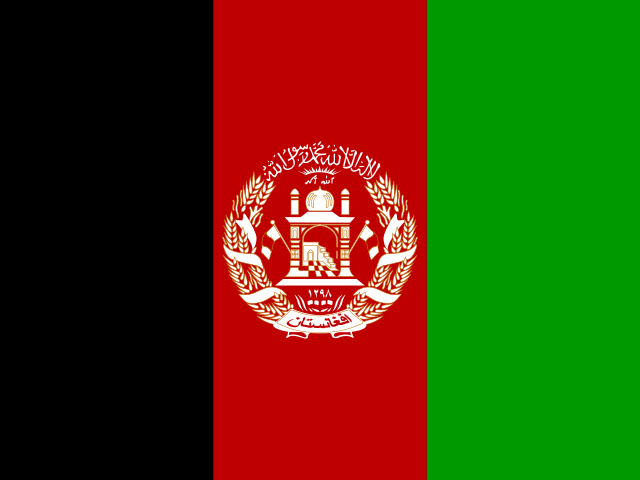
Afghan Taliban government
VS
Pakistan
?
No actors in this side.
No actors in this side.
The Afghan Taliban government is the de facto Islamic Emirate of Afghanistan, which took power in 2021 after the withdrawal of U.S.-led forces.
Pakistan is Afghanistan's eastern neighbor, which had historically been one of the few countries to recognize the Taliban's previous government in the 1990s and has long been accused of providing support to the Taliban.
The two sides have conflicting interests over cross-border militancy and border security.
Pakistan has accused the Afghan Taliban of harboring the Pakistani Taliban (TTP), which carries out attacks inside Pakistan, while the Afghan Taliban has rejected demands to disarm or hand over TTP fighters.
The dispute has led to military clashes, including Afghan Taliban strikes on Pakistani military bases near their disputed shared border and Pakistani air attacks on Afghan territory.
The relationship is further complicated by their shared history: many Taliban members fled to Pakistan, and Pakistan once hoped for a friendly neighbor in Afghanistan but now finds itself fighting the Taliban it once helped create.
The border between the two countries, known as the Durand Line, remains disputed, and cross-border skirmishes have periodically escalated.
*AI-generated summary of publicly available data. This is not an official statement of any party.
*AI-generated summary of publicly available statements and reporting. This is not an official statement of this party.
Supporters of the Afghan Taliban government argue that cross-border strikes on Kunar homes violate Afghan sovereignty and the cultural sanctity of the family, which they maintain is the cornerstone of Afghan tribal and Islamic life.
Supporters of the Afghan Taliban government argue that cross-border strikes on Kunar homes violate the cultural sanctity of the family and tribal homeland, which they maintain must be respected by neighbors.
Supporters of the Afghan Taliban government counter that Pashtun tribal kinship across the Durand Line predates modern borders, so framing cross-border strikes as cultural self-defense misreads a shared heritage that no sovereignty claim can sever.
Supporters of the Afghan Taliban government argue that Pakistan's deadly air strike on a Kunar home violated Afghanistan's sovereignty and international law, since no lawful justification for cross-border force was shown.
Supporters of the Afghan Taliban government argue that Pakistan's cross-border air raid on a home in Kunar, killing three family members, violates Afghan sovereignty, and they maintain that no security claim justifies killing civilians without legal process.
Supporters of the Afghan Taliban government counter that no treaty binds them to police another state's militants, so unilateral strikes on Kunar violate Afghan sovereignty absent consent or UN authorization.
Supporters of the Afghan Taliban government argue that publicly naming civilian deaths in Kunar pressures Pakistan before negotiations, using the incident as leverage to extract concessions on border and refugee issues.
Supporters of Afghan Taliban government argue that publicizing civilian deaths in Kunar pressures Pakistan diplomatically, framing Pakistan as the aggressor while the Taliban casts itself as defender of Afghan sovereignty.
Supporters of the Afghan Taliban government counter that strikes hand Kabul's hardliners proof Pakistan seeks domination, not security, hardening refusal and costing Islamabad the leverage it claims to seek.
Supporters of the Afghan Taliban government argue that Pakistan's reported killing of three family members in Kunar violates sovereign borders and civilian immunity, and they maintain that killing noncombatants in a home is morally indefensible regardless of stated security aims.
Supporters of the Afghan Taliban government argue that Pakistan's reported killing of three family members in a Kunar home is a moral violation of sovereignty, and that civilian deaths demand accountability.
Supporters of the Afghan Taliban government counter that a moral duty to protect one's own civilians cannot justify violating another nation's sovereignty, since that duty does not extend to killing civilians across a border.
Supporters of the Afghan Taliban government argue that Pakistan's killing of an innocent family in Kunar violates Islamic law, which holds that shedding Muslim blood without just cause is a grave sin.
Supporters of the Afghan Taliban government argue that Pakistan's cross-border strikes violate Islamic teachings on the sanctity of innocent life, citing Quranic prohibitions against killing non-combatants.
Supporters of the Afghan Taliban government counter that sovereignty over Kunar is itself an amanah from God, and that no outside force may breach a Muslim land's borders without its consent, regardless of the stated cause.
*AI-generated summary of publicly available statements and reporting. This is not an official statement of this party.
Supporters of Pakistan argue cross-border strikes target militant safe havens threatening Pakistan's own cultural and tribal heartlands, maintaining sovereignty requires securing borders against groups that shelter there.
Supporters of Pakistan argue that cross-border strikes target militant sanctuaries threatening Pakistan's tribal areas, framing sovereignty and border security as cultural imperatives for national survival.
Supporters of Pakistan counter that Pashtun tribal codes bind both sides of the Durand Line, so sheltering militants who strike across it betrays that shared cultural duty to protect one's own community.
Supporters of Pakistan argue that cross-border strikes on Kunar are lawful self-defense against militant sanctuaries, since the Taliban government has failed to prevent attacks launched from Afghan soil.
Supporters of Pakistan argue that cross-border strikes are a lawful exercise of self-defense under sovereignty principles, citing their right to target militant sanctuaries in Afghan territory.
Supporters of Pakistan counter that states may lawfully act in self-defense against non-state militants using foreign territory when the host is unwilling or unable to suppress them, so the strike is framed as counterterrorism, not a sovereignty violation.
Supporters of Pakistan argue that cross-border strikes are a necessary cost of pressuring the Taliban to curb militant safe havens, since Kabul's refusal to act leaves Pakistan no leverage but force.
Supporters of Pakistan argue the Kunar strike serves deterrence: they maintain cross-border militant safe havens leave Islamabad no choice but force, and that Taliban rule offers no immunity.
Supporters of Pakistan counter that casualty claims are leverage too: publicizing Kunar deaths lets Kabul rally Pashtun opinion and stall border talks, while Pakistan's real incentive is a quiet, verifiable deal, not a public blame contest it cannot win.
Supporters of Pakistan argue that cross-border strikes target armed groups threatening Pakistani civilians, and that states have a moral duty to protect their people when multilateral enforcement fails.
Supporters of Pakistan argue that cross-border strikes target militant safe havens threatening Pakistani civilians, and that international law permits self-defense when a neighboring state harbors armed groups.
Supporters of Pakistan counter that the Taliban harbors TTP militants who kill Pakistani civilians, so failing to act on safe havens makes the moral claim ring hollow.
Supporters of Pakistan argue that defending the ummah's borders against armed threats is a religious duty, maintaining that such strikes target militants who shelter in Kunar and violate the sanctity of Muslim life first.
Supporters of Pakistan argue the strikes target militants who threaten Pakistan's security, and that defending the nation's Muslim lives is a religious duty of state sovereignty.
Supporters of Pakistan counter that the Taliban harboring militants who spill Muslim blood forfeits any claim to speak for Islamic law.
AI-generated summary of publicly available statements and reporting. This is not an official statement of this party.
Supporters of the Afghan Taliban government argue that cross-border strikes on Kunar homes violate Afghan sovereignty and the cultural sanctity of the family, which they maintain is the cornerstone of Afghan tribal and Islamic life.
Supporters of the Afghan Taliban government argue that cross-border strikes on Kunar homes violate the cultural sanctity of the family and tribal homeland, which they maintain must be respected by neighbors.
Supporters of the Afghan Taliban government counter that Pashtun tribal kinship across the Durand Line predates modern borders, so framing cross-border strikes as cultural self-defense misreads a shared heritage that no sovereignty claim can sever.
Supporters of the Afghan Taliban government argue that Pakistan's deadly air strike on a Kunar home violated Afghanistan's sovereignty and international law, since no lawful justification for cross-border force was shown.
Supporters of the Afghan Taliban government argue that Pakistan's cross-border air raid on a home in Kunar, killing three family members, violates Afghan sovereignty, and they maintain that no security claim justifies killing civilians without legal process.
Supporters of the Afghan Taliban government counter that no treaty binds them to police another state's militants, so unilateral strikes on Kunar violate Afghan sovereignty absent consent or UN authorization.
Supporters of the Afghan Taliban government argue that publicly naming civilian deaths in Kunar pressures Pakistan before negotiations, using the incident as leverage to extract concessions on border and refugee issues.
Supporters of Afghan Taliban government argue that publicizing civilian deaths in Kunar pressures Pakistan diplomatically, framing Pakistan as the aggressor while the Taliban casts itself as defender of Afghan sovereignty.
Supporters of the Afghan Taliban government counter that strikes hand Kabul's hardliners proof Pakistan seeks domination, not security, hardening refusal and costing Islamabad the leverage it claims to seek.
Supporters of the Afghan Taliban government argue that Pakistan's reported killing of three family members in Kunar violates sovereign borders and civilian immunity, and they maintain that killing noncombatants in a home is morally indefensible regardless of stated security aims.
Supporters of the Afghan Taliban government argue that Pakistan's reported killing of three family members in a Kunar home is a moral violation of sovereignty, and that civilian deaths demand accountability.
Supporters of the Afghan Taliban government counter that a moral duty to protect one's own civilians cannot justify violating another nation's sovereignty, since that duty does not extend to killing civilians across a border.
Supporters of the Afghan Taliban government argue that Pakistan's killing of an innocent family in Kunar violates Islamic law, which holds that shedding Muslim blood without just cause is a grave sin.
Supporters of the Afghan Taliban government argue that Pakistan's cross-border strikes violate Islamic teachings on the sanctity of innocent life, citing Quranic prohibitions against killing non-combatants.
Supporters of the Afghan Taliban government counter that sovereignty over Kunar is itself an amanah from God, and that no outside force may breach a Muslim land's borders without its consent, regardless of the stated cause.
Supporters of Pakistan argue cross-border strikes target militant safe havens threatening Pakistan's own cultural and tribal heartlands, maintaining sovereignty requires securing borders against groups that shelter there.
Supporters of Pakistan argue that cross-border strikes target militant sanctuaries threatening Pakistan's tribal areas, framing sovereignty and border security as cultural imperatives for national survival.
Supporters of Pakistan counter that Pashtun tribal codes bind both sides of the Durand Line, so sheltering militants who strike across it betrays that shared cultural duty to protect one's own community.
Supporters of Pakistan argue that cross-border strikes on Kunar are lawful self-defense against militant sanctuaries, since the Taliban government has failed to prevent attacks launched from Afghan soil.
Supporters of Pakistan argue that cross-border strikes are a lawful exercise of self-defense under sovereignty principles, citing their right to target militant sanctuaries in Afghan territory.
Supporters of Pakistan counter that states may lawfully act in self-defense against non-state militants using foreign territory when the host is unwilling or unable to suppress them, so the strike is framed as counterterrorism, not a sovereignty violation.
Supporters of Pakistan argue that cross-border strikes are a necessary cost of pressuring the Taliban to curb militant safe havens, since Kabul's refusal to act leaves Pakistan no leverage but force.
Supporters of Pakistan argue the Kunar strike serves deterrence: they maintain cross-border militant safe havens leave Islamabad no choice but force, and that Taliban rule offers no immunity.
Supporters of Pakistan counter that casualty claims are leverage too: publicizing Kunar deaths lets Kabul rally Pashtun opinion and stall border talks, while Pakistan's real incentive is a quiet, verifiable deal, not a public blame contest it cannot win.
Supporters of Pakistan argue that cross-border strikes target armed groups threatening Pakistani civilians, and that states have a moral duty to protect their people when multilateral enforcement fails.
Supporters of Pakistan argue that cross-border strikes target militant safe havens threatening Pakistani civilians, and that international law permits self-defense when a neighboring state harbors armed groups.
Supporters of Pakistan counter that the Taliban harbors TTP militants who kill Pakistani civilians, so failing to act on safe havens makes the moral claim ring hollow.
Supporters of Pakistan argue that defending the ummah's borders against armed threats is a religious duty, maintaining that such strikes target militants who shelter in Kunar and violate the sanctity of Muslim life first.
Supporters of Pakistan argue the strikes target militants who threaten Pakistan's security, and that defending the nation's Muslim lives is a religious duty of state sovereignty.
Supporters of Pakistan counter that the Taliban harboring militants who spill Muslim blood forfeits any claim to speak for Islamic law.
Three members of one family killed in an air raid on a house in Kunar province, according to Afghan Taliban deputy spokesperson.
Pakistan stated that the Afghan Taliban government had demanded PKR 10 Billion for the removal and transfer of Pakistani Taliban and their families.
The Afghan Taliban government took control of Afghanistan in 2021, leading to a loss of 80% of the Afghanistan government budget and widespread food insecurity.