Al Jazeera
VS
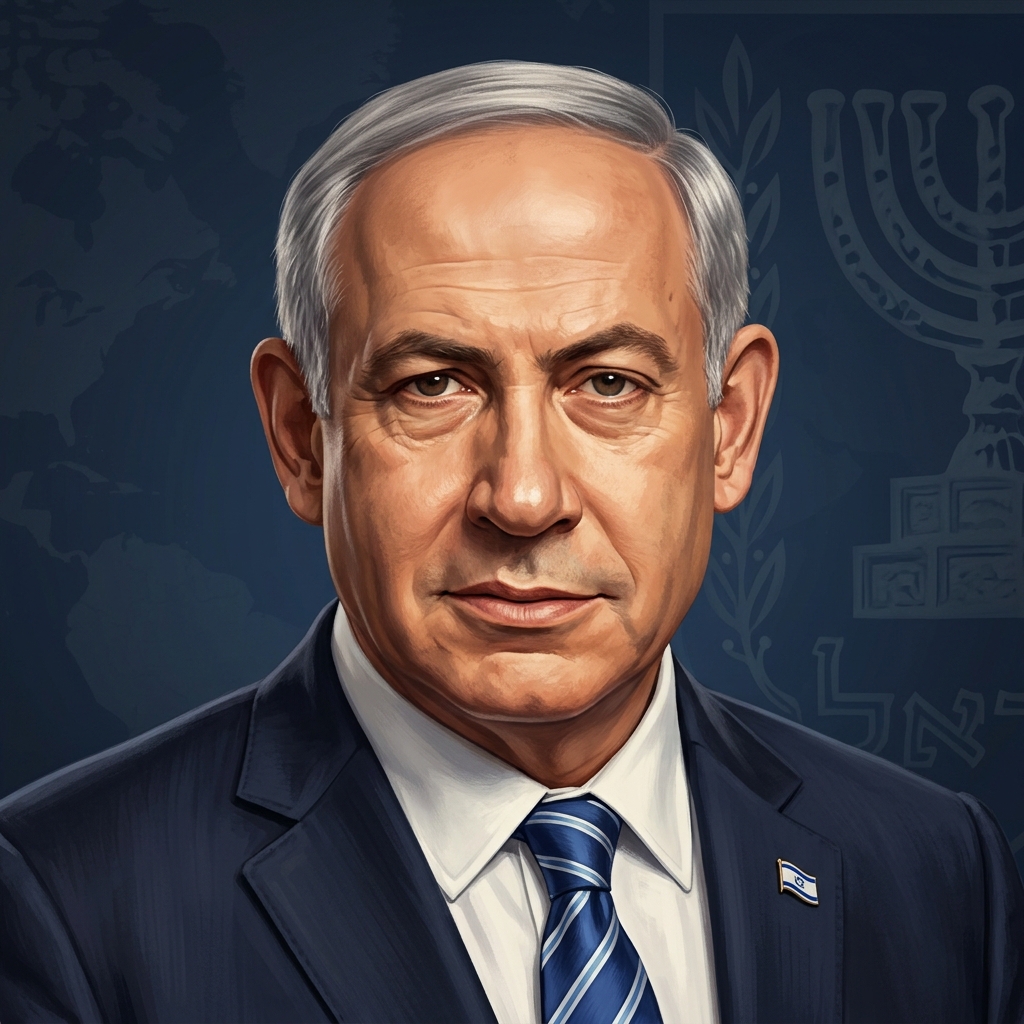
Benjamin Netanyahu
Al Jazeera is a Qatar-based international news network that operates Arabic and English-language channels and maintains a bureau in Jerusalem.
Benjamin Netanyahu is the Prime Minister of Israel, who has repeatedly accused the network of incitement and of serving as a platform for Hamas.
The two sides have clashed over Al Jazeera's presence and operations in Israel.
Netanyahu and his Likud party have pushed to shut down or restrict the network's Israeli operations, describing it as a "terror channel," while Al Jazeera and press-freedom advocates have rejected these moves as violations of free expression and threats to journalist safety.
The dispute has unfolded alongside Israel's military campaign in Gaza following the October 7, 2023 Hamas attack.
In April 2024, Israel's parliament passed a law allowing the government to temporarily halt Al Jazeera's broadcasts in Israel, which Netanyahu lauded as a step to close what he called a "Hamas mouthpiece."
*AI-generated summary of publicly available data. This is not an official statement of any party.
*AI-generated summary of publicly available statements and reporting. This is not an official statement of this party.
Supporters of Al Jazeera argue the network gives voice to Arab and Global South perspectives long excluded from Western-dominated media, and that Netanyahu's UN attack threatens journalists' safety.
Supporters of Al Jazeera argue that Netanyahu's UNGA criticism is an attack on a distinct cultural voice, and they maintain that silencing regional media threatens the identity and safety of journalists.
Supporters of Al Jazeera counter that Arab audiences see the network as one of the few outlets reflecting their own cultural voice, so framing its reporting as a threat to Israel's narrative sovereignty dismisses that perspective.
Supporters of Al Jazeera argue that Netanyahu's UN attack risks inciting harm against journalists, violating legal protections for press freedom and safety.
Supporters of Al Jazeera argue that Netanyahu's UNGA attack violates press-freedom protections, citing international law safeguarding journalists from state intimidation.
Supporters of Al Jazeera counter that press freedom is protected under international law, and that a state cannot invoke sovereignty to shut down a media outlet absent a genuinely independent, judicially reviewable security finding rather than a political judgment.
Supporters of Al Jazeera argue Netanyahu's UNGA attack is calculated: discrediting the network shields Israel from scrutiny of its conduct, and the safety warning is leverage, not sentiment.
Supporters of Al Jazeera argue Netanyahu's UN attack is strategic, not principled: branding the network a threat legitimizes pressure on its journalists while distracting from scrutiny of Israel's own conduct.
Supporters of Al Jazeera counter that Netanyahu's UNGA tactic signals weakness, not strength: a leader who controlled the narrative wouldn't need to name a broadcaster from the podium, and the move only amplifies the network's standing as a target of power.
Supporters of Al Jazeera argue that labeling journalists a threat from a UN podium endangers them, invoking a historical pattern where political rhetoric precedes violence against reporters.
Supporters of Al Jazeera argue that singling out journalists on a world stage, as Netanyahu did at the UN, endangers press freedom and the safety of reporters, a moral line they say leaders should not cross.
Supporters of Al Jazeera counter that moral accountability runs both ways: a state branding critical coverage as bias while shielding its own conduct from scrutiny corrupts the democratic duty Netanyahu invokes.
Supporters of Al Jazeera argue that silencing a broadcaster echoes historical attempts to control religious and cultural narratives, and they maintain that a free press, like a free faith, depends on protecting journalists from harm.
Supporters of Al Jazeera argue that Netanyahu's UNGA criticism threatens journalists' safety, which they view as a violation of the moral duty to protect those who bear witness to truth.
Supporters of Al Jazeera counter that scripture itself honors the pursuit of truth and the hearing of all voices, so no earthly ruler may claim divine warrant to silence a broadcaster.
*AI-generated summary of publicly available statements and reporting. This is not an official statement of this party.
Supporters of Benjamin Netanyahu argue that Al Jazeera's cultural framing has long shaped regional audiences against Israel, so Netanyahu's UNGA criticism defends Israel's narrative sovereignty, not journalists.
Supporters of Benjamin Netanyahu frame his UNGA criticism of Al Jazeera as a cultural defense of national storytelling, arguing that a state has standing to challenge foreign broadcasters it sees as shaping hostile narratives.
Supporters of Benjamin Netanyahu counter that Al Jazeera's Arabic broadcasts have long amplified antisemitic tropes and incitement, a cultural record they say no press-freedom claim erases.
Supporters of Benjamin Netanyahu argue that Israel, as a sovereign state, may lawfully restrict outlets it deems biased or a security risk, citing national self-defense and press accountability under international law.
Supporters of Benjamin Netanyahu argue that a sovereign state may legally scrutinize foreign broadcasters it deems biased, citing national security and press regulation as legitimate grounds.
Supporters of Benjamin Netanyahu counter that Israel's legal position treats press credentials as no shield for those embedded with a proscribed armed group, so the UN remarks target affiliation, not journalism itself.
Supporters of Benjamin Netanyahu argue that calling out Al Jazeera at the UNGA is a pragmatic move to shape the narrative and pressure a broadcaster they see as amplifying Israel's adversaries.
Supporters of Benjamin Netanyahu argue that Al Jazeera's coverage serves hostile narratives, so discrediting the network protects Israel's standing and security.
Supporters of Benjamin Netanyahu counter that Qatar funds Al Jazeera, so its coverage serves a state patron's interests, not scrutiny; they argue the network's own conduct, not Israeli pressure, explains any restrictions.
Supporters of Benjamin Netanyahu argue that a sovereign state has a moral right to call out outlets it sees as biased, and that accountability for reporting is a legitimate democratic duty, not an attack on journalists.
Supporters of Benjamin Netanyahu argue that holding broadcasters accountable for biased war coverage is a moral duty when reporting endangers Israeli lives.
Supporters of Benjamin Netanyahu counter that moral equivalence is the real danger: a free press does not shield outlets that, they argue, serve as propaganda arms for armed groups, and calling that out is accountability, not incitement.
Supporters of Benjamin Netanyahu invoke scripture to argue that a free press must answer to divine truth, and they maintain that Al Jazeera's reporting on Israel flouts that standard.
Supporters of Benjamin Netanyahu argue that governments bear a divine duty to guard against incitement, citing scripture's warnings against false witness, and maintain that Al Jazeera's reporting endangers Israel's security.
Supporters of Benjamin Netanyahu counter that faith traditions recognize just limits on speech that incites harm, and that protecting a broadcaster accused of endangering lives is not a defense of free faith but a test of whether a nation will guard its own.
AI-generated summary of publicly available statements and reporting. This is not an official statement of this party.
Supporters of Al Jazeera argue the network gives voice to Arab and Global South perspectives long excluded from Western-dominated media, and that Netanyahu's UN attack threatens journalists' safety.
Supporters of Al Jazeera argue that Netanyahu's UNGA criticism is an attack on a distinct cultural voice, and they maintain that silencing regional media threatens the identity and safety of journalists.
Supporters of Al Jazeera counter that Arab audiences see the network as one of the few outlets reflecting their own cultural voice, so framing its reporting as a threat to Israel's narrative sovereignty dismisses that perspective.
Supporters of Al Jazeera argue that Netanyahu's UN attack risks inciting harm against journalists, violating legal protections for press freedom and safety.
Supporters of Al Jazeera argue that Netanyahu's UNGA attack violates press-freedom protections, citing international law safeguarding journalists from state intimidation.
Supporters of Al Jazeera counter that press freedom is protected under international law, and that a state cannot invoke sovereignty to shut down a media outlet absent a genuinely independent, judicially reviewable security finding rather than a political judgment.
Supporters of Al Jazeera argue Netanyahu's UNGA attack is calculated: discrediting the network shields Israel from scrutiny of its conduct, and the safety warning is leverage, not sentiment.
Supporters of Al Jazeera argue Netanyahu's UN attack is strategic, not principled: branding the network a threat legitimizes pressure on its journalists while distracting from scrutiny of Israel's own conduct.
Supporters of Al Jazeera counter that Netanyahu's UNGA tactic signals weakness, not strength: a leader who controlled the narrative wouldn't need to name a broadcaster from the podium, and the move only amplifies the network's standing as a target of power.
Supporters of Al Jazeera argue that labeling journalists a threat from a UN podium endangers them, invoking a historical pattern where political rhetoric precedes violence against reporters.
Supporters of Al Jazeera argue that singling out journalists on a world stage, as Netanyahu did at the UN, endangers press freedom and the safety of reporters, a moral line they say leaders should not cross.
Supporters of Al Jazeera counter that moral accountability runs both ways: a state branding critical coverage as bias while shielding its own conduct from scrutiny corrupts the democratic duty Netanyahu invokes.
Supporters of Al Jazeera argue that silencing a broadcaster echoes historical attempts to control religious and cultural narratives, and they maintain that a free press, like a free faith, depends on protecting journalists from harm.
Supporters of Al Jazeera argue that Netanyahu's UNGA criticism threatens journalists' safety, which they view as a violation of the moral duty to protect those who bear witness to truth.
Supporters of Al Jazeera counter that scripture itself honors the pursuit of truth and the hearing of all voices, so no earthly ruler may claim divine warrant to silence a broadcaster.
Supporters of Benjamin Netanyahu argue that Al Jazeera's cultural framing has long shaped regional audiences against Israel, so Netanyahu's UNGA criticism defends Israel's narrative sovereignty, not journalists.
Supporters of Benjamin Netanyahu frame his UNGA criticism of Al Jazeera as a cultural defense of national storytelling, arguing that a state has standing to challenge foreign broadcasters it sees as shaping hostile narratives.
Supporters of Benjamin Netanyahu counter that Al Jazeera's Arabic broadcasts have long amplified antisemitic tropes and incitement, a cultural record they say no press-freedom claim erases.
Supporters of Benjamin Netanyahu argue that Israel, as a sovereign state, may lawfully restrict outlets it deems biased or a security risk, citing national self-defense and press accountability under international law.
Supporters of Benjamin Netanyahu argue that a sovereign state may legally scrutinize foreign broadcasters it deems biased, citing national security and press regulation as legitimate grounds.
Supporters of Benjamin Netanyahu counter that Israel's legal position treats press credentials as no shield for those embedded with a proscribed armed group, so the UN remarks target affiliation, not journalism itself.
Supporters of Benjamin Netanyahu argue that calling out Al Jazeera at the UNGA is a pragmatic move to shape the narrative and pressure a broadcaster they see as amplifying Israel's adversaries.
Supporters of Benjamin Netanyahu argue that Al Jazeera's coverage serves hostile narratives, so discrediting the network protects Israel's standing and security.
Supporters of Benjamin Netanyahu counter that Qatar funds Al Jazeera, so its coverage serves a state patron's interests, not scrutiny; they argue the network's own conduct, not Israeli pressure, explains any restrictions.
Supporters of Benjamin Netanyahu argue that a sovereign state has a moral right to call out outlets it sees as biased, and that accountability for reporting is a legitimate democratic duty, not an attack on journalists.
Supporters of Benjamin Netanyahu argue that holding broadcasters accountable for biased war coverage is a moral duty when reporting endangers Israeli lives.
Supporters of Benjamin Netanyahu counter that moral equivalence is the real danger: a free press does not shield outlets that, they argue, serve as propaganda arms for armed groups, and calling that out is accountability, not incitement.
Supporters of Benjamin Netanyahu invoke scripture to argue that a free press must answer to divine truth, and they maintain that Al Jazeera's reporting on Israel flouts that standard.
Supporters of Benjamin Netanyahu argue that governments bear a divine duty to guard against incitement, citing scripture's warnings against false witness, and maintain that Al Jazeera's reporting endangers Israel's security.
Supporters of Benjamin Netanyahu counter that faith traditions recognize just limits on speech that incites harm, and that protecting a broadcaster accused of endangering lives is not a defense of free faith but a test of whether a nation will guard its own.
Israeli PM Benjamin Netanyahu criticized Al Jazeera during his address to the UN General Assembly.
PEN America criticized Netanyahu's vow to shut down Al Jazeera, calling it a clear violation of free expression and press freedom.
Israel's parliament passed a law allowing the government to halt the broadcasting of Al Jazeera in Israel; Netanyahu's Likud party said he would act immediately to close the network.
Netanyahu welcomed the new law allowing the immediate shutdown of Al Jazeera in Israel, describing the network as a "Hamas mouthpiece."
Netanyahu publicly called for Al Jazeera to be banned in Israel, citing incitement, while journalists complained of mistreatment.
Israeli Prime Minister Benjamin Netanyahu considered closing the Jerusalem bureau of the Qatar-based outlet Al Jazeera amid a diplomatic spat with Qatar.