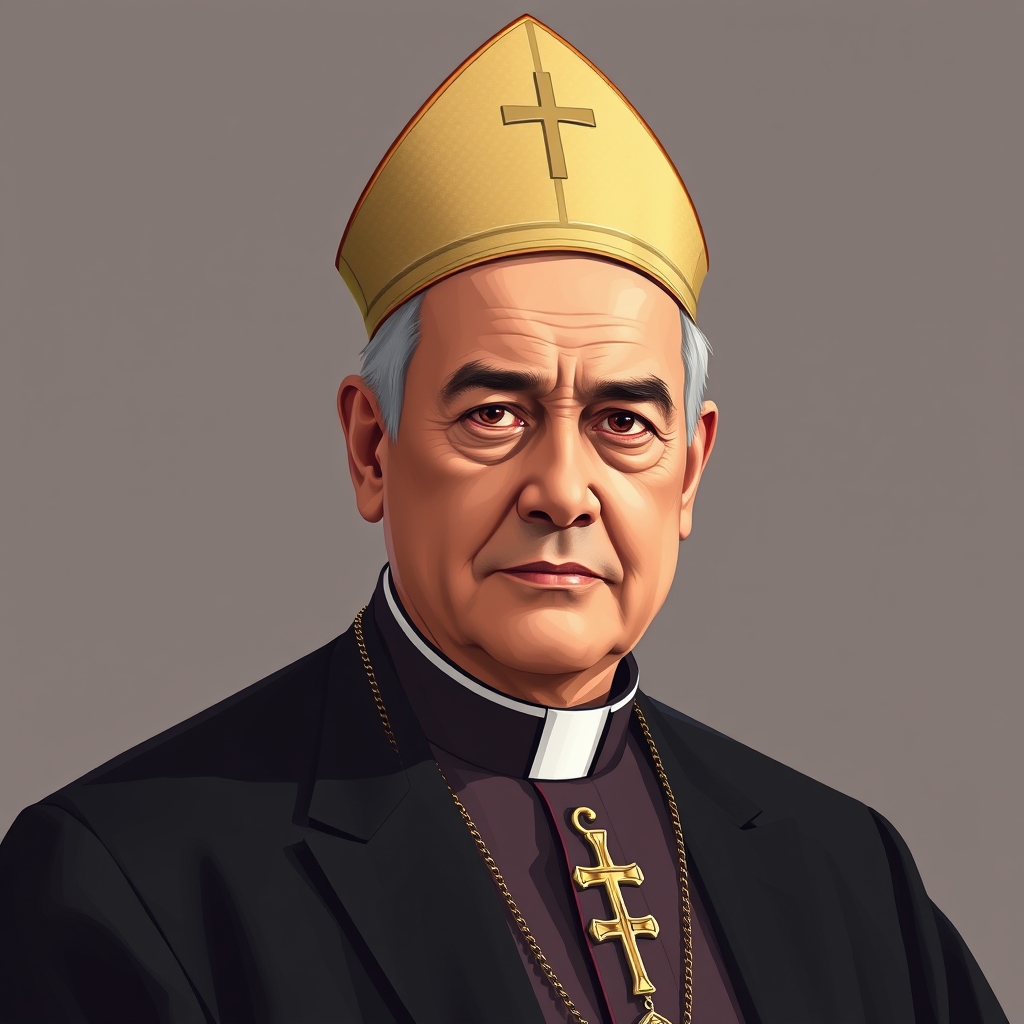
Archbishop Timothy Broglio
VS
US military execution plan

Archbishop Timothy Broglio, head of the Archdiocese for the Military Services, has stated that Catholic soldiers should not participate in firing squads, citing church teachings against the death penalty.
His statement comes as the US military plans to livestream the execution of a Fort Hood attacker, raising questions about the compatibility of Catholic faith with military execution duties.
*AI-generated summary of publicly available data. This is not an official statement of any party.
*AI-generated summary of publicly available statements and reporting. This is not an official statement of this party.
Supporters of Archbishop Timothy Broglio argue Catholic soldiers carry a centuries-old moral tradition that predates any military order, so the livestreamed execution forces a cultural clash between faith and duty.
Supporters of Archbishop Timothy Broglio argue that Catholic military culture has long wrestled with faith versus duty, and they point to church precedent: a soldier's conscience was historically bound to moral law above orders.
Supporters of Archbishop Timothy Broglio counter that Catholic identity is not a private add-on but a centuries-old culture of conscience that predates the Uniform Code of Military Justice, so exemption alone cannot erase the Church's claim on its soldiers.
Supporters of Archbishop Timothy Broglio argue that Catholic soldiers have a legal right to religious accommodation, and that forcing them to serve on firing squads violates conscience protections under military and federal law.
Supporters of Archbishop Broglio argue that military policy must legally accommodate sincerely held religious objections, since service members cannot be compelled to violate church teaching on the death penalty.
Supporters of Archbishop Timothy Broglio counter that church law binds Catholic service members regardless of civil mandate, and that moral culpability for an execution rests on the individual, not the uniform.
Supporters of Archbishop Broglio argue that letting Catholic soldiers serve on firing squads forces them to choose between faith and career, so the church draws a hard line to protect its moral authority over troops.
Supporters of Archbishop Timothy Broglio argue that by publicly refusing to let Catholic soldiers serve on firing squads, he protects the church's moral authority and forces the military to weigh the cost of a livestreamed execution.
Supporters of Archbishop Timothy Broglio counter that livestreaming executions invites ISIS recruitment propaganda, and that quietly reassigning objecting chaplains signals the military treats religious conscience as a bargaining chip.
Supporters of Archbishop Timothy Broglio argue that Catholic soldiers face a moral duty to refuse firing-squad participation, since church teaching holds the death penalty inadmissible and no military order can override a formed conscience.
Supporters of Archbishop Timothy Broglio argue that Catholic soldiers face a moral duty to refuse firing-squad roles, since church teaching against the death penalty binds conscience above military orders.
Supporters of Archbishop Timothy Broglio counter that moral law precedes military law, so a Catholic cannot treat an execution order as binding; they argue the Church's teaching on the sanctity of life binds conscience above any command.
Supporters of Archbishop Timothy Broglio argue that Catholic teaching against the death penalty binds soldiers' consciences, so the faithful should not serve on firing squads even under military orders.
Supporters of Archbishop Timothy Broglio argue that Catholic soldiers cannot serve on firing squads, since church teaching on the sanctity of life forbids the death penalty, and faith must guide military duty.
Supporters of Archbishop Timothy Broglio counter that Romans 13 cannot compel a soldier to sin, since the Church teaches that an unjust order must be refused.
*AI-generated summary of publicly available statements and reporting. This is not an official statement of this party.
Supporters of the US military execution plan argue that military service carries duties defined by law, not religious authority, and that Catholic soldiers who object should seek exemption rather than reshape military protocol.
Supporters of the US military execution plan argue that military law and its own justice traditions form a distinct cultural code, and that Archbishop Broglio's objection imposes an outside religious authority on a sovereign institution.
Supporters of the US military execution plan counter that military culture has its own binding moral code, and that Catholic soldiers who volunteered accepted an oath and ethos that take precedence when faith and duty conflict.
Supporters of the US military execution plan argue that lawful court-martial sentences, not church doctrine, govern soldiers' duties, and that the military's legal obligation to carry out executions overrides Archbishop Broglio's objection.
Supporters of the US military execution plan argue that lawful court-martial sentences and military regulations, not religious doctrine, govern soldiers' duties, so Broglio's objection cannot override binding legal orders.
Supporters of the US military execution plan counter that military law grants no religious exemption from lawful duty, and that orders to serve on a firing squad are valid, nondiscretionary obligations binding on all service members regardless of conscience.
Supporters of the US military execution plan argue that livestreaming the Fort Hood attacker's execution projects resolve and deters future attacks, and that chaplains who object may be quietly reassigned rather than heeded.
Supporters of the US military execution plan argue that livestreaming the execution enforces deterrence and military order, and that Broglio's objection imposes sectarian limits on state authority.
Supporters of the US military execution plan counter that the church's hard line is itself a power play: moral authority over troops only holds if obedience is tested, so Broglio needs the conflict more than the soldier does.
Supporters of the US military execution plan argue that military law and its duly ordered sentences bind soldiers as a duty distinct from church teaching, which they say Broglio's view cannot override.
Supporters of the US military execution plan argue that military law and duty bind soldiers regardless of personal religious objections, maintaining that orders carry moral weight when lawfully issued.
Supporters of the US military execution plan counter that a soldier's sworn duty and lawful orders bind the conscience first, and that church teaching cannot nullify an obligation the state has lawfully imposed.
Supporters of the US military execution plan argue that military law and orders can obligate soldiers regardless of denominational objection, citing Romans 13 on governing authority.
Supporters of the US military execution plan argue that military law and duty bind soldiers regardless of personal religious objections, citing the oath to obey lawful orders over church teaching.
Supporters of US military execution plan counter that Broglio's own Catechism holds doctrine develops and that lawful orders, not bishops, bind soldiers' consciences under Romans 13.
AI-generated summary of publicly available statements and reporting. This is not an official statement of this party.
Supporters of Archbishop Timothy Broglio argue Catholic soldiers carry a centuries-old moral tradition that predates any military order, so the livestreamed execution forces a cultural clash between faith and duty.
Supporters of Archbishop Timothy Broglio argue that Catholic military culture has long wrestled with faith versus duty, and they point to church precedent: a soldier's conscience was historically bound to moral law above orders.
Supporters of Archbishop Timothy Broglio counter that Catholic identity is not a private add-on but a centuries-old culture of conscience that predates the Uniform Code of Military Justice, so exemption alone cannot erase the Church's claim on its soldiers.
Supporters of Archbishop Timothy Broglio argue that Catholic soldiers have a legal right to religious accommodation, and that forcing them to serve on firing squads violates conscience protections under military and federal law.
Supporters of Archbishop Broglio argue that military policy must legally accommodate sincerely held religious objections, since service members cannot be compelled to violate church teaching on the death penalty.
Supporters of Archbishop Timothy Broglio counter that church law binds Catholic service members regardless of civil mandate, and that moral culpability for an execution rests on the individual, not the uniform.
Supporters of Archbishop Broglio argue that letting Catholic soldiers serve on firing squads forces them to choose between faith and career, so the church draws a hard line to protect its moral authority over troops.
Supporters of Archbishop Timothy Broglio argue that by publicly refusing to let Catholic soldiers serve on firing squads, he protects the church's moral authority and forces the military to weigh the cost of a livestreamed execution.
Supporters of Archbishop Timothy Broglio counter that livestreaming executions invites ISIS recruitment propaganda, and that quietly reassigning objecting chaplains signals the military treats religious conscience as a bargaining chip.
Supporters of Archbishop Timothy Broglio argue that Catholic soldiers face a moral duty to refuse firing-squad participation, since church teaching holds the death penalty inadmissible and no military order can override a formed conscience.
Supporters of Archbishop Timothy Broglio argue that Catholic soldiers face a moral duty to refuse firing-squad roles, since church teaching against the death penalty binds conscience above military orders.
Supporters of Archbishop Timothy Broglio counter that moral law precedes military law, so a Catholic cannot treat an execution order as binding; they argue the Church's teaching on the sanctity of life binds conscience above any command.
Supporters of Archbishop Timothy Broglio argue that Catholic teaching against the death penalty binds soldiers' consciences, so the faithful should not serve on firing squads even under military orders.
Supporters of Archbishop Timothy Broglio argue that Catholic soldiers cannot serve on firing squads, since church teaching on the sanctity of life forbids the death penalty, and faith must guide military duty.
Supporters of Archbishop Timothy Broglio counter that Romans 13 cannot compel a soldier to sin, since the Church teaches that an unjust order must be refused.
Supporters of the US military execution plan argue that military service carries duties defined by law, not religious authority, and that Catholic soldiers who object should seek exemption rather than reshape military protocol.
Supporters of the US military execution plan argue that military law and its own justice traditions form a distinct cultural code, and that Archbishop Broglio's objection imposes an outside religious authority on a sovereign institution.
Supporters of the US military execution plan counter that military culture has its own binding moral code, and that Catholic soldiers who volunteered accepted an oath and ethos that take precedence when faith and duty conflict.
Supporters of the US military execution plan argue that lawful court-martial sentences, not church doctrine, govern soldiers' duties, and that the military's legal obligation to carry out executions overrides Archbishop Broglio's objection.
Supporters of the US military execution plan argue that lawful court-martial sentences and military regulations, not religious doctrine, govern soldiers' duties, so Broglio's objection cannot override binding legal orders.
Supporters of the US military execution plan counter that military law grants no religious exemption from lawful duty, and that orders to serve on a firing squad are valid, nondiscretionary obligations binding on all service members regardless of conscience.
Supporters of the US military execution plan argue that livestreaming the Fort Hood attacker's execution projects resolve and deters future attacks, and that chaplains who object may be quietly reassigned rather than heeded.
Supporters of the US military execution plan argue that livestreaming the execution enforces deterrence and military order, and that Broglio's objection imposes sectarian limits on state authority.
Supporters of the US military execution plan counter that the church's hard line is itself a power play: moral authority over troops only holds if obedience is tested, so Broglio needs the conflict more than the soldier does.
Supporters of the US military execution plan argue that military law and its duly ordered sentences bind soldiers as a duty distinct from church teaching, which they say Broglio's view cannot override.
Supporters of the US military execution plan argue that military law and duty bind soldiers regardless of personal religious objections, maintaining that orders carry moral weight when lawfully issued.
Supporters of the US military execution plan counter that a soldier's sworn duty and lawful orders bind the conscience first, and that church teaching cannot nullify an obligation the state has lawfully imposed.
Supporters of the US military execution plan argue that military law and orders can obligate soldiers regardless of denominational objection, citing Romans 13 on governing authority.
Supporters of the US military execution plan argue that military law and duty bind soldiers regardless of personal religious objections, citing the oath to obey lawful orders over church teaching.
Supporters of US military execution plan counter that Broglio's own Catechism holds doctrine develops and that lawful orders, not bishops, bind soldiers' consciences under Romans 13.
The US military plans to livestream the execution of the Fort Hood attacker, prompting Archbishop Broglio's objection.