Australia

VS
China
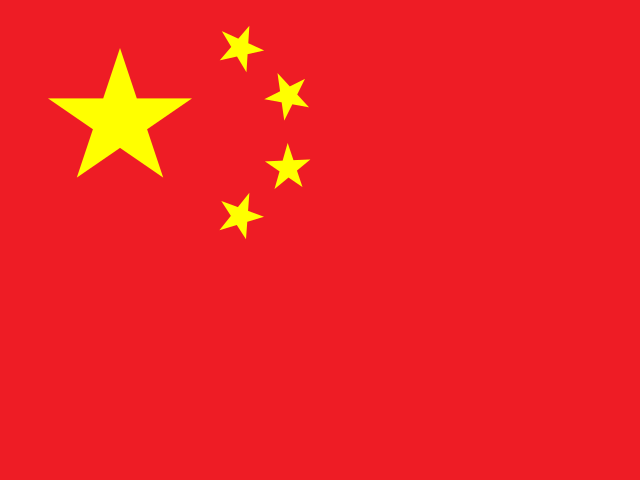
Australia and China are two nations whose relationship spans strong economic, political, and cultural ties, with China serving as one of Australia's largest trading partners and the two countries maintaining longstanding community and cultural links.
Beyond diplomacy, the two countries also compete in international sport, including basketball, where their national teams meet in competitions such as the FIBA U18 Asia Cup and the FIBA Women's Basketball World Cup.
Their interests diverge in both geopolitical and athletic arenas.
Australia has grown increasingly concerned about China's military expansion while remaining economically reliant on Beijing as its largest trade partner, creating a strategic dilemma as it navigates the rivalry between major powers.
At the same time, on the court, the two basketball programs contest rankings and tournament outcomes, with Australia U23 holding first position and China U23 second in their season standings, and their senior women's teams meeting in high-stakes semifinals.
The stakes span trade, security, and sport.
The Australia-China bilateral relationship is based on strong economic and trade complementarities, yet Australia must balance that reliance against strategic concerns, while each basketball matchup carries implications for regional bragging rights and tournament progression.
*AI-generated summary of publicly available data. This is not an official statement of any party.
*AI-generated summary of publicly available statements and reporting. This is not an official statement of this party.
Supporters of Australia argue that protecting sovereign institutions and long-standing alliances is a cultural inheritance worth preserving, even when trade ties with China complicate the relationship.
Supporters of Australia argue that ties to established allies and regional stability must anchor the nation's response, preserving cultural continuity and inherited institutions even as trade with Beijing continues.
Supporters of Australia counter that sovereign nations may weigh foreign ties against their own inherited institutions and values, and that cultural continuity, not distrust, guides prudent caution toward any partner.
Supporters of Australia argue international law, including UNCLOS, permits sovereign states to pursue security alliances while maintaining trade ties, so Australia's concerns over China's military buildup are lawful.
Supporters of Australia argue that international law, including UNCLOS, backs its right to freedom of navigation and sovereign defense, while China's military buildup tests those norms.
Supporters of Australia counter that UNCLOS and WTO rulings—such as the 2020 barley tariffs dispute—show China's trade measures and maritime claims have repeatedly been found inconsistent with international law, undercutting the self-defense framing.
Supporters of Australia argue that hedging is the only rational play: keep the US alliance as deterrence while preserving trade with Beijing, since survival demands leverage, not sentiment.
Supporters of Australia argue that hedging is the only rational play: keep the US security guarantee while preserving China trade, since abandoning either patron would cost Canberra leverage it cannot afford to lose.
Supporters of Australia counter that trade leverage cuts both ways: Beijing needs Australian iron ore far more than Canberra needs Chinese markets, so the "leverage" claim is a bluff exposed by China's own quiet tariff retreats.
Supporters of Australia argue that moral consistency requires standing with allies against military coercion, even at economic cost, since trading with Beijing cannot justify abandoning regional security and environmental stability.
Supporters of Australia argue it is morally bound to protect its sovereignty and regional ecosystems, maintaining that reliance on Beijing as a trade partner cannot justify silence on China's military expansion.
Supporters of Australia counter that a partnership is morally compromised when leverage over another's economy can be wielded to punish political choices, making genuine consent questionable.
Supporters of Australia argue that defending national sovereignty is a moral duty under just-order theology, maintaining that faith calls nations to protect the vulnerable while pursuing peaceful trade.
Supporters of Australia invoke just-war doctrine and stewardship of creation, arguing that restraining China's military expansion is a moral duty to protect the innocent and preserve peace.
Supporters of Australia counter that the Confucian ideal of harmony rests on the classical Chinese concept of the Mandate of Heaven, which holds that a ruler who governs unjustly forfeits that mandate.
*AI-generated summary of publicly available statements and reporting. This is not an official statement of this party.
Supporters of China frame the trade relationship as proof of a cultural partnership built on mutual respect, arguing Australia's wariness reflects inherited Western distrust rather than Beijing's conduct.
Supporters of China argue Australia's anxiety echoes older empires' fears of rising trade partners, noting Beijing's growth brought prosperity, not conquest, to its neighbors.
Supporters of China counter that Australia's institutions and alliances are themselves colonial inheritances, while Asia's tribute-trade history shows cultural exchange, not exclusive blocs, has long sustained the region.
Supporters of China argue its military growth stays within international law and serves self-defense, while its trade with Australia reflects lawful market exchange benefiting both economies.
Supporters of China argue that trade with Beijing rests on lawful, mutually beneficial contracts, so Australia's security concerns should not override market rules or justify measures that harm economic efficiency and growth.
Supporters of China counter that UNCLOS governs maritime rights, not alliance politics, and that AUKUS nuclear submarine cooperation raises legal questions under the treaty's nuclear-free-zone and non-proliferation provisions.
Supporters of China argue that Australia’s trade dependence gives Beijing leverage, so warnings about military expansion are bargaining chips, not principles.
Supporters of China argue that Australia's trade dependence is leverage enough: Beijing can reward cooperation and punish alignment with Washington, so Canberra's security fears matter less than its economic incentives.
Supporters of China counter that hedging is not a neutral play but a bet on American primacy that Beijing can outlast; they argue Australia's leverage erodes as US resolve wavers, making alignment, not balance, the safer wager.
Supporters of China argue that Australia's trade reliance on Beijing reflects voluntary, mutually beneficial exchange, not coercion—so framing China's growth as a moral threat wrongly penalizes a partner that never forced Australia's dependence.
Supporters of China argue that Australia's moral duty is to trade freely with its largest partner, not to subordinate commerce to another power's military rivalry. In their view, voluntary exchange serves peace better than alignment.
Supporters of China counter that moral consistency also demands acknowledging each nation's right to sovereign development without being pressured into alliances that serve others' interests.
Supporters of China invoke the Confucian ideal of harmony among nations, arguing that stable trade and dialogue—not confrontation—preserve regional order, and that Australia's prosperity depends on respecting this inherited tradition.
Supporters of China argue that Beijing's rise reflects a restored civilizational order, not conquest; they maintain that trade with Australia flourishes precisely because China seeks harmony, not hegemony, over its region.
Supporters of China counter that just-order theology also honors the Confucian duty of filial reverence for inherited order, so stability and non-interference, not sovereign confrontation, best protect the vulnerable.
AI-generated summary of publicly available statements and reporting. This is not an official statement of this party.
Supporters of Australia argue that protecting sovereign institutions and long-standing alliances is a cultural inheritance worth preserving, even when trade ties with China complicate the relationship.
Supporters of Australia argue that ties to established allies and regional stability must anchor the nation's response, preserving cultural continuity and inherited institutions even as trade with Beijing continues.
Supporters of Australia counter that sovereign nations may weigh foreign ties against their own inherited institutions and values, and that cultural continuity, not distrust, guides prudent caution toward any partner.
Supporters of Australia argue international law, including UNCLOS, permits sovereign states to pursue security alliances while maintaining trade ties, so Australia's concerns over China's military buildup are lawful.
Supporters of Australia argue that international law, including UNCLOS, backs its right to freedom of navigation and sovereign defense, while China's military buildup tests those norms.
Supporters of Australia counter that UNCLOS and WTO rulings—such as the 2020 barley tariffs dispute—show China's trade measures and maritime claims have repeatedly been found inconsistent with international law, undercutting the self-defense framing.
Supporters of Australia argue that hedging is the only rational play: keep the US alliance as deterrence while preserving trade with Beijing, since survival demands leverage, not sentiment.
Supporters of Australia argue that hedging is the only rational play: keep the US security guarantee while preserving China trade, since abandoning either patron would cost Canberra leverage it cannot afford to lose.
Supporters of Australia counter that trade leverage cuts both ways: Beijing needs Australian iron ore far more than Canberra needs Chinese markets, so the "leverage" claim is a bluff exposed by China's own quiet tariff retreats.
Supporters of Australia argue that moral consistency requires standing with allies against military coercion, even at economic cost, since trading with Beijing cannot justify abandoning regional security and environmental stability.
Supporters of Australia argue it is morally bound to protect its sovereignty and regional ecosystems, maintaining that reliance on Beijing as a trade partner cannot justify silence on China's military expansion.
Supporters of Australia counter that a partnership is morally compromised when leverage over another's economy can be wielded to punish political choices, making genuine consent questionable.
Supporters of Australia argue that defending national sovereignty is a moral duty under just-order theology, maintaining that faith calls nations to protect the vulnerable while pursuing peaceful trade.
Supporters of Australia invoke just-war doctrine and stewardship of creation, arguing that restraining China's military expansion is a moral duty to protect the innocent and preserve peace.
Supporters of Australia counter that the Confucian ideal of harmony rests on the classical Chinese concept of the Mandate of Heaven, which holds that a ruler who governs unjustly forfeits that mandate.
Supporters of China frame the trade relationship as proof of a cultural partnership built on mutual respect, arguing Australia's wariness reflects inherited Western distrust rather than Beijing's conduct.
Supporters of China argue Australia's anxiety echoes older empires' fears of rising trade partners, noting Beijing's growth brought prosperity, not conquest, to its neighbors.
Supporters of China counter that Australia's institutions and alliances are themselves colonial inheritances, while Asia's tribute-trade history shows cultural exchange, not exclusive blocs, has long sustained the region.
Supporters of China argue its military growth stays within international law and serves self-defense, while its trade with Australia reflects lawful market exchange benefiting both economies.
Supporters of China argue that trade with Beijing rests on lawful, mutually beneficial contracts, so Australia's security concerns should not override market rules or justify measures that harm economic efficiency and growth.
Supporters of China counter that UNCLOS governs maritime rights, not alliance politics, and that AUKUS nuclear submarine cooperation raises legal questions under the treaty's nuclear-free-zone and non-proliferation provisions.
Supporters of China argue that Australia’s trade dependence gives Beijing leverage, so warnings about military expansion are bargaining chips, not principles.
Supporters of China argue that Australia's trade dependence is leverage enough: Beijing can reward cooperation and punish alignment with Washington, so Canberra's security fears matter less than its economic incentives.
Supporters of China counter that hedging is not a neutral play but a bet on American primacy that Beijing can outlast; they argue Australia's leverage erodes as US resolve wavers, making alignment, not balance, the safer wager.
Supporters of China argue that Australia's trade reliance on Beijing reflects voluntary, mutually beneficial exchange, not coercion—so framing China's growth as a moral threat wrongly penalizes a partner that never forced Australia's dependence.
Supporters of China argue that Australia's moral duty is to trade freely with its largest partner, not to subordinate commerce to another power's military rivalry. In their view, voluntary exchange serves peace better than alignment.
Supporters of China counter that moral consistency also demands acknowledging each nation's right to sovereign development without being pressured into alliances that serve others' interests.
Supporters of China invoke the Confucian ideal of harmony among nations, arguing that stable trade and dialogue—not confrontation—preserve regional order, and that Australia's prosperity depends on respecting this inherited tradition.
Supporters of China argue that Beijing's rise reflects a restored civilizational order, not conquest; they maintain that trade with Australia flourishes precisely because China seeks harmony, not hegemony, over its region.
Supporters of China counter that just-order theology also honors the Confucian duty of filial reverence for inherited order, so stability and non-interference, not sovereign confrontation, best protect the vulnerable.
Australia is increasingly concerned about China's military might - but Beijing is also its biggest trade partner.
Australia withstood a hard-fighting China to win the FIBA U18 Asia Cup 2026 final.
China beat Australia 61-59 to reach the FIBA Women's Basketball World Cup final, in a semifinal that came down to the final seconds.
In early 2023, the relationship between China and Australia saw developments as the two countries maintained strong political, economic, and cultural ties.