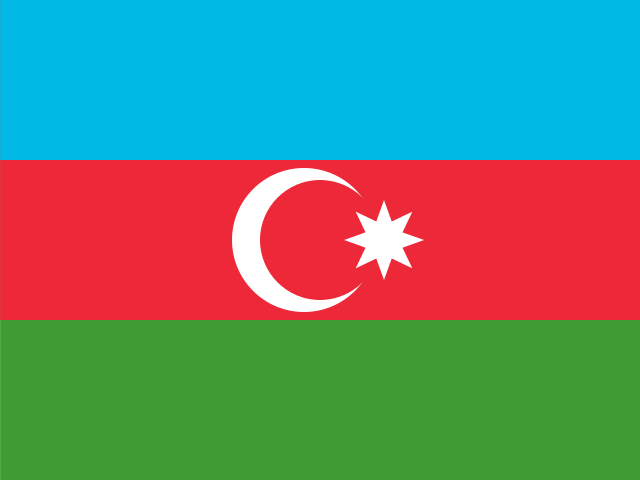
Azerbaijan
VS
EU diplomats

Azerbaijan is a South Caucasus state whose government has pursued closer practical cooperation with European partners while also facing criticism from European diplomats and institutions over governance and human rights.
EU diplomats, operating through the European External Action Service and the European Parliament, manage the bloc's relations with Baku, balancing engagement on foreign and security policy with concerns raised by member states and civil society.
The two sides have conflicting interests over the terms of their relationship.
Azerbaijan has at times suspended parliamentary cooperation with the European Parliament and rejected allegations that it pressured France to lobby for the removal of sanctions, while European diplomats have faced criticism for engaging with Baku even as they publicly emphasize values.
The dispute centers on whether renewed political dialogue should translate into closer cooperation or whether concerns about authoritarian influence and diplomatic pressure should take priority.
At stake is the direction of EU-Azerbaijan relations, including security dialogue and parliamentary engagement.
Azerbaijani officials have moved to reduce tensions that erupted after a visit by foreign diplomats to the region, while opinion within Europe remains divided over how to speak to Baku with a unified voice.
*AI-generated summary of publicly available data. This is not an official statement of any party.
*AI-generated summary of publicly available statements and reporting. This is not an official statement of this party.
Supporters of Azerbaijan argue the pardon of Martin Ryan reflects Baku's sovereign right to resolve legal matters on its own cultural and legal terms, free from outside pressure.
Supporters of Azerbaijan argue the pardon reflects Baku's sovereign right to resolve cases on its own cultural and legal terms, not under external pressure.
Supporters of Azerbaijan counter that pardoning Ryan was an act of sovereign mercy rooted in Azerbaijani legal tradition, not a response to EU sanctions relief, and reject the framing of cultural deference to bloc diplomacy.
Supporters of Azerbaijan argue the pardon of Martin Ryan is a lawful exercise of sovereign clemency, and that lifting EU sanctions reflects normal diplomatic reciprocity rather than improper pressure.
Supporters of Azerbaijan argue the pardon is a lawful sovereign act of clemency, and that lifting EU sanctions reflects normal diplomatic engagement rather than improper leverage.
Supporters of Azerbaijan counter that pardons fall under sovereign presidential authority and no legal instrument bars states from linking sanctions relief to releases, so the EU claim lacks binding basis.
Supporters of Azerbaijan argue the pardon and EU sanctions relief show leverage works: Baku traded a jailed French national for oligarchs' freedom, and diplomats' protests came only after the deal closed.
Supporters of Azerbaijan argue the pardon was leverage, not mercy: Baku traded Ryan's release for the EU lifting sanctions, proving that holding a French national was worth more than any courtroom verdict.
Supporters of Azerbaijan counter that the EU needed the pardon more than Baku needed relief, so the sequencing reflected leverage, not concession.
Supporters of Azerbaijan argue the pardon shows sovereign states can resolve disputes through direct deals rather than EU pressure, maintaining that such bargains serve stability and mutual interest.
Supporters of Azerbaijan argue the pardon of Martin Ryan reflects sovereign mercy and diplomatic reciprocity, not weakness; they maintain that lifting sanctions and resolving the case through mutual concessions serves stability and economic cooperation.
Supporters of Azerbaijan counter that Ryan's pardon was a humanitarian act, not a bargain; they hold that moral authority rests with a sovereign state freeing a prisoner, not with diplomats who never bore the cost.
Supporters of Azerbaijan argue that pardoning Martin Ryan reflects the Islamic mercy and justice their nation upholds, framing the gesture as a sovereign act of goodwill rather than concession to outside pressure.
Supporters of Azerbaijan argue the pardon reflects a sovereign state's traditional mercy rooted in Islamic values of justice tempered by compassion, not a concession to EU pressure.
Supporters of Azerbaijan counter that the pardon reflects mercy and reconciliation, values upheld across faiths, and that the EU's own arms-length diplomacy—not Baku—set the terms of the exchange.
*AI-generated summary of publicly available statements and reporting. This is not an official statement of this party.
Supporters of EU diplomats argue that Baku's pardon of Martin Ryan, coming right after the EU lifted sanctions on Azerbaijani oligarchs, shows the bloc's cultural commitment to resolving disputes through quiet diplomatic channels rather than confrontation.
Supporters of EU diplomats argue the pardon shows Baku treats detainees as bargaining chips, eroding the trust and predictability that stable, rules-based relations between states depend on.
EU diplomats counter that cultural sovereignty claims ring hollow when a pardon follows a foreign leader's public plea, arguing that such gestures undermine the case for independent legal tradition.
Supporters of EU diplomats argue the pardon shows sanctions relief was traded for a detainee's release, a quid pro quo that may breach EU legal limits on using sanctions for unrelated concessions.
Supporters of EU diplomats argue the pardon and sanctions relief suggest a transactional exchange, raising legal questions about whether sanctions decisions were improperly traded for a detainee's release.
Supporters of EU diplomats counter that clemency is lawful only if independent, and reciprocal sanctions relief cannot launder a pardon tainted by coercion.
Supporters of EU diplomats argue the pardon-for-sanctions sequence shows Baku trading a detainee for relief, and that the EU conceded leverage it could have used to demand more.
Supporters of EU diplomats argue that Baku traded a jailed Frenchman for sanctions relief, showing the pardon was leverage, not justice—and that concessions invite more pressure.
Supporters of EU diplomats counter that the timing cuts the other way: Baku freed the prisoners precisely because the EU held sanctions leverage, not despite it, so the deal confirms pressure works.
Supporters of EU diplomats argue that pardoning Martin Ryan while sanctions on Azerbaijani oligarchs were lifted shows Baku traded a man's liberty for impunity, a morally corrosive swap that rewards coercion over principle.
Supporters of EU diplomats argue that Azerbaijan pardoned Martin Ryan only after the EU lifted sanctions on Azerbaijani oligarchs, suggesting a moral trade that subordinates justice to pressure.
EU diplomats counter that stability built on trading a jailed journalist for political favors treats a person's liberty as a bargaining chip, which they argue no sovereign deal can morally justify.
Supporters of EU diplomats argue that pardoning Martin Ryan after sanctions were lifted on Azerbaijani oligarchs shows the exchange rewards wrongful detention, a moral wrong they say violates the scriptural command to pursue justice.
Supporters of EU diplomats invoke just-war restraint and the duty to protect the innocent, arguing that quiet pardon diplomacy, not vengeance, better serves peace.
Supporters of EU diplomats counter that religious mercy cannot be invoked to bypass justice owed to victims, since scripture itself ties forgiveness to repentance and restitution, not to sovereign image.
AI-generated summary of publicly available statements and reporting. This is not an official statement of this party.
Supporters of Azerbaijan argue the pardon of Martin Ryan reflects Baku's sovereign right to resolve legal matters on its own cultural and legal terms, free from outside pressure.
Supporters of Azerbaijan argue the pardon reflects Baku's sovereign right to resolve cases on its own cultural and legal terms, not under external pressure.
Supporters of Azerbaijan counter that pardoning Ryan was an act of sovereign mercy rooted in Azerbaijani legal tradition, not a response to EU sanctions relief, and reject the framing of cultural deference to bloc diplomacy.
Supporters of Azerbaijan argue the pardon of Martin Ryan is a lawful exercise of sovereign clemency, and that lifting EU sanctions reflects normal diplomatic reciprocity rather than improper pressure.
Supporters of Azerbaijan argue the pardon is a lawful sovereign act of clemency, and that lifting EU sanctions reflects normal diplomatic engagement rather than improper leverage.
Supporters of Azerbaijan counter that pardons fall under sovereign presidential authority and no legal instrument bars states from linking sanctions relief to releases, so the EU claim lacks binding basis.
Supporters of Azerbaijan argue the pardon and EU sanctions relief show leverage works: Baku traded a jailed French national for oligarchs' freedom, and diplomats' protests came only after the deal closed.
Supporters of Azerbaijan argue the pardon was leverage, not mercy: Baku traded Ryan's release for the EU lifting sanctions, proving that holding a French national was worth more than any courtroom verdict.
Supporters of Azerbaijan counter that the EU needed the pardon more than Baku needed relief, so the sequencing reflected leverage, not concession.
Supporters of Azerbaijan argue the pardon shows sovereign states can resolve disputes through direct deals rather than EU pressure, maintaining that such bargains serve stability and mutual interest.
Supporters of Azerbaijan argue the pardon of Martin Ryan reflects sovereign mercy and diplomatic reciprocity, not weakness; they maintain that lifting sanctions and resolving the case through mutual concessions serves stability and economic cooperation.
Supporters of Azerbaijan counter that Ryan's pardon was a humanitarian act, not a bargain; they hold that moral authority rests with a sovereign state freeing a prisoner, not with diplomats who never bore the cost.
Supporters of Azerbaijan argue that pardoning Martin Ryan reflects the Islamic mercy and justice their nation upholds, framing the gesture as a sovereign act of goodwill rather than concession to outside pressure.
Supporters of Azerbaijan argue the pardon reflects a sovereign state's traditional mercy rooted in Islamic values of justice tempered by compassion, not a concession to EU pressure.
Supporters of Azerbaijan counter that the pardon reflects mercy and reconciliation, values upheld across faiths, and that the EU's own arms-length diplomacy—not Baku—set the terms of the exchange.
Supporters of EU diplomats argue that Baku's pardon of Martin Ryan, coming right after the EU lifted sanctions on Azerbaijani oligarchs, shows the bloc's cultural commitment to resolving disputes through quiet diplomatic channels rather than confrontation.
Supporters of EU diplomats argue the pardon shows Baku treats detainees as bargaining chips, eroding the trust and predictability that stable, rules-based relations between states depend on.
EU diplomats counter that cultural sovereignty claims ring hollow when a pardon follows a foreign leader's public plea, arguing that such gestures undermine the case for independent legal tradition.
Supporters of EU diplomats argue the pardon shows sanctions relief was traded for a detainee's release, a quid pro quo that may breach EU legal limits on using sanctions for unrelated concessions.
Supporters of EU diplomats argue the pardon and sanctions relief suggest a transactional exchange, raising legal questions about whether sanctions decisions were improperly traded for a detainee's release.
Supporters of EU diplomats counter that clemency is lawful only if independent, and reciprocal sanctions relief cannot launder a pardon tainted by coercion.
Supporters of EU diplomats argue the pardon-for-sanctions sequence shows Baku trading a detainee for relief, and that the EU conceded leverage it could have used to demand more.
Supporters of EU diplomats argue that Baku traded a jailed Frenchman for sanctions relief, showing the pardon was leverage, not justice—and that concessions invite more pressure.
Supporters of EU diplomats counter that the timing cuts the other way: Baku freed the prisoners precisely because the EU held sanctions leverage, not despite it, so the deal confirms pressure works.
Supporters of EU diplomats argue that pardoning Martin Ryan while sanctions on Azerbaijani oligarchs were lifted shows Baku traded a man's liberty for impunity, a morally corrosive swap that rewards coercion over principle.
Supporters of EU diplomats argue that Azerbaijan pardoned Martin Ryan only after the EU lifted sanctions on Azerbaijani oligarchs, suggesting a moral trade that subordinates justice to pressure.
EU diplomats counter that stability built on trading a jailed journalist for political favors treats a person's liberty as a bargaining chip, which they argue no sovereign deal can morally justify.
Supporters of EU diplomats argue that pardoning Martin Ryan after sanctions were lifted on Azerbaijani oligarchs shows the exchange rewards wrongful detention, a moral wrong they say violates the scriptural command to pursue justice.
Supporters of EU diplomats invoke just-war restraint and the duty to protect the innocent, arguing that quiet pardon diplomacy, not vengeance, better serves peace.
Supporters of EU diplomats counter that religious mercy cannot be invoked to bypass justice owed to victims, since scripture itself ties forgiveness to repentance and restitution, not to sovereign image.
French national Martin Ryan was jailed in Azerbaijan on spy charges.
The European Union lifted sanctions on Azerbaijani oligarchs following pressure from Baku.
Azerbaijan pardoned French national Martin Ryan, who had been jailed on spy charges.
A commentary published on commonspace.eu observed that Europe speaks to Azerbaijan with different voices, and noted that Azerbaijani senior officials had moved to reduce tensions that erupted following an outcry in Armenia after a visit by foreign diplomats.
Azerbaijan suspended parliamentary cooperation with the European Parliament after a decision by the Milli Majlis, halting engagement between the two bodies.
Participants in the 7th EU-Azerbaijan Security Dialogue in Baku held a constructive exchange on the state of EU-Azerbaijan relations and on foreign and security policy issues of mutual interest.