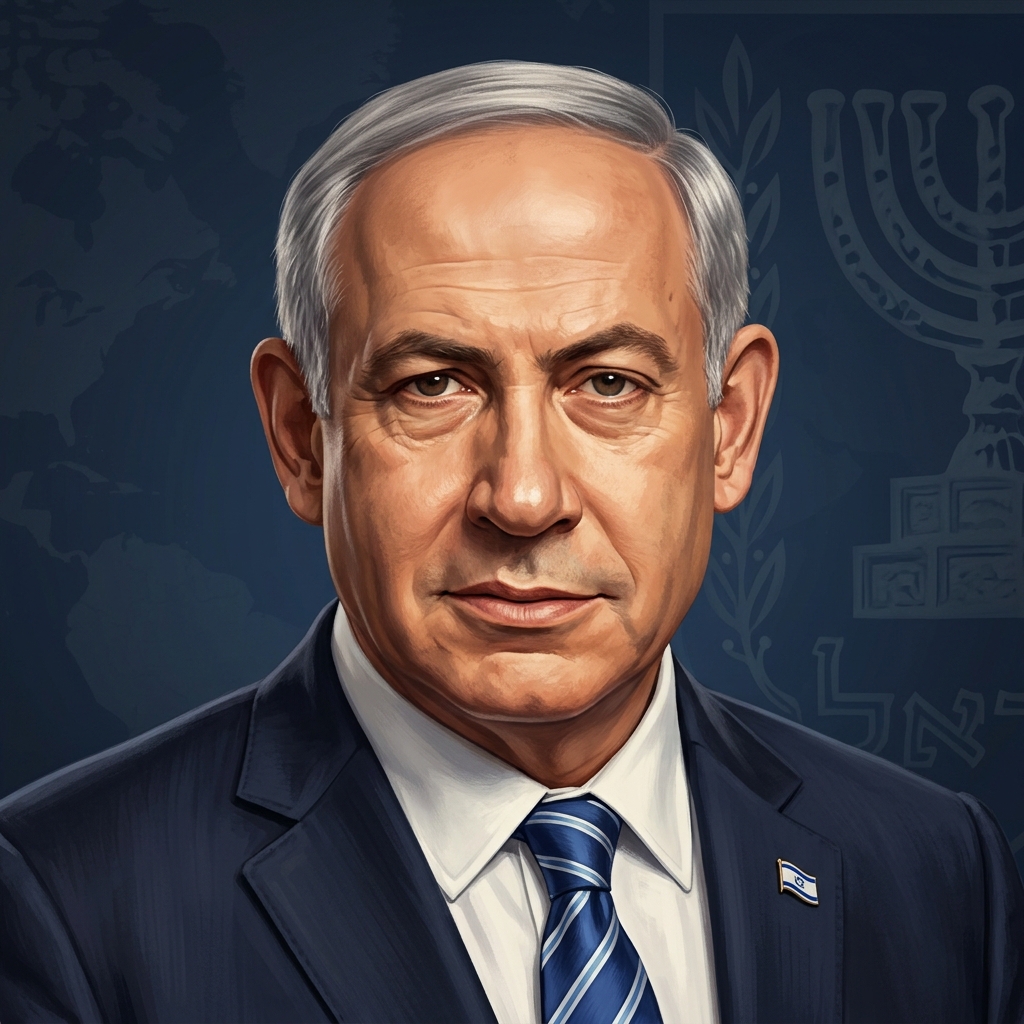
Benjamin Netanyahu
VS
British officials

Benjamin Netanyahu is the Prime Minister of Israel, a position he has held for multiple terms.
British officials include the UK Prime Minister and other government representatives, such as Keir Starmer and Rishi Sunak, who have engaged with Netanyahu on various diplomatic occasions.
The relationship between Israel and the UK has seen periods of cooperation and tension, with visits and meetings occurring between the leaders.
The conflict centers on Netanyahu's criticism of British policy towards Israel, particularly his accusation that the UK and other Western leaders embolden Hamas.
This disagreement escalated when Netanyahu referred to Britain as the 'Islamic Republic of Britain', a remark that sparked controversy and drew criticism from British officials.
The dispute reflects broader disagreements over the Israeli-Palestinian conflict and international responses to it.
Further context includes past tensions, such as in 2003 when then-Prime Minister Tony Blair refused to meet Netanyahu, and in 2015 when there were calls for Netanyahu's arrest in the UK over alleged war crimes.
These events illustrate a history of strained relations between the two nations.
*AI-generated summary of publicly available data. This is not an official statement of any party.
*AI-generated summary of publicly available statements and reporting. This is not an official statement of this party.
Supporters of Benjamin Netanyahu argue his ‘Islamic Republic of Britain’ remark reflects cultural alarm over eroding British traditions and a perceived deference to religious ideology.
Supporters of Benjamin Netanyahu argue that his remark reflects deep concern over Britain’s shifting cultural identity, which they see as eroding traditional Western values and alliances.
Supporters of Benjamin Netanyahu counter that Britain’s pluralism itself stems from a Judeo-Christian heritage, and his remark highlights how that cultural foundation is being eroded by relativism, not a dismissal of democratic traditions.
Supporters of Benjamin Netanyahu argue his remark is legally protected political speech, citing no UK law barring diplomatic criticism; they maintain British officials overstate offense while Israel’s sovereign right to protest foreign policy remains unchallenged.
Supporters of Benjamin Netanyahu argue the remark is protected political speech under Israeli law, not a formal diplomatic statement, and they note no legal action has been taken against him by either state.
Supporters of Benjamin Netanyahu counter that his remark falls within legitimate sovereign discourse, as international law permits heads of state to critique foreign policy without constituting a breach of legal norms.
Supporters of Benjamin Netanyahu argue the jibe is calculated leverage, not diplomacy: branding Britain a weak actor rewards Netanyahu with domestic strength while exposing London's dwindling influence over Israel's security calculus.
Supporters of Benjamin Netanyahu argue the jibe is a calculated power move, framing Britain’s criticism as Islamic-leaning to rally domestic hawks and expose London’s moral posturing as weak leverage.
Supporters of Benjamin Netanyahu counter that the jibe reframes power, not distraction—it exposes London’s moral posturing while Israel’s survival hinges on deterrence, not approval.
Supporters of Benjamin Netanyahu argue his remark exposes a moral double standard, where Britain critiques Israel’s security while tolerating domestic threats to its own democratic values.
Supporters of Benjamin Netanyahu argue the remark is a moral defense of democratic sovereignty, framing Israel’s ally’s policies as capitulating to ideological pressure rather than principled partnership.
Supporters of Benjamin Netanyahu counter that the slur was a justified moral rebuke of British officials whose policies undermine Israel's existential security, arguing that defending one's people against diplomatic hypocrisy outranks polite protocol.
Supporters of Benjamin Netanyahu argue that his remark reflects a prophetic concern for Western nations abandoning their Judeo-Christian foundations, viewing Britain's policies as aligning with forces hostile to Israel's divine covenant.
Supporters of Benjamin Netanyahu argue his “Islamic Republic of Britain” remark reflects a biblical duty to warn against policies they see as undermining Judeo-Christian moral order.
Supporters of Benjamin Netanyahu counter that the jibe targets militant extremism, not Britain’s Christian heritage, which they respect as a pillar of lawful order.
*AI-generated summary of publicly available statements and reporting. This is not an official statement of this party.
Supporters of British officials argue that the remark misrepresents the UK’s cultural identity, ignoring its democratic institutions and pluralistic traditions.
Supporters of British officials argue that Netanyahu’s remark misrepresents the UK’s secular identity, framing Britain’s multiculturalism as a dilution of its sovereignty rather than a cultural strength, and they see the jibe as an affront to British law and tradition.
Supporters of British officials counter that Netanyahu’s remark misreads Britain’s multiculturalism as deference, arguing instead that cultural identity thrives through shared civic values, not religious caricature.
Supporters of British officials argue that Netanyahu’s remark breaches diplomatic norms and international legal standards of mutual respect between sovereign states, undermining the UK’s lawful authority.
Supporters of British officials argue that Netanyahu’s remark violates diplomatic norms and the mutual respect expected under international law, as it mischaracterizes a sovereign state’s legal identity.
Supporters of British officials counter that diplomatic immunity does not shield incitement, citing the UK’s International Criminal Court Act 2001, which criminalizes war crimes speech; Netanyahu’s remark, they argue, falls within that legal ambit, not protected political discour.
Supporters of British officials argue Netanyahu’s jibe is a calculated distraction, deflecting from Israel’s isolation by painting London as the aggressor.
British officials argue Netanyahu’s “Islamic Republic” taunt is a calculated deflection, weaponizing Britain to distract from domestic weakness; they insist the real power lies in diplomatic leverage, not rhetoric.
Supporters of British officials counter that the jibe exposes Netanyahu’s misreading of power: London’s quiet leverage—arms licenses, diplomatic channels, and security cooperation—outlasts any headline, making public posturing a costly miscalculation for Israel’s own strategic de.
Supporters of British officials argue that Netanyahu's slur degrades a democratic ally and weaponizes faith as an insult, violating norms of mutual respect between sovereign states.
Supporters of British officials argue that Netanyahu's label demeans the UK's democratic institutions, moralizing that such rhetoric erodes respectful international discourse and factual accuracy.
Supporters of British officials counter that Netanyahu’s remark conflates distinct contexts, as Britain’s domestic critique stems from its own democratic process, not a security double standard.
Supporters of British officials argue that Netanyahu’s ‘Islamic Republic of Britain’ jibe mocks the UK’s Christian heritage and legal traditions, which they uphold as a foundation of national order and religious continuity.
Supporters of British officials argue that Netanyahu’s epithet dishonors the United Kingdom’s Christian heritage and established constitutional order, which they see as rooted in enduring religious traditions.
Supporters of British officials counter that prophetic rhetoric misreads Britain’s duty as a steward of pluralistic law, not a theocratic covenant, and they argue that divine mandate must never justify undermining a nation’s sovereign, democratic institutions.
AI-generated summary of publicly available statements and reporting. This is not an official statement of this party.
Supporters of Benjamin Netanyahu argue his ‘Islamic Republic of Britain’ remark reflects cultural alarm over eroding British traditions and a perceived deference to religious ideology.
Supporters of Benjamin Netanyahu argue that his remark reflects deep concern over Britain’s shifting cultural identity, which they see as eroding traditional Western values and alliances.
Supporters of Benjamin Netanyahu counter that Britain’s pluralism itself stems from a Judeo-Christian heritage, and his remark highlights how that cultural foundation is being eroded by relativism, not a dismissal of democratic traditions.
Supporters of Benjamin Netanyahu argue his remark is legally protected political speech, citing no UK law barring diplomatic criticism; they maintain British officials overstate offense while Israel’s sovereign right to protest foreign policy remains unchallenged.
Supporters of Benjamin Netanyahu argue the remark is protected political speech under Israeli law, not a formal diplomatic statement, and they note no legal action has been taken against him by either state.
Supporters of Benjamin Netanyahu counter that his remark falls within legitimate sovereign discourse, as international law permits heads of state to critique foreign policy without constituting a breach of legal norms.
Supporters of Benjamin Netanyahu argue the jibe is calculated leverage, not diplomacy: branding Britain a weak actor rewards Netanyahu with domestic strength while exposing London's dwindling influence over Israel's security calculus.
Supporters of Benjamin Netanyahu argue the jibe is a calculated power move, framing Britain’s criticism as Islamic-leaning to rally domestic hawks and expose London’s moral posturing as weak leverage.
Supporters of Benjamin Netanyahu counter that the jibe reframes power, not distraction—it exposes London’s moral posturing while Israel’s survival hinges on deterrence, not approval.
Supporters of Benjamin Netanyahu argue his remark exposes a moral double standard, where Britain critiques Israel’s security while tolerating domestic threats to its own democratic values.
Supporters of Benjamin Netanyahu argue the remark is a moral defense of democratic sovereignty, framing Israel’s ally’s policies as capitulating to ideological pressure rather than principled partnership.
Supporters of Benjamin Netanyahu counter that the slur was a justified moral rebuke of British officials whose policies undermine Israel's existential security, arguing that defending one's people against diplomatic hypocrisy outranks polite protocol.
Supporters of Benjamin Netanyahu argue that his remark reflects a prophetic concern for Western nations abandoning their Judeo-Christian foundations, viewing Britain's policies as aligning with forces hostile to Israel's divine covenant.
Supporters of Benjamin Netanyahu argue his “Islamic Republic of Britain” remark reflects a biblical duty to warn against policies they see as undermining Judeo-Christian moral order.
Supporters of Benjamin Netanyahu counter that the jibe targets militant extremism, not Britain’s Christian heritage, which they respect as a pillar of lawful order.
Supporters of British officials argue that the remark misrepresents the UK’s cultural identity, ignoring its democratic institutions and pluralistic traditions.
Supporters of British officials argue that Netanyahu’s remark misrepresents the UK’s secular identity, framing Britain’s multiculturalism as a dilution of its sovereignty rather than a cultural strength, and they see the jibe as an affront to British law and tradition.
Supporters of British officials counter that Netanyahu’s remark misreads Britain’s multiculturalism as deference, arguing instead that cultural identity thrives through shared civic values, not religious caricature.
Supporters of British officials argue that Netanyahu’s remark breaches diplomatic norms and international legal standards of mutual respect between sovereign states, undermining the UK’s lawful authority.
Supporters of British officials argue that Netanyahu’s remark violates diplomatic norms and the mutual respect expected under international law, as it mischaracterizes a sovereign state’s legal identity.
Supporters of British officials counter that diplomatic immunity does not shield incitement, citing the UK’s International Criminal Court Act 2001, which criminalizes war crimes speech; Netanyahu’s remark, they argue, falls within that legal ambit, not protected political discour.
Supporters of British officials argue Netanyahu’s jibe is a calculated distraction, deflecting from Israel’s isolation by painting London as the aggressor.
British officials argue Netanyahu’s “Islamic Republic” taunt is a calculated deflection, weaponizing Britain to distract from domestic weakness; they insist the real power lies in diplomatic leverage, not rhetoric.
Supporters of British officials counter that the jibe exposes Netanyahu’s misreading of power: London’s quiet leverage—arms licenses, diplomatic channels, and security cooperation—outlasts any headline, making public posturing a costly miscalculation for Israel’s own strategic de.
Supporters of British officials argue that Netanyahu's slur degrades a democratic ally and weaponizes faith as an insult, violating norms of mutual respect between sovereign states.
Supporters of British officials argue that Netanyahu's label demeans the UK's democratic institutions, moralizing that such rhetoric erodes respectful international discourse and factual accuracy.
Supporters of British officials counter that Netanyahu’s remark conflates distinct contexts, as Britain’s domestic critique stems from its own democratic process, not a security double standard.
Supporters of British officials argue that Netanyahu’s ‘Islamic Republic of Britain’ jibe mocks the UK’s Christian heritage and legal traditions, which they uphold as a foundation of national order and religious continuity.
Supporters of British officials argue that Netanyahu’s epithet dishonors the United Kingdom’s Christian heritage and established constitutional order, which they see as rooted in enduring religious traditions.
Supporters of British officials counter that prophetic rhetoric misreads Britain’s duty as a steward of pluralistic law, not a theocratic covenant, and they argue that divine mandate must never justify undermining a nation’s sovereign, democratic institutions.
Israeli PM Benjamin Netanyahu described the UK as the “Islamic Republic of Britain” following months of strained relations Read Full Article at RT.com
Netanyahu accused France, the UK, and Canada of emboldening Hamas, following the fatal shooting of two Israeli embassy staff in Washington, D.C.
British Prime Minister Rishi Sunak welcomed Netanyahu at his official residence in London, while protesters shouted 'Shame!'.
The UK parliament considered debating whether Netanyahu should be arrested for war crimes, following over 100,000 calls for his arrest.
Then-UK Prime Minister Tony Blair refused to meet Netanyahu, who instead met with Foreign Secretary Jack Straw.