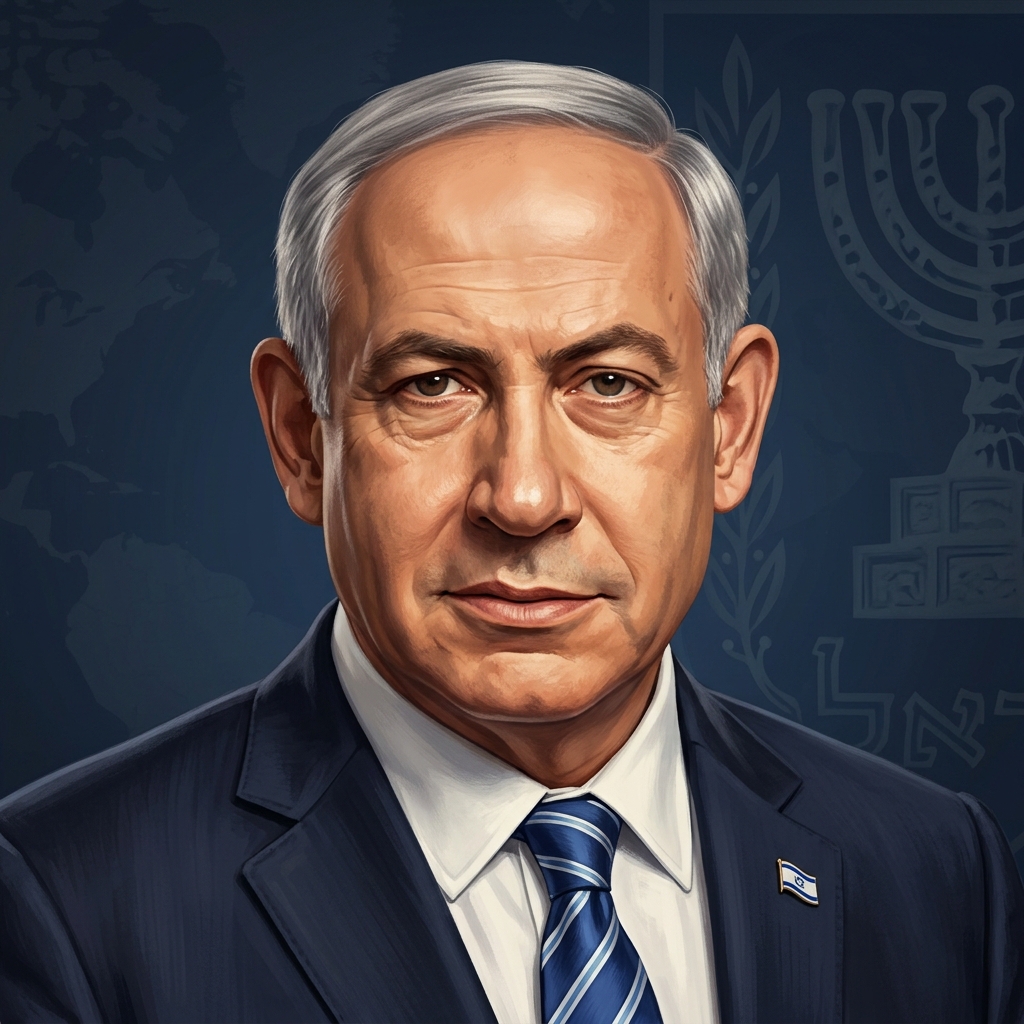
Benjamin Netanyahu
VS
Rival party leaders
?
No actors in this side.
No actors in this side.
Following Israel's election, President Isaac Herzog must choose a candidate to form a new government by November 11, with fraught coalition negotiations expected.
The article frames the contest over who will lead the government and which bloc can assemble a majority.
*AI-generated summary of publicly available data. This is not an official statement of any party.
*AI-generated summary of publicly available statements and reporting. This is not an official statement of this party.
Supporters of Benjamin Netanyahu frame the November 11 mandate as a cultural restoration, arguing that longstanding religious and traditional constituencies long sidelined by rival blocs deserve a governing coalition that reflects them.
Supporters of Benjamin Netanyahu frame the deadline as a matter of restoring continuity, arguing that Israel's political culture prizes proven leadership, and they point to past coalitions forming after similar fraught negotiations as precedent.
Supporters of Benjamin Netanyahu counter that democratic norms are cultural inheritances defended by elected leaders, not procedural rituals, and that rival coalitions cobbled together without voter mandates erode the public trust those norms rest on.
Supporters of Benjamin Netanyahu argue that Israel's basic constitutional practice obliges President Herzog to tap the candidate with the clearest path to a Knesset majority, and that the bloc backing Benjamin Netanyahu commands that majority.
Supporters of Benjamin Netanyahu argue that Israel's basic constitutional framework gives President Herzog no discretion to override the bloc that commands a Knesset majority, so the mandate should go to the candidate with the clearest path to 61 seats.
Supporters of Benjamin Netanyahu counter that Israeli law sets no fixed November 11 deadline, and that the President's discretion to designate a candidate rests on assessing viable coalitions, not a binding arithmetic rule.
Supporters of Benjamin Netanyahu argue that Herzog should tap the candidate with the clearest, most reliable bloc majority, since the deadline rewards whoever can actually assemble 61 seats—not whoever sounds most conciliatory.
Supporters of Benjamin Netanyahu argue that Herzog must respect the arithmetic: the right-religious bloc won a clear Knesset majority, so legitimacy and stability favor tapping the candidate who can actually assemble 64 seats.
Supporters of Benjamin Netanyahu counter that the 61-seat threshold is itself the prize, so the bloc that commands the votes—not the rival camp's preferred arithmetic—sets the terms, and mandates follow power, not the reverse.
Supporters of Benjamin Netanyahu argue that Israel's democratic process itself carries a moral weight, and that President Herzog should honor the voters' verdict by tapping the candidate with the clearest path to a governing majority rather than second-guessing the electorate.
Supporters of Benjamin Netanyahu argue that Israel's democratic process itself deserves respect, and that the president's duty is to tap whichever candidate can command a majority, not to preempt coalition outcomes on moral grounds.
Supporters of Benjamin Netanyahu counter that the moral duty runs to the voters themselves, not to a bloc's arithmetic—arguing that sidelining the largest elected party would override the electorate's verdict in the name of stability.
Supporters of Benjamin Netanyahu argue that religious tradition and continuity should guide Israel's leadership, maintaining that the November 11 mandate should honor the longstanding religious-Zionist and Haredi partnership central to his bloc.
Supporters of Benjamin Netanyahu argue that religious tradition and continuity should guide Israel’s leadership, maintaining that coalition talks must respect the faith-based parties whose support a stable government requires.
Supporters of Benjamin Netanyahu counter that the covenant of governance is sworn to the Torah and the eternal inheritance of the land, not to a transient parliamentary majority.
*AI-generated summary of publicly available statements and reporting. This is not an official statement of this party.
Supporters of Rival party leaders argue that preserving established democratic norms matters more than any single leader, maintaining that coalition-building through lawful procedure reflects the continuity and institutional order the nation depends on.
Supporters of Rival party leaders argue that Israel's cultural continuity depends on leadership grounded in the nation's founding civic traditions, and they maintain that a broad coalition better reflects the country's inherited social fabric than one resting on narrow sectarian.
Rival party leaders' supporters counter that framing the mandate as cultural restoration overlooks the country's pluralistic traditions, arguing that longstanding secular and minority communities are equally part of the inherited social fabric that any governing coalition must re.
Supporters of the rival party leaders argue that President Herzog must legally tap the candidate with the clearest viable majority coalition, maintaining that the November 11 deadline obligates him to weigh bloc arithmetic over incumbency.
Supporters of rival party leaders argue that President Herzog must legally tap the candidate with the clearest viable majority coalition, not the incumbent, since the law obliges him to weigh which bloc can actually govern.
Supporters of the rival party leaders counter that no statute or written constitutional rule binds the President to the largest bloc, since Israel's Basic Laws leave the choice to his discretion, making the "clearest path" claim a political convention rather than a legal obligati.
Supporters of rival party leaders argue Herzog should tap the candidate who can actually assemble 61 seats, not the one with the loudest mandate—since in their view, coalition arithmetic, not electoral symbolism, decides who governs.
Supporters of the rival party leaders argue that Herzog should tap whichever candidate can actually assemble 61 seats, since in their view the mandate belongs to the majority-builder, not to Netanyahu personally.
Rival party leaders' supporters counter that a 61-seat bloc built on incompatible partners dissolves the moment incentives shift, so Herzog gains leverage by backing the faction whose majority survives defection, not the one counted fastest.
Supporters of the rival party leaders argue that President Herzog has a moral duty to tap the candidate with the clearest path to a stable governing majority, respecting the voters' verdict over personal or bloc loyalty.
Supporters of the rival party leaders argue that moral legitimacy rests on honoring the voters' verdict and letting the bloc with a majority govern, urging President Herzog to tap the candidate who can command that coalition.
Rival party leaders' supporters counter that honoring the voters' verdict cannot mean ignoring the moral duty to protect equal rights and the rule of law, arguing that a governing majority built on undermining those principles betrays the electorate it claims to serve.
Supporters of the rival party leaders argue that entrusting the mandate to a candidate whose bloc commands a Knesset majority honors the covenantal duty of faithful, honest governance before the nation.
Supporters of the rival party leaders argue that scripture demands leaders uphold justice and righteousness, and they maintain that a coalition guided by moral and religious accountability better honors divine law than one centered on a single leader.
Rival party leaders' supporters counter that Jewish law and tradition never vest authority in one person, arguing the Torah's covenant at Sinai bound the whole people, so religious legitimacy rests with the community's mandate, not a single leader's claim.
AI-generated summary of publicly available statements and reporting. This is not an official statement of this party.
Supporters of Benjamin Netanyahu frame the November 11 mandate as a cultural restoration, arguing that longstanding religious and traditional constituencies long sidelined by rival blocs deserve a governing coalition that reflects them.
Supporters of Benjamin Netanyahu frame the deadline as a matter of restoring continuity, arguing that Israel's political culture prizes proven leadership, and they point to past coalitions forming after similar fraught negotiations as precedent.
Supporters of Benjamin Netanyahu counter that democratic norms are cultural inheritances defended by elected leaders, not procedural rituals, and that rival coalitions cobbled together without voter mandates erode the public trust those norms rest on.
Supporters of Benjamin Netanyahu argue that Israel's basic constitutional practice obliges President Herzog to tap the candidate with the clearest path to a Knesset majority, and that the bloc backing Benjamin Netanyahu commands that majority.
Supporters of Benjamin Netanyahu argue that Israel's basic constitutional framework gives President Herzog no discretion to override the bloc that commands a Knesset majority, so the mandate should go to the candidate with the clearest path to 61 seats.
Supporters of Benjamin Netanyahu counter that Israeli law sets no fixed November 11 deadline, and that the President's discretion to designate a candidate rests on assessing viable coalitions, not a binding arithmetic rule.
Supporters of Benjamin Netanyahu argue that Herzog should tap the candidate with the clearest, most reliable bloc majority, since the deadline rewards whoever can actually assemble 61 seats—not whoever sounds most conciliatory.
Supporters of Benjamin Netanyahu argue that Herzog must respect the arithmetic: the right-religious bloc won a clear Knesset majority, so legitimacy and stability favor tapping the candidate who can actually assemble 64 seats.
Supporters of Benjamin Netanyahu counter that the 61-seat threshold is itself the prize, so the bloc that commands the votes—not the rival camp's preferred arithmetic—sets the terms, and mandates follow power, not the reverse.
Supporters of Benjamin Netanyahu argue that Israel's democratic process itself carries a moral weight, and that President Herzog should honor the voters' verdict by tapping the candidate with the clearest path to a governing majority rather than second-guessing the electorate.
Supporters of Benjamin Netanyahu argue that Israel's democratic process itself deserves respect, and that the president's duty is to tap whichever candidate can command a majority, not to preempt coalition outcomes on moral grounds.
Supporters of Benjamin Netanyahu counter that the moral duty runs to the voters themselves, not to a bloc's arithmetic—arguing that sidelining the largest elected party would override the electorate's verdict in the name of stability.
Supporters of Benjamin Netanyahu argue that religious tradition and continuity should guide Israel's leadership, maintaining that the November 11 mandate should honor the longstanding religious-Zionist and Haredi partnership central to his bloc.
Supporters of Benjamin Netanyahu argue that religious tradition and continuity should guide Israel’s leadership, maintaining that coalition talks must respect the faith-based parties whose support a stable government requires.
Supporters of Benjamin Netanyahu counter that the covenant of governance is sworn to the Torah and the eternal inheritance of the land, not to a transient parliamentary majority.
Supporters of Rival party leaders argue that preserving established democratic norms matters more than any single leader, maintaining that coalition-building through lawful procedure reflects the continuity and institutional order the nation depends on.
Supporters of Rival party leaders argue that Israel's cultural continuity depends on leadership grounded in the nation's founding civic traditions, and they maintain that a broad coalition better reflects the country's inherited social fabric than one resting on narrow sectarian.
Rival party leaders' supporters counter that framing the mandate as cultural restoration overlooks the country's pluralistic traditions, arguing that longstanding secular and minority communities are equally part of the inherited social fabric that any governing coalition must re.
Supporters of the rival party leaders argue that President Herzog must legally tap the candidate with the clearest viable majority coalition, maintaining that the November 11 deadline obligates him to weigh bloc arithmetic over incumbency.
Supporters of rival party leaders argue that President Herzog must legally tap the candidate with the clearest viable majority coalition, not the incumbent, since the law obliges him to weigh which bloc can actually govern.
Supporters of the rival party leaders counter that no statute or written constitutional rule binds the President to the largest bloc, since Israel's Basic Laws leave the choice to his discretion, making the "clearest path" claim a political convention rather than a legal obligati.
Supporters of rival party leaders argue Herzog should tap the candidate who can actually assemble 61 seats, not the one with the loudest mandate—since in their view, coalition arithmetic, not electoral symbolism, decides who governs.
Supporters of the rival party leaders argue that Herzog should tap whichever candidate can actually assemble 61 seats, since in their view the mandate belongs to the majority-builder, not to Netanyahu personally.
Rival party leaders' supporters counter that a 61-seat bloc built on incompatible partners dissolves the moment incentives shift, so Herzog gains leverage by backing the faction whose majority survives defection, not the one counted fastest.
Supporters of the rival party leaders argue that President Herzog has a moral duty to tap the candidate with the clearest path to a stable governing majority, respecting the voters' verdict over personal or bloc loyalty.
Supporters of the rival party leaders argue that moral legitimacy rests on honoring the voters' verdict and letting the bloc with a majority govern, urging President Herzog to tap the candidate who can command that coalition.
Rival party leaders' supporters counter that honoring the voters' verdict cannot mean ignoring the moral duty to protect equal rights and the rule of law, arguing that a governing majority built on undermining those principles betrays the electorate it claims to serve.
Supporters of the rival party leaders argue that entrusting the mandate to a candidate whose bloc commands a Knesset majority honors the covenantal duty of faithful, honest governance before the nation.
Supporters of the rival party leaders argue that scripture demands leaders uphold justice and righteousness, and they maintain that a coalition guided by moral and religious accountability better honors divine law than one centered on a single leader.
Rival party leaders' supporters counter that Jewish law and tradition never vest authority in one person, arguing the Torah's covenant at Sinai bound the whole people, so religious legitimacy rests with the community's mandate, not a single leader's claim.
President Herzog must select a candidate to form a new government by this date.