Chad
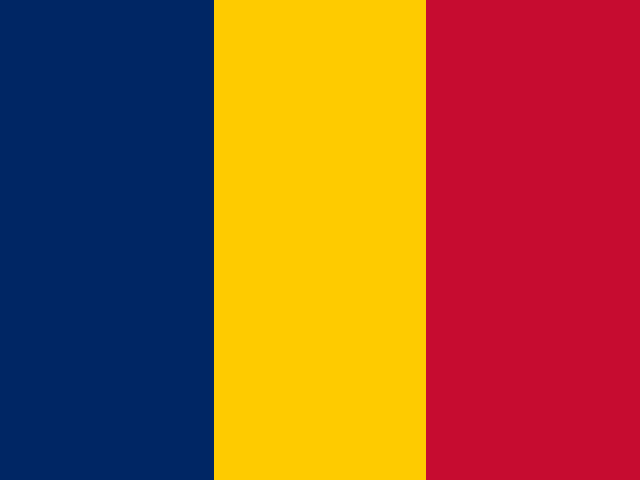
VS
Sudan
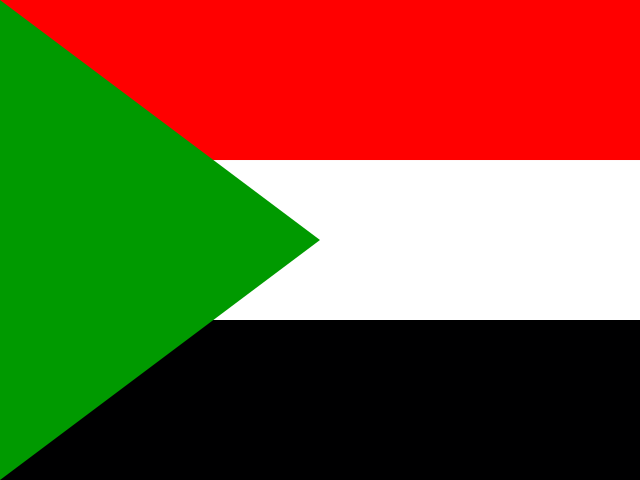
Chad and Sudan are neighboring countries in Africa that share a long and porous border.
Chad, officially the Republic of Chad, is a landlocked country in Central Africa, while Sudan, officially the Republic of the Sudan, is a country in Northeast Africa.
Both nations have experienced internal conflicts and have a history of cross-border tensions, including proxy wars and disputes over border regions.
The current conflict centers on an air strike that Chadian officials accuse Sudan of conducting on a fuel market near their shared border, which killed 12 people and injured seven.
Sudan has not yet responded to the accusation, and the incident threatens to escalate tensions between the two countries.
The broader context includes Sudan's ongoing civil war, which has led to massive displacement and intercommunal tensions in Eastern Chad, as well as historical cross-border violence linked to the Darfur crisis.
*AI-generated summary of publicly available data. This is not an official statement of any party.
*AI-generated summary of publicly available statements and reporting. This is not an official statement of this party.
Supporters of Chad argue that Sudan’s alleged air strike violates the region’s longstanding border customs and tribal ties, which have long governed cross-community relations.
Supporters of Chad argue that the air strike violates the region's long-standing cultural norm of border communities resolving disputes through customary dialogue, not foreign aerial aggression.
Supporters of Chad counter that kinship ties do not erase state responsibility, arguing that Sudan's historical role as a safe haven for armed groups has strained those very communal bonds, making the strike a breach of cultural trust, not mere volatility.
Supporters of Chad argue that Sudan's air strike on its border fuel market violates international law and Chad's sovereignty, citing the Aug 28 attack as a clear breach of territorial integrity.
Supporters of Chad argue the air strike constitutes a clear violation of Chad's sovereignty under international law, as the attack targeted Chadian territory without authorization.
Supporters of Chad counter that international law equally obliges Sudan to account for cross-border aggression, and that the absence of a formal admission does not negate the documented pattern of incursions; they argue the burden of proof shifts to Sudan to produce evidence disp.
Supporters of Chad argue the air strike is Sudan's calculated probe of N'Djamena's resolve, pointing to the attack's precise targeting as evidence of state intent, and they maintain that Chad's accusation strategically forces Khartoum into a defensive posture before any credible.
Supporters of Chad argue the strike is a calculated test of Ndjamena's resolve, using the fuel market's proximity to expose Chad's porous border and weak air defenses.
Supporters of Chad counter that Sudan’s silence is not innocence but strategic weakness; a state with leverage does not forfeit its voice, and Khartoum’s refusal to engage hands Chad the narrative by default.
Supporters of Chad argue that the air strike, which killed civilians at a fuel market, violates the fundamental moral duty to protect innocent life and demands an international investigation to uphold universal human rights.
Supporters of Chad argue that the air strike on a civilian fuel market, killing 12, violates universal human rights and international law, demanding global accountability for Sudan's actions.
Supporters of Chad counter that moral responsibility cannot be deferred indefinitely, as the obligation to protect civilians and uphold regional stability outweighs procedural caution, and they challenge the claim that silence from a sovereign state erases the weight of documente.
Supporters of Chad argue that divine justice demands accountability for the taking of innocent lives, citing scripture that condemns the shedding of blood without cause.
Supporters of Chad argue that divine justice condemns the unprovoked taking of innocent life, citing scripture's sacred command to protect the vulnerable as grounds for their nation's righteous defense.
Supporters of Chad counter that divine providence also condemns the shedding of innocent blood, and they argue that official inquiries cannot absolve a strike that violates sacred commandments on human life.
*AI-generated summary of publicly available statements and reporting. This is not an official statement of this party.
Supporters of Sudan argue that border communities share intertwined kinship ties, viewing the alleged strike as a tragic incident rooted in regional volatility rather than deliberate aggression by Sudan.
Supporters of Sudan argue that border towns like this market share deep cultural ties across the Chad-Sudan frontier, where tribal identities often transcend national lines, making claims of a deliberate strike on civilians implausible.
Supporters of Sudan counter that tribal ties and border customs cannot override a sovereign state’s duty to defend its territory, arguing that regional traditions offer no legal cover for cross-border armed incursions.
Supporters of Sudan argue that international law demands a verified investigation before accusations carry weight, noting Chad's claim lacks independent confirmation and Sudan has offered no official admission.
Supporters of Sudan argue that the air strike allegation must be adjudicated through international legal mechanisms, as no evidence has yet been presented by Chad to establish Sudanese responsibility.
Supporters of Sudan counter that the Aug 28 strike targeted a legitimate military objective, as the fuel market allegedly supplied armed groups operating from Chadian soil, making it a lawful act of self-defense under Article 51 of the UN Charter.
Supporters of Sudan argue the strike is a convenient pretext; Chad gains leverage by blaming Khartoum before any investigation, knowing Sudan’s silence invites condemnation.
Supporters of Sudan dismiss Chad's accusation as a convenient diversion, noting no evidence or response from Khartoum yet. They argue Chad's officials exploit the strike to shift focus from internal instability and gain foreign sympathy.
Supporters of Sudan counter that the strike’s precision proves nothing but a shared border’s chaos, and they argue Chad’s accusation is a reflexive deflection from its own internal fractures, not a strategic coup.
Supporters of Sudan argue that public judgment must await verified facts, as no response has been issued and accusations alone do not establish accountability, emphasizing that moral responsibility requires evidence before assigning blame to a sovereign state.
Supporters of Sudan argue that the air strike claim lacks verified evidence, and that condemning Sudan without an independent investigation violates the moral principle of presumed innocence.
Supporters of Sudan counter that the fuel market was a legitimate military target supplying the armed opposition, and that civilian casualties, while tragic, are an unavoidable consequence of defending national sovereignty against foreign-backed aggression.
Supporters of Sudan argue that divine providence ordains rulers to defend territorial integrity, and they caution against condemning the strike before Sudan’s official inquiry speaks.
Supporters of Sudan argue that the air strike accusation is unverified, and they maintain that divine providence will expose truth amid regional turmoil.
Supporters of Sudan counter that divine justice also honors mercy and restoration, citing scripture where forgiveness follows repentance, and that accountability must not overshadow the path to reconciliation between the two nations.
AI-generated summary of publicly available statements and reporting. This is not an official statement of this party.
Supporters of Chad argue that Sudan’s alleged air strike violates the region’s longstanding border customs and tribal ties, which have long governed cross-community relations.
Supporters of Chad argue that the air strike violates the region's long-standing cultural norm of border communities resolving disputes through customary dialogue, not foreign aerial aggression.
Supporters of Chad counter that kinship ties do not erase state responsibility, arguing that Sudan's historical role as a safe haven for armed groups has strained those very communal bonds, making the strike a breach of cultural trust, not mere volatility.
Supporters of Chad argue that Sudan's air strike on its border fuel market violates international law and Chad's sovereignty, citing the Aug 28 attack as a clear breach of territorial integrity.
Supporters of Chad argue the air strike constitutes a clear violation of Chad's sovereignty under international law, as the attack targeted Chadian territory without authorization.
Supporters of Chad counter that international law equally obliges Sudan to account for cross-border aggression, and that the absence of a formal admission does not negate the documented pattern of incursions; they argue the burden of proof shifts to Sudan to produce evidence disp.
Supporters of Chad argue the air strike is Sudan's calculated probe of N'Djamena's resolve, pointing to the attack's precise targeting as evidence of state intent, and they maintain that Chad's accusation strategically forces Khartoum into a defensive posture before any credible.
Supporters of Chad argue the strike is a calculated test of Ndjamena's resolve, using the fuel market's proximity to expose Chad's porous border and weak air defenses.
Supporters of Chad counter that Sudan’s silence is not innocence but strategic weakness; a state with leverage does not forfeit its voice, and Khartoum’s refusal to engage hands Chad the narrative by default.
Supporters of Chad argue that the air strike, which killed civilians at a fuel market, violates the fundamental moral duty to protect innocent life and demands an international investigation to uphold universal human rights.
Supporters of Chad argue that the air strike on a civilian fuel market, killing 12, violates universal human rights and international law, demanding global accountability for Sudan's actions.
Supporters of Chad counter that moral responsibility cannot be deferred indefinitely, as the obligation to protect civilians and uphold regional stability outweighs procedural caution, and they challenge the claim that silence from a sovereign state erases the weight of documente.
Supporters of Chad argue that divine justice demands accountability for the taking of innocent lives, citing scripture that condemns the shedding of blood without cause.
Supporters of Chad argue that divine justice condemns the unprovoked taking of innocent life, citing scripture's sacred command to protect the vulnerable as grounds for their nation's righteous defense.
Supporters of Chad counter that divine providence also condemns the shedding of innocent blood, and they argue that official inquiries cannot absolve a strike that violates sacred commandments on human life.
Supporters of Sudan argue that border communities share intertwined kinship ties, viewing the alleged strike as a tragic incident rooted in regional volatility rather than deliberate aggression by Sudan.
Supporters of Sudan argue that border towns like this market share deep cultural ties across the Chad-Sudan frontier, where tribal identities often transcend national lines, making claims of a deliberate strike on civilians implausible.
Supporters of Sudan counter that tribal ties and border customs cannot override a sovereign state’s duty to defend its territory, arguing that regional traditions offer no legal cover for cross-border armed incursions.
Supporters of Sudan argue that international law demands a verified investigation before accusations carry weight, noting Chad's claim lacks independent confirmation and Sudan has offered no official admission.
Supporters of Sudan argue that the air strike allegation must be adjudicated through international legal mechanisms, as no evidence has yet been presented by Chad to establish Sudanese responsibility.
Supporters of Sudan counter that the Aug 28 strike targeted a legitimate military objective, as the fuel market allegedly supplied armed groups operating from Chadian soil, making it a lawful act of self-defense under Article 51 of the UN Charter.
Supporters of Sudan argue the strike is a convenient pretext; Chad gains leverage by blaming Khartoum before any investigation, knowing Sudan’s silence invites condemnation.
Supporters of Sudan dismiss Chad's accusation as a convenient diversion, noting no evidence or response from Khartoum yet. They argue Chad's officials exploit the strike to shift focus from internal instability and gain foreign sympathy.
Supporters of Sudan counter that the strike’s precision proves nothing but a shared border’s chaos, and they argue Chad’s accusation is a reflexive deflection from its own internal fractures, not a strategic coup.
Supporters of Sudan argue that public judgment must await verified facts, as no response has been issued and accusations alone do not establish accountability, emphasizing that moral responsibility requires evidence before assigning blame to a sovereign state.
Supporters of Sudan argue that the air strike claim lacks verified evidence, and that condemning Sudan without an independent investigation violates the moral principle of presumed innocence.
Supporters of Sudan counter that the fuel market was a legitimate military target supplying the armed opposition, and that civilian casualties, while tragic, are an unavoidable consequence of defending national sovereignty against foreign-backed aggression.
Supporters of Sudan argue that divine providence ordains rulers to defend territorial integrity, and they caution against condemning the strike before Sudan’s official inquiry speaks.
Supporters of Sudan argue that the air strike accusation is unverified, and they maintain that divine providence will expose truth amid regional turmoil.
Supporters of Sudan counter that divine justice also honors mercy and restoration, citing scripture where forgiveness follows repentance, and that accountability must not overshadow the path to reconciliation between the two nations.
An air strike killed 12 and injured seven at a fuel market near Chad's border with Sudan, according to Chadian officials.
The International Crisis Group published a report highlighting how Sudan's civil war is spreading across borders, causing massive displacement and intercommunal tensions in Eastern Chad.
Crisis Group expert Enrica Picco assessed how Sudan's civil war is deepening communal tensions and straining Chad's ruling elite.
An Al Jazeera English interview discussed how Sudan's war is driving Chad's humanitarian collapse, featuring a Sudanese refugee activist who fled the same forces.
The Center for American Progress published an article by Colin Thomas-Jensen arguing that with root causes of conflict in Chad and Sudan still untended, the regional crisis is poised to deepen.
Human Rights Watch documented that the crisis in Darfur, Sudan, which had been trickling into Chad for three years, was bleeding freely across the border.