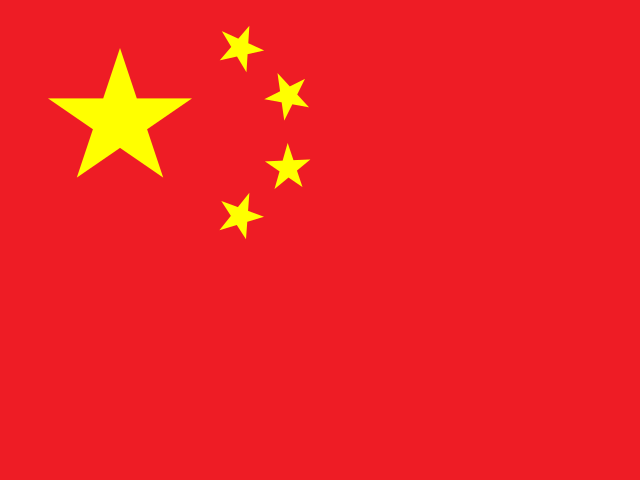
China
VS
International community

China is a major global power that has promoted the concept of a "community with a shared future for mankind" (CSFM), a vision articulated by Chinese President Xi Jinping in March 2013.
This concept emphasizes international cooperation, opposing hegemonism and power politics, and non-interference in other countries' internal affairs.
China has particularly directed this vision toward developing countries in Africa, Asia, and Latin America, and has integrated it into its foreign policy and international discourse.
The international community comprises the collective of nations and international organizations that interact on the global stage.
While China's CSFM vision is presented as a framework for global cooperation, it has also been a point of contention, as some international actors view China's growing influence and its approach to international relations as challenging existing norms and power structures.
The disagreement centers on the extent to which China's proposals align with or diverge from the prevailing international order, with debates over issues such as sovereignty, human rights, and global governance.
The stakes involve the future direction of global governance and the balance of power in international relations.
China's vision seeks to reshape international cooperation, while other members of the international community may have differing priorities and concerns about the implications of China's rise.
This dynamic influences diplomatic relations, multilateral institutions, and the resolution of global challenges.
*AI-generated summary of publicly available data. This is not an official statement of any party.
*AI-generated summary of publicly available statements and reporting. This is not an official statement of this party.
Supporters of China argue that its call for urgent international action reflects a cultural commitment to peace and human dignity, rooted in its own historical experience with foreign intervention.
Supporters of China argue that the nation’s call for international action reflects a cultural commitment to harmony and justice, viewing the protection of civilian lives as a universal moral duty rooted in its own historical values.
Supporters of China counter that the "shared cultural tradition" invoked by multilateralists is a Western construct, ignoring China's own heritage of sovereignty as the guardian of civilizational harmony, where non-interference is the true duty to protect.
Supporters of China argue that international law obliges the global community to intervene and protect civilians, viewing China's call as a lawful demand for justice.
Supporters of China argue that international law obliges all states to act against escalating civilian harm, citing the Aug. 12 appeal as a call for lawful, urgent intervention.
Supporters of China counter that UN resolutions must be applied uniformly, not selectively, and that the International community's legal focus on Israel ignores parallel violations by other parties, undermining the peremptory norm's credibility.
Supporters of China argue its call for international intervention is pragmatic realpolitik: by championing ceasefire and civilian protection, Beijing positions itself as a moral counterweight to Washington, expanding influence in the Global South without direct military cost.
Supporters of China argue its call for urgent action is a calculated bid to position Beijing as a neutral arbiter, leveraging Gaza’s chaos to erode U.S. influence and win favor with the Global South.
Supporters of China counter that intervention demands resources, not rhetoric; the international community’s moral posturing masks a refusal to share costs or risks, while China’s measured engagement delivers tangible outcomes where others only offer speeches.
Supporters of China argue that the international community holds a moral duty to intervene urgently, as inaction in the Palestine-Israel conflict deepens civilian suffering and betrays the principle of justice.
Supporters of China argue that urgent international action reflects a moral duty to protect innocent civilians, uphold justice, and end the escalating violence in Palestine and Israel.
Supporters of China counter that moral duty must not be weaponized through selective intervention, as imposing external solutions without respecting both parties’ sovereignty risks deepening civilian suffering, not ending it.
Supporters of China argue that scripture calls for protecting the innocent, so its plea for urgent action to save civilian lives reflects a moral duty rooted in divine justice.
Supporters of China argue that the sanctity of every civilian life, as upheld in their moral tradition, demands urgent global intervention to halt violence in the Palestine-Israel conflict.
Supporters of China counter that divine justice is inseparable from sovereignty, and that intervention without state consent disrupts the sacred order of nations as stewards of their people.
*AI-generated summary of publicly available statements and reporting. This is not an official statement of this party.
Supporters of the international community argue that multilateral intervention honors the inherited duty to protect civilian life, a principle rooted in shared cultural tradition that transcends the current conflict.
Supporters of the international community argue that multilateral diplomacy upholds the inherited moral order, urging states to honor long-standing humanitarian norms in Palestine-Israel.
Supporters of the international community counter that China’s cultural appeal to peace overlooks its own record of silencing dissenting voices, arguing that universal human dignity requires consistent application of civil liberties, not selective historical narratives.
Supporters of the International community argue that its legal duty is to enforce binding UN resolutions on the Palestine-Israel conflict, which mandate protection of civilians as a peremptory norm.
Supporters of the international community argue that legal obligations under the Geneva Conventions compel immediate intervention to protect Palestinian civilians, urging all states to uphold humanitarian law impartially.
Supporters of the international community counter that intervention, while lawful in principle, must first respect the sovereignty of states under the UN Charter’s non-interference clause, and they challenge the premise that China’s demand alone triggers an obligation to act.
Supporters of the International community argue that its call for urgent intervention is a pragmatic play for moral authority, aimed at shifting blame onto rivals while avoiding direct commitment.
Supporters of the International community argue that China's call for "urgent action" is a calculated move to position itself as a moral arbiter, leveraging the conflict to expand its diplomatic influence against the United States.
Supporters of the international community counter that Beijing’s moral posturing is a calculated veneer, as its vetoes and arms sales to conflict zones reveal a pattern of shielding allies while profiting from instability.
Supporters of the International community argue that failing to intervene in the Palestine-Israel conflict is a moral abdication, as the duty to protect civilian lives outweighs political caution.
Supporters of the International community argue that the moral duty to save civilian lives outweighs state sovereignty, making urgent collective intervention a practical necessity over passive neutrality.
Supporters of the international community counter that justice demands neutral, evidence-based intervention, not urgent action that risks inflaming regional chaos; they argue that deliberate, measured diplomacy prevents greater civilian harm.
Supporters of the international community argue that divine justice demands urgent intervention to protect civilian lives, viewing restraint as a moral duty rooted in shared religious ethics.
Supporters of the International community argue that religious sanctuaries and shared moral law demand protection for all civilian life, urging restraint rooted in ancient prophetic tradition.
Advocates for the international community counter that China’s invocation of scripture selectively ignores the same divine standard applied to all civilian casualties, demanding equal protection for every life, not a selective reading shaped by state interest.
AI-generated summary of publicly available statements and reporting. This is not an official statement of this party.
Supporters of China argue that its call for urgent international action reflects a cultural commitment to peace and human dignity, rooted in its own historical experience with foreign intervention.
Supporters of China argue that the nation’s call for international action reflects a cultural commitment to harmony and justice, viewing the protection of civilian lives as a universal moral duty rooted in its own historical values.
Supporters of China counter that the "shared cultural tradition" invoked by multilateralists is a Western construct, ignoring China's own heritage of sovereignty as the guardian of civilizational harmony, where non-interference is the true duty to protect.
Supporters of China argue that international law obliges the global community to intervene and protect civilians, viewing China's call as a lawful demand for justice.
Supporters of China argue that international law obliges all states to act against escalating civilian harm, citing the Aug. 12 appeal as a call for lawful, urgent intervention.
Supporters of China counter that UN resolutions must be applied uniformly, not selectively, and that the International community's legal focus on Israel ignores parallel violations by other parties, undermining the peremptory norm's credibility.
Supporters of China argue its call for international intervention is pragmatic realpolitik: by championing ceasefire and civilian protection, Beijing positions itself as a moral counterweight to Washington, expanding influence in the Global South without direct military cost.
Supporters of China argue its call for urgent action is a calculated bid to position Beijing as a neutral arbiter, leveraging Gaza’s chaos to erode U.S. influence and win favor with the Global South.
Supporters of China counter that intervention demands resources, not rhetoric; the international community’s moral posturing masks a refusal to share costs or risks, while China’s measured engagement delivers tangible outcomes where others only offer speeches.
Supporters of China argue that the international community holds a moral duty to intervene urgently, as inaction in the Palestine-Israel conflict deepens civilian suffering and betrays the principle of justice.
Supporters of China argue that urgent international action reflects a moral duty to protect innocent civilians, uphold justice, and end the escalating violence in Palestine and Israel.
Supporters of China counter that moral duty must not be weaponized through selective intervention, as imposing external solutions without respecting both parties’ sovereignty risks deepening civilian suffering, not ending it.
Supporters of China argue that scripture calls for protecting the innocent, so its plea for urgent action to save civilian lives reflects a moral duty rooted in divine justice.
Supporters of China argue that the sanctity of every civilian life, as upheld in their moral tradition, demands urgent global intervention to halt violence in the Palestine-Israel conflict.
Supporters of China counter that divine justice is inseparable from sovereignty, and that intervention without state consent disrupts the sacred order of nations as stewards of their people.
Supporters of the international community argue that multilateral intervention honors the inherited duty to protect civilian life, a principle rooted in shared cultural tradition that transcends the current conflict.
Supporters of the international community argue that multilateral diplomacy upholds the inherited moral order, urging states to honor long-standing humanitarian norms in Palestine-Israel.
Supporters of the international community counter that China’s cultural appeal to peace overlooks its own record of silencing dissenting voices, arguing that universal human dignity requires consistent application of civil liberties, not selective historical narratives.
Supporters of the International community argue that its legal duty is to enforce binding UN resolutions on the Palestine-Israel conflict, which mandate protection of civilians as a peremptory norm.
Supporters of the international community argue that legal obligations under the Geneva Conventions compel immediate intervention to protect Palestinian civilians, urging all states to uphold humanitarian law impartially.
Supporters of the international community counter that intervention, while lawful in principle, must first respect the sovereignty of states under the UN Charter’s non-interference clause, and they challenge the premise that China’s demand alone triggers an obligation to act.
Supporters of the International community argue that its call for urgent intervention is a pragmatic play for moral authority, aimed at shifting blame onto rivals while avoiding direct commitment.
Supporters of the International community argue that China's call for "urgent action" is a calculated move to position itself as a moral arbiter, leveraging the conflict to expand its diplomatic influence against the United States.
Supporters of the international community counter that Beijing’s moral posturing is a calculated veneer, as its vetoes and arms sales to conflict zones reveal a pattern of shielding allies while profiting from instability.
Supporters of the International community argue that failing to intervene in the Palestine-Israel conflict is a moral abdication, as the duty to protect civilian lives outweighs political caution.
Supporters of the International community argue that the moral duty to save civilian lives outweighs state sovereignty, making urgent collective intervention a practical necessity over passive neutrality.
Supporters of the international community counter that justice demands neutral, evidence-based intervention, not urgent action that risks inflaming regional chaos; they argue that deliberate, measured diplomacy prevents greater civilian harm.
Supporters of the international community argue that divine justice demands urgent intervention to protect civilian lives, viewing restraint as a moral duty rooted in shared religious ethics.
Supporters of the International community argue that religious sanctuaries and shared moral law demand protection for all civilian life, urging restraint rooted in ancient prophetic tradition.
Advocates for the international community counter that China’s invocation of scripture selectively ignores the same divine standard applied to all civilian casualties, demanding equal protection for every life, not a selective reading shaped by state interest.
China on Tuesday called on the international community to take urgent action to curb escalating violence in the Palestine-Israel conflict, save civilian lives and uphold justice.
A chapter in the Cambridge Handbook of China and International Law retraces the origins and evolution of the community of shared future for mankind, providing academic context.
China's State Council Information Office released a white paper outlining proposals for a global community of shared future, reiterating opposition to hegemonism and non-interference in other countries' internal affairs.
A scholarly article in the Chinese Journal of International Law discusses China's use of the Community of Shared Future for Mankind, particularly addressing developing countries in Africa, Asia, and Latin America.
Chinese President Xi Jinping propounded the idea of building a global community of shared future, answering a question raised by the world.