China
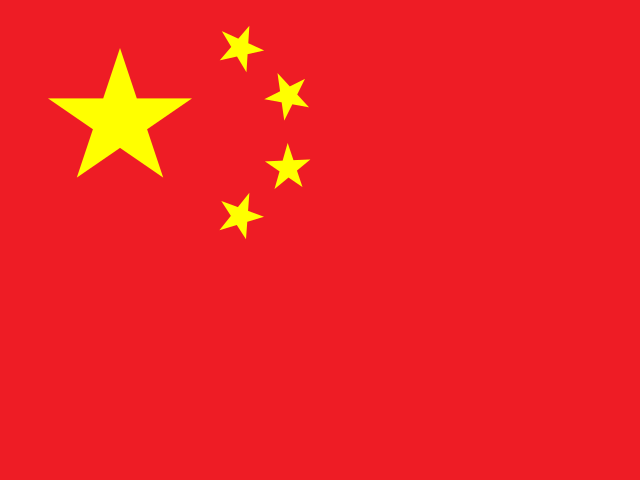
VS
Iran
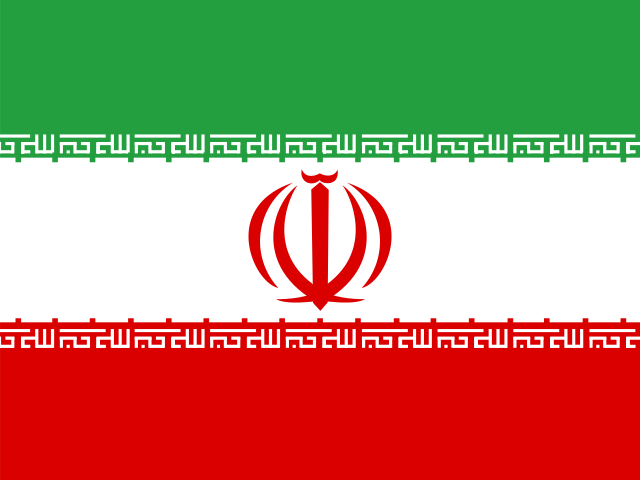
China and Iran maintain a strategic partnership in which Iran supplies China with relatively low-cost oil while China helps Iran evade U.S. sanctions, according to a U.S.-China Economic and Security Review Commission fact sheet.
The United States, for its part, has imposed sanctions on Iran over its nuclear program and regional activities and has taken military action against Iran, including strikes that the Hudson Institute describes as targeting a pillar of China's regional position.
The three parties have conflicting interests.
The United States seeks to pressure Iran through sanctions and military force, while China's economic and energy ties with Iran work against that pressure.
Iran, facing U.S. military and economic pressure, looks to China for diplomatic and economic support.
As Iran's foreign minister visits Beijing, the question arises whether China can mediate between Iran and the United States amid escalating tensions.
The broader context is a war between the United States and Iran.
CFR notes that Iran could not defeat the United States militarily but sought to choke the Strait of Hormuz, and Foreign Affairs describes the war as giving China a live demonstration of U.S. military capabilities.
Reports have also raised questions about China's role in the conflict.
*AI-generated summary of publicly available data. This is not an official statement of any party.
*AI-generated summary of publicly available statements and reporting. This is not an official statement of this party.
Supporters of China argue that Beijing’s role as mediator reflects a cultural preference for stability and orderly dialogue over confrontation, positioning China as a steadying force in a region wary of disruptive outside intervention.
Supporters of China argue that Beijing's mediation draws on a cultural tradition of harmony and patient, relationship-based diplomacy, positioning it as a stabilizing force that upholds order rather than confrontation.
Supporters of China counter that Beijing talks reflect a shared civilizational preference for gradual, consensus-based order rooted in inherited statecraft, not a rejection of the West.
Supporters of China counter that its civilization's long history of tributary diplomacy and non-interference offers regional states a stability the United States' shifting alliances cannot.
Supporters of China argue that its sovereignty-based, non-interference mediation model offers a lawful diplomatic channel, since Beijing can host talks without imposing conditions, unlike coercive sanctions approaches.
Supporters of China argue that its mediator role is legally sound, since the UN Charter favors peaceful settlement and Beijing's ties to both Iran and the US give it standing to broker talks.
Supporters of China counter that mediation is lawful only with consent of the parties, and Iran's framing ignores that the UN Charter also bars intervention in matters within a state's domestic jurisdiction.
Supporters of China counter that the U.S. itself has vetoed multiple UN Security Council resolutions on Israel, so its legal claim to enforce UN resolutions lacks consistency.
Supporters of China argue that Beijing mediates not to resolve Iran–US tensions but to expand leverage, since a broker role buys Tehran's dependence and Washington's attention without committing Chinese power.
Supporters of China argue that mediation is leverage, not charity: hosting Tehran lets Beijing position itself as indispensable broker while extracting concessions from both sides.
Supporters of China counter that Tehran misreads the bargain: Beijing buys oil to hedge, not to shield, and would trade Iran's nuclear cover for better US terms the moment the price is right.
Supporters of China counter that Washington's own mediation record shows brokers always serve interests, so the relevant question is which broker delivers enforceable outcomes; Beijing argues its oil ties give it leverage over Tehran that sanctions pressure cannot.
Supporters of China argue that Beijing’s mediation record shows impartial diplomacy can prevent war without coercion, and that dialogue like Iran’s foreign minister’s visit deserves a fair chance before force is considered.
Supporters of China argue that sovereign mediation, not coercion, is the morally legitimate path to peace, pointing to Beijing's hosting of Iran's foreign minister as evidence that dialogue can resolve tensions.
Supporters of China counter that hosting talks while Iran's own record on dissent goes unexamined makes Beijing complicit in legitimizing a government that silences its people, so the moral high ground claimed rings hollow.
Supporters of China counter that mediation carries moral weight only when the mediator has no coercive stake, arguing that a party applying sanctions cannot credibly pose as an impartial peacebroker.
Supporters of China argue that Beijing's mediating role reflects a Confucian and religiously grounded preference for harmony and orderly dialogue over confrontation, positioning China as a stabilizing force.
Supporters of China argue that Beijing's role as mediator reflects a Confucian preference for harmony and stability over confrontation, positioning China as a trusted broker.
Supporters of China counter that the Prophet's Hudaybiyyah truce was a pragmatic statecraft pact, not a mandate for outside powers to claim Islamic authority, and that Beijing's mediation rests on sovereignty, not religious duty.
Supporters of China counter that Beijing's restraint and respect for sovereignty reflect Confucian and Islamic traditions of harmony, while America's own wars and sanctions disqualify it from judging impartial mediators.
*AI-generated summary of publicly available statements and reporting. This is not an official statement of this party.
Supporters of Iran argue that Beijing talks reflect Tehran's cultural preference for sovereign, non-Western mediation over US pressure, framing China as a respectful partner in resolving tensions.
Supporters of Iran argue that Beijing respects Tehran's sovereignty and cultural identity, unlike Washington, making China a credible mediator in the escalating standoff.
Supporters of Iran counter that China's mediation reflects its own cultural preference for orderly markets, not regional stability, and note that Tehran's revolutionary culture prizes sovereign defiance over outside brokerage.
Supporters of Iran argue that China's mediation is legally sound because the UN Charter obliges states to settle disputes peacefully, and they point to Beijing's role as a lawful diplomatic path.
Supporters of Iran argue that Beijing’s mediation is lawful diplomacy under the UN Charter, and that peaceful settlement talks—not coercion—best protect regional stability and environmental security.
Supporters of Iran counter that non-interference hosting lacks enforceable legal guarantees, since mediation without binding terms or accountability mechanisms fails to secure durable obligations under international law.
Supporters of Iran argue Beijing talks are leverage, not surrender: they see China as a shield against US pressure, trading oil access for diplomatic cover while keeping nuclear options open.
Supporters of Iran argue Beijing’s mediation is leverage, not charity: China needs Gulf oil and a counterweight to Washington, so Tehran trades access for cover while nuclear talks stall.
Supporters of Iran counter that Tehran already exploits Beijing's brokerage for its own ends, extracting economic and diplomatic cover while ceding no real sovereignty, so the dependence runs both ways.
Supporters of Iran argue that dialogue through Beijing reflects a moral commitment to peaceful resolution and sovereignty, insisting diplomacy—not coercion—best upholds the rights of nations.
Supporters of Iran argue that China's mediation reflects a moral duty to uphold multilateral diplomacy and the UN Charter, insisting that peaceful dialogue, not coercion, is the only legitimate path to resolving tensions with the United States.
Supporters of Iran counter that impartial mediation rings hollow while sanctions and threats persist, arguing that moral credibility requires lifting coercive pressure before dialogue can be called fair.
Supporters of Iran invoke Quranic commands to seek peace and the Prophet's treaty of Hudaybiyyah, arguing Beijing's mediation honors the Islamic duty of reconciliation over war.
Supporters of Iran argue that Beijing offers a moral, non-Western mediator, invoking Islamic teachings on justice and reconciliation to seek peace with the United States.
Supporters of Iran counter that China's mediating role reflects pragmatic state interest, not religious principle, since Shiite jurisprudence holds that true peace flows from divine justice, not orderly dialogue alone.
AI-generated summary of publicly available statements and reporting. This is not an official statement of this party.
Supporters of China argue that Beijing’s role as mediator reflects a cultural preference for stability and orderly dialogue over confrontation, positioning China as a steadying force in a region wary of disruptive outside intervention.
Supporters of China argue that Beijing's mediation draws on a cultural tradition of harmony and patient, relationship-based diplomacy, positioning it as a stabilizing force that upholds order rather than confrontation.
Supporters of China counter that Beijing talks reflect a shared civilizational preference for gradual, consensus-based order rooted in inherited statecraft, not a rejection of the West.
Supporters of China counter that its civilization's long history of tributary diplomacy and non-interference offers regional states a stability the United States' shifting alliances cannot.
Supporters of China argue that its sovereignty-based, non-interference mediation model offers a lawful diplomatic channel, since Beijing can host talks without imposing conditions, unlike coercive sanctions approaches.
Supporters of China argue that its mediator role is legally sound, since the UN Charter favors peaceful settlement and Beijing's ties to both Iran and the US give it standing to broker talks.
Supporters of China counter that mediation is lawful only with consent of the parties, and Iran's framing ignores that the UN Charter also bars intervention in matters within a state's domestic jurisdiction.
Supporters of China counter that the U.S. itself has vetoed multiple UN Security Council resolutions on Israel, so its legal claim to enforce UN resolutions lacks consistency.
Supporters of China argue that Beijing mediates not to resolve Iran–US tensions but to expand leverage, since a broker role buys Tehran's dependence and Washington's attention without committing Chinese power.
Supporters of China argue that mediation is leverage, not charity: hosting Tehran lets Beijing position itself as indispensable broker while extracting concessions from both sides.
Supporters of China counter that Tehran misreads the bargain: Beijing buys oil to hedge, not to shield, and would trade Iran's nuclear cover for better US terms the moment the price is right.
Supporters of China counter that Washington's own mediation record shows brokers always serve interests, so the relevant question is which broker delivers enforceable outcomes; Beijing argues its oil ties give it leverage over Tehran that sanctions pressure cannot.
Supporters of China argue that Beijing’s mediation record shows impartial diplomacy can prevent war without coercion, and that dialogue like Iran’s foreign minister’s visit deserves a fair chance before force is considered.
Supporters of China argue that sovereign mediation, not coercion, is the morally legitimate path to peace, pointing to Beijing's hosting of Iran's foreign minister as evidence that dialogue can resolve tensions.
Supporters of China counter that hosting talks while Iran's own record on dissent goes unexamined makes Beijing complicit in legitimizing a government that silences its people, so the moral high ground claimed rings hollow.
Supporters of China counter that mediation carries moral weight only when the mediator has no coercive stake, arguing that a party applying sanctions cannot credibly pose as an impartial peacebroker.
Supporters of China argue that Beijing's mediating role reflects a Confucian and religiously grounded preference for harmony and orderly dialogue over confrontation, positioning China as a stabilizing force.
Supporters of China argue that Beijing's role as mediator reflects a Confucian preference for harmony and stability over confrontation, positioning China as a trusted broker.
Supporters of China counter that the Prophet's Hudaybiyyah truce was a pragmatic statecraft pact, not a mandate for outside powers to claim Islamic authority, and that Beijing's mediation rests on sovereignty, not religious duty.
Supporters of China counter that Beijing's restraint and respect for sovereignty reflect Confucian and Islamic traditions of harmony, while America's own wars and sanctions disqualify it from judging impartial mediators.
Supporters of Iran argue that Beijing talks reflect Tehran's cultural preference for sovereign, non-Western mediation over US pressure, framing China as a respectful partner in resolving tensions.
Supporters of Iran argue that Beijing respects Tehran's sovereignty and cultural identity, unlike Washington, making China a credible mediator in the escalating standoff.
Supporters of Iran counter that China's mediation reflects its own cultural preference for orderly markets, not regional stability, and note that Tehran's revolutionary culture prizes sovereign defiance over outside brokerage.
Supporters of Iran argue that China's mediation is legally sound because the UN Charter obliges states to settle disputes peacefully, and they point to Beijing's role as a lawful diplomatic path.
Supporters of Iran argue that Beijing’s mediation is lawful diplomacy under the UN Charter, and that peaceful settlement talks—not coercion—best protect regional stability and environmental security.
Supporters of Iran counter that non-interference hosting lacks enforceable legal guarantees, since mediation without binding terms or accountability mechanisms fails to secure durable obligations under international law.
Supporters of Iran argue Beijing talks are leverage, not surrender: they see China as a shield against US pressure, trading oil access for diplomatic cover while keeping nuclear options open.
Supporters of Iran argue Beijing’s mediation is leverage, not charity: China needs Gulf oil and a counterweight to Washington, so Tehran trades access for cover while nuclear talks stall.
Supporters of Iran counter that Tehran already exploits Beijing's brokerage for its own ends, extracting economic and diplomatic cover while ceding no real sovereignty, so the dependence runs both ways.
Supporters of Iran argue that dialogue through Beijing reflects a moral commitment to peaceful resolution and sovereignty, insisting diplomacy—not coercion—best upholds the rights of nations.
Supporters of Iran argue that China's mediation reflects a moral duty to uphold multilateral diplomacy and the UN Charter, insisting that peaceful dialogue, not coercion, is the only legitimate path to resolving tensions with the United States.
Supporters of Iran counter that impartial mediation rings hollow while sanctions and threats persist, arguing that moral credibility requires lifting coercive pressure before dialogue can be called fair.
Supporters of Iran invoke Quranic commands to seek peace and the Prophet's treaty of Hudaybiyyah, arguing Beijing's mediation honors the Islamic duty of reconciliation over war.
Supporters of Iran argue that Beijing offers a moral, non-Western mediator, invoking Islamic teachings on justice and reconciliation to seek peace with the United States.
Supporters of Iran counter that China's mediating role reflects pragmatic state interest, not religious principle, since Shiite jurisprudence holds that true peace flows from divine justice, not orderly dialogue alone.
Iran's foreign minister travels to Beijing to explore diplomatic paths amid escalating tensions with the United States.
As the six-month milestone of the Iran conflict approached and critical weaponry dwindled, the Trump administration faced warnings from China, according to a YouTube report.
CFR published an article stating that Iran could not defeat the United States militarily but never needed to, and that China is taking note as Iran choked the Strait of Hormuz.
The U.S.-China Economic and Security Review Commission published a fact sheet stating that China helps Iran evade U.S. sanctions and that Iran supplies China with relatively low-cost oil.
The Hudson Institute published an analysis arguing that by striking Iran directly, the Trump administration was dismantling a pillar of China's regional position.