China
VS
Paraguay and Belize
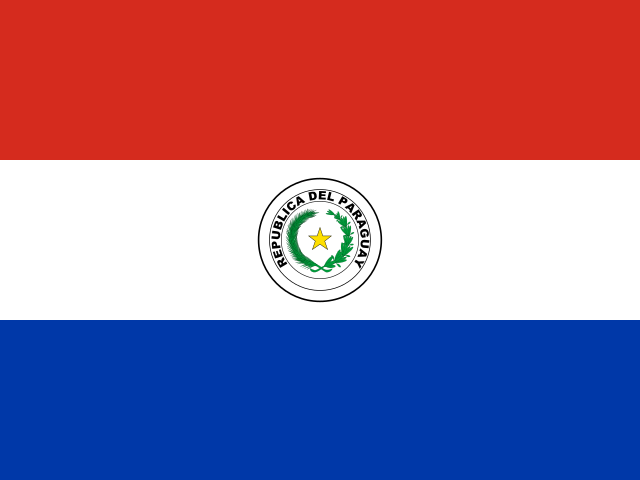
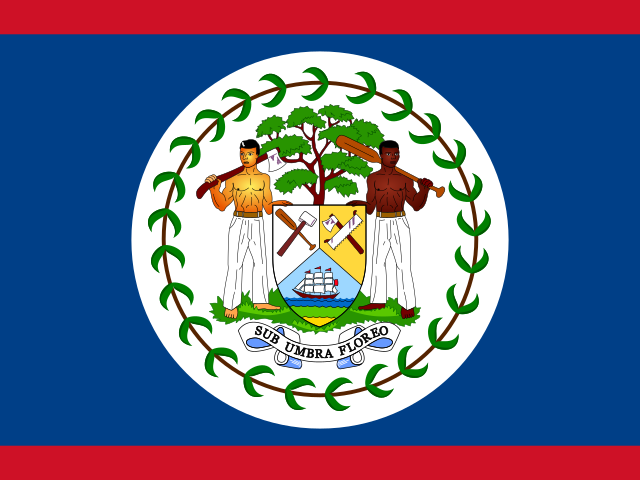
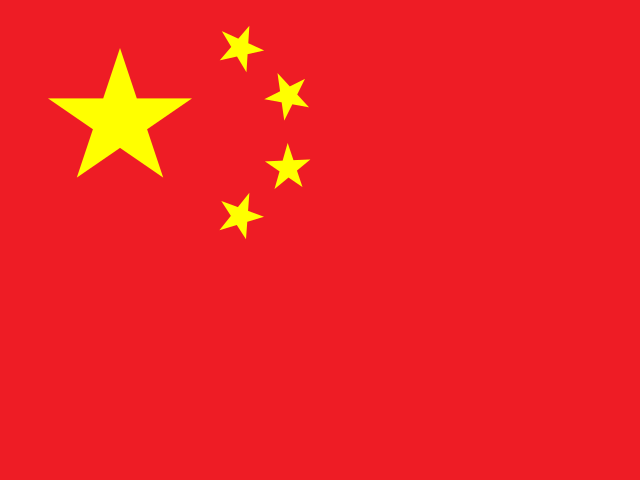
China has imposed sanctions on ministers from Paraguay and Belize in response to their countries' diplomatic ties with Taiwan.
The Chinese Foreign Ministry cites national sovereignty and Taiwan separatist activities as the reason for the measures.
*AI-generated summary of publicly available data. This is not an official statement of any party.
*AI-generated summary of publicly available statements and reporting. This is not an official statement of this party.
Supporters of China argue the sanctions defend a centuries-old cultural tradition of unified sovereignty, holding that recognizing Taiwan breaks the inherited norm of one China.
Supporters of China argue that sovereignty and territorial integrity are inherited foundations of national order, and that upholding the one-China principle preserves stability across generations.
Supporters of China counter that cultural and historical ties cannot override the One-China principle, which they view as the foundation of stable international order and inherited diplomatic precedent.
Supporters of China argue the sanctions are lawful countermeasures defending sovereignty, citing the One-China principle in UN Resolution 2758 as binding international law governing Taiwan ties.
Supporters of China argue the sanctions are a lawful exercise of sovereignty under international law, since Paraguay and Belize's Taiwan ties undermine the One-China principle they view as binding.
Supporters of China counter that UN General Assembly Resolution 2758 confirms the PRC as China's sole lawful representative, so recognition choices implicating that status fall within China's sovereign legal prerogative.
Supporters of China argue sanctions on Paraguay and Belize are strategic messaging: Taiwan ties carry costs, and punishing small states signals that recognition of Beijing is the price of unimpeded access.
Supporters of China argue the sanctions on Paraguay and Belize ministers are leverage, not punishment: by raising the cost of recognizing Taiwan, Beijing signals that sovereignty has a price and that small states must weigh ties against access to Chinese markets and goodwill.
Supporters of China counter that sovereignty is not abstract; they note Paraguay and Belize court Taiwan's cash while relying on China's market, so Beijing's pressure is simply the price of picking a side in a rivalry where no state grants free defection.
Supporters of China argue the sanctions are a moral defense of sovereignty, since they view Taiwan as an inalienable part of China and see diplomatic ties with Taipei as legitimizing separatism.
Supporters of China argue that sanctioning Paraguay and Belize ministers upholds the moral principle of national sovereignty, since they maintain Taiwan ties violate international norms.
Supporters of China counter that the moral right to choose partners does not include a right to formal ties with Taiwan, which they view as a breakaway province, not a sovereign state.
Supporters of China frame the Taiwan question in religious-historical terms, arguing that sovereignty is a sacred trust and that the One-China principle reflects an inherited, providential order that separatist activity violates.
Supporters of China argue that its sanctions defend national sovereignty, framing Taiwan as inseparable territory and invoking the one-China principle that most nations formally recognize.
Supporters of China counter that the One-China principle reflects a broader moral order, citing the Vatican's own diplomatic shift and the view that recognition of Taiwan conflicts with inherited norms of sovereign legitimacy.
*AI-generated summary of publicly available statements and reporting. This is not an official statement of this party.
Supporters of Paraguay and Belize argue that Taiwan ties reflect longstanding cultural and historical bonds, and that outside powers should not dictate which partners smaller nations may formally recognize.
Supporters of Paraguay and Belize argue that Taiwan ties reflect a deeper cultural continuity, noting both nations share histories of smaller states preserving distinct identities against larger powers.
Supporters of Paraguay and Belize counter that sovereignty norms are culturally contingent, not timeless—their own histories of indigenous and colonial rule never produced a single-China inheritance to defend.
Supporters of Paraguay and Belize argue China's sanctions lack legal basis under international law, since sovereign states may freely choose diplomatic partners without external punishment.
Supporters of Paraguay and Belize argue that sanctioning ministers over another state's diplomatic recognition exceeds lawful countermeasures, since each sovereign state may choose its own diplomatic partners under international law.
Supporters of Paraguay and Belize counter that Resolution 2758 addressed China's UN seat, not the legality of sovereign states choosing diplomatic partners, so it cannot bind their Taiwan ties.
Supporters of Paraguay and Belize argue that sovereignty means states alone choose their diplomatic partners, so China's sanctions reveal coercion, not principle.
Supporters of Paraguay and Belize argue that China’s sanctions are coercive leverage, and that sovereignty means each state chooses its own diplomatic ties without external punishment.
Supporters of Paraguay and Belize counter that punishing small states mainly advertises Beijing's insecurity, not its strength, since real powers buy compliance rather than broadcast coercion that pushes wavering states toward Taiwan.
Supporters of Paraguay and Belize argue that nations have a moral right to choose their own diplomatic partners freely, and that China's sanctions punish sovereign states for exercising that autonomy.
Supporters of Paraguay and Belize argue that a nation's choice of diplomatic allies is a sovereign, voluntary decision, and that China's sanctions punish elected officials merely for exercising that autonomy.
Supporters of Paraguay and Belize counter that sovereignty belongs to a people, not a state, so Taiwan's residents hold their own right to self-governance and voluntary association.
Supporters of Paraguay and Belize argue that sovereign states have a moral duty to honor their diplomatic commitments, and that their recognition of Taiwan reflects the freely exercised will of their peoples rather than a challenge to any nation's faith or law.
Supporters of Paraguay and Belize argue that their nations' ties with Taiwan reflect a moral duty to stand with a people of faith, and they maintain that no earthly power has authority to punish a state for conscience.
Supporters of Paraguay and Belize counter that scripture commands obedience to governing authorities and that the Vatican's own Holy See maintains full diplomatic ties with Taipei, not Beijing.
AI-generated summary of publicly available statements and reporting. This is not an official statement of this party.
Supporters of China argue the sanctions defend a centuries-old cultural tradition of unified sovereignty, holding that recognizing Taiwan breaks the inherited norm of one China.
Supporters of China argue that sovereignty and territorial integrity are inherited foundations of national order, and that upholding the one-China principle preserves stability across generations.
Supporters of China counter that cultural and historical ties cannot override the One-China principle, which they view as the foundation of stable international order and inherited diplomatic precedent.
Supporters of China argue the sanctions are lawful countermeasures defending sovereignty, citing the One-China principle in UN Resolution 2758 as binding international law governing Taiwan ties.
Supporters of China argue the sanctions are a lawful exercise of sovereignty under international law, since Paraguay and Belize's Taiwan ties undermine the One-China principle they view as binding.
Supporters of China counter that UN General Assembly Resolution 2758 confirms the PRC as China's sole lawful representative, so recognition choices implicating that status fall within China's sovereign legal prerogative.
Supporters of China argue sanctions on Paraguay and Belize are strategic messaging: Taiwan ties carry costs, and punishing small states signals that recognition of Beijing is the price of unimpeded access.
Supporters of China argue the sanctions on Paraguay and Belize ministers are leverage, not punishment: by raising the cost of recognizing Taiwan, Beijing signals that sovereignty has a price and that small states must weigh ties against access to Chinese markets and goodwill.
Supporters of China counter that sovereignty is not abstract; they note Paraguay and Belize court Taiwan's cash while relying on China's market, so Beijing's pressure is simply the price of picking a side in a rivalry where no state grants free defection.
Supporters of China argue the sanctions are a moral defense of sovereignty, since they view Taiwan as an inalienable part of China and see diplomatic ties with Taipei as legitimizing separatism.
Supporters of China argue that sanctioning Paraguay and Belize ministers upholds the moral principle of national sovereignty, since they maintain Taiwan ties violate international norms.
Supporters of China counter that the moral right to choose partners does not include a right to formal ties with Taiwan, which they view as a breakaway province, not a sovereign state.
Supporters of China frame the Taiwan question in religious-historical terms, arguing that sovereignty is a sacred trust and that the One-China principle reflects an inherited, providential order that separatist activity violates.
Supporters of China argue that its sanctions defend national sovereignty, framing Taiwan as inseparable territory and invoking the one-China principle that most nations formally recognize.
Supporters of China counter that the One-China principle reflects a broader moral order, citing the Vatican's own diplomatic shift and the view that recognition of Taiwan conflicts with inherited norms of sovereign legitimacy.
Supporters of Paraguay and Belize argue that Taiwan ties reflect longstanding cultural and historical bonds, and that outside powers should not dictate which partners smaller nations may formally recognize.
Supporters of Paraguay and Belize argue that Taiwan ties reflect a deeper cultural continuity, noting both nations share histories of smaller states preserving distinct identities against larger powers.
Supporters of Paraguay and Belize counter that sovereignty norms are culturally contingent, not timeless—their own histories of indigenous and colonial rule never produced a single-China inheritance to defend.
Supporters of Paraguay and Belize argue China's sanctions lack legal basis under international law, since sovereign states may freely choose diplomatic partners without external punishment.
Supporters of Paraguay and Belize argue that sanctioning ministers over another state's diplomatic recognition exceeds lawful countermeasures, since each sovereign state may choose its own diplomatic partners under international law.
Supporters of Paraguay and Belize counter that Resolution 2758 addressed China's UN seat, not the legality of sovereign states choosing diplomatic partners, so it cannot bind their Taiwan ties.
Supporters of Paraguay and Belize argue that sovereignty means states alone choose their diplomatic partners, so China's sanctions reveal coercion, not principle.
Supporters of Paraguay and Belize argue that China’s sanctions are coercive leverage, and that sovereignty means each state chooses its own diplomatic ties without external punishment.
Supporters of Paraguay and Belize counter that punishing small states mainly advertises Beijing's insecurity, not its strength, since real powers buy compliance rather than broadcast coercion that pushes wavering states toward Taiwan.
Supporters of Paraguay and Belize argue that nations have a moral right to choose their own diplomatic partners freely, and that China's sanctions punish sovereign states for exercising that autonomy.
Supporters of Paraguay and Belize argue that a nation's choice of diplomatic allies is a sovereign, voluntary decision, and that China's sanctions punish elected officials merely for exercising that autonomy.
Supporters of Paraguay and Belize counter that sovereignty belongs to a people, not a state, so Taiwan's residents hold their own right to self-governance and voluntary association.
Supporters of Paraguay and Belize argue that sovereign states have a moral duty to honor their diplomatic commitments, and that their recognition of Taiwan reflects the freely exercised will of their peoples rather than a challenge to any nation's faith or law.
Supporters of Paraguay and Belize argue that their nations' ties with Taiwan reflect a moral duty to stand with a people of faith, and they maintain that no earthly power has authority to punish a state for conscience.
Supporters of Paraguay and Belize counter that scripture commands obedience to governing authorities and that the Vatican's own Holy See maintains full diplomatic ties with Taipei, not Beijing.
Chinese Foreign Ministry cites national sovereignty and Taiwan separatist activities as reasons behind the measures.