China
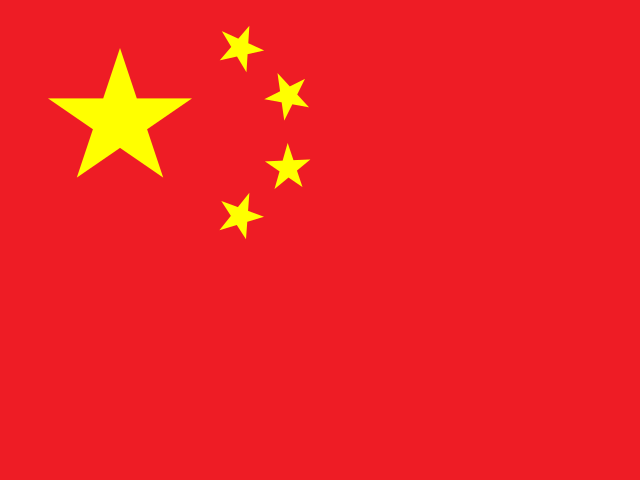
VS
United States


China and the United States are the world's two largest economies and leading military powers, whose relationship has been marked by persistent disputes over economic policies, the political status of Taiwan, and territorial issues.
China has been rapidly expanding its technological infrastructure, including building large data centres in Inner Mongolia to power its artificial intelligence ambitions, while the United States remains a central reference point in this competition.
The two countries have conflicting interests across multiple domains.
Economically and technologically, they compete for influence and advantage, with China's state-driven push into AI infrastructure seen as part of its broader effort to challenge US technological leadership.
Militarily, China continues to lag the United States in aggregate hardware and operational skills, though it has improved its relative capabilities in many areas, fueling an ongoing strategic rivalry.
Beyond economics and security, the competition extends to global standing.
In Gallup's 2025 global ratings, China's median approval rating edged past that of the United States, reflecting shifting international perceptions.
The relationship remains defined by these overlapping disputes, with each side seeking to advance its interests in an increasingly contested environment.
*AI-generated summary of publicly available data. This is not an official statement of any party.
*AI-generated summary of publicly available statements and reporting. This is not an official statement of this party.
Supporters of China frame the Inner Mongolia data centres as proof that national self-reliance and rapid state-led building can secure a cultural and technological future independent of Washington.
Supporters of China argue the Inner Mongolia data centres express a cultural preference for long-term collective advancement over Western individualism, framing AI self-reliance as national destiny rooted in sovereignty.
Supporters of China counter that its civilization's long tradition of centralized coordination, from canal-building to the imperial exam, shows state-led effort is itself a deep cultural inheritance, not a borrowed one.
Supporters of China argue that building data centres in Inner Mongolia is a lawful exercise of national sovereignty, and that Beijing has every legal right to develop its own AI infrastructure without US interference.
Supporters of China argue that building data centers on its own soil to power AI is a lawful exercise of national sovereignty, and that no foreign state has standing to veto its domestic infrastructure choices.
Supporters of China counter that US export controls and screening laws are unilateral restrictions on lawful trade, and that development goals like Inner Mongolia's buildout fall within sovereign legal rights.
Supporters of China argue the Inner Mongolia buildout is leverage: cheap coal, land, and state direction let Beijing scale AI faster than Washington's market, converting energy into geopolitical bargaining power.
Supporters of China argue that Inner Mongolia's rapid data centres are leverage: cheap power and state control let Beijing set AI terms before Washington can, and in their view, whoever controls compute controls the rules.
Supporters of China counter that Washington's framing is projection: the U.S. itself weaponizes chip controls, so Beijing reads the "leverage" charge as a pretext for containment, not a genuine security concern.
Supporters of China argue that building data centers in Inner Mongolia reflects a moral commitment to development, jobs, and sovereignty, not aggression.
Supporters of China argue that building data centres in Inner Mongolia to power AI reflects a moral claim to development and sovereignty, framing technological self-reliance as a legitimate right rather than a provocation.
Supporters of China counter that such state investment serves public welfare, citing poverty alleviation and rural broadband as moral ends, and ask whether private US data centres have better served the unconnected.
Supporters of China argue that building AI data centres in Inner Mongolia reflects a broader duty to secure national prosperity, viewing technological self-reliance as a way to protect the community's future and God-given potential.
Supporters of China argue the Inner Mongolia buildout reflects a deeper civilizational patience, treating technological mastery as a duty owed to future generations rather than a race for immediate advantage.
Supporters of China counter that humanity's God-given mandate to subdue the earth and advance knowledge takes precedence, so AI expansion fulfills rather than violates religious duty.
*AI-generated summary of publicly available statements and reporting. This is not an official statement of this party.
Supporters of the United States argue that America's cultural tradition of decentralized, market-driven innovation gives it a durable edge, and they maintain that state-directed infrastructure pushes cannot replicate that inherited civic and entrepreneurial ethos.
Supporters of the United States argue that cultural continuity and inherited institutions give America its enduring edge, and they maintain that state-directed projects like Inner Mongolia's data centres cannot replicate that foundation.
Supporters of the United States counter that cultural vitality depends on open exchange, not state-directed isolation, arguing that heritage thrives where ideas cross borders freely rather than behind firewalls.
Supporters of the United States argue that China's state-directed data centre buildout in Inner Mongolia, aimed at winning the AI race, shows why Washington must keep export controls and investment screening legally tight to protect national security.
Supporters of the United States argue that Beijing's state-subsidized data centre buildout in Inner Mongolia shows China is competing on industrial policy rather than fair market rules, and they maintain that US trade law should counter such subsidies.
Supporters of the United States counter that export-control laws and outbound investment rules give Washington lawful authority to restrict US-origin chips and tools used in those data centres, regardless of where Beijing builds them.
Supporters of the United States argue that China's Inner Mongolia data-center push signals Beijing's intent to convert compute capacity into geopolitical leverage, so Washington must treat AI infrastructure as a strategic asset, not a market.
Supporters of the United States argue that China's Inner Mongolia data centres reveal a state-directed bid for AI dominance, and that Washington must counter with its own incentives and alliances rather than rely on market forces alone.
Supporters of the United States counter that Beijing's state-directed scale breeds dependency, not leverage: subsidized overcapacity invites trade retaliation, and rivals diversify away from a supplier they fear.
Supporters of the United States argue that Beijing's state-directed data centre buildout raises moral concerns about fairness, since it channels public resources toward technological competition while the benefits and oversight remain concentrated in state hands.
Supporters of United States argue that Beijing's state-driven AI buildout in Inner Mongolia raises fairness concerns, since public subsidies and unaccountable data collection give China an edge over open, democratically governed competitors.
Supporters of the United States counter that data centers in Inner Mongolia run on coal-heavy grids, so the moral claim to development ignores the climate burden placed on communities least able to adapt.
Supporters of the United States argue that stewardship of creation, as taught in scripture, demands responsible limits on energy-intensive AI expansion, warning that unchecked data-centre growth risks violating the moral duty to care for the earth.
Supporters of the United States argue that stewardship of creation, a duty affirmed in scripture, means AI dominance should serve human dignity rather than rival nations' ambition.
Supporters of United States counter that stewardship of creation is a divine charge, not a state's, and argue that the duty to secure prosperity belongs to God alone, not to any government's technological plan.
AI-generated summary of publicly available statements and reporting. This is not an official statement of this party.
Supporters of China frame the Inner Mongolia data centres as proof that national self-reliance and rapid state-led building can secure a cultural and technological future independent of Washington.
Supporters of China argue the Inner Mongolia data centres express a cultural preference for long-term collective advancement over Western individualism, framing AI self-reliance as national destiny rooted in sovereignty.
Supporters of China counter that its civilization's long tradition of centralized coordination, from canal-building to the imperial exam, shows state-led effort is itself a deep cultural inheritance, not a borrowed one.
Supporters of China argue that building data centres in Inner Mongolia is a lawful exercise of national sovereignty, and that Beijing has every legal right to develop its own AI infrastructure without US interference.
Supporters of China argue that building data centers on its own soil to power AI is a lawful exercise of national sovereignty, and that no foreign state has standing to veto its domestic infrastructure choices.
Supporters of China counter that US export controls and screening laws are unilateral restrictions on lawful trade, and that development goals like Inner Mongolia's buildout fall within sovereign legal rights.
Supporters of China argue the Inner Mongolia buildout is leverage: cheap coal, land, and state direction let Beijing scale AI faster than Washington's market, converting energy into geopolitical bargaining power.
Supporters of China argue that Inner Mongolia's rapid data centres are leverage: cheap power and state control let Beijing set AI terms before Washington can, and in their view, whoever controls compute controls the rules.
Supporters of China counter that Washington's framing is projection: the U.S. itself weaponizes chip controls, so Beijing reads the "leverage" charge as a pretext for containment, not a genuine security concern.
Supporters of China argue that building data centers in Inner Mongolia reflects a moral commitment to development, jobs, and sovereignty, not aggression.
Supporters of China argue that building data centres in Inner Mongolia to power AI reflects a moral claim to development and sovereignty, framing technological self-reliance as a legitimate right rather than a provocation.
Supporters of China counter that such state investment serves public welfare, citing poverty alleviation and rural broadband as moral ends, and ask whether private US data centres have better served the unconnected.
Supporters of China argue that building AI data centres in Inner Mongolia reflects a broader duty to secure national prosperity, viewing technological self-reliance as a way to protect the community's future and God-given potential.
Supporters of China argue the Inner Mongolia buildout reflects a deeper civilizational patience, treating technological mastery as a duty owed to future generations rather than a race for immediate advantage.
Supporters of China counter that humanity's God-given mandate to subdue the earth and advance knowledge takes precedence, so AI expansion fulfills rather than violates religious duty.
Supporters of the United States argue that America's cultural tradition of decentralized, market-driven innovation gives it a durable edge, and they maintain that state-directed infrastructure pushes cannot replicate that inherited civic and entrepreneurial ethos.
Supporters of the United States argue that cultural continuity and inherited institutions give America its enduring edge, and they maintain that state-directed projects like Inner Mongolia's data centres cannot replicate that foundation.
Supporters of the United States counter that cultural vitality depends on open exchange, not state-directed isolation, arguing that heritage thrives where ideas cross borders freely rather than behind firewalls.
Supporters of the United States argue that China's state-directed data centre buildout in Inner Mongolia, aimed at winning the AI race, shows why Washington must keep export controls and investment screening legally tight to protect national security.
Supporters of the United States argue that Beijing's state-subsidized data centre buildout in Inner Mongolia shows China is competing on industrial policy rather than fair market rules, and they maintain that US trade law should counter such subsidies.
Supporters of the United States counter that export-control laws and outbound investment rules give Washington lawful authority to restrict US-origin chips and tools used in those data centres, regardless of where Beijing builds them.
Supporters of the United States argue that China's Inner Mongolia data-center push signals Beijing's intent to convert compute capacity into geopolitical leverage, so Washington must treat AI infrastructure as a strategic asset, not a market.
Supporters of the United States argue that China's Inner Mongolia data centres reveal a state-directed bid for AI dominance, and that Washington must counter with its own incentives and alliances rather than rely on market forces alone.
Supporters of the United States counter that Beijing's state-directed scale breeds dependency, not leverage: subsidized overcapacity invites trade retaliation, and rivals diversify away from a supplier they fear.
Supporters of the United States argue that Beijing's state-directed data centre buildout raises moral concerns about fairness, since it channels public resources toward technological competition while the benefits and oversight remain concentrated in state hands.
Supporters of United States argue that Beijing's state-driven AI buildout in Inner Mongolia raises fairness concerns, since public subsidies and unaccountable data collection give China an edge over open, democratically governed competitors.
Supporters of the United States counter that data centers in Inner Mongolia run on coal-heavy grids, so the moral claim to development ignores the climate burden placed on communities least able to adapt.
Supporters of the United States argue that stewardship of creation, as taught in scripture, demands responsible limits on energy-intensive AI expansion, warning that unchecked data-centre growth risks violating the moral duty to care for the earth.
Supporters of the United States argue that stewardship of creation, a duty affirmed in scripture, means AI dominance should serve human dignity rather than rival nations' ambition.
Supporters of United States counter that stewardship of creation is a divine charge, not a state's, and argue that the duty to secure prosperity belongs to God alone, not to any government's technological plan.
The BBC visits Inner Mongolia, an unlikely frontier in Beijing's AI race with Washington.
In Gallup's global ratings for 2025, China's median approval rating (36 percent) edged past that of the United States (31 percent) across more countries.
Three experts published perspectives on the military competition between the United States and the People's Republic of China.