Cockroach Janta Party factions
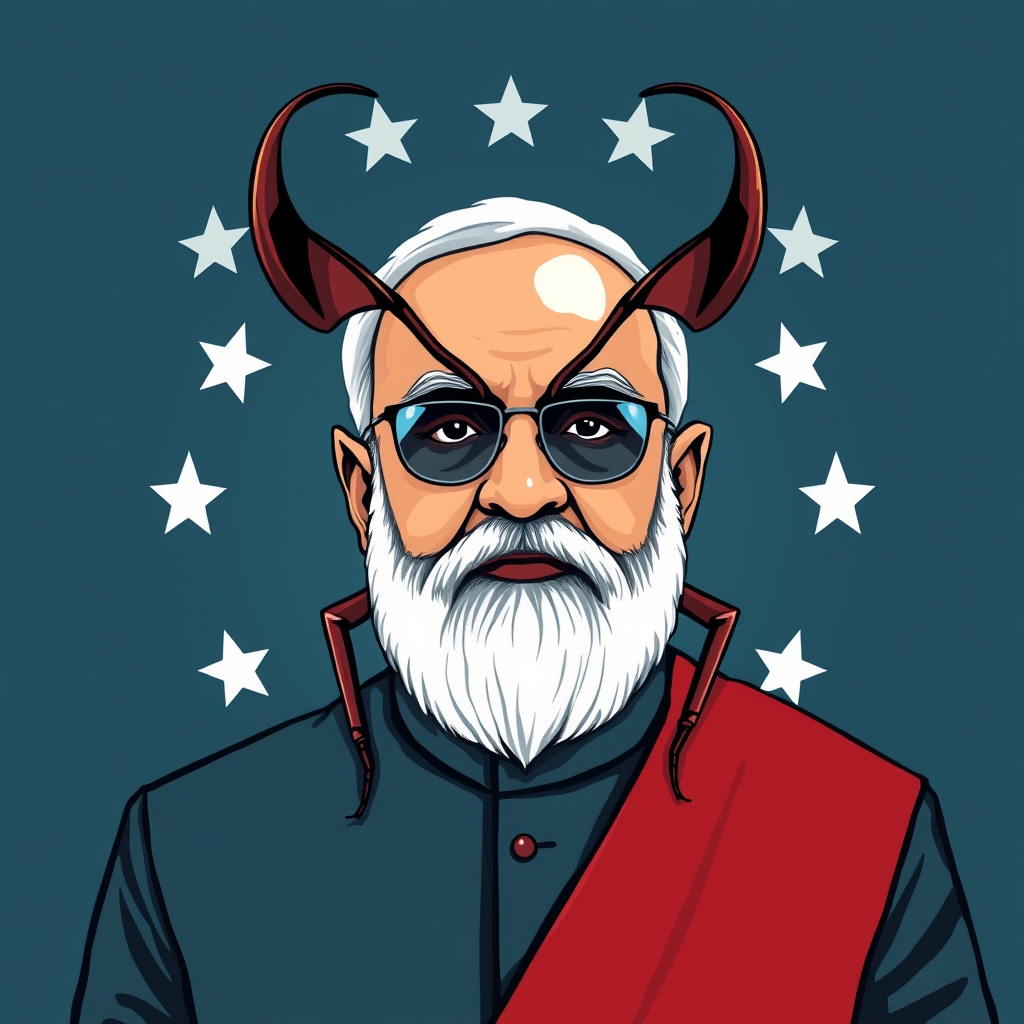
VS
India's Gen Z protesters

The Cockroach Janta Party (CJP) is a satirical, youth-led protest movement in India, primarily composed of Gen Z activists.
The movement gained prominence in 2026 through street protests in New Delhi, where tens of thousands of young people demonstrated against exam paper leaks and demanded system accountability.
The protests drew international attention, with reports from outlets like Time, CNN, and BBC, and were marked by police using tear gas and batons against protesters, leading to injuries.
The movement also achieved a notable political victory by ousting a government minister, a rare outcome for a youth-led protest.
The conflict between the Cockroach Janta Party factions and India's Gen Z protesters centers on the movement's legacy and future direction.
After the street protests ended, different factions within the CJP have been using Instagram and memes to shape the narrative of what the movement achieved and how it should be remembered.
This online battle reflects a broader disagreement over the impact of the protests on India's Gen Z political engagement, with some factions emphasizing the movement's success in holding authorities accountable, while others may focus on sustaining momentum or addressing unresolved issues.
*AI-generated summary of publicly available data. This is not an official statement of any party.
*AI-generated summary of publicly available statements and reporting. This is not an official statement of this party.
Supporters of Cockroach Janta Party factions argue that the movement’s legacy lies in preserving its cultural rituals of protest, not in Gen Z’s fleeting online memes, which erode the inherited wisdom of sustained collective action.
Supporters of Cockroach Janta Party factions argue that preserving the movement’s original cultural narrative is vital, as remixing its legacy through Gen Z memes risks eroding the shared values and social order that first inspired the protests.
Supporters of Cockroach Janta Party factions counter that meme-driven memory is fleeting amusement, not cultural inheritance, arguing that enduring traditions and institutional rituals alone preserve a movement’s true legacy.
Supporters of Cockroach Janta Party factions argue that the movement's legacy must be legally codified, pointing to the Aug 5, 2026 online battle as proof that preserving its constitutional right to peaceful dissent requires formal recognition of their digital narrative.
Supporters of Cockroach Janta Party factions argue that legal clarity on protest records, including amnesty for participants, is essential to preserve the movement's legitimacy and Gen Z's right to future civic engagement without fear of reprisal.
Supporters of Cockroach Janta Party factions counter that unchecked online narratives can violate India’s legal boundaries, citing the Information Technology Act’s provisions against incitement and defamation. They argue that lawful expression carries statutory limits, and.
Supporters of Cockroach Janta Party factions argue the online battle is a calculated power grab, where each faction weaponizes memes to crown itself the movement's true heir and control Gen Z’s political capital.
Supporters of the Cockroach Janta Party factions argue that whoever controls the meme narrative now secures future political capital, treating Instagram as the new battlefield for Gen Z loyalty. They maintain that the movement's legacy is a weapon to be wielded, not a history to.
Supporters of Cockroach Janta Party factions counter that Gen Z protesters’ narrative ownership is a myth, as street presence, not hashtags, determines who wields real power. They argue the online battle is theater, while faction leaders quietly consolidate offline leverage.
Supporters of Cockroach Janta Party factions argue that moral fidelity to the movement’s original grievance demands preserving its raw, unvarnished record, not sanitized nostalgia. They maintain that Gen Z protesters’ online memorializing risks distorting empirical facts,.
Supporters of Cockroach Janta Party factions argue that memorializing the movement's moral urgency—not just its tactical wins—is essential, as Gen Z's continued engagement depends on honoring its ethical core over viral spectacle.
Supporters of Cockroach Janta Party factions counter that unpolished chaos cannot substitute for moral accountability, arguing that a movement’s ethical weight depends on clear, principled leadership, not its emotional authenticity.
Supporters of the Cockroach Janta Party factions argue that the movement’s legacy is a moral witness to truth, not mere political success, and that Gen Z’s online remembrance honors scripture’s call to stand for justice without fear.
Supporters of Cockroach Janta Party factions argue that the movement's legacy reflects a moral calling to uphold dharma, viewing their online memorialization as a sacred duty to preserve truth over transient digital noise.
Supporters of Cockroach Janta Party factions counter that digital remembrance cannot replace embodied sacrifice, for dharma demands physical presence in sacred struggle, not passive screens.
*AI-generated summary of publicly available statements and reporting. This is not an official statement of this party.
Supporters of India's Gen Z protesters argue that the movement's legacy is a cultural shift, not a political defeat, pointing to meme-driven memory as proof that its spirit endures beyond the streets.
Supporters of India's Gen Z protesters argue the movement's online afterlife is its true legacy, citing the shift to Instagram as proof that cultural memory now outlives street protests.
Supporters of India's Gen Z protesters counter that cultural memory is not static ritual but living adaptation, noting that each generation reinterprets protest—from Gandhi’s salt to their digital marches—and that dismissing memes ignores how Gen Z preserves dissent through.
Supporters of India's Gen Z protesters argue that online narratives are lawful free expression, protected speech under India's Constitution. They maintain that shaping a movement's legacy via memes and Instagram is a legal exercise of individual autonomy, not an act requiring.
Supporters of India's Gen Z protesters argue the online battle over the Cockroach Janta Party legacy is legally protected free expression, as peaceful digital speech remains a constitutional right under Indian law.
Supporters of India’s Gen Z protesters counter that legal codification of the Cockroach Janta Party’s digital narrative would entrench one faction’s version of events, violating the protesters’ own constitutional right to dissent against imposed historical memory.
Supporters of India's Gen Z protesters argue that the online battle is a power play to own the movement's narrative, ensuring their faction controls its future political currency rather than ceding it to rivals.
Supporters of India's Gen Z protesters argue the online battle is the real prize; whoever controls the legacy controls future political capital. They maintain that Instagram memes are a power tool, not play, to cement the movement’s narrative and outmaneuver factional rivals.
Supporters of India’s Gen Z protesters counter that the factions’ meme war is a distraction from raw street leverage; Gen Z protesters see online infighting as theater that masks the real prize—state concessions, not faction crowns.
Supporters of India's Gen Z protesters argue that preserving the movement's diverse, messy spirit matters more than any single faction's polished narrative.
Supporters of India's Gen Z protesters argue that remembering the movement demands honesty about its moral costs, not factional myth-making; they maintain that true civic duty lies in owning the outcome, not sanitizing it.
Supporters of India's Gen Z protesters counter that preserving raw records without contextual truth is itself a distortion, as moral duty includes justice for living victims, not just archival purity.
Supporters of India's Gen Z protesters argue that their online campaign preserves the movement's moral continuity, upholding dharma through digital remembrance rather than fleeting street spectacle, grounding civic duty in timeless spiritual order.
Supporters of India's Gen Z protesters argue that preserving the movement's moral urgency matters more than institutional polish, grounding their memory in dharma's call for righteous duty over fleeting online spectacle.
Supporters of India's Gen Z protesters counter that honoring scripture demands confronting present-day injustice, not venerating a past that no longer speaks to their lived realities. They argue that remembrance without action fails the very moral witness it claims to uphold.
AI-generated summary of publicly available statements and reporting. This is not an official statement of this party.
Supporters of Cockroach Janta Party factions argue that the movement’s legacy lies in preserving its cultural rituals of protest, not in Gen Z’s fleeting online memes, which erode the inherited wisdom of sustained collective action.
Supporters of Cockroach Janta Party factions argue that preserving the movement’s original cultural narrative is vital, as remixing its legacy through Gen Z memes risks eroding the shared values and social order that first inspired the protests.
Supporters of Cockroach Janta Party factions counter that meme-driven memory is fleeting amusement, not cultural inheritance, arguing that enduring traditions and institutional rituals alone preserve a movement’s true legacy.
Supporters of Cockroach Janta Party factions argue that the movement's legacy must be legally codified, pointing to the Aug 5, 2026 online battle as proof that preserving its constitutional right to peaceful dissent requires formal recognition of their digital narrative.
Supporters of Cockroach Janta Party factions argue that legal clarity on protest records, including amnesty for participants, is essential to preserve the movement's legitimacy and Gen Z's right to future civic engagement without fear of reprisal.
Supporters of Cockroach Janta Party factions counter that unchecked online narratives can violate India’s legal boundaries, citing the Information Technology Act’s provisions against incitement and defamation. They argue that lawful expression carries statutory limits, and.
Supporters of Cockroach Janta Party factions argue the online battle is a calculated power grab, where each faction weaponizes memes to crown itself the movement's true heir and control Gen Z’s political capital.
Supporters of the Cockroach Janta Party factions argue that whoever controls the meme narrative now secures future political capital, treating Instagram as the new battlefield for Gen Z loyalty. They maintain that the movement's legacy is a weapon to be wielded, not a history to.
Supporters of Cockroach Janta Party factions counter that Gen Z protesters’ narrative ownership is a myth, as street presence, not hashtags, determines who wields real power. They argue the online battle is theater, while faction leaders quietly consolidate offline leverage.
Supporters of Cockroach Janta Party factions argue that moral fidelity to the movement’s original grievance demands preserving its raw, unvarnished record, not sanitized nostalgia. They maintain that Gen Z protesters’ online memorializing risks distorting empirical facts,.
Supporters of Cockroach Janta Party factions argue that memorializing the movement's moral urgency—not just its tactical wins—is essential, as Gen Z's continued engagement depends on honoring its ethical core over viral spectacle.
Supporters of Cockroach Janta Party factions counter that unpolished chaos cannot substitute for moral accountability, arguing that a movement’s ethical weight depends on clear, principled leadership, not its emotional authenticity.
Supporters of the Cockroach Janta Party factions argue that the movement’s legacy is a moral witness to truth, not mere political success, and that Gen Z’s online remembrance honors scripture’s call to stand for justice without fear.
Supporters of Cockroach Janta Party factions argue that the movement's legacy reflects a moral calling to uphold dharma, viewing their online memorialization as a sacred duty to preserve truth over transient digital noise.
Supporters of Cockroach Janta Party factions counter that digital remembrance cannot replace embodied sacrifice, for dharma demands physical presence in sacred struggle, not passive screens.
Supporters of India's Gen Z protesters argue that the movement's legacy is a cultural shift, not a political defeat, pointing to meme-driven memory as proof that its spirit endures beyond the streets.
Supporters of India's Gen Z protesters argue the movement's online afterlife is its true legacy, citing the shift to Instagram as proof that cultural memory now outlives street protests.
Supporters of India's Gen Z protesters counter that cultural memory is not static ritual but living adaptation, noting that each generation reinterprets protest—from Gandhi’s salt to their digital marches—and that dismissing memes ignores how Gen Z preserves dissent through.
Supporters of India's Gen Z protesters argue that online narratives are lawful free expression, protected speech under India's Constitution. They maintain that shaping a movement's legacy via memes and Instagram is a legal exercise of individual autonomy, not an act requiring.
Supporters of India's Gen Z protesters argue the online battle over the Cockroach Janta Party legacy is legally protected free expression, as peaceful digital speech remains a constitutional right under Indian law.
Supporters of India’s Gen Z protesters counter that legal codification of the Cockroach Janta Party’s digital narrative would entrench one faction’s version of events, violating the protesters’ own constitutional right to dissent against imposed historical memory.
Supporters of India's Gen Z protesters argue that the online battle is a power play to own the movement's narrative, ensuring their faction controls its future political currency rather than ceding it to rivals.
Supporters of India's Gen Z protesters argue the online battle is the real prize; whoever controls the legacy controls future political capital. They maintain that Instagram memes are a power tool, not play, to cement the movement’s narrative and outmaneuver factional rivals.
Supporters of India’s Gen Z protesters counter that the factions’ meme war is a distraction from raw street leverage; Gen Z protesters see online infighting as theater that masks the real prize—state concessions, not faction crowns.
Supporters of India's Gen Z protesters argue that preserving the movement's diverse, messy spirit matters more than any single faction's polished narrative.
Supporters of India's Gen Z protesters argue that remembering the movement demands honesty about its moral costs, not factional myth-making; they maintain that true civic duty lies in owning the outcome, not sanitizing it.
Supporters of India's Gen Z protesters counter that preserving raw records without contextual truth is itself a distortion, as moral duty includes justice for living victims, not just archival purity.
Supporters of India's Gen Z protesters argue that their online campaign preserves the movement's moral continuity, upholding dharma through digital remembrance rather than fleeting street spectacle, grounding civic duty in timeless spiritual order.
Supporters of India's Gen Z protesters argue that preserving the movement's moral urgency matters more than institutional polish, grounding their memory in dharma's call for righteous duty over fleeting online spectacle.
Supporters of India's Gen Z protesters counter that honoring scripture demands confronting present-day injustice, not venerating a past that no longer speaks to their lived realities. They argue that remembrance without action fails the very moral witness it claims to uphold.
Modi's BJP once controlled media narratives in India, but this might be changing with the 'Cockroach' movement.
The "cockroach" movement was one of the biggest public displays of dissent against India's prime minister in years.
The streets are quiet, but a fight over the legacy of the Cockroach Janta Party movement is intensifying across Instagram, memes and social media.
Following the end of street protests, a new online battle intensified over the legacy of the Cockroach Janta Party movement, with factions using Instagram and memes to shape its narrative.
Time published a feature titled 'Revolt of the Cockroaches: How India's Gen Z Humbled Modi,' highlighting how the young protesters were immune to blackouts and vilification, and describing the protests as overwhelming Modi's regime of control.
CNN published an article discussing the aftermath of the Cockroach Janta Party protests, noting that tens of thousands of Gen Z protesters had flooded the streets of New Delhi and questioning what comes next for the movement.
