Colombia



VS
Israel
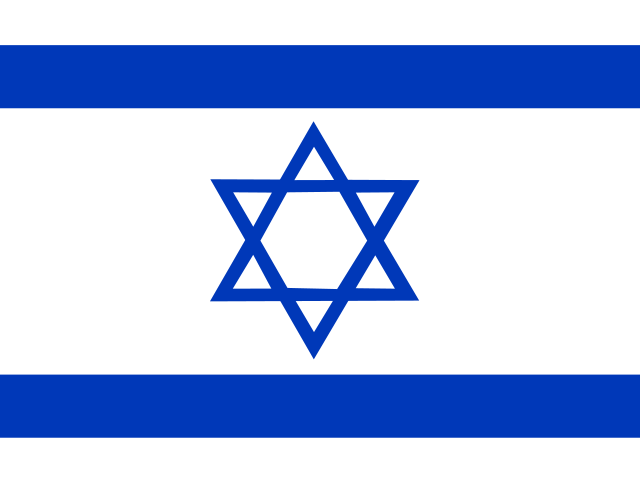

The match between Colombia and Israel covers both diplomatic tensions and football encounters.
Diplomatically, Colombia severed relations with Israel in 2024 due to the Gaza war, and outgoing President Gustavo Petro's characterization of Israel's actions as 'genocide' led to US sanctions, with Colombia's Foreign Minister blaming Israel for the resulting tensions.
In sports, the two nations have faced off in football, including a FIFA U-20 World Cup match in 2023 and a 1990 World Cup qualifier.
The comparison also highlights the significant geographic disparity, with Colombia being about 52 times larger than Israel.
*AI-generated summary of publicly available data. This is not an official statement of any party.
*AI-generated summary of publicly available statements and reporting. This is not an official statement of this party.
Supporters of Colombia argue that breaking ties with Israel upholds a sovereign cultural commitment to human dignity, rooted in Latin American solidarity with the oppressed.
Supporters of Colombia argue that President Petro’s stance reflects a cultural commitment to defending human dignity and historical solidarity with the oppressed, viewing the severed ties as a moral stand rooted in Latin American tradition rather than a political rupture.
Supporters of Colombia counter that Petro’s stance reflects a cultural duty to honor ancestral Indigenous and Afro-Colombian ties to Palestinian land, not a misreading of Israel’s security, and that shared democratic values cannot override a lived history of solidarity with the.
Supporters of Colombia argue that severing relations with Israel in 2024 was a lawful exercise of sovereign diplomacy, grounded in treaty obligations to prevent genocide, not a political stunt.
Supporters of Colombia argue that President Petro's 'genocide' characterization is protected speech under international law, and that US sanctions over it violate Colombia's sovereign right to condemn alleged violations of the Geneva Conventions.
Supporters of Colombia counter that the ICJ’s provisional measures in January 2024 explicitly flagged plausible genocide risks, obligating Israel to prevent harm—a legal threshold Israel has failed to meet. They argue self-defense cannot justify collective punishment, as.
Supporters of Colombia argue that Petro’s stance exploits the Gaza war to rally domestic support, using Israel as a convenient foil to distract from internal crises, while the US sanctions reveal the real cost of moral posturing over pragmatism.
Supporters of Colombia argue that Petro’s ‘genocide’ label was a calculated move to rally domestic leftist support, and Israel’s lobbying of the US to sanction Bogotá backfired, handing Petro a martyr’s narrative that cements his legacy while exposing Israel’s overreach in.
Supporters of Colombia counter that Petro’s label is a strategic lever, not theater: severing ties with Israel and enduring US sanctions buys domestic legitimacy and South-South alliance capital, while the football defeats are irrelevant to state leverage, as power here is.
Supporters of Colombia argue that severing ties with Israel was a moral imperative, not a political stunt, grounded in the duty to oppose what they view as genocide in Gaza. They maintain that Petro’s condemnation reflects a principled stand for human rights, even at the cost of.
Supporters of Colombia argue that Petro’s condemnation of the Gaza war reflects a moral duty to oppose reported atrocities, and that Israel’s alleged role in straining ties ignores Colombia’s right to speak against civilian suffering.
Supporters of Colombia counter that invoking self-defense does not absolve a state of its duty to protect civilians, and they challenge the claim that military necessity justifies the scale of harm inflicted on Palestinian communities.
Supporters of Colombia argue that faith calls for defending the oppressed, citing scripture’s mandate to protect the vulnerable as grounds for severing ties with Israel over Gaza.
Supporters of Colombia argue that faith compels nations to condemn injustice, citing President Petro’s framing of Gaza as a moral test that transcends politics, and they view severed ties as a scriptural duty to stand with the oppressed.
Supporters of Colombia counter that divine law condemns the shedding of innocent blood, and that no covenant justifies collective punishment of civilians in Gaza.
*AI-generated summary of publicly available statements and reporting. This is not an official statement of this party.
Supporters of Israel argue that Colombia’s 2024 severing of ties, driven by President Petro’s “genocide” label, misreads Israel’s cultural right to self-defense as a Jewish state, ignoring the deep historical bonds of shared democratic values and mutual diaspora communities.
Supporters of Israel argue that Colombia’s severing of ties, driven by one leader’s “genocide” label, misrepresents Israel’s cultural and historical right to self-defense, overlooking shared sporting ties that once bridged nations.
Supporters of Israel counter that Colombia’s cultural claim to dignity overlooks Israel’s own ancient heritage, where Jewish identity and sovereignty are inseparable from survival, and they challenge the notion that solidarity with one narrative should erase another people’s.
Supporters of Israel argue that legal self-defense under international law justifies its actions in Gaza, and they reject accusations of genocide as unfounded, noting the ICJ has not issued such a ruling.
Supporters of Israel argue that the 2024 severance and 'genocide' label violate international legal norms, as Israel's actions are defensive under international law, and such unilateral diplomatic measures politicize legal standards.
Supporters of Israel counter that Colombia’s severance breached the 2020 free-trade agreement’s dispute-resolution clauses, which require bilateral negotiation before unilateral diplomatic action, and that invoking the Genocide Convention without a binding ICJ ruling misapplies.
Supporters of Israel argue Petro’s ‘genocide’ label is political theater, not legal fact, driven by domestic survival and foreign leverage. They note Colombia’s severed ties and US sanctions expose Petro’s isolation, while football defeats only underscore that power, not.
Supporters of Israel argue Petro’s ‘genocide’ label is a political lever, not fact, and that Colombia’s severing ties in 2024 traded diplomacy for symbolic posturing. They note the US sanctions target Petro’s rhetoric, not Israel, and that football losses, from 1989 to 2023,.
Supporters of Israel counter that Petro’s moral posturing is itself a calculated distraction, while Washington’s sanctions expose not the cost of principle but the price of abandoning a strategic ally for domestic theater.
Supporters of Israel argue that branding its defensive actions as genocide is a moral distortion, since Israel’s right to self-defense against attacks is a fundamental liberty that Colombia’s leaders mischaracterize.
Supporters of Israel argue that labeling its self-defense as genocide is a moral distortion, since Israel acts against armed threats like Hezbollah while Colombia's severed ties ignore the right of any nation to protect its citizens.
Supporters of Israel counter that Colombia’s severed ties misplace moral blame, ignoring Israel’s right to defend citizens from Hamas’s October 7 massacres. They argue moral duty requires distinguishing self-defense from genocide, a charge unsupported by evidence. For them,.
Supporters of Israel argue that the nation’s actions in Gaza are defensive and rooted in a biblical right to self-preservation, not genocide, and they view Colombia’s severed ties as a political break from that ancient covenant.
Supporters of Israel argue that the Jewish state’s divine covenant and historical right to the land justify its actions, framing Gaza’s conflict as a defense of sacred heritage against forces seeking its destruction.
Supporters of Israel counter that scripture equally commands honoring covenants and safeguarding the Jewish people’s ancestral homeland, viewing Colombia’s selective piety as a departure from the biblical duty to uphold God’s enduring promises to Israel.
AI-generated summary of publicly available statements and reporting. This is not an official statement of this party.
Supporters of Colombia argue that breaking ties with Israel upholds a sovereign cultural commitment to human dignity, rooted in Latin American solidarity with the oppressed.
Supporters of Colombia argue that President Petro’s stance reflects a cultural commitment to defending human dignity and historical solidarity with the oppressed, viewing the severed ties as a moral stand rooted in Latin American tradition rather than a political rupture.
Supporters of Colombia counter that Petro’s stance reflects a cultural duty to honor ancestral Indigenous and Afro-Colombian ties to Palestinian land, not a misreading of Israel’s security, and that shared democratic values cannot override a lived history of solidarity with the.
Supporters of Colombia argue that severing relations with Israel in 2024 was a lawful exercise of sovereign diplomacy, grounded in treaty obligations to prevent genocide, not a political stunt.
Supporters of Colombia argue that President Petro's 'genocide' characterization is protected speech under international law, and that US sanctions over it violate Colombia's sovereign right to condemn alleged violations of the Geneva Conventions.
Supporters of Colombia counter that the ICJ’s provisional measures in January 2024 explicitly flagged plausible genocide risks, obligating Israel to prevent harm—a legal threshold Israel has failed to meet. They argue self-defense cannot justify collective punishment, as.
Supporters of Colombia argue that Petro’s stance exploits the Gaza war to rally domestic support, using Israel as a convenient foil to distract from internal crises, while the US sanctions reveal the real cost of moral posturing over pragmatism.
Supporters of Colombia argue that Petro’s ‘genocide’ label was a calculated move to rally domestic leftist support, and Israel’s lobbying of the US to sanction Bogotá backfired, handing Petro a martyr’s narrative that cements his legacy while exposing Israel’s overreach in.
Supporters of Colombia counter that Petro’s label is a strategic lever, not theater: severing ties with Israel and enduring US sanctions buys domestic legitimacy and South-South alliance capital, while the football defeats are irrelevant to state leverage, as power here is.
Supporters of Colombia argue that severing ties with Israel was a moral imperative, not a political stunt, grounded in the duty to oppose what they view as genocide in Gaza. They maintain that Petro’s condemnation reflects a principled stand for human rights, even at the cost of.
Supporters of Colombia argue that Petro’s condemnation of the Gaza war reflects a moral duty to oppose reported atrocities, and that Israel’s alleged role in straining ties ignores Colombia’s right to speak against civilian suffering.
Supporters of Colombia counter that invoking self-defense does not absolve a state of its duty to protect civilians, and they challenge the claim that military necessity justifies the scale of harm inflicted on Palestinian communities.
Supporters of Colombia argue that faith calls for defending the oppressed, citing scripture’s mandate to protect the vulnerable as grounds for severing ties with Israel over Gaza.
Supporters of Colombia argue that faith compels nations to condemn injustice, citing President Petro’s framing of Gaza as a moral test that transcends politics, and they view severed ties as a scriptural duty to stand with the oppressed.
Supporters of Colombia counter that divine law condemns the shedding of innocent blood, and that no covenant justifies collective punishment of civilians in Gaza.
Supporters of Israel argue that Colombia’s 2024 severing of ties, driven by President Petro’s “genocide” label, misreads Israel’s cultural right to self-defense as a Jewish state, ignoring the deep historical bonds of shared democratic values and mutual diaspora communities.
Supporters of Israel argue that Colombia’s severing of ties, driven by one leader’s “genocide” label, misrepresents Israel’s cultural and historical right to self-defense, overlooking shared sporting ties that once bridged nations.
Supporters of Israel counter that Colombia’s cultural claim to dignity overlooks Israel’s own ancient heritage, where Jewish identity and sovereignty are inseparable from survival, and they challenge the notion that solidarity with one narrative should erase another people’s.
Supporters of Israel argue that legal self-defense under international law justifies its actions in Gaza, and they reject accusations of genocide as unfounded, noting the ICJ has not issued such a ruling.
Supporters of Israel argue that the 2024 severance and 'genocide' label violate international legal norms, as Israel's actions are defensive under international law, and such unilateral diplomatic measures politicize legal standards.
Supporters of Israel counter that Colombia’s severance breached the 2020 free-trade agreement’s dispute-resolution clauses, which require bilateral negotiation before unilateral diplomatic action, and that invoking the Genocide Convention without a binding ICJ ruling misapplies.
Supporters of Israel argue Petro’s ‘genocide’ label is political theater, not legal fact, driven by domestic survival and foreign leverage. They note Colombia’s severed ties and US sanctions expose Petro’s isolation, while football defeats only underscore that power, not.
Supporters of Israel argue Petro’s ‘genocide’ label is a political lever, not fact, and that Colombia’s severing ties in 2024 traded diplomacy for symbolic posturing. They note the US sanctions target Petro’s rhetoric, not Israel, and that football losses, from 1989 to 2023,.
Supporters of Israel counter that Petro’s moral posturing is itself a calculated distraction, while Washington’s sanctions expose not the cost of principle but the price of abandoning a strategic ally for domestic theater.
Supporters of Israel argue that branding its defensive actions as genocide is a moral distortion, since Israel’s right to self-defense against attacks is a fundamental liberty that Colombia’s leaders mischaracterize.
Supporters of Israel argue that labeling its self-defense as genocide is a moral distortion, since Israel acts against armed threats like Hezbollah while Colombia's severed ties ignore the right of any nation to protect its citizens.
Supporters of Israel counter that Colombia’s severed ties misplace moral blame, ignoring Israel’s right to defend citizens from Hamas’s October 7 massacres. They argue moral duty requires distinguishing self-defense from genocide, a charge unsupported by evidence. For them,.
Supporters of Israel argue that the nation’s actions in Gaza are defensive and rooted in a biblical right to self-preservation, not genocide, and they view Colombia’s severed ties as a political break from that ancient covenant.
Supporters of Israel argue that the Jewish state’s divine covenant and historical right to the land justify its actions, framing Gaza’s conflict as a defense of sacred heritage against forces seeking its destruction.
Supporters of Israel counter that scripture equally commands honoring covenants and safeguarding the Jewish people’s ancestral homeland, viewing Colombia’s selective piety as a departure from the biblical duty to uphold God’s enduring promises to Israel.
Israel is to blame for the US’ long-running tensions with Colombia’s outgoing President Gustavo Petro, FM Rosa Yolanda Villavicencio told RT Read Full Article at RT.com
Colombia severed diplomatic relations with Israel in 2024 as a result of the Gaza war.
Colombia U20 defeated Israel U20 2-1 in a FIFA U-20 World Cup match on May 21, 2023, with an attendance of 7,613.
Colombia defeated Israel 1-0 in a 1990 World Cup qualifying match on October 15, 1989.