Cuba
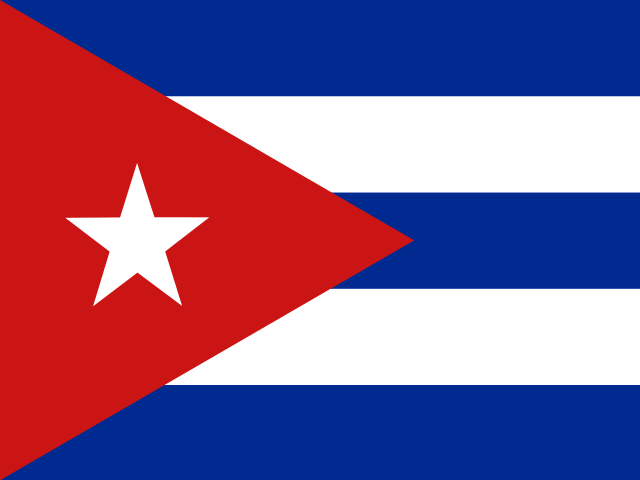
VS
Dominican Republic
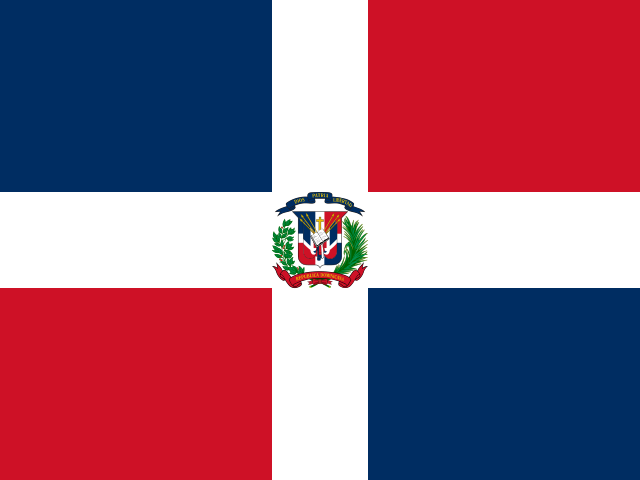
Cuba and the Dominican Republic are two Caribbean nations with a complex relationship.
Cuba is a socialist state that has historically been more economically developed, while the Dominican Republic has seen its economy grow in recent years, with some comparisons suggesting the latter now outperforms the former.
The two countries also share a rivalry in sports, particularly in baseball and soccer, where they have faced each other in various competitions.
The current diplomatic dispute stems from the Dominican Republic's expulsion of 10 Cuban diplomats and their families.
Cuba condemned this action, accusing the Dominican government of bowing to US pressure and its anti-Cuban policy.
This move has sparked a diplomatic rift between the two nations, highlighting their conflicting interests and the influence of external powers in the region.
The dispute occurs against a backdrop of ongoing cultural and economic comparisons between the two countries, with discussions often focusing on aspects like tourism, food, and overall development.
The diplomatic tension adds a political dimension to their existing rivalry, which is also expressed through sports competitions.
*AI-generated summary of publicly available data. This is not an official statement of any party.
*AI-generated summary of publicly available statements and reporting. This is not an official statement of this party.
Supporters of Cuba argue that the Dominican Republic’s expulsion of Cuban diplomats breaks a shared cultural tradition of sovereign Caribbean solidarity, yielding to foreign pressure instead of honoring that inherited bond.
Supporters of Cuba argue the expulsion breaks a long-standing cultural bond, insisting the Dominican Republic abandons shared Latin American fraternity by bowing to Washington's hostile policy.
Supporters of Cuba counter that the Dominican Republic's expulsion severs a shared cultural lineage, where mutual exchange of music, faith, and family has long defined Caribbean identity, not ideological purity.
Supporters of Cuba argue the expulsions violate diplomatic norms under the Vienna Convention, asserting the Dominican Republic’s action, driven by external US pressure, breaches legal obligations of reciprocity and sovereign equality between states.
Supporters of Cuba argue the expulsions violate the Vienna Convention on Diplomatic Relations, which guarantees diplomats’ protection from arbitrary removal without valid legal justification, pointing to the action as evidence of the Dominican Republic yielding to external politi.
Supporters of Cuba counter that the Vienna Convention also obliges states to uphold diplomatic immunity and peaceful dispute resolution, challenging the Dominican Republic’s expulsion as a unilateral breach of multilateral legal norms, not a sovereign exercise.
Supporters of Cuba argue the expulsion is Washington’s leverage made visible—Santo Domingo trades sovereignty for US favor, exposing Caribbean dependence on northern power.
Supporters of Cuba argue the Dominican Republic's expulsion is a calculated deference to Washington, trading sovereignty for US favor.
Supporters of Cuba counter that the expulsion was a miscalculated gambit, exposing Santo Domingo’s dependence on U.S. favor rather than regional strength.
Supporters of Cuba argue that expelling diplomats over foreign pressure violates the universal principle of diplomatic sovereignty, and they condemn the Dominican Republic for subordinating bilateral relations to Washington's anti-Cuban agenda.
Supporters of Cuba argue that expelling diplomats over political pressure violates the moral duty of nations to uphold diplomatic dialogue and human dignity, viewing the Dominican Republic's action as subservience that undermines mutual respect between sovereign states.
Supporters of Cuba counter that sovereignty cannot justify shielding abuses, arguing that universal human rights transcend borders and that multilateral accountability strengthens, not weakens, a nation’s moral standing.
Supporters of Cuba argue that the Dominican Republic's expulsion betrays a sacred duty of neighborly solidarity, submitting to foreign pressure rather than honoring the moral covenant of sovereign respect.
Supporters of Cuba argue the diplomat expulsion disrespects the sacred duty of hospitality, a moral covenant that transcends political disputes and reflects a nation's honor before God.
Supporters of Cuba counter that divine governance demands solidarity with the oppressed, not the defense of earthly order that sanctions injustice.
*AI-generated summary of publicly available statements and reporting. This is not an official statement of this party.
Supporters of the Dominican Republic argue that the expulsion reflects a sovereign defense of national dignity, rooted in cultural pride against foreign ideological interference.
Supporters of the Dominican Republic argue that expelling Cuba’s diplomats defends national sovereignty and cultural independence, rejecting Havana’s narrative of subservience as an intrusion on Dominican self-determination.
Supporters of the Dominican Republic counter that sovereignty, not solidarity, defines cultural integrity, and that rejecting foreign diplomatic interference upholds the nation’s own heritage of self-determination.
Supporters of the Dominican Republic argue that its sovereign right to expel foreign diplomats is a legal act under the Vienna Convention, reflecting national interest over external pressure.
Supporters of the Dominican Republic argue that the expulsion of the Cuban diplomats is a lawful exercise of national sovereignty under the Vienna Convention on Diplomatic Relations, protecting the nation's borders and legal order.
Supporters of the Dominican Republic counter that the Vienna Convention’s protections apply only to accredited diplomats, not to undocumented migrants, and that each state retains the sovereign legal right to enforce its own immigration laws without external interference.
Supporters of Dominican Republic argue the expulsion was a rational power play, signaling allegiance to Washington while isolating Cuba’s regional influence. They maintain Havana’s condemnation is predictable posturing, masking Cuba’s own weakened leverage.
Supporters of the Dominican Republic argue the expulsion was a calculated signal to Washington, leveraging anti-Cuba posture to secure U.S. economic and security backing.
Supporters of Dominican Republic counter that sovereignty is measured in outcomes, not symbolism—Santo Domingo’s pact with Washington secures remittances, trade, and migration controls that Cuba’s isolation cannot match.
Supporters of the Dominican Republic argue that expelling the diplomats upholds national sovereignty and moral integrity, rejecting any foreign political interference as a matter of principled self-determination.
Supporters of the Dominican Republic argue that expelling the diplomats upholds national sovereignty, viewing Cuba's characterization as subservience as a misreading of a legitimate sovereign act, not a moral capitulation to Washington.
Supporters of the Dominican Republic counter that sovereignty includes the right to reject foreign influence, and they argue Cuba's expulsion reflects a moral duty to uphold democratic norms and regional security over ideological alignment.
Supporters of the Dominican Republic maintain that its action reflects a sovereign duty to uphold order over external ideological allegiance, a principle rooted in divine governance.
Supporters of the Dominican Republic argue that national sovereignty and the protection of its diplomatic integrity are sacred duties, guided by divine order and moral law.
Supporters of the Dominican Republic counter that Cuba’s claim misreads divine law, for scripture commands nations to guard their own flock before extending charity, and no covenant obliges sheltering a neighbor who refuses repentance.
AI-generated summary of publicly available statements and reporting. This is not an official statement of this party.
Supporters of Cuba argue that the Dominican Republic’s expulsion of Cuban diplomats breaks a shared cultural tradition of sovereign Caribbean solidarity, yielding to foreign pressure instead of honoring that inherited bond.
Supporters of Cuba argue the expulsion breaks a long-standing cultural bond, insisting the Dominican Republic abandons shared Latin American fraternity by bowing to Washington's hostile policy.
Supporters of Cuba counter that the Dominican Republic's expulsion severs a shared cultural lineage, where mutual exchange of music, faith, and family has long defined Caribbean identity, not ideological purity.
Supporters of Cuba argue the expulsions violate diplomatic norms under the Vienna Convention, asserting the Dominican Republic’s action, driven by external US pressure, breaches legal obligations of reciprocity and sovereign equality between states.
Supporters of Cuba argue the expulsions violate the Vienna Convention on Diplomatic Relations, which guarantees diplomats’ protection from arbitrary removal without valid legal justification, pointing to the action as evidence of the Dominican Republic yielding to external politi.
Supporters of Cuba counter that the Vienna Convention also obliges states to uphold diplomatic immunity and peaceful dispute resolution, challenging the Dominican Republic’s expulsion as a unilateral breach of multilateral legal norms, not a sovereign exercise.
Supporters of Cuba argue the expulsion is Washington’s leverage made visible—Santo Domingo trades sovereignty for US favor, exposing Caribbean dependence on northern power.
Supporters of Cuba argue the Dominican Republic's expulsion is a calculated deference to Washington, trading sovereignty for US favor.
Supporters of Cuba counter that the expulsion was a miscalculated gambit, exposing Santo Domingo’s dependence on U.S. favor rather than regional strength.
Supporters of Cuba argue that expelling diplomats over foreign pressure violates the universal principle of diplomatic sovereignty, and they condemn the Dominican Republic for subordinating bilateral relations to Washington's anti-Cuban agenda.
Supporters of Cuba argue that expelling diplomats over political pressure violates the moral duty of nations to uphold diplomatic dialogue and human dignity, viewing the Dominican Republic's action as subservience that undermines mutual respect between sovereign states.
Supporters of Cuba counter that sovereignty cannot justify shielding abuses, arguing that universal human rights transcend borders and that multilateral accountability strengthens, not weakens, a nation’s moral standing.
Supporters of Cuba argue that the Dominican Republic's expulsion betrays a sacred duty of neighborly solidarity, submitting to foreign pressure rather than honoring the moral covenant of sovereign respect.
Supporters of Cuba argue the diplomat expulsion disrespects the sacred duty of hospitality, a moral covenant that transcends political disputes and reflects a nation's honor before God.
Supporters of Cuba counter that divine governance demands solidarity with the oppressed, not the defense of earthly order that sanctions injustice.
Supporters of the Dominican Republic argue that the expulsion reflects a sovereign defense of national dignity, rooted in cultural pride against foreign ideological interference.
Supporters of the Dominican Republic argue that expelling Cuba’s diplomats defends national sovereignty and cultural independence, rejecting Havana’s narrative of subservience as an intrusion on Dominican self-determination.
Supporters of the Dominican Republic counter that sovereignty, not solidarity, defines cultural integrity, and that rejecting foreign diplomatic interference upholds the nation’s own heritage of self-determination.
Supporters of the Dominican Republic argue that its sovereign right to expel foreign diplomats is a legal act under the Vienna Convention, reflecting national interest over external pressure.
Supporters of the Dominican Republic argue that the expulsion of the Cuban diplomats is a lawful exercise of national sovereignty under the Vienna Convention on Diplomatic Relations, protecting the nation's borders and legal order.
Supporters of the Dominican Republic counter that the Vienna Convention’s protections apply only to accredited diplomats, not to undocumented migrants, and that each state retains the sovereign legal right to enforce its own immigration laws without external interference.
Supporters of Dominican Republic argue the expulsion was a rational power play, signaling allegiance to Washington while isolating Cuba’s regional influence. They maintain Havana’s condemnation is predictable posturing, masking Cuba’s own weakened leverage.
Supporters of the Dominican Republic argue the expulsion was a calculated signal to Washington, leveraging anti-Cuba posture to secure U.S. economic and security backing.
Supporters of Dominican Republic counter that sovereignty is measured in outcomes, not symbolism—Santo Domingo’s pact with Washington secures remittances, trade, and migration controls that Cuba’s isolation cannot match.
Supporters of the Dominican Republic argue that expelling the diplomats upholds national sovereignty and moral integrity, rejecting any foreign political interference as a matter of principled self-determination.
Supporters of the Dominican Republic argue that expelling the diplomats upholds national sovereignty, viewing Cuba's characterization as subservience as a misreading of a legitimate sovereign act, not a moral capitulation to Washington.
Supporters of the Dominican Republic counter that sovereignty includes the right to reject foreign influence, and they argue Cuba's expulsion reflects a moral duty to uphold democratic norms and regional security over ideological alignment.
Supporters of the Dominican Republic maintain that its action reflects a sovereign duty to uphold order over external ideological allegiance, a principle rooted in divine governance.
Supporters of the Dominican Republic argue that national sovereignty and the protection of its diplomatic integrity are sacred duties, guided by divine order and moral law.
Supporters of the Dominican Republic counter that Cuba’s claim misreads divine law, for scripture commands nations to guard their own flock before extending charity, and no covenant obliges sheltering a neighbor who refuses repentance.
The Dominican Republic and Cuba faced each other in an international friendly soccer match, which ended in a 1-1 draw. The match was covered by ESPN and Sofascore.
The friendly match between the Dominican Republic and Cuba saw five minutes of additional time, as noted by Sofascore, indicating a closely contested game.
A Facebook group discussion compared Cuba's beaches and people favorably against the Dominican Republic's food options, reflecting ongoing cultural comparisons between the two nations.
Cuba condemned the Dominican Republic's decision to expel 10 Cuban diplomats and their families, calling it subservience to Washington.
A Reddit thread on r/asklatinamerica discussed the historical economic development of Cuba versus the Dominican Republic, noting that Cuba was once more developed but the DR has since overtaken it.
According to AiScore, Cuba and the Dominican Republic have played five soccer games since 2015, with Cuba winning three and the Dominican Republic winning none, indicating Cuba's historical dominance in their soccer rivalry.