Damascus
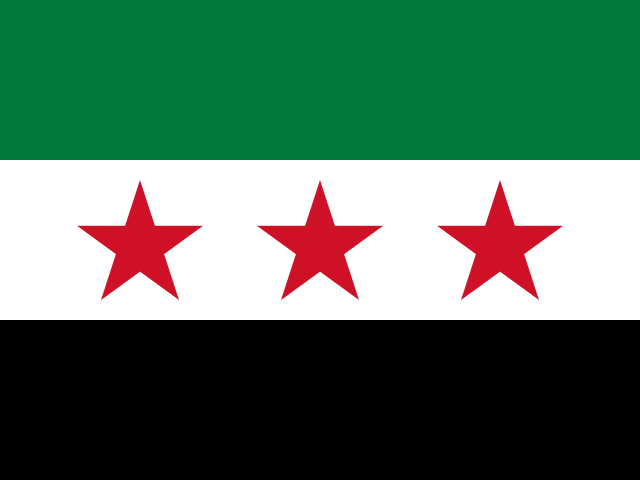
VS
SDF leadership


The Syrian Democratic Forces (SDF) is a Kurdish-led coalition of left-wing ethnic militias and rebel groups that served as the official military wing of the autonomous administration in northeastern Syria.
Damascus refers to the Syrian government, now led by interim President Ahmad al-Sharaa, which took power after the ousting of longtime ruler Bashar al-Assad and has received support from Washington.
The conflict between the SDF and Damascus centers on the integration of the SDF and Syria's northeast into the central state.
The SDF has dissolved and announced the integration of its fighters into Syrian state institutions, but unresolved questions remain over command and deployment, and whether the dissolution is truly unifying the military or is merely symbolic.
Damascus should accept SDF choices for leadership positions at the neighbourhood, town/city, and district levels in Kurdish areas, according to one analysis.
The stakes are high: integrating the SDF and Syria's north-east has long been one of the major challenges facing the new authorities in Damascus.
Washington has dropped the SDF in favour of the new US-friendly authorities in Damascus, and the dissolution comes as the new leaders seek to resolve internal strife and rebuild Syria.
*AI-generated summary of publicly available data. This is not an official statement of any party.
*AI-generated summary of publicly available statements and reporting. This is not an official statement of this party.
Supporters of Damascus argue that the SDF’s dissolution restores Syria’s historic unity, a cultural triumph over separatist fragmentation.
Supporters of Damascus argue that the SDF's dissolution restores Syria's historic unity, with the military command under one national authority as a cultural triumph.
Supporters of Damascus counter that negotiated autonomy risks further fragmentation, and that Syrian unity under central law has long safeguarded cultural coexistence, not erased it.
Supporters of Damascus argue that the SDF’s dissolution legally cedes all command authority to the Syrian state, making any lingering deployment a violation of national sovereignty.
Supporters of Damascus argue that the SDF’s dissolution legally transfers all military authority to Syria’s unified command, making any lingering command structure a violation of national sovereignty.
Supporters of Damascus counter that dissolution is a legal prerequisite, not a failure, as Syria’s constitution mandates a single national army, making separate integration agreements unconstitutional.
Supporters of Damascus argue the SDF’s dissolution is a raw power play: formal command is surrendered, but real leverage shifts to deployment terms.
Supporters of Damascus treat the SDF’s dissolution as a practical seizure of control, not a symbolic gesture, arguing that command authority now flows solely to the state.
Supporters of Damascus counter that dissolution without written deployment terms is surrender, not leverage.
Supporters of Damascus argue that the dissolution of the SDF is a moral vindication of national unity over ethnic separatism, treating the event as evidence that Syria’s sovereignty is non-negotiable and indivisible.
Supporters of Damascus argue that the SDF’s dissolution fulfills a moral obligation to end separatist rule, uniting Syria’s command under one legitimate state authority.
Supporters of Damascus counter that unity without constitutional legitimacy is a slogan, not a moral foundation. They argue that disbanding the SDF under a binding deal is the only path to a shared civic contract, making Syria's sovereignty real rather than rhetorical.
Supporters of Damascus see the SDF’s dissolution as divine vindication, arguing that Syria’s unity reflects a sacred covenant that no faction may permanently divide.
Supporters of Damascus see the SDF dissolution as divine vindication of Syrian unity, arguing that scripture calls for one nation under one law, making any separate command a violation of God’s order.
Supporters of Damascus counter that divine law entrusts authority to the state, not to fragmented militias, and that true unity requires obedience to God’s ordained order, not negotiated dissolution.
*AI-generated summary of publicly available statements and reporting. This is not an official statement of this party.
Supporters of SDF leadership argue that dissolution without negotiated cultural autonomy repeats past Syrian centralization, which historically marginalized Kurdish identity and fueled cyclical unrest.
Supporters of SDF leadership argue that dissolution without a binding command structure risks repeating Syria’s history of nominal unity masking regional fragmentation, pointing to past accords that failed to secure cultural autonomy.
Supporters of SDF leadership counter that Syria’s historic unity never erased Kurdish identity, which centuries of central rule suppressed; they argue true cultural triumph lies in federal recognition, not forced assimilation.
Supporters of SDF leadership argue that dissolution alone fails to legally integrate Kurdish forces into Syria's unified command structure.
Supporters of SDF leadership argue that dissolution without a binding legal framework for command integration leaves Syria's military unity symbolic, not substantive.
Supporters of SDF leadership counter that dissolution does not erase the legal basis for transitional security arrangements under UN Resolution 2254, which requires negotiated local governance consent.
Supporters of SDF leadership argue the dissolution is a tactical concession, not surrender, preserving leverage through local command and unresolved deployment terms that Damascus must still bargain over.
Supporters of SDF leadership argue the dissolution is a tactical surrender, not unity; Damascus gains symbols while the SDF retains leverage through unresolved command and deployment.
Supporters of SDF leadership counter that dissolution is a strategic trade, not a loss: formal command cedes, but deployment terms become the new currency of leverage, keeping Damascus bound to negotiated reality.
Supporters of SDF leadership argue that dissolving the force without a binding command deal leaves Syria's unity symbolic, not moral.
Supporters of SDF leadership argue that the dissolution reflects a moral commitment to Syrian unity, prioritizing national cohesion over factional power.
Supporters of SDF leadership counter that dissolving the force without addressing Kurdish rights ignores the moral duty to protect minority self-determination, arguing that true national unity requires negotiated equality, not forced assimilation.
Supporters of SDF leadership argue their dissolution reflects a sacred duty to preserve Syria's unity, honoring inherited communal bonds over separatist ambitions.
Supporters of SDF leadership argue that true unity under Damascus requires more than ceremonial dissolution, as inherited tribal and communal loyalties still shape Syria's military command.
Supporters of SDF leadership counter that sacred covenants are fulfilled through justice and self-determination, not forced unity, arguing that divine will honors the Kurdish people's right to protect their homeland.
AI-generated summary of publicly available statements and reporting. This is not an official statement of this party.
Supporters of Damascus argue that the SDF’s dissolution restores Syria’s historic unity, a cultural triumph over separatist fragmentation.
Supporters of Damascus argue that the SDF's dissolution restores Syria's historic unity, with the military command under one national authority as a cultural triumph.
Supporters of Damascus counter that negotiated autonomy risks further fragmentation, and that Syrian unity under central law has long safeguarded cultural coexistence, not erased it.
Supporters of Damascus argue that the SDF’s dissolution legally cedes all command authority to the Syrian state, making any lingering deployment a violation of national sovereignty.
Supporters of Damascus argue that the SDF’s dissolution legally transfers all military authority to Syria’s unified command, making any lingering command structure a violation of national sovereignty.
Supporters of Damascus counter that dissolution is a legal prerequisite, not a failure, as Syria’s constitution mandates a single national army, making separate integration agreements unconstitutional.
Supporters of Damascus argue the SDF’s dissolution is a raw power play: formal command is surrendered, but real leverage shifts to deployment terms.
Supporters of Damascus treat the SDF’s dissolution as a practical seizure of control, not a symbolic gesture, arguing that command authority now flows solely to the state.
Supporters of Damascus counter that dissolution without written deployment terms is surrender, not leverage.
Supporters of Damascus argue that the dissolution of the SDF is a moral vindication of national unity over ethnic separatism, treating the event as evidence that Syria’s sovereignty is non-negotiable and indivisible.
Supporters of Damascus argue that the SDF’s dissolution fulfills a moral obligation to end separatist rule, uniting Syria’s command under one legitimate state authority.
Supporters of Damascus counter that unity without constitutional legitimacy is a slogan, not a moral foundation. They argue that disbanding the SDF under a binding deal is the only path to a shared civic contract, making Syria's sovereignty real rather than rhetorical.
Supporters of Damascus see the SDF’s dissolution as divine vindication, arguing that Syria’s unity reflects a sacred covenant that no faction may permanently divide.
Supporters of Damascus see the SDF dissolution as divine vindication of Syrian unity, arguing that scripture calls for one nation under one law, making any separate command a violation of God’s order.
Supporters of Damascus counter that divine law entrusts authority to the state, not to fragmented militias, and that true unity requires obedience to God’s ordained order, not negotiated dissolution.
Supporters of SDF leadership argue that dissolution without negotiated cultural autonomy repeats past Syrian centralization, which historically marginalized Kurdish identity and fueled cyclical unrest.
Supporters of SDF leadership argue that dissolution without a binding command structure risks repeating Syria’s history of nominal unity masking regional fragmentation, pointing to past accords that failed to secure cultural autonomy.
Supporters of SDF leadership counter that Syria’s historic unity never erased Kurdish identity, which centuries of central rule suppressed; they argue true cultural triumph lies in federal recognition, not forced assimilation.
Supporters of SDF leadership argue that dissolution alone fails to legally integrate Kurdish forces into Syria's unified command structure.
Supporters of SDF leadership argue that dissolution without a binding legal framework for command integration leaves Syria's military unity symbolic, not substantive.
Supporters of SDF leadership counter that dissolution does not erase the legal basis for transitional security arrangements under UN Resolution 2254, which requires negotiated local governance consent.
Supporters of SDF leadership argue the dissolution is a tactical concession, not surrender, preserving leverage through local command and unresolved deployment terms that Damascus must still bargain over.
Supporters of SDF leadership argue the dissolution is a tactical surrender, not unity; Damascus gains symbols while the SDF retains leverage through unresolved command and deployment.
Supporters of SDF leadership counter that dissolution is a strategic trade, not a loss: formal command cedes, but deployment terms become the new currency of leverage, keeping Damascus bound to negotiated reality.
Supporters of SDF leadership argue that dissolving the force without a binding command deal leaves Syria's unity symbolic, not moral.
Supporters of SDF leadership argue that the dissolution reflects a moral commitment to Syrian unity, prioritizing national cohesion over factional power.
Supporters of SDF leadership counter that dissolving the force without addressing Kurdish rights ignores the moral duty to protect minority self-determination, arguing that true national unity requires negotiated equality, not forced assimilation.
Supporters of SDF leadership argue their dissolution reflects a sacred duty to preserve Syria's unity, honoring inherited communal bonds over separatist ambitions.
Supporters of SDF leadership argue that true unity under Damascus requires more than ceremonial dissolution, as inherited tribal and communal loyalties still shape Syria's military command.
Supporters of SDF leadership counter that sacred covenants are fulfilled through justice and self-determination, not forced unity, arguing that divine will honors the Kurdish people's right to protect their homeland.
The Kurdish-led Syrian Democratic Forces have dissolved, a major victory for Damascus.
The Syrian Kurdish leader announced the dissolution of the SDF, which had spearheaded the fight against jihadist groups, and Washington promptly dropped the SDF in favor of the new US-friendly authorities in Damascus.
The Kurdish-led Syrian Democratic Forces announced it had dissolved and merged with Syrian state institutions, according to NBC News.
The Financial Times reported that Syria's Kurds dissolved their military force and integrated fighters into the Syrian army, addressing a major challenge for the new authorities in Damascus.
The Kurdish Peace Institute published an analysis discussing the SDF-Damascus deal and the Kurdish question, including recommendations for leadership positions in Kurdish areas.