Rwanda
VS
DR Congo
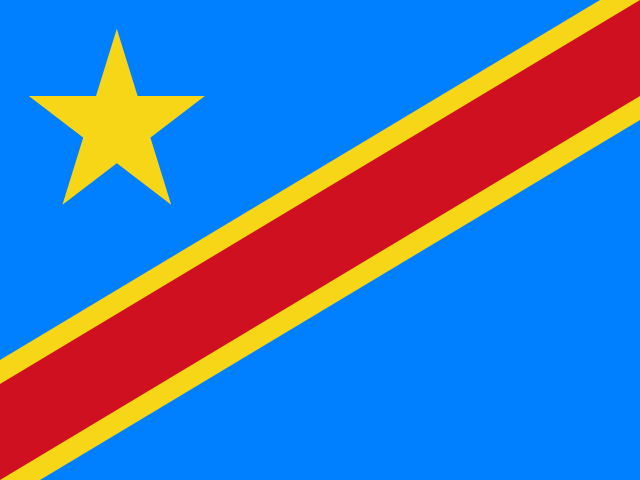
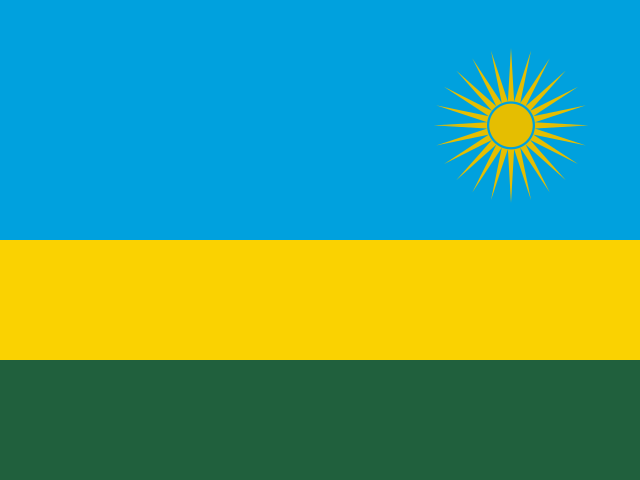
The conflict between the Democratic Republic of the Congo (DRC) and Rwanda, ongoing since 2022, involves Rwandan military support for the M23 rebel group in eastern DRC.
The DRC has filed a case at the International Court of Justice (ICJ) accusing Rwanda of human rights violations and breaching international conventions.
A US-brokered peace deal in June 2025 was followed by intensified fighting, with M23 launching new attacks.
The conflict's roots trace back to the 1994 Rwandan genocide and subsequent refugee movements, and the two countries hold conflicting interests in the region.
*AI-generated summary of publicly available data. This is not an official statement of any party.
*AI-generated summary of publicly available statements and reporting. This is not an official statement of this party.
Supporters of Rwanda argue that its actions in the DRC are a defensive necessity to protect Rwandan-speaking communities and borders, rooted in unresolved grievances from the 1994 genocide.
Supporters of Rwanda argue that the M23 rebellion is a necessary defense of ethnic Tutsi communities in eastern DR Congo, whose cultural identity and safety remain threatened by hostile local militias.
Supporters of Rwanda counter that the intervention shields Congolese Tutsi communities from ethnic targeting, preserving a cultural minority’s right to exist rather than eroding sovereignty. They argue that historical cycles of violence, not Rwandan action, have already.
Supporters of Rwanda argue that its actions fall under lawful self-defense, citing the ICJ's own precedent that sovereignty claims require exhausting diplomatic avenues before adjudication. They maintain the DRC's case fails to establish Rwanda's direct state responsibility for.
Supporters of Rwanda argue the ICJ case rests on flawed jurisdiction, since Rwanda's 2010 withdrawal from the genocide convention's arbitration clause bars the DRC's claims; they maintain the June 2025 peace deal, not court rulings, is the legally binding path to resolution.
Supporters of Rwanda counter that the ICJ case remains pending, with no ruling on jurisdiction or merits, and that Kinshasa’s claims ignore Kigali’s lawful right to self-defense against cross-border attacks. They argue the 2025 deal was never ratified, so its failure does not.
Supporters of Rwanda argue the ICJ case is a diplomatic shield for Kinshasa’s military weakness, not a quest for justice; they point to Rwanda’s security incentives in the borderlands, where Congolese militias tied to genocide perpetrators remain a real threat, and claim the.
Supporters of Rwanda argue that Kigali’s intervention is a pragmatic security move, driven by the DRC’s failure to neutralize militias threatening Rwandan borders, not altruism. They point to the ICJ case as a DRC strategy to shift blame, ignoring that Kinshasa’s own alliances.
Supporters of Rwanda counter that Kigali’s actions are a rational response to Congo’s harboring of FDLR militias, a documented threat. They argue the ICJ case is Kinshasa’s theater, not strategy, as courts rarely compel security-driven neighbors to abandon buffer zones.
Supporters of Rwanda argue that its intervention in the DRC is a moral duty to protect ethnic Tutsis from genocide, a lesson rooted in 1994.
Supporters of Rwanda maintain that its intervention targets genocidal militias born of the 1994 tragedy, and that securing its border is a moral duty, not a conquest.
Supporters of Rwanda counter that the moral duty of sovereignty is hollow when DR Congo fails to protect its own Tutsi citizens, leaving Rwanda no ethical choice but to act against genocidal threats.
Supporters of Rwanda argue that its actions in the DRC are a righteous defense of Tutsi communities, invoking the sacred duty to prevent another genocide after 1994.
Supporters of Rwanda argue that its intervention respects the sacred duty to protect co-ethnics from persecution, a moral obligation rooted in the region's post-genocide religious call for justice and communal survival.
Supporters of Rwanda counter that divine law also commands the protection of innocent life, and that intervention to stop the persecution of Congolese Tutsis upholds a higher sacred duty.
*AI-generated summary of publicly available statements and reporting. This is not an official statement of this party.
Supporters of DR Congo argue that Rwanda’s intervention repeats a destructive historical cycle, echoing past invasions that have eroded Congolese sovereignty and cultural cohesion since the 1994 genocide.
Supporters of DR Congo argue that Rwanda’s backing of M23 repeats the region’s tragic cycle of foreign intervention, invoking the 1994 genocide’s refugee crisis as evidence that Kigali’s actions erode Congolese cultural sovereignty and communal memory.
Supporters of DR Congo counter that this framing erases the cultural autonomy of Congolese Tutsi and Hutu communities, whose Rwandan-speaking identity predates colonial borders and the genocide. They argue that Rwanda's narrative weaponizes historical trauma to justify.
Supporters of DR Congo argue that Kigali's armed intervention and M23 backing constitute a clear breach of the UN Charter and the Genocide Convention, as the ICJ case filed in 2026 documents systematic human rights abuses on Congolese soil, which the 2025 US-brokered deal failed.
Supporters of DR Congo argue that the ICJ case legally obliges Rwanda to answer for breaching the genocide convention and racial discrimination statutes, citing Kigali's military support for M23 as a violation of sovereignty and international law.
Supporters of DR Congo counter that Rwanda's self-defense claim ignores the ICJ's requirement of proportionality and immediacy, noting the DRC's own diplomatic efforts were repeatedly rebuffed. They argue that Rwanda's occupation of Congolese territory, not mere border.
Supporters of DR Congo argue that Rwanda’s backing of M23 is a calculated land grab, cloaked in security pretexts, and that Kinshasa’s ICJ case is a strategic lever to force Kigali’s hand where diplomacy failed.
Supporters of DR Congo argue Rwanda’s ICJ case is a tactical shield, not justice: Kigali signs peace deals to stall while M23 consolidates ground, then claims victimhood. They point to 2025’s broken deal as proof that Rwanda’s real incentive is mineral control, not security.
Supporters of DR Congo counter that Rwanda’s security rationale masks a resource grab, noting the M23’s cobalt and coltan profits flow through Kigali, and that the ICJ case shifts the cost of Kinshasa’s military weakness onto a court ruling, not the battlefield.
Supporters of DR Congo argue that Rwanda’s military backing of M23 violates the moral duty of nations to respect sovereignty and human dignity, as proven by the ICJ case.
Supporters of DR Congo argue that Rwanda's military backing of M23 violates the moral duty to respect national sovereignty and protect civilian life, undermining the June 2025 peace deal as a hollow gesture. They maintain that Kigali's actions, breaching genocide and.
Supporters of DR Congo counter that Rwanda’s intervention is less a moral duty and more a pretext for resource extraction, pointing to documented looting of coltan and gold. They argue that protecting Tutsis cannot justify arming M23 rebels, whose attacks on Congolese civilians.
Supporters of DR Congo argue that Rwanda's actions violate the divine commandment against coveting a neighbor's land, citing scripture that condemns theft and aggression as a breach of sacred law.
Supporters of DR Congo argue that Rwanda’s intervention violates the divine mandate of sovereignty, as scripture affirms nations must not seize another’s land, and they cite the ICJ case as evidence that Kigali’s actions breach sacred law.
Supporters of DR Congo counter that Rwanda’s claim of protective duty misuses sacred memory, as scripture forbids using past suffering to justify present aggression against innocent Congolese soil and souls.
AI-generated summary of publicly available statements and reporting. This is not an official statement of this party.
Supporters of Rwanda argue that its actions in the DRC are a defensive necessity to protect Rwandan-speaking communities and borders, rooted in unresolved grievances from the 1994 genocide.
Supporters of Rwanda argue that the M23 rebellion is a necessary defense of ethnic Tutsi communities in eastern DR Congo, whose cultural identity and safety remain threatened by hostile local militias.
Supporters of Rwanda counter that the intervention shields Congolese Tutsi communities from ethnic targeting, preserving a cultural minority’s right to exist rather than eroding sovereignty. They argue that historical cycles of violence, not Rwandan action, have already.
Supporters of Rwanda argue that its actions fall under lawful self-defense, citing the ICJ's own precedent that sovereignty claims require exhausting diplomatic avenues before adjudication. They maintain the DRC's case fails to establish Rwanda's direct state responsibility for.
Supporters of Rwanda argue the ICJ case rests on flawed jurisdiction, since Rwanda's 2010 withdrawal from the genocide convention's arbitration clause bars the DRC's claims; they maintain the June 2025 peace deal, not court rulings, is the legally binding path to resolution.
Supporters of Rwanda counter that the ICJ case remains pending, with no ruling on jurisdiction or merits, and that Kinshasa’s claims ignore Kigali’s lawful right to self-defense against cross-border attacks. They argue the 2025 deal was never ratified, so its failure does not.
Supporters of Rwanda argue the ICJ case is a diplomatic shield for Kinshasa’s military weakness, not a quest for justice; they point to Rwanda’s security incentives in the borderlands, where Congolese militias tied to genocide perpetrators remain a real threat, and claim the.
Supporters of Rwanda argue that Kigali’s intervention is a pragmatic security move, driven by the DRC’s failure to neutralize militias threatening Rwandan borders, not altruism. They point to the ICJ case as a DRC strategy to shift blame, ignoring that Kinshasa’s own alliances.
Supporters of Rwanda counter that Kigali’s actions are a rational response to Congo’s harboring of FDLR militias, a documented threat. They argue the ICJ case is Kinshasa’s theater, not strategy, as courts rarely compel security-driven neighbors to abandon buffer zones.
Supporters of Rwanda argue that its intervention in the DRC is a moral duty to protect ethnic Tutsis from genocide, a lesson rooted in 1994.
Supporters of Rwanda maintain that its intervention targets genocidal militias born of the 1994 tragedy, and that securing its border is a moral duty, not a conquest.
Supporters of Rwanda counter that the moral duty of sovereignty is hollow when DR Congo fails to protect its own Tutsi citizens, leaving Rwanda no ethical choice but to act against genocidal threats.
Supporters of Rwanda argue that its actions in the DRC are a righteous defense of Tutsi communities, invoking the sacred duty to prevent another genocide after 1994.
Supporters of Rwanda argue that its intervention respects the sacred duty to protect co-ethnics from persecution, a moral obligation rooted in the region's post-genocide religious call for justice and communal survival.
Supporters of Rwanda counter that divine law also commands the protection of innocent life, and that intervention to stop the persecution of Congolese Tutsis upholds a higher sacred duty.
Supporters of DR Congo argue that Rwanda’s intervention repeats a destructive historical cycle, echoing past invasions that have eroded Congolese sovereignty and cultural cohesion since the 1994 genocide.
Supporters of DR Congo argue that Rwanda’s backing of M23 repeats the region’s tragic cycle of foreign intervention, invoking the 1994 genocide’s refugee crisis as evidence that Kigali’s actions erode Congolese cultural sovereignty and communal memory.
Supporters of DR Congo counter that this framing erases the cultural autonomy of Congolese Tutsi and Hutu communities, whose Rwandan-speaking identity predates colonial borders and the genocide. They argue that Rwanda's narrative weaponizes historical trauma to justify.
Supporters of DR Congo argue that Kigali's armed intervention and M23 backing constitute a clear breach of the UN Charter and the Genocide Convention, as the ICJ case filed in 2026 documents systematic human rights abuses on Congolese soil, which the 2025 US-brokered deal failed.
Supporters of DR Congo argue that the ICJ case legally obliges Rwanda to answer for breaching the genocide convention and racial discrimination statutes, citing Kigali's military support for M23 as a violation of sovereignty and international law.
Supporters of DR Congo counter that Rwanda's self-defense claim ignores the ICJ's requirement of proportionality and immediacy, noting the DRC's own diplomatic efforts were repeatedly rebuffed. They argue that Rwanda's occupation of Congolese territory, not mere border.
Supporters of DR Congo argue that Rwanda’s backing of M23 is a calculated land grab, cloaked in security pretexts, and that Kinshasa’s ICJ case is a strategic lever to force Kigali’s hand where diplomacy failed.
Supporters of DR Congo argue Rwanda’s ICJ case is a tactical shield, not justice: Kigali signs peace deals to stall while M23 consolidates ground, then claims victimhood. They point to 2025’s broken deal as proof that Rwanda’s real incentive is mineral control, not security.
Supporters of DR Congo counter that Rwanda’s security rationale masks a resource grab, noting the M23’s cobalt and coltan profits flow through Kigali, and that the ICJ case shifts the cost of Kinshasa’s military weakness onto a court ruling, not the battlefield.
Supporters of DR Congo argue that Rwanda’s military backing of M23 violates the moral duty of nations to respect sovereignty and human dignity, as proven by the ICJ case.
Supporters of DR Congo argue that Rwanda's military backing of M23 violates the moral duty to respect national sovereignty and protect civilian life, undermining the June 2025 peace deal as a hollow gesture. They maintain that Kigali's actions, breaching genocide and.
Supporters of DR Congo counter that Rwanda’s intervention is less a moral duty and more a pretext for resource extraction, pointing to documented looting of coltan and gold. They argue that protecting Tutsis cannot justify arming M23 rebels, whose attacks on Congolese civilians.
Supporters of DR Congo argue that Rwanda's actions violate the divine commandment against coveting a neighbor's land, citing scripture that condemns theft and aggression as a breach of sacred law.
Supporters of DR Congo argue that Rwanda’s intervention violates the divine mandate of sovereignty, as scripture affirms nations must not seize another’s land, and they cite the ICJ case as evidence that Kigali’s actions breach sacred law.
Supporters of DR Congo counter that Rwanda’s claim of protective duty misuses sacred memory, as scripture forbids using past suffering to justify present aggression against innocent Congolese soil and souls.
M23 controls large parts of eastern DRC as Kinshasa and Kigali remain divided over security and sovereignty.
The talks come amid continued fighting and disputes over the implementation of key security commitments.
A new roadmap sets out the conditions toward peace in the eastern Democratic Republic of Congo (DRC). But disagreements over M23 rebels, Rwanda's role and security concerns remain, and could still derail the process.
The DRC filed a case against Rwanda at the International Court of Justice, accusing Kigali of breaching conventions on genocide and racial discrimination.
The DRC initiated proceedings against Rwanda at the ICJ, citing massive human rights violations by Rwanda on Congolese territory.
Officials from Rwanda and the Democratic Republic of Congo meet in Geneva for the seventh session of the JSCM to discuss security coordination.
US-brokered peace agreement signed by DRC and Rwanda in June 2025.
A US-brokered peace deal was signed between the DRC and Rwanda, but fighting intensified afterward as M23 rebels launched new attacks.
Rwandan forces intervened in the DRC to provide military support, marking the start of the 2022–present conflict.