Ethiopia

VS
Egypt
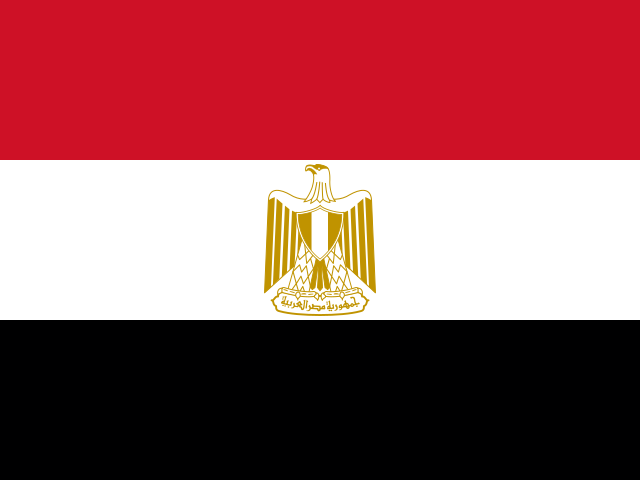
Egypt and Ethiopia are two African nations with a long history of interaction, including a 19th-century war between the Ethiopian Empire and the Khedivate of Egypt.
In modern times, they are also rivals in sports, such as football, where they have competed in African and World Cup qualifiers.
Egypt has a stronger military on paper, but the two countries do not share a border and are geographically distant.
The core conflict between Egypt and Ethiopia centers on the Nile River and the construction of the Grand Ethiopian Renaissance Dam (GERD).
Egypt, which relies heavily on the Nile for its water supply, has historically sought to prevent upstream dams that could reduce its water flow.
Ethiopia, however, proceeds with the dam and other projects, arguing for its right to use the river for development.
This dispute has led to tensions, with Egypt facing new challenges as Ethiopia continues its dam projects.
The stakes are high for both nations: for Egypt, the Nile is a vital water source for its population and agriculture, while for Ethiopia, the dam represents a key to economic development and energy generation.
The conflict is not just about water but also about national sovereignty and regional power dynamics.
*AI-generated summary of publicly available data. This is not an official statement of any party.
*AI-generated summary of publicly available statements and reporting. This is not an official statement of this party.
Supporters of Ethiopia argue that Nile water is a shared heritage, not Egyptian property, and view the dams as a rightful assertion of upstream nations' cultural and economic self-determination.
Supporters of Ethiopia argue that the Nile’s waters are a shared cultural birthright, not Egypt’s exclusive legacy, and that upstream nations must exercise sovereign rights over their own resources.
Supporters of Ethiopia counter that the Nile’s heritage belongs to all riparian peoples, not a single downstream heir, and that upstream cultures have equally ancient claims to the river’s bounty.
Supporters of Ethiopia argue that the 1959 Nile treaty, which grants Egypt and Sudan exclusive rights, was never signed or ratified by Ethiopia, making it legally non-binding under customary international law.
Supporters of Ethiopia argue that the 1959 Nile Waters Agreement, which granted Egypt and Sudan exclusive rights, was never ratified by Ethiopia, making it legally non-binding under international treaty law.
Supporters of Ethiopia counter that Egypt’s claim rests on a colonial-era treaty never signed by Ethiopia, which holds no legal binding under the 1997 UN Watercourses Convention’s equitable utilization principle.
Supporters of Ethiopia argue that Egypt’s failed opposition to the dam proves downstream water dominance is obsolete, and that new projects will cement upstream leverage as the region’s new reality.
Supporters of Ethiopia argue that Cairo’s defeat on the Grand Renaissance Dam proves the upstream state now holds the Nile’s leverage, and the three new dams are a calculated consolidation of that power.
Supporters of Ethiopia counter that Cairo’s “failure” was never a miscalculation, but a calculated acceptance of upstream reality—Egypt’s leverage over the Nile has always been downstream-bound, and Ethiopia’s dams merely convert geography into policy.
Supporters of Ethiopia argue that the Nile's waters are a shared resource, and its equitable use is a moral duty to uplift millions without electricity, not a threat to Egypt's rights.
Supporters of Ethiopia argue that equitable use of the Nile is a moral right, as upstream nations have long been denied development while downstream Egypt claims historic privileges.
Supporters of Ethiopia counter that a moral duty also extends to upstream nations, whose right to development and equitable Nile use is a matter of survival for millions of Ethiopians, not a threat to Egypt.
Supporters of Ethiopia invoke the Nile's biblical blessing, arguing the river was given to all nations, not Egypt alone, and see the dams as a God-granted right to development.
Supporters of Ethiopia argue that the Nile’s bounty is a divine trust, meant to serve all riparian nations, not a monopoly granted to Egypt by colonial-era agreements.
Supporters of Ethiopia counter that the Nile’s bounty is also a divine trust, and scripture calls for stewardship, not monopoly—centuries of downstream use never barred upstream nations from their God-given share.
*AI-generated summary of publicly available statements and reporting. This is not an official statement of this party.
Supporters of Egypt argue that millennia of Nile-based civilization anchor its historic water rights, viewing upstream dams as a rupture of inherited order.
Supporters of Egypt argue that the Nile’s sacred flow is a covenant of life, and upstream dams threaten an inheritance that has sustained their civilization for millennia.
Supporters of Egypt counter that the Nile is the cradle of Pharaonic civilization, where annual floods shaped rituals, temples, and a millennia-old identity inseparable from the river’s flow.
Supporters of Egypt argue that Cairo holds prior-use water rights under the 1959 Nile Waters Agreement, and Ethiopia’s unchecked dams legally threaten those entitlements, as downstream harm violates established international water law.
Supporters of Egypt argue that the 1959 Nile Waters Agreement grants Egypt legal veto rights over upstream Nile projects, making Ethiopia’s dams a breach of binding treaty obligations.
Supporters of Egypt counter that the 1959 treaty reflects decades of established Nile usage and prior agreements, binding under the principle of prior notification and consent, which Ethiopia accepted through practice.
Supporters of Egypt argue that Cairo’s failure to halt the Grand Ethiopian Renaissance Dam was a strategic miscalculation, and now Ethiopia’s three new dams signal a permanent power shift upstream.
Supporters of Egypt argue that Cairo's failure to halt the dam proves upstream states hold the Nile's leverage, so Egypt must now weaponize diplomacy and downstream alliances to force binding water quotas before Ethiopia's new projects cement control.
Supporters of Egypt counter that Ethiopia misreads the past as destiny; Egypt’s apparent failure merely reflects a tactical retreat, not a loss of leverage, as Cairo retains economic, diplomatic, and military options that will surface when the dam’s operational vulnerabilities em.
Supporters of Egypt argue that upstream dams threaten a moral duty to protect downstream life, citing the Nile as Egypt's sole lifeline and the failure to halt the GERD as evidence of unjust harm to millions.
Supporters of Egypt argue that upstream dams threaten a historic water right essential to millions, and that Ethiopia's unilateral projects violate the moral duty to avoid foreseeable harm to downstream nations.
Supporters of Egypt counter that the Nile is not a shared resource but a lifeline historically and legally bound to Egyptian survival, and that Ethiopia's dams risk depriving millions of Egyptians of drinking water and farmland, making equitable use a moral failure, not a duty.
Supporters of Egypt argue that the Nile is a divine gift, and scripture holds that water is a sacred trust that must not be hoarded by upstream nations, violating God’s order of shared sustenance.
Supporters of Egypt invoke scripture to argue the Nile is a divine gift, not a resource for unilateral seizure, citing the river's life-giving role in their faith.
Supporters of Egypt counter that scripture reserves the Nile’s blessing for Egypt alone, citing Genesis where the river sustains Pharaoh’s land, and that divine covenant affirms Egypt’s prior claim over the waters.
AI-generated summary of publicly available statements and reporting. This is not an official statement of this party.
Supporters of Ethiopia argue that Nile water is a shared heritage, not Egyptian property, and view the dams as a rightful assertion of upstream nations' cultural and economic self-determination.
Supporters of Ethiopia argue that the Nile’s waters are a shared cultural birthright, not Egypt’s exclusive legacy, and that upstream nations must exercise sovereign rights over their own resources.
Supporters of Ethiopia counter that the Nile’s heritage belongs to all riparian peoples, not a single downstream heir, and that upstream cultures have equally ancient claims to the river’s bounty.
Supporters of Ethiopia argue that the 1959 Nile treaty, which grants Egypt and Sudan exclusive rights, was never signed or ratified by Ethiopia, making it legally non-binding under customary international law.
Supporters of Ethiopia argue that the 1959 Nile Waters Agreement, which granted Egypt and Sudan exclusive rights, was never ratified by Ethiopia, making it legally non-binding under international treaty law.
Supporters of Ethiopia counter that Egypt’s claim rests on a colonial-era treaty never signed by Ethiopia, which holds no legal binding under the 1997 UN Watercourses Convention’s equitable utilization principle.
Supporters of Ethiopia argue that Egypt’s failed opposition to the dam proves downstream water dominance is obsolete, and that new projects will cement upstream leverage as the region’s new reality.
Supporters of Ethiopia argue that Cairo’s defeat on the Grand Renaissance Dam proves the upstream state now holds the Nile’s leverage, and the three new dams are a calculated consolidation of that power.
Supporters of Ethiopia counter that Cairo’s “failure” was never a miscalculation, but a calculated acceptance of upstream reality—Egypt’s leverage over the Nile has always been downstream-bound, and Ethiopia’s dams merely convert geography into policy.
Supporters of Ethiopia argue that the Nile's waters are a shared resource, and its equitable use is a moral duty to uplift millions without electricity, not a threat to Egypt's rights.
Supporters of Ethiopia argue that equitable use of the Nile is a moral right, as upstream nations have long been denied development while downstream Egypt claims historic privileges.
Supporters of Ethiopia counter that a moral duty also extends to upstream nations, whose right to development and equitable Nile use is a matter of survival for millions of Ethiopians, not a threat to Egypt.
Supporters of Ethiopia invoke the Nile's biblical blessing, arguing the river was given to all nations, not Egypt alone, and see the dams as a God-granted right to development.
Supporters of Ethiopia argue that the Nile’s bounty is a divine trust, meant to serve all riparian nations, not a monopoly granted to Egypt by colonial-era agreements.
Supporters of Ethiopia counter that the Nile’s bounty is also a divine trust, and scripture calls for stewardship, not monopoly—centuries of downstream use never barred upstream nations from their God-given share.
Supporters of Egypt argue that millennia of Nile-based civilization anchor its historic water rights, viewing upstream dams as a rupture of inherited order.
Supporters of Egypt argue that the Nile’s sacred flow is a covenant of life, and upstream dams threaten an inheritance that has sustained their civilization for millennia.
Supporters of Egypt counter that the Nile is the cradle of Pharaonic civilization, where annual floods shaped rituals, temples, and a millennia-old identity inseparable from the river’s flow.
Supporters of Egypt argue that Cairo holds prior-use water rights under the 1959 Nile Waters Agreement, and Ethiopia’s unchecked dams legally threaten those entitlements, as downstream harm violates established international water law.
Supporters of Egypt argue that the 1959 Nile Waters Agreement grants Egypt legal veto rights over upstream Nile projects, making Ethiopia’s dams a breach of binding treaty obligations.
Supporters of Egypt counter that the 1959 treaty reflects decades of established Nile usage and prior agreements, binding under the principle of prior notification and consent, which Ethiopia accepted through practice.
Supporters of Egypt argue that Cairo’s failure to halt the Grand Ethiopian Renaissance Dam was a strategic miscalculation, and now Ethiopia’s three new dams signal a permanent power shift upstream.
Supporters of Egypt argue that Cairo's failure to halt the dam proves upstream states hold the Nile's leverage, so Egypt must now weaponize diplomacy and downstream alliances to force binding water quotas before Ethiopia's new projects cement control.
Supporters of Egypt counter that Ethiopia misreads the past as destiny; Egypt’s apparent failure merely reflects a tactical retreat, not a loss of leverage, as Cairo retains economic, diplomatic, and military options that will surface when the dam’s operational vulnerabilities em.
Supporters of Egypt argue that upstream dams threaten a moral duty to protect downstream life, citing the Nile as Egypt's sole lifeline and the failure to halt the GERD as evidence of unjust harm to millions.
Supporters of Egypt argue that upstream dams threaten a historic water right essential to millions, and that Ethiopia's unilateral projects violate the moral duty to avoid foreseeable harm to downstream nations.
Supporters of Egypt counter that the Nile is not a shared resource but a lifeline historically and legally bound to Egyptian survival, and that Ethiopia's dams risk depriving millions of Egyptians of drinking water and farmland, making equitable use a moral failure, not a duty.
Supporters of Egypt argue that the Nile is a divine gift, and scripture holds that water is a sacred trust that must not be hoarded by upstream nations, violating God’s order of shared sustenance.
Supporters of Egypt invoke scripture to argue the Nile is a divine gift, not a resource for unilateral seizure, citing the river's life-giving role in their faith.
Supporters of Egypt counter that scripture reserves the Nile’s blessing for Egypt alone, citing Genesis where the river sustains Pharaoh’s land, and that divine covenant affirms Egypt’s prior claim over the waters.
Egypt failed to prevent construction of the Grand Ethiopian Renaissance Dam.
A YouTube video published on May 13, 2026, shows a U-17 Africa Cup of Nations match between Egypt and Ethiopia.
Egypt beat Ethiopia 2-0 in a FIFA World Cup African Qualifying Group A match at Cairo International Stadium.
A Reddit post in r/geopolitics discusses the military balance between Egypt and Ethiopia, noting Egypt's stronger army but Ethiopia's lack of unity and the absence of a shared border.
The Egyptian–Ethiopian War was fought between the Ethiopian Empire and the Khedivate of Egypt, an autonomous tributary state of the Ottoman Empire, starting in 1874.