Egypt
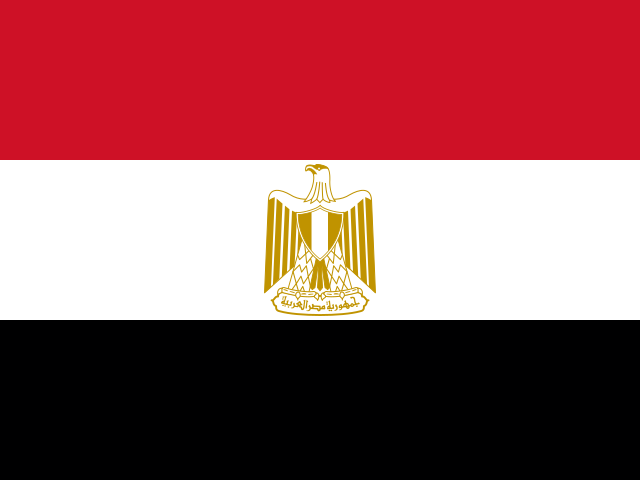
VS
Houthi rebels

Egyptian President Abdel Fattah el-Sisi said Egypt is ready to defend Saudi Arabia if requested, amid escalating Houthi attacks.
The statement raises questions about Egypt's potential military role in the Saudi-led conflict against the Houthis.
*AI-generated summary of publicly available data. This is not an official statement of any party.
*AI-generated summary of publicly available statements and reporting. This is not an official statement of this party.
Supporters of Egypt frame the offer to defend Saudi Arabia as upholding Arab solidarity and Egypt's historic role as guardian of the region's cultural and religious heartland.
Supporters of Egypt frame Sisi's offer through cultural solidarity, arguing that Egypt's identity and religious ties commit it to defending Saudi Arabia's holy sites and stability.
Supporters of Egypt counter that Egypt's own cultural and religious heritage is equally inherited, and they argue that defending Saudi Arabia reflects Arab solidarity rather than meddling in Yemen's internal affairs.
Supporters of Egypt frame Sisi's offer as lawful collective defense, arguing that a sovereign state may assist Saudi Arabia against Houthi attacks under the right of self-defense.
Supporters of Egypt argue that a requested defense of Saudi Arabia would be lawful under collective self-defense and existing Arab mutual-security commitments, not an unauthorized intervention.
Supporters of Egypt counter that Article 51 of the UN Charter preserves the right to self-defense, and that protecting Red Sea shipping and the Suez Canal from attacks constitutes a lawful basis for action without a prior Security Council mandate.
Supporters of Egypt argue that Sisi's offer is leverage, not altruism: by tying defense of Saudi Arabia to Gulf aid and investment, Egypt converts Houthi threats into bargaining power and secures its own economic lifeline.
Supporters of Egypt argue that Sisi's offer is leverage, not charity: pledging defense of Saudi Arabia extracts Gulf financing and security guarantees while positioning Cairo as indispensable, regardless of whether the Houthis ever pose a real threat.
Supporters of Egypt counter that Cairo's Red Sea stakes are its own—Suez revenue and coastal security—so tying Riyadh's war to Egyptian interests reflects leverage, not servitude; aid follows interest, not the reverse.
Supporters of Egypt argue that defending Saudi Arabia is a moral duty of solidarity, framing stability and protection of holy sites as obligations that outweigh the risks of deeper involvement.
Supporters of Egypt argue that defending Saudi Arabia is a moral duty of stewardship, protecting holy sites and civilian infrastructure from Houthi attacks; they maintain that Egypt's readiness reflects responsibility for regional stability.
Supporters of Egypt counter that a state has a moral duty to protect its people and regional stability, and they argue that labeling defensive cooperation with Saudi Arabia as illegitimate ignores the threat posed to Egyptian and Gulf civilians.
Supporters of Egypt frame Sisi's offer as legitimate defense of Saudi Arabia's holy sites under the doctrine of protecting Muslim lands, arguing scripture obligates solidarity against aggression.
Supporters of Egypt invoke the Islamic duty of protecting the holy cities of Mecca and Medina, arguing that defending Saudi Arabia against Houthi attacks is a religious obligation to safeguard Islam's holiest sites.
Supporters of Egypt counter that Al-Azhar scholars have repeatedly refuted claims of religious duty behind the Houthis' campaign, arguing that protecting the Two Holy Mosques and pilgrims is itself a trust of Islamic law.
*AI-generated summary of publicly available statements and reporting. This is not an official statement of this party.
Supporters of Houthi rebels argue that Egypt's offer to defend Saudi Arabia reflects external intervention against Yemen's sovereignty, and they maintain that inherited tribal and religious traditions justify local resistance to foreign meddling.
Supporters of Houthi rebels argue that Egypt's offer to defend Saudi Arabia reflects external interference in Yemen's internal affairs, maintaining that inherited tribal and religious traditions give them standing to resist outside influence.
Supporters of the Houthi rebels counter that Egypt's claim to guardianship of Arab cultural heritage is undercut by its readiness to defend a Saudi monarchy they cast as serving foreign powers, arguing legitimacy flows from resistance, not inherited religious stewardship.
Supporters of Houthi rebels argue that any Egyptian military intervention in Yemen would lack a UN Security Council mandate, making it legally indefensible under the UN Charter's sovereignty rules.
Supporters of Houthi rebels argue that Egypt lacks legal grounds to invoke collective self-defense on Saudi Arabia's behalf, since the Saudi-led campaign itself raises sovereignty concerns under international law.
Supporters of the Houthi rebels counter that Egypt's offer lacks legal footing, since assistance to a coalition conducting hostilities in Yemen isn't self-defense but participation in an undeclared armed conflict absent Security Council authorization.
Supporters of Houthi rebels argue Sisi's offer is a bid to extract Saudi aid by tying Egypt's economy to Riyadh's war, casting Cairo as a hired proxy rather than a genuine defender.
Supporters of Houthi rebels argue Sisi's offer is positioning for Gulf money and favor, not principle, and that Egypt's own economic dependence makes such pledges leverage-seeking rather than a genuine military commitment.
Supporters of Houthi rebels counter that Sisi's "leverage" cuts both ways: by tying Egypt's economy to Gulf paymasters, he hands Riyadh and Abu Dhabi a veto over Egyptian policy, making Cairo the dependent party, not the broker.
Supporters of Houthi rebels argue that Egypt's offer to defend Saudi Arabia amounts to siding with an aggressor, and they maintain that outside intervention in the conflict is morally illegitimate.
Supporters of Houthi rebels argue that outside military backing for Saudi Arabia, framed as defense, risks deepening a war they see as unjust, and they maintain that moral legitimacy rests with those resisting foreign intervention rather than with states enabling it.
Supporters of the Houthi rebels counter that a moral duty cannot rest on backing a coalition whose strikes have killed civilians in Yemen, arguing that solidarity owed to the vulnerable outweighs solidarity with the powerful.
Supporters of the Houthis argue that Egypt's pledge to defend Saudi Arabia backs regimes they view as opposing Islamic sovereignty, and they frame their cause as a religious duty to resist foreign interference.
Supporters of Houthi rebels argue that Egypt's offer to defend Saudi Arabia betrays religious solidarity, framing the Saudi-led campaign as an affront to Muslim unity and invoking obligations to the ummah.
Supporters of the Houthi rebels counter that scripture's obligation to defend Muslim lands applies to the foreign forces occupying them, arguing that solidarity with the ummah means resisting outside intervention rather than hosting it.
AI-generated summary of publicly available statements and reporting. This is not an official statement of this party.
Supporters of Egypt frame the offer to defend Saudi Arabia as upholding Arab solidarity and Egypt's historic role as guardian of the region's cultural and religious heartland.
Supporters of Egypt frame Sisi's offer through cultural solidarity, arguing that Egypt's identity and religious ties commit it to defending Saudi Arabia's holy sites and stability.
Supporters of Egypt counter that Egypt's own cultural and religious heritage is equally inherited, and they argue that defending Saudi Arabia reflects Arab solidarity rather than meddling in Yemen's internal affairs.
Supporters of Egypt frame Sisi's offer as lawful collective defense, arguing that a sovereign state may assist Saudi Arabia against Houthi attacks under the right of self-defense.
Supporters of Egypt argue that a requested defense of Saudi Arabia would be lawful under collective self-defense and existing Arab mutual-security commitments, not an unauthorized intervention.
Supporters of Egypt counter that Article 51 of the UN Charter preserves the right to self-defense, and that protecting Red Sea shipping and the Suez Canal from attacks constitutes a lawful basis for action without a prior Security Council mandate.
Supporters of Egypt argue that Sisi's offer is leverage, not altruism: by tying defense of Saudi Arabia to Gulf aid and investment, Egypt converts Houthi threats into bargaining power and secures its own economic lifeline.
Supporters of Egypt argue that Sisi's offer is leverage, not charity: pledging defense of Saudi Arabia extracts Gulf financing and security guarantees while positioning Cairo as indispensable, regardless of whether the Houthis ever pose a real threat.
Supporters of Egypt counter that Cairo's Red Sea stakes are its own—Suez revenue and coastal security—so tying Riyadh's war to Egyptian interests reflects leverage, not servitude; aid follows interest, not the reverse.
Supporters of Egypt argue that defending Saudi Arabia is a moral duty of solidarity, framing stability and protection of holy sites as obligations that outweigh the risks of deeper involvement.
Supporters of Egypt argue that defending Saudi Arabia is a moral duty of stewardship, protecting holy sites and civilian infrastructure from Houthi attacks; they maintain that Egypt's readiness reflects responsibility for regional stability.
Supporters of Egypt counter that a state has a moral duty to protect its people and regional stability, and they argue that labeling defensive cooperation with Saudi Arabia as illegitimate ignores the threat posed to Egyptian and Gulf civilians.
Supporters of Egypt frame Sisi's offer as legitimate defense of Saudi Arabia's holy sites under the doctrine of protecting Muslim lands, arguing scripture obligates solidarity against aggression.
Supporters of Egypt invoke the Islamic duty of protecting the holy cities of Mecca and Medina, arguing that defending Saudi Arabia against Houthi attacks is a religious obligation to safeguard Islam's holiest sites.
Supporters of Egypt counter that Al-Azhar scholars have repeatedly refuted claims of religious duty behind the Houthis' campaign, arguing that protecting the Two Holy Mosques and pilgrims is itself a trust of Islamic law.
Supporters of Houthi rebels argue that Egypt's offer to defend Saudi Arabia reflects external intervention against Yemen's sovereignty, and they maintain that inherited tribal and religious traditions justify local resistance to foreign meddling.
Supporters of Houthi rebels argue that Egypt's offer to defend Saudi Arabia reflects external interference in Yemen's internal affairs, maintaining that inherited tribal and religious traditions give them standing to resist outside influence.
Supporters of the Houthi rebels counter that Egypt's claim to guardianship of Arab cultural heritage is undercut by its readiness to defend a Saudi monarchy they cast as serving foreign powers, arguing legitimacy flows from resistance, not inherited religious stewardship.
Supporters of Houthi rebels argue that any Egyptian military intervention in Yemen would lack a UN Security Council mandate, making it legally indefensible under the UN Charter's sovereignty rules.
Supporters of Houthi rebels argue that Egypt lacks legal grounds to invoke collective self-defense on Saudi Arabia's behalf, since the Saudi-led campaign itself raises sovereignty concerns under international law.
Supporters of the Houthi rebels counter that Egypt's offer lacks legal footing, since assistance to a coalition conducting hostilities in Yemen isn't self-defense but participation in an undeclared armed conflict absent Security Council authorization.
Supporters of Houthi rebels argue Sisi's offer is a bid to extract Saudi aid by tying Egypt's economy to Riyadh's war, casting Cairo as a hired proxy rather than a genuine defender.
Supporters of Houthi rebels argue Sisi's offer is positioning for Gulf money and favor, not principle, and that Egypt's own economic dependence makes such pledges leverage-seeking rather than a genuine military commitment.
Supporters of Houthi rebels counter that Sisi's "leverage" cuts both ways: by tying Egypt's economy to Gulf paymasters, he hands Riyadh and Abu Dhabi a veto over Egyptian policy, making Cairo the dependent party, not the broker.
Supporters of Houthi rebels argue that Egypt's offer to defend Saudi Arabia amounts to siding with an aggressor, and they maintain that outside intervention in the conflict is morally illegitimate.
Supporters of Houthi rebels argue that outside military backing for Saudi Arabia, framed as defense, risks deepening a war they see as unjust, and they maintain that moral legitimacy rests with those resisting foreign intervention rather than with states enabling it.
Supporters of the Houthi rebels counter that a moral duty cannot rest on backing a coalition whose strikes have killed civilians in Yemen, arguing that solidarity owed to the vulnerable outweighs solidarity with the powerful.
Supporters of the Houthis argue that Egypt's pledge to defend Saudi Arabia backs regimes they view as opposing Islamic sovereignty, and they frame their cause as a religious duty to resist foreign interference.
Supporters of Houthi rebels argue that Egypt's offer to defend Saudi Arabia betrays religious solidarity, framing the Saudi-led campaign as an affront to Muslim unity and invoking obligations to the ummah.
Supporters of the Houthi rebels counter that scripture's obligation to defend Muslim lands applies to the foreign forces occupying them, arguing that solidarity with the ummah means resisting outside intervention rather than hosting it.
Egyptian President Sisi says Egypt is ready to defend Saudi Arabia if requested, amid escalating Houthi attacks.