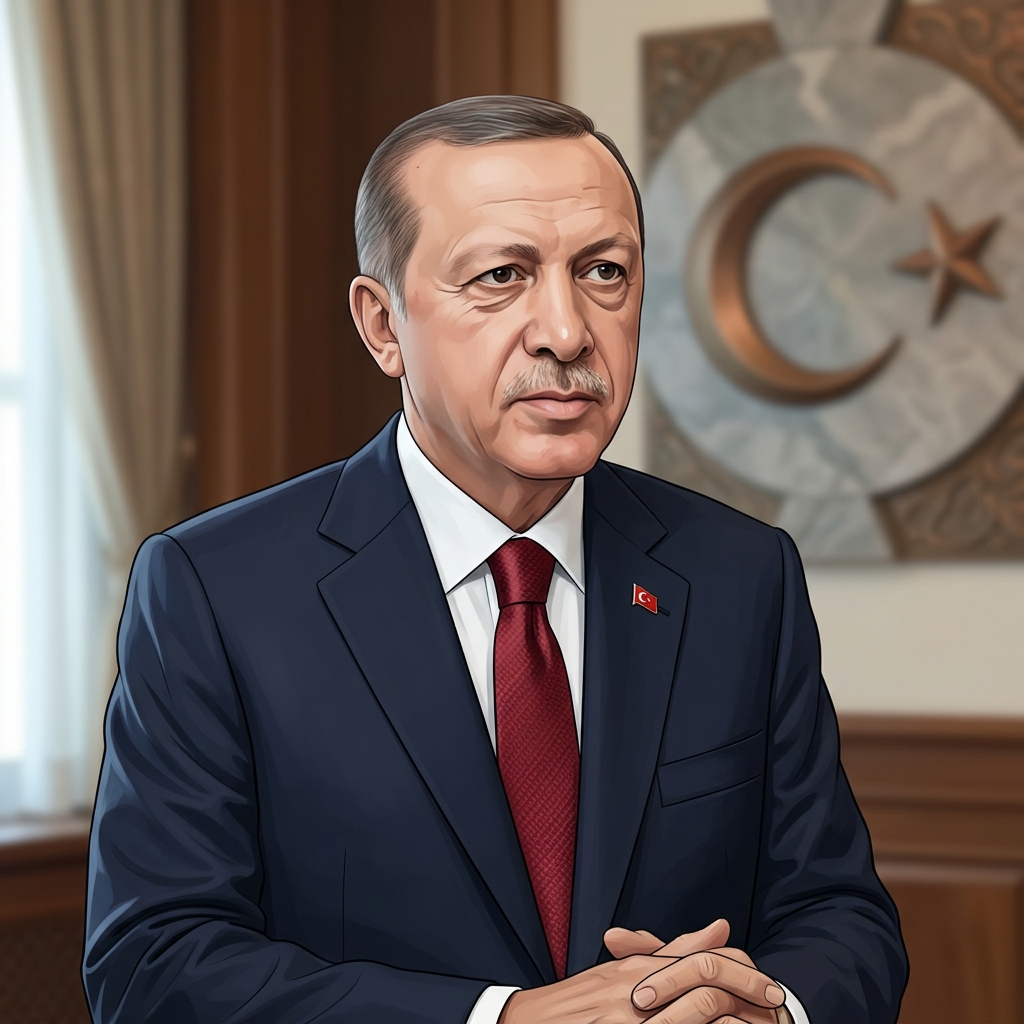
Erdogan and Zelenskyy

VS
Russia
Turkish President Erdogan hosted Ukrainian President Zelenskyy in Istanbul, urging Russia and Ukraine to halt attacks in the Black Sea and agreeing to work on a new grain corridor.
The issue centers on ongoing Black Sea hostilities affecting shipping and the push for a renewed grain export route.
*AI-generated summary of publicly available data. This is not an official statement of any party.
*AI-generated summary of publicly available statements and reporting. This is not an official statement of this party.
Supporters of Erdogan and Zelenskyy frame a renewed grain corridor as honoring the region's inherited role as a crossroads of trade, arguing that restoring stable Black Sea shipping preserves the cultural continuity and livelihood of coastal communities.
Supporters of Erdogan and Zelenskyy cast the grain corridor as a cultural lifeline, arguing that restoring Black Sea shipping honors the region's long-standing trade customs and preserves the food traditions and livelihoods that depend on them.
Supporters of Erdogan and Zelenskyy counter that Türkiye's grain diplomacy draws on its own cultural and historical ties across the Black Sea, presenting the corridor as regional stewardship rather than a Western arrangement imposed against Moscow.
Supporters of Erdogan and Zelenskyy argue that a renewed Black Sea grain corridor is legally grounded in freedom-of-navigation and existing export agreements, and they maintain that halting attacks on shipping upholds those obligations.
Supporters of Erdogan and Zelenskyy maintain that a renewed Black Sea grain corridor serves legitimate trade and humanitarian aims, and argue that halting attacks on shipping upholds navigational rights and existing export agreements.
Supporters of Erdogan and Zelenskyy counter that Ukraine and Turkey, as parties to the Montreux Convention and UN-brokered grain deals, hold legal standing to guarantee corridor terms without Russia's consent.
Supporters of Erdogan and Zelenskyy argue the grain corridor is leverage, not charity: by binding Kyiv's exports to Ankara's brokerage, they make Turkey indispensable to Russia's customers and give Moscow a face-saving off-ramp.
Supporters of Erdogan and Zelenskyy argue the grain corridor is leverage: by tying Black Sea calm to trade, Turkey positions itself as indispensable broker while Ukraine keeps exports flowing, pressing Russia to weigh economic cost against military gain.
Supporters of Erdogan and Zelenskyy counter that leverage is the only currency Moscow respects, so Turkey's control of the corridor is what forces Russia to negotiate at all rather than dictate terms.
Supporters of Erdogan and Zelenskyy argue that halting Black Sea attacks is a moral duty, since renewed grain corridors serve the hungry and civilians harmed by disrupted shipping.
Supporters of Erdogan and Zelenskyy argue that halting Black Sea attacks and restoring a grain corridor is a moral duty, since ordinary civilians depend on those exports for food and livelihoods.
Supporters of Erdogan and Zelenskyy counter that feeding vulnerable populations is a moral duty that outweighs military advantage, so blocking grain shipments is an unjustifiable use of force against civilians far from any battlefield.
Supporters of Erdogan and Zelenskyy frame the grain corridor as a moral and religious duty, arguing that halting Black Sea attacks honors the obligation to feed the hungry and pursue peace.
Supporters of Erdogan and Zelenskyy argue that halting Black Sea attacks and opening a grain corridor honors the moral duty to feed the hungry, invoking scripture's call to share bread with those in need.
Supporters of Erdogan and Zelenskyy counter that feeding the hungry is itself a sacred duty shared across faiths, and they argue that blocking grain ships to defend Orthodox heritage contradicts the tradition they claim to protect.
*AI-generated summary of publicly available statements and reporting. This is not an official statement of this party.
Supporters of Russia argue that the Black Sea grain corridor push, brokered without Moscow, sidelines Russia's regional role and treats its security interests as secondary to Western and Turkish arrangements.
Supporters of Russia frame the Istanbul talks as outside powers meddling in a Slavic conflict, arguing that Black Sea shipping and grain deals are being used to advance Turkish and Western influence over a region tied to Russia’s cultural sphere.
Supporters of Russia counter that the grain corridor serves external markets rather than the Black Sea's own cultural and economic ties, arguing that coastal communities' heritage is bound to regional trade with Russia, not to distant buyers.
Supporters of Russia argue that any new Black Sea grain corridor must rest on binding legal guarantees, not political declarations, and that Erdogan's Istanbul talks cannot substitute for agreements Russia itself is party to.
Supporters of Russia argue that any new Black Sea grain corridor must respect Russia's legal rights under existing agreements, and they maintain that calls to halt attacks overlook binding obligations that Russia insists on enforcing.
Supporters of Russia counter that the grain deal's own terms gave Moscow a legal basis to suspend participation when its export guarantees went unmet, so they frame the corridor's collapse as a contractual dispute rather than a breach of navigation law.
Supporters of Russia argue that Erdogan’s grain-corridor push serves Turkey’s leverage and Ukraine’s exports, not neutrality, so Moscow sees it as pressure disguised as mediation.
Supporters of Russia argue Erdogan's Istanbul summit is leverage theater—Ankara profits from a new grain corridor while Moscow is asked to concede Black Sea advantage for nothing in return.
Supporters of Russia counter that the corridor binds Ankara to Moscow's terms, not the reverse: Russia's customers depend on Russian goodwill to keep the route open, so Turkey's brokerage is leverage Moscow can revoke at will.
Supporters of Russia argue that Erdogan's push for a new grain corridor and his hosting of Zelenskyy ignore Russia's security concerns in the Black Sea, contending that outside pressure to halt attacks treats Russia's interests as secondary to Western shipping demands.
Supporters of Russia argue that pushing a new grain corridor treats Ukraine’s exports as morally neutral while ignoring that Black Sea shipping serves a state at war, and they maintain that halting attacks requires addressing the wider conflict rather than isolating one route.
Supporters of Russia counter that the moral duty runs both ways: they argue that grain shipped through a corridor serving Kyiv's war economy feeds the same conflict, and that Russia's own civilian shipping and food exports face moral harm from attacks.
Supporters of Russia argue that Erdogan’s Istanbul push for a new grain corridor ignores Russia’s defense of religious and cultural continuity in the Black Sea, where Orthodox heritage and sovereign order are seen as under threat.
Supporters of Russia argue that Orthodox tradition upholds legitimate authority and stability, and they maintain that outside mediation on Black Sea shipping should respect Russia’s sovereign concerns rather than pressure it.
Supporters of Russia counter that the grain deal's humanitarian framing was undermined by the fact that shipments largely flowed to wealthy nations rather than the hungry, and they argue that religious duty cannot justify ignoring legitimate security concerns.
AI-generated summary of publicly available statements and reporting. This is not an official statement of this party.
Supporters of Erdogan and Zelenskyy frame a renewed grain corridor as honoring the region's inherited role as a crossroads of trade, arguing that restoring stable Black Sea shipping preserves the cultural continuity and livelihood of coastal communities.
Supporters of Erdogan and Zelenskyy cast the grain corridor as a cultural lifeline, arguing that restoring Black Sea shipping honors the region's long-standing trade customs and preserves the food traditions and livelihoods that depend on them.
Supporters of Erdogan and Zelenskyy counter that Türkiye's grain diplomacy draws on its own cultural and historical ties across the Black Sea, presenting the corridor as regional stewardship rather than a Western arrangement imposed against Moscow.
Supporters of Erdogan and Zelenskyy argue that a renewed Black Sea grain corridor is legally grounded in freedom-of-navigation and existing export agreements, and they maintain that halting attacks on shipping upholds those obligations.
Supporters of Erdogan and Zelenskyy maintain that a renewed Black Sea grain corridor serves legitimate trade and humanitarian aims, and argue that halting attacks on shipping upholds navigational rights and existing export agreements.
Supporters of Erdogan and Zelenskyy counter that Ukraine and Turkey, as parties to the Montreux Convention and UN-brokered grain deals, hold legal standing to guarantee corridor terms without Russia's consent.
Supporters of Erdogan and Zelenskyy argue the grain corridor is leverage, not charity: by binding Kyiv's exports to Ankara's brokerage, they make Turkey indispensable to Russia's customers and give Moscow a face-saving off-ramp.
Supporters of Erdogan and Zelenskyy argue the grain corridor is leverage: by tying Black Sea calm to trade, Turkey positions itself as indispensable broker while Ukraine keeps exports flowing, pressing Russia to weigh economic cost against military gain.
Supporters of Erdogan and Zelenskyy counter that leverage is the only currency Moscow respects, so Turkey's control of the corridor is what forces Russia to negotiate at all rather than dictate terms.
Supporters of Erdogan and Zelenskyy argue that halting Black Sea attacks is a moral duty, since renewed grain corridors serve the hungry and civilians harmed by disrupted shipping.
Supporters of Erdogan and Zelenskyy argue that halting Black Sea attacks and restoring a grain corridor is a moral duty, since ordinary civilians depend on those exports for food and livelihoods.
Supporters of Erdogan and Zelenskyy counter that feeding vulnerable populations is a moral duty that outweighs military advantage, so blocking grain shipments is an unjustifiable use of force against civilians far from any battlefield.
Supporters of Erdogan and Zelenskyy frame the grain corridor as a moral and religious duty, arguing that halting Black Sea attacks honors the obligation to feed the hungry and pursue peace.
Supporters of Erdogan and Zelenskyy argue that halting Black Sea attacks and opening a grain corridor honors the moral duty to feed the hungry, invoking scripture's call to share bread with those in need.
Supporters of Erdogan and Zelenskyy counter that feeding the hungry is itself a sacred duty shared across faiths, and they argue that blocking grain ships to defend Orthodox heritage contradicts the tradition they claim to protect.
Supporters of Russia argue that the Black Sea grain corridor push, brokered without Moscow, sidelines Russia's regional role and treats its security interests as secondary to Western and Turkish arrangements.
Supporters of Russia frame the Istanbul talks as outside powers meddling in a Slavic conflict, arguing that Black Sea shipping and grain deals are being used to advance Turkish and Western influence over a region tied to Russia’s cultural sphere.
Supporters of Russia counter that the grain corridor serves external markets rather than the Black Sea's own cultural and economic ties, arguing that coastal communities' heritage is bound to regional trade with Russia, not to distant buyers.
Supporters of Russia argue that any new Black Sea grain corridor must rest on binding legal guarantees, not political declarations, and that Erdogan's Istanbul talks cannot substitute for agreements Russia itself is party to.
Supporters of Russia argue that any new Black Sea grain corridor must respect Russia's legal rights under existing agreements, and they maintain that calls to halt attacks overlook binding obligations that Russia insists on enforcing.
Supporters of Russia counter that the grain deal's own terms gave Moscow a legal basis to suspend participation when its export guarantees went unmet, so they frame the corridor's collapse as a contractual dispute rather than a breach of navigation law.
Supporters of Russia argue that Erdogan’s grain-corridor push serves Turkey’s leverage and Ukraine’s exports, not neutrality, so Moscow sees it as pressure disguised as mediation.
Supporters of Russia argue Erdogan's Istanbul summit is leverage theater—Ankara profits from a new grain corridor while Moscow is asked to concede Black Sea advantage for nothing in return.
Supporters of Russia counter that the corridor binds Ankara to Moscow's terms, not the reverse: Russia's customers depend on Russian goodwill to keep the route open, so Turkey's brokerage is leverage Moscow can revoke at will.
Supporters of Russia argue that Erdogan's push for a new grain corridor and his hosting of Zelenskyy ignore Russia's security concerns in the Black Sea, contending that outside pressure to halt attacks treats Russia's interests as secondary to Western shipping demands.
Supporters of Russia argue that pushing a new grain corridor treats Ukraine’s exports as morally neutral while ignoring that Black Sea shipping serves a state at war, and they maintain that halting attacks requires addressing the wider conflict rather than isolating one route.
Supporters of Russia counter that the moral duty runs both ways: they argue that grain shipped through a corridor serving Kyiv's war economy feeds the same conflict, and that Russia's own civilian shipping and food exports face moral harm from attacks.
Supporters of Russia argue that Erdogan’s Istanbul push for a new grain corridor ignores Russia’s defense of religious and cultural continuity in the Black Sea, where Orthodox heritage and sovereign order are seen as under threat.
Supporters of Russia argue that Orthodox tradition upholds legitimate authority and stability, and they maintain that outside mediation on Black Sea shipping should respect Russia’s sovereign concerns rather than pressure it.
Supporters of Russia counter that the grain deal's humanitarian framing was undermined by the fact that shipments largely flowed to wealthy nations rather than the hungry, and they argue that religious duty cannot justify ignoring legitimate security concerns.
Turkish President Erdogan met Ukrainian President Zelenskyy in Istanbul, urging Russia and Ukraine to stop Black Sea attacks and agreeing to work on a new Black Sea grain corridor.