Erdogan
VS
Israel
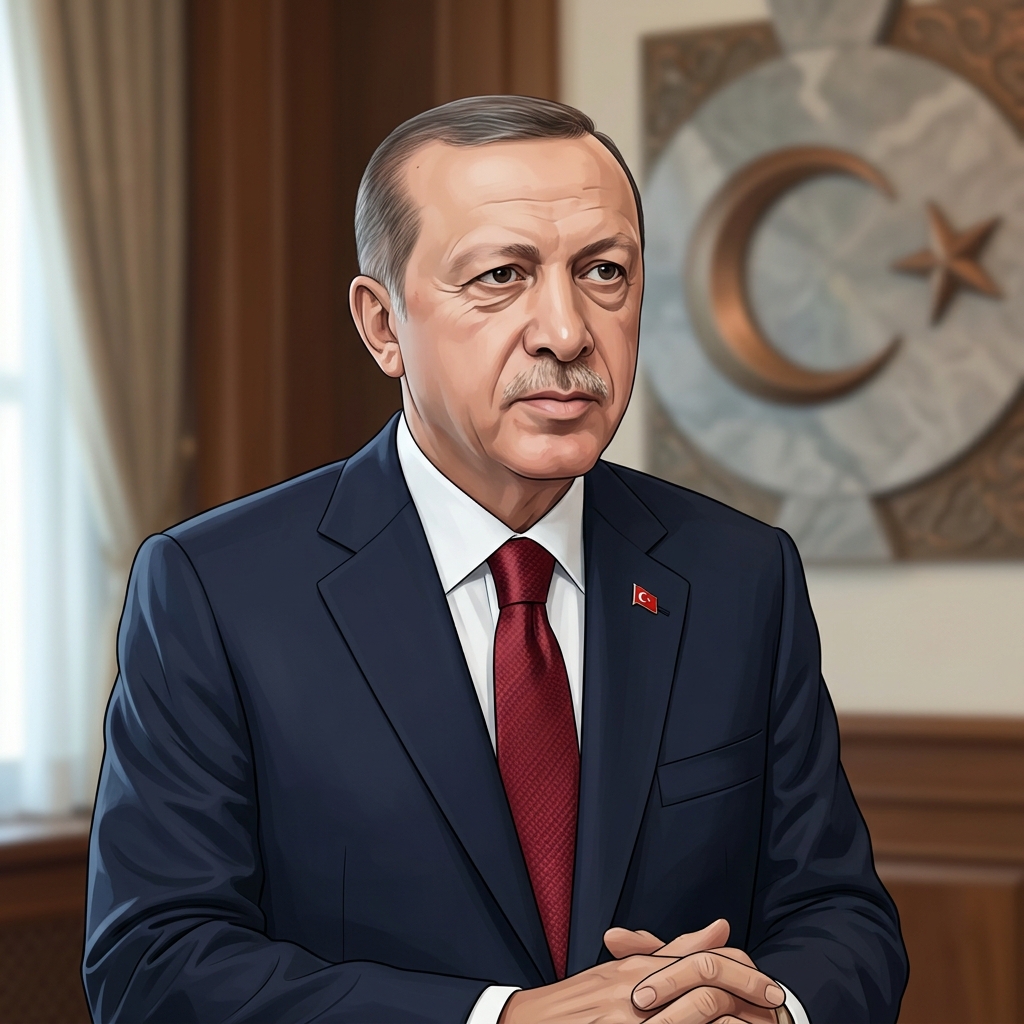
Recep Tayyip Erdoğan is the President of Turkey, a NATO member and a prominent leader in the Muslim world.
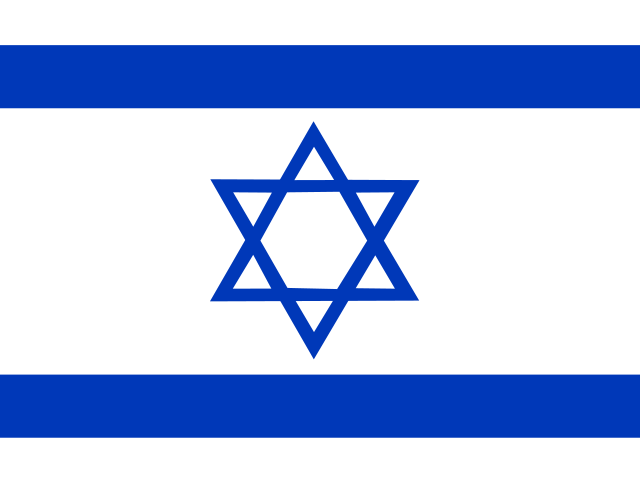
Israel is a country in the Middle East, with which Turkey has had historically complex diplomatic relations.
Erdoğan has frequently positioned himself as a vocal critic of Israeli policies, particularly regarding the Palestinian territories.
Erdoğan and Israel hold conflicting views on the Israeli military operations in Gaza and the broader region.
Erdoğan has condemned these actions, accusing Israel of committing crimes against humanity and genocide, and has called on Muslim leaders to pressure Israel.
In contrast, Israel defends its military actions as necessary for its security, leading to a sharp public rift between the two sides.
The stakes are significant, as Erdoğan has warned that Israel's campaign threatens Turkey's security and has sought to rally international opposition.
He has also announced plans to file legal cases against Israel with the support of over 2,000 lawyers, escalating the dispute beyond diplomatic rhetoric.
*AI-generated summary of publicly available data. This is not an official statement of any party.
*AI-generated summary of publicly available statements and reporting. This is not an official statement of this party.
Supporters of Erdogan argue that his praise for Hamas reflects shared cultural-religious solidarity with Palestinian resistance, not endorsement of violence, framing Israel’s Gaza actions as a threat to Muslim identity and regional sovereignty.
Supporters of Erdogan argue that his praise for Hamas reflects Turkey’s cultural duty to defend Palestinian identity against what they see as Israel’s disregard for Muslim lives.
Supporters of Erdogan counter that Hamas embodies Palestinian resistance to occupation, not a rejection of coexistence, and that Turkey’s cultural diplomacy champions pluralism across faiths, unlike Israel’s exclusive ethno-religious statehood.
Supporters of Erdogan argue Israel's Gaza strikes violate international law, while Hamas's resistance is legally framed as legitimate self-defense under occupation.
Supporters of Erdogan argue Israel's strikes breach international law, citing unlawful collective punishment, whereas Hamas' resistance is legally framed as self-defense under occupation.
Supporters of Erdogan counter that the legal basis for Israel's actions remains contested, as international courts have yet to rule on the 1967 occupation's legality, and they argue that Hamas's designation as terrorist is a political choice, not a binding UN Security Council res.
Supporters of Erdogan argue Ankara’s praise for Hamas is a calculated lever, not ideology, aimed at rallying Muslim-world legitimacy and offsetting Israel’s alliances.
Supporters of Erdogan argue his Hamas praise is pure realpolitik, positioning Turkey as the Muslim world's power broker against Israel, using Gaza's tragedy to boost Ankara's regional leverage.
Supporters of Erdogan counter that Israel’s own realpolitik masks a deeper hypocrisy: its dominance rests on U.S.
Supporters of Erdogan argue that Hamas’s sincere solidarity reflects a moral duty to resist occupation, while Israel’s attacks on Gaza are seen as disproportionate and unjust, framing the conflict as a defense of Palestinian dignity against state violence.
Supporters of Erdogan argue that Israel’s military campaign in Gaza violates basic moral duties to protect civilian life, while Hamas’s stance reflects a legitimate resistance to occupation.
Supporters of Erdogan counter that condemning Hamas while ignoring Israel’s occupation and blockade is a moral double standard, arguing that resistance against systemic oppression cannot be equated with state violence that kills thousands of civilians.
Supporters of Erdogan argue that divine justice favors those who show steadfast faith, citing Hamas's sincerity as proof of moral righteousness against Israel's actions in Gaza.
Supporters of Erdogan argue that Hamas' resistance reflects a divine mandate for justice against oppression, while Israel's strikes violate sacred duties to protect innocent life.
Supporters of Erdogan counter that divine covenant cannot justify collective punishment, citing the Quran’s injunction to uphold justice even toward enemies, and that no scripture sanctifies the suffering of civilians in Gaza.
*AI-generated summary of publicly available statements and reporting. This is not an official statement of this party.
Supporters of Israel argue that Erdogan’s praise of Hamas ignores the group’s rejection of cultural coexistence, while Israel’s actions defend a democratic society rooted in Jewish tradition.
Supporters of Israel argue that Erdogan’s praise of Hamas ignores the group’s rejection of cultural coexistence, while Israel’s actions defend a pluralistic society rooted in Jewish and democratic tradition.
Supporters of Israel counter that Erdogan’s framing ignores Hamas’s charter, which explicitly rejects Jewish sovereignty, and that cultural solidarity cannot sanitize terrorism’s threat to Israel’s existence.
Supporters of Israel argue that Erdogan's praise of Hamas ignores international law, which designates the group as a terrorist entity, and they point to Israel's right to self-defense under legal statutes against such aggression.
Supporters of Israel argue that its military operations in Gaza are lawful self-defense under international law, targeting Hamas, not civilians, and dismiss Erdogan's praise of Hamas as legitimizing a designated terror group.
Supporters of Israel counter that under international law, states retain the inherent right to self-defense against armed attacks, and Hamas's rocket fire constitutes aggression, not legitimate resistance.
Supporters of Israel argue Erdogan's praise for Hamas is pure realpolitik, exploiting Gaza to boost Turkish regional influence against Israeli power.
Supporters of Israel see Erdogan’s praise of Hamas as a calculated power play, not principle, aimed at boosting Turkey’s regional influence over Gaza’s narrative.
Supporters of Israel counter that Erdogan’s praise is no lever but a strategic embrace of Hamas’s violent doctrine, costing Ankara credibility in any future mediation and reinforcing Israel’s security alliances as the only pragmatic counterweight.
Supporters of Israel argue that Erdogan praises Hamas, a group they hold morally responsible for terrorism, while ignoring Israel’s right to defend its citizens from such attacks.
Supporters of Israel argue that Erdogan’s praise of Hamas ignores the group’s moral violation of individual autonomy through terrorism, framing Israel’s defense as a legitimate exercise of self-preservation against an aggressor that rejects peaceful coexistence.
Supporters of Israel counter that moral duty cannot justify Hamas’s deliberate targeting of civilians, and they argue that Israel’s actions defend its citizens’ right to exist free from rocket fire, framing resistance as self-defense, not occupation.
Supporters of Israel argue that its actions in Gaza reflect a divinely ordained duty to protect the Jewish homeland, a sacred covenant rooted in scripture that transcends political criticism.
Supporters of Israel hold that its military action in Gaza defends a sacred biblical inheritance, framing the conflict as a duty to preserve Jewish continuity against Hamas’s aggression.
Supporters of Israel counter that divine justice cannot be measured by human sincerity, and they invoke the biblical covenant promising the land to the Jewish people, viewing Gaza as a test of faithfulness to that eternal promise, not a verdict on Hamas's piety.
AI-generated summary of publicly available statements and reporting. This is not an official statement of this party.
Supporters of Erdogan argue that his praise for Hamas reflects shared cultural-religious solidarity with Palestinian resistance, not endorsement of violence, framing Israel’s Gaza actions as a threat to Muslim identity and regional sovereignty.
Supporters of Erdogan argue that his praise for Hamas reflects Turkey’s cultural duty to defend Palestinian identity against what they see as Israel’s disregard for Muslim lives.
Supporters of Erdogan counter that Hamas embodies Palestinian resistance to occupation, not a rejection of coexistence, and that Turkey’s cultural diplomacy champions pluralism across faiths, unlike Israel’s exclusive ethno-religious statehood.
Supporters of Erdogan argue Israel's Gaza strikes violate international law, while Hamas's resistance is legally framed as legitimate self-defense under occupation.
Supporters of Erdogan argue Israel's strikes breach international law, citing unlawful collective punishment, whereas Hamas' resistance is legally framed as self-defense under occupation.
Supporters of Erdogan counter that the legal basis for Israel's actions remains contested, as international courts have yet to rule on the 1967 occupation's legality, and they argue that Hamas's designation as terrorist is a political choice, not a binding UN Security Council res.
Supporters of Erdogan argue Ankara’s praise for Hamas is a calculated lever, not ideology, aimed at rallying Muslim-world legitimacy and offsetting Israel’s alliances.
Supporters of Erdogan argue his Hamas praise is pure realpolitik, positioning Turkey as the Muslim world's power broker against Israel, using Gaza's tragedy to boost Ankara's regional leverage.
Supporters of Erdogan counter that Israel’s own realpolitik masks a deeper hypocrisy: its dominance rests on U.S.
Supporters of Erdogan argue that Hamas’s sincere solidarity reflects a moral duty to resist occupation, while Israel’s attacks on Gaza are seen as disproportionate and unjust, framing the conflict as a defense of Palestinian dignity against state violence.
Supporters of Erdogan argue that Israel’s military campaign in Gaza violates basic moral duties to protect civilian life, while Hamas’s stance reflects a legitimate resistance to occupation.
Supporters of Erdogan counter that condemning Hamas while ignoring Israel’s occupation and blockade is a moral double standard, arguing that resistance against systemic oppression cannot be equated with state violence that kills thousands of civilians.
Supporters of Erdogan argue that divine justice favors those who show steadfast faith, citing Hamas's sincerity as proof of moral righteousness against Israel's actions in Gaza.
Supporters of Erdogan argue that Hamas' resistance reflects a divine mandate for justice against oppression, while Israel's strikes violate sacred duties to protect innocent life.
Supporters of Erdogan counter that divine covenant cannot justify collective punishment, citing the Quran’s injunction to uphold justice even toward enemies, and that no scripture sanctifies the suffering of civilians in Gaza.
Supporters of Israel argue that Erdogan’s praise of Hamas ignores the group’s rejection of cultural coexistence, while Israel’s actions defend a democratic society rooted in Jewish tradition.
Supporters of Israel argue that Erdogan’s praise of Hamas ignores the group’s rejection of cultural coexistence, while Israel’s actions defend a pluralistic society rooted in Jewish and democratic tradition.
Supporters of Israel counter that Erdogan’s framing ignores Hamas’s charter, which explicitly rejects Jewish sovereignty, and that cultural solidarity cannot sanitize terrorism’s threat to Israel’s existence.
Supporters of Israel argue that Erdogan's praise of Hamas ignores international law, which designates the group as a terrorist entity, and they point to Israel's right to self-defense under legal statutes against such aggression.
Supporters of Israel argue that its military operations in Gaza are lawful self-defense under international law, targeting Hamas, not civilians, and dismiss Erdogan's praise of Hamas as legitimizing a designated terror group.
Supporters of Israel counter that under international law, states retain the inherent right to self-defense against armed attacks, and Hamas's rocket fire constitutes aggression, not legitimate resistance.
Supporters of Israel argue Erdogan's praise for Hamas is pure realpolitik, exploiting Gaza to boost Turkish regional influence against Israeli power.
Supporters of Israel see Erdogan’s praise of Hamas as a calculated power play, not principle, aimed at boosting Turkey’s regional influence over Gaza’s narrative.
Supporters of Israel counter that Erdogan’s praise is no lever but a strategic embrace of Hamas’s violent doctrine, costing Ankara credibility in any future mediation and reinforcing Israel’s security alliances as the only pragmatic counterweight.
Supporters of Israel argue that Erdogan praises Hamas, a group they hold morally responsible for terrorism, while ignoring Israel’s right to defend its citizens from such attacks.
Supporters of Israel argue that Erdogan’s praise of Hamas ignores the group’s moral violation of individual autonomy through terrorism, framing Israel’s defense as a legitimate exercise of self-preservation against an aggressor that rejects peaceful coexistence.
Supporters of Israel counter that moral duty cannot justify Hamas’s deliberate targeting of civilians, and they argue that Israel’s actions defend its citizens’ right to exist free from rocket fire, framing resistance as self-defense, not occupation.
Supporters of Israel argue that its actions in Gaza reflect a divinely ordained duty to protect the Jewish homeland, a sacred covenant rooted in scripture that transcends political criticism.
Supporters of Israel hold that its military action in Gaza defends a sacred biblical inheritance, framing the conflict as a duty to preserve Jewish continuity against Hamas’s aggression.
Supporters of Israel counter that divine justice cannot be measured by human sincerity, and they invoke the biblical covenant promising the land to the Jewish people, viewing Gaza as a test of faithfulness to that eternal promise, not a verdict on Hamas's piety.
Erdogan accused Israel of a 'genocidal mindset' at the UN General Assembly.
Erdogan slams Israel's 'genocidal mindset' and criticizes UN dysfunction in Palestine, Lebanon, and Sudan.
Erdogan said Hamas has shown all possible sincere solidarity, while Israel continues aggressive attacks on Gaza.
Erdogan issued a stark warning to the Israeli administration, stating that Israel's ongoing military campaign poses a threat to Turkey.
In a parliament speech, Erdogan launched one of his strongest attacks on Israel and Prime Minister Benjamin Netanyahu.
Erdogan urged world powers to take a clearer stance against Israel, saying it was emboldened by the silence of the international community.
Erdogan condemned Israel's actions and initiated efforts to pressure Muslim leaders to hamstring Israel's military campaign.