Ethiopian army

VS
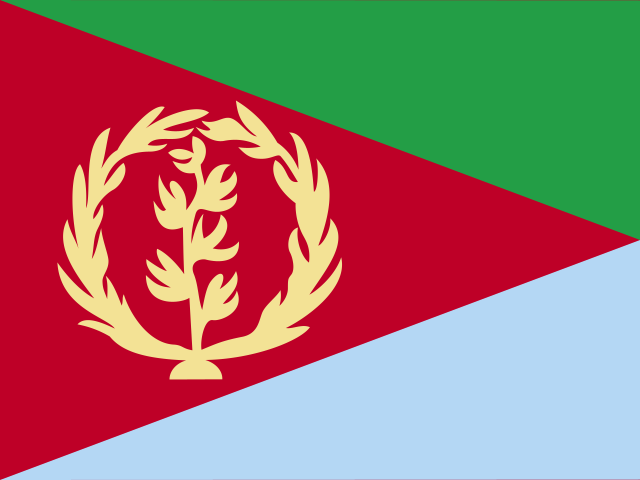
Eritrea
The Ethiopian army is the national military force of Ethiopia, one of the most populous countries in the Horn of Africa.
Eritrea is a neighboring state that became independent from Ethiopia in 1993 after a long armed struggle, and it maintains a large military with mandatory conscription.
The two countries fought a major border war from 1998 to 2002.
The two sides have a history of armed conflict and mutual suspicion.
Ethiopia's army chief has accused Eritrea of funding and supporting armed groups to weaken Ethiopia, amid fears of a new civil war.
The Ethiopian army has promised restraint in response to these alleged actions, while Eritrea has not publicly responded to the accusation.
The dispute is shaped by the legacy of the 1998–2002 Eritrean–Ethiopian War and by the current military balance between the two states.
International observers have warned that renewed instability could have wider regional consequences.
*AI-generated summary of publicly available data. This is not an official statement of any party.
*AI-generated summary of publicly available statements and reporting. This is not an official statement of this party.
Supporters of the Ethiopian army argue that Eritrea's alleged backing of armed groups echoes a long history of external meddling in Ethiopian affairs, and they frame restraint as a defense of national unity.
Supporters of the Ethiopian army invoke the memory of the 1998–2000 border war, arguing that Eritrea's alleged backing of armed groups repeats a historical pattern of proxy conflict, and that restraint now honors Ethiopia's cultural tradition of measured defense.
Supporters of the Ethiopian army counter that Eritrea's cultural identity was forged through shared anti-colonial struggle and kinship ties, so appeals to sovereignty overlook the deep historical bonds the two peoples share.
Supporters of the Ethiopian army argue that Eritrea's alleged funding of armed groups violates state sovereignty and international law, and they maintain that Ethiopia's promised restraint shows good-faith compliance with legal norms.
Supporters of the Ethiopian army argue that Eritrea's alleged funding of armed groups violates Ethiopia's sovereignty, and that legal restraint, not retaliation, is the army's lawful response.
Supporters of the Ethiopian army counter that under Article 51 of the UN Charter, self-defense against armed attack is an inherent right, not contingent on first proving the claim before the Security Council.
Supporters of the Ethiopian army argue that restraint is itself leverage: by publicly naming Eritrea's alleged funding of armed groups, the army casts Asmara as the aggressor while preserving the option to strike later.
Supporters of the Ethiopian army argue that public restraint is itself leverage: by naming Eritrea's alleged proxy funding while holding fire, the army frames Asmara as the aggressor and keeps foreign backers on its side.
Supporters of Ethiopian army counter that naming Eritrea as a threat is itself leverage: public hostility toward Asmara hardens ranks, and a visible external rival keeps officers' bargaining power in Addis intact.
Supporters of the Ethiopian army argue that Eritrea's alleged funding of armed groups is a moral violation of sovereignty, and they maintain that Ethiopia's promised restraint shows responsibility rather than weakness.
Supporters of the Ethiopian army argue that Eritrea's alleged funding of armed groups violates the moral duty of non-interference, and they maintain that restraint, though costly, is the more principled response than retaliatory war.
Supporters of the Ethiopian army counter that sovereignty imposes a moral duty: a state arming insurgents across a border forfeits claims to non-interference, so accountability for Ethiopia's fractures begins with Asmara's conduct.
Supporters of the Ethiopian army argue that a just peace requires restraint, and cite scripture's call for peacemakers to justify not retaliating while Eritrea is accused of funding armed groups.
Supporters of the Ethiopian army invoke the duty to defend the nation, arguing that Ethiopia's restraint reflects a moral and scriptural commitment to peace over vengeance.
Supporters of the Ethiopian army counter that Ethiopia's own ancient covenant and sacred duty to protect its faithful flocks predates and outweighs Eritrea's recent sovereignty claim.
*AI-generated summary of publicly available statements and reporting. This is not an official statement of this party.
Supporters of Eritrea argue that preserving Eritrea's hard-won sovereignty and cultural identity requires resisting Ethiopian pressure, and they deny the army chief's accusations as a pretext for intervention.
Supporters of Eritrea argue that Eritrea has long defended its sovereignty against a larger neighbor's claims, and they view Ethiopia's accusations as a familiar tactic to deflect internal unrest onto an external rival rather than address it.
Supporters of Eritrea counter that Eritrea's own cultural memory is defined by resisting external domination, so framing its regional ties as meddling misreads a shared history of self-determination.
Supporters of Eritrea argue Ethiopia's accusation lacks publicly presented evidence, and that under international law a state alleging foreign aggression must substantiate it before the UN Security Council.
Supporters of Eritrea argue the army chief's accusation lacks publicly presented evidence, and that under international law such a claim requires proof before it can justify any cross-border action.
Supporters of Eritrea counter that Ethiopia's cross-border operations into sovereign Eritrean territory breach Article 2(4) of the UN Charter, making its professed restraint legally hollow.
Supporters of Eritrea argue that Ethiopia's army chief manufactures external enemies to mask internal fractures, since blaming Asmara for arming groups conveniently justifies crackdowns and consolidates the army's leverage in Addis Ababa.
Supporters of Eritrea argue the army chief’s accusation is a calculated pretext, letting Addis Ababa blame Asmara for internal unrest while its own rival factions weaken the state.
Supporters of Eritrea counter that naming Asmara as aggressor is itself the escalation: it invites external pressure and forecloses the quiet bargains that actually restrain militias, whereas Eritrea's leverage rests on making Ethiopian strikes costlier than silence.
Supporters of Eritrea argue that blaming Asmara for Ethiopia's internal armed groups is a moral deflection, letting Ethiopia's government avoid accountability for its own fractures.
Supporters of Eritrea argue that history shows Asmara has long been a scapegoat for Ethiopia's internal fractures, so blaming Eritrea for armed groups serves to deflect moral accountability from Ethiopia's own leaders.
Supporters of Eritrea counter that Ethiopia's history of invasions and its 1998–2000 war, which killed tens of thousands, makes its moral claims about sovereignty ring hollow.
Supporters of Eritrea invoke the sanctity of Eritrea's hard-won sovereignty, arguing that a nation forged through sacrifice has a sacred duty to defend its faithful against encirclement.
Supporters of Eritrea invoke the sanctity of national sovereignty and non-interference, arguing that religious and traditional values forbid one nation from destabilizing another.
Supporters of Eritrea counter that scripture also commands nations to defend the innocent, and they argue that peacemaking without justice merely rewards aggression.
AI-generated summary of publicly available statements and reporting. This is not an official statement of this party.
Supporters of the Ethiopian army argue that Eritrea's alleged backing of armed groups echoes a long history of external meddling in Ethiopian affairs, and they frame restraint as a defense of national unity.
Supporters of the Ethiopian army invoke the memory of the 1998–2000 border war, arguing that Eritrea's alleged backing of armed groups repeats a historical pattern of proxy conflict, and that restraint now honors Ethiopia's cultural tradition of measured defense.
Supporters of the Ethiopian army counter that Eritrea's cultural identity was forged through shared anti-colonial struggle and kinship ties, so appeals to sovereignty overlook the deep historical bonds the two peoples share.
Supporters of the Ethiopian army argue that Eritrea's alleged funding of armed groups violates state sovereignty and international law, and they maintain that Ethiopia's promised restraint shows good-faith compliance with legal norms.
Supporters of the Ethiopian army argue that Eritrea's alleged funding of armed groups violates Ethiopia's sovereignty, and that legal restraint, not retaliation, is the army's lawful response.
Supporters of the Ethiopian army counter that under Article 51 of the UN Charter, self-defense against armed attack is an inherent right, not contingent on first proving the claim before the Security Council.
Supporters of the Ethiopian army argue that restraint is itself leverage: by publicly naming Eritrea's alleged funding of armed groups, the army casts Asmara as the aggressor while preserving the option to strike later.
Supporters of the Ethiopian army argue that public restraint is itself leverage: by naming Eritrea's alleged proxy funding while holding fire, the army frames Asmara as the aggressor and keeps foreign backers on its side.
Supporters of Ethiopian army counter that naming Eritrea as a threat is itself leverage: public hostility toward Asmara hardens ranks, and a visible external rival keeps officers' bargaining power in Addis intact.
Supporters of the Ethiopian army argue that Eritrea's alleged funding of armed groups is a moral violation of sovereignty, and they maintain that Ethiopia's promised restraint shows responsibility rather than weakness.
Supporters of the Ethiopian army argue that Eritrea's alleged funding of armed groups violates the moral duty of non-interference, and they maintain that restraint, though costly, is the more principled response than retaliatory war.
Supporters of the Ethiopian army counter that sovereignty imposes a moral duty: a state arming insurgents across a border forfeits claims to non-interference, so accountability for Ethiopia's fractures begins with Asmara's conduct.
Supporters of the Ethiopian army argue that a just peace requires restraint, and cite scripture's call for peacemakers to justify not retaliating while Eritrea is accused of funding armed groups.
Supporters of the Ethiopian army invoke the duty to defend the nation, arguing that Ethiopia's restraint reflects a moral and scriptural commitment to peace over vengeance.
Supporters of the Ethiopian army counter that Ethiopia's own ancient covenant and sacred duty to protect its faithful flocks predates and outweighs Eritrea's recent sovereignty claim.
Supporters of Eritrea argue that preserving Eritrea's hard-won sovereignty and cultural identity requires resisting Ethiopian pressure, and they deny the army chief's accusations as a pretext for intervention.
Supporters of Eritrea argue that Eritrea has long defended its sovereignty against a larger neighbor's claims, and they view Ethiopia's accusations as a familiar tactic to deflect internal unrest onto an external rival rather than address it.
Supporters of Eritrea counter that Eritrea's own cultural memory is defined by resisting external domination, so framing its regional ties as meddling misreads a shared history of self-determination.
Supporters of Eritrea argue Ethiopia's accusation lacks publicly presented evidence, and that under international law a state alleging foreign aggression must substantiate it before the UN Security Council.
Supporters of Eritrea argue the army chief's accusation lacks publicly presented evidence, and that under international law such a claim requires proof before it can justify any cross-border action.
Supporters of Eritrea counter that Ethiopia's cross-border operations into sovereign Eritrean territory breach Article 2(4) of the UN Charter, making its professed restraint legally hollow.
Supporters of Eritrea argue that Ethiopia's army chief manufactures external enemies to mask internal fractures, since blaming Asmara for arming groups conveniently justifies crackdowns and consolidates the army's leverage in Addis Ababa.
Supporters of Eritrea argue the army chief’s accusation is a calculated pretext, letting Addis Ababa blame Asmara for internal unrest while its own rival factions weaken the state.
Supporters of Eritrea counter that naming Asmara as aggressor is itself the escalation: it invites external pressure and forecloses the quiet bargains that actually restrain militias, whereas Eritrea's leverage rests on making Ethiopian strikes costlier than silence.
Supporters of Eritrea argue that blaming Asmara for Ethiopia's internal armed groups is a moral deflection, letting Ethiopia's government avoid accountability for its own fractures.
Supporters of Eritrea argue that history shows Asmara has long been a scapegoat for Ethiopia's internal fractures, so blaming Eritrea for armed groups serves to deflect moral accountability from Ethiopia's own leaders.
Supporters of Eritrea counter that Ethiopia's history of invasions and its 1998–2000 war, which killed tens of thousands, makes its moral claims about sovereignty ring hollow.
Supporters of Eritrea invoke the sanctity of Eritrea's hard-won sovereignty, arguing that a nation forged through sacrifice has a sacred duty to defend its faithful against encirclement.
Supporters of Eritrea invoke the sanctity of national sovereignty and non-interference, arguing that religious and traditional values forbid one nation from destabilizing another.
Supporters of Eritrea counter that scripture also commands nations to defend the innocent, and they argue that peacemaking without justice merely rewards aggression.
Army chief accuses Eritrea of funding and supporting armed groups to weaken Ethiopia.
The major armed conflict between Ethiopia and Eritrea that began in May 1998 ended on June 18, 2000.
The Eritrean–Ethiopian War, also known as the Badme War, began on May 6, 1998, as a major armed conflict between Ethiopia and Eritrea.