Eurovision organizers

VS
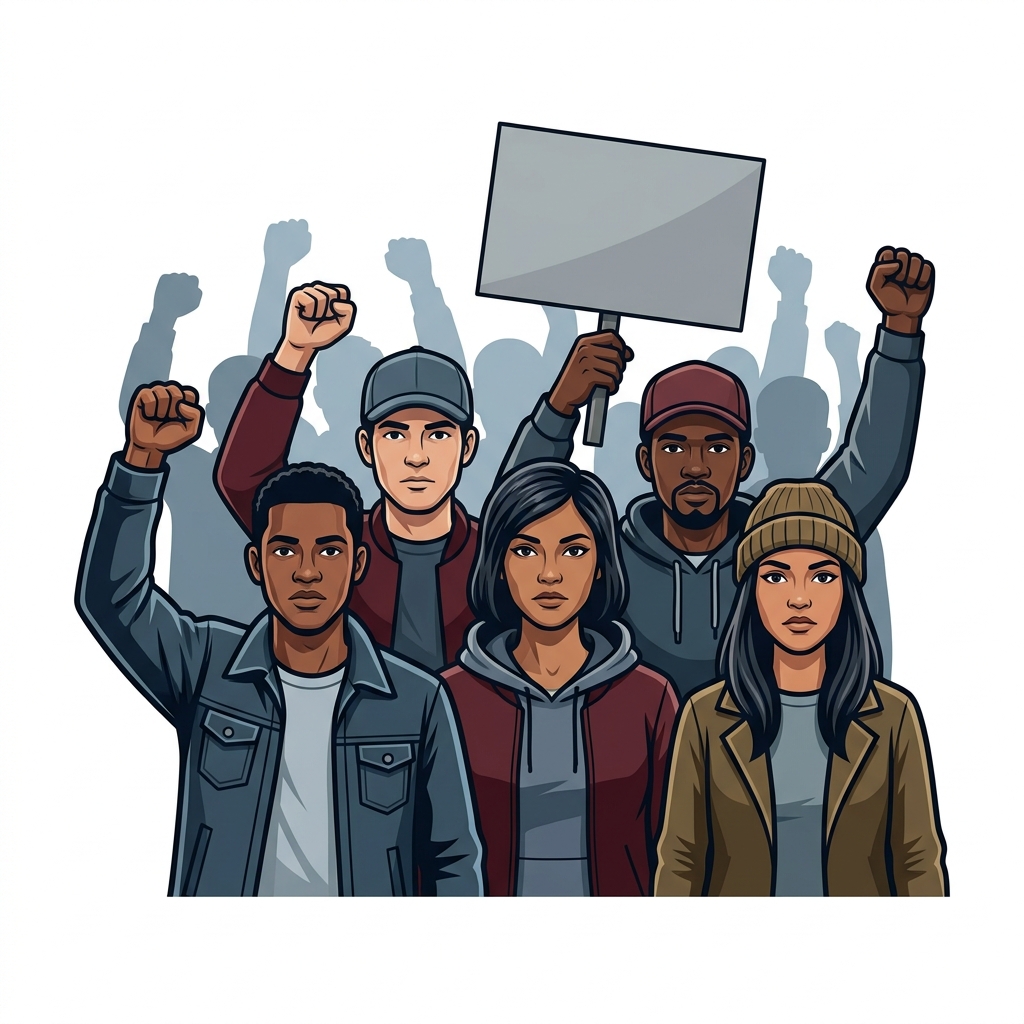
Protesters
The Eurovision Song Contest is organized by the European Broadcasting Union (EBU), a body that includes public broadcasters from across Europe and beyond.
The contest is intended to be non-political, and participating broadcasters and performers are expected to avoid promoting political messages.
In 2019, Israel hosted the event, and in 2026, Israel's participation in the contest has become a major point of contention.
Protesters, including crowds in Vienna, Belgrade, and elsewhere, have called for a boycott of the contest over Israel's participation, with some accusing Israel of genocide and urging broadcasters not to air the event.
Five countries have officially boycotted the contest, and more than 1,000 artists have signed an open letter urging fans to boycott.
Eurovision organizers have faced international condemnation for refusing to suspend Israel from the contest, leading to protests and debates over the event's political neutrality and the fairness of its policies.
*AI-generated summary of publicly available data. This is not an official statement of any party.
*AI-generated summary of publicly available statements and reporting. This is not an official statement of this party.
Supporters of Eurovision organizers argue that the 2019 hosting by Israel reflects the contest's cultural tradition of celebrating national heritage, and the new rule preserves that spirit by focusing on peaceful participation.
Supporters of Eurovision organizers argue the 2019 Israeli hosting showcased a vibrant cultural moment, and the new rule preserves that heritage by preventing war from overshadowing music's unifying spirit.
Supporters of Eurovision organizers counter that the 2019 hosting reflected a unique diplomatic moment, not a cultural precedent, and the new ban responds to evolving artistic integrity standards, not political selectivity.
Supporters of Eurovision organizers argue the rule is legally sound: it applies neutrally to any nation at war, not targeting Israel, and preserves Israel's right to compete, ensuring consistent, principled governance.
Supporters of Eurovision organizers argue the rule change is a legal safeguard, not a sanction, ensuring host neutrality amid conflict, with Israel retaining full competition rights under the contest’s governing charter.
Supporters of Eurovision organizers counter that the 2019 precedent is legally distinct, as the European Broadcasting Union’s rules vest discretion in the governing board to assess each host nation’s compliance with safety and non-discrimination standards at the time of applicati.
Supporters of Eurovision organizers argue the rule change is a calculated shield, not a moral stance, framing Israel’s 2019 hosting as precedent that now lets them deflect protest while keeping Israel competing.
Supporters of Eurovision organizers argue that barring warring nations from hosting is a pure power play, not principle; Israel's 2019 win secured leverage, and this rule protects the contest's brand by scapegoating one conflict while competitors still profit from exposure.
Supporters of Eurovision organizers counter that the rule is a pragmatic lever, not a moral shield; it pressures host-states while keeping the contest’s commercial engine intact, since banning Israel outright would trigger a broadcaster revolt and revenue collapse.
Supporters of Eurovision organizers argue that barring war-affected nations from hosting upholds a moral duty to protect cultural events from conflict, viewing the 2019 precedent as a past exception, not a binding promise, and seeing Israel’s continued participation as proof the.
Supporters of Eurovision organizers argue that barring war-affected nations from hosting upholds a moral duty to protect the event’s spirit of unity and safety, viewing it as a principled, consistent rule applied equally to all, not a targeted penalty against Israel.
Supporters of Eurovision organizers counter that the contest’s moral duty is to keep culture apart from politics, and that excluding Israel would itself be a political act, undermining the event’s neutral platform.
Supporters of Eurovision organizers argue that the contest's rule change reflects a moral duty to prioritize peace, citing scripture's call to beat swords into plowshares as governing its hosting decisions.
Supporters of Eurovision organizers argue that the contest's rule change reflects a moral duty to avoid hosting where conflict disrupts unity, citing scripture's call for peace as guiding their decision.
Supporters of Eurovision organizers counter that divine mandates demand justice, not mere ritual, and that Israel’s continued competition, absent hosting, still honors unity while upholding the sacred call to separate worship from political power.
*AI-generated summary of publicly available statements and reporting. This is not an official statement of this party.
Supporters of Protesters argue the 2019 hosting by Israel set a precedent that the new ban conveniently rewrites, framing the rule change as a culturally selective erasure of Israel's contested place in European arts.
Supporters of Protesters argue that barring only war-hosting nations while allowing war-fighting competitors creates a cultural double standard, noting Israel’s 2019 hosting set a precedent now contradicted by the rule change.
Supporters of Protesters counter that Eurovision’s heritage is not national pride but shared, inclusive artistry; they argue the 2019 hosting weaponized culture, and the new rule sanitizes that history rather than confronting it.
Supporters of Protesters argue the rule change is legally arbitrary, since Israel hosted in 2019 under identical war conditions, making the ban retroactive and discriminatory.
Supporters of Protesters argue the rule change codifies an arbitrary, post-hoc standard, since Israel legally hosted in 2019 under the same contest rules.
Supporters of Protesters counter that neutrality in law is not impartiality in effect, as the rule’s application hinges on host-state discretion, which the organizers exercise selectively, leaving Israel’s participation unchallenged while other disputes face scrutiny.
Supporters of Protesters argue the Eurovision rule is a calculated fig leaf: Israel still competes, so the ban punishes hosting, not war, preserving the contest's image while shielding its realpolitik ties.
Supporters of Protesters argue the ban is a calculated loophole, not principle—Israel competes while the hosting rule punishes only optics, exposing Eurovision’s selective enforcement as a power play favoring political allies.
Protesters counter that precedent is a flimsy shield; the 2019 rule change was a tactical evasion, not a binding constraint.
Supporters of Protesters argue that barring war-hosting nations while still allowing Israel to compete is a moral inconsistency, as it grants legitimacy to a state whose actions they see as unjust.
Supporters of Protesters argue that barring only war-hosting countries, while still letting Israel compete, imposes a hollow rule that ignores the moral weight of hosting versus performing.
Supporters of Protesters counter that barring nations from hosting while permitting their participation is a moral contradiction, arguing that divine law and the 2019 precedent demand equal protection for all lives, not just cultural stages.
Supporters of Protesters argue that Israel's exclusion from hosting, while still competing, violates the sacred duty of nations to steward cultural heritage, as its 2019 hosting honored a divine mandate to unite peoples through song.
Supporters of Protesters argue that Israel's exclusion from hosting, while still competing, contradicts its role as a steward of shared cultural heritage; they maintain a tradition-bound contest should honor the biblical mandate to gather nations, not punish a land long tied to s.
Supporters of Protesters counter that the same scripture commands justice before peace, and organizers, by silencing dissent, turn plowshares into shackles, betraying the contest’s own heritage of free expression.
AI-generated summary of publicly available statements and reporting. This is not an official statement of this party.
Supporters of Eurovision organizers argue that the 2019 hosting by Israel reflects the contest's cultural tradition of celebrating national heritage, and the new rule preserves that spirit by focusing on peaceful participation.
Supporters of Eurovision organizers argue the 2019 Israeli hosting showcased a vibrant cultural moment, and the new rule preserves that heritage by preventing war from overshadowing music's unifying spirit.
Supporters of Eurovision organizers counter that the 2019 hosting reflected a unique diplomatic moment, not a cultural precedent, and the new ban responds to evolving artistic integrity standards, not political selectivity.
Supporters of Eurovision organizers argue the rule is legally sound: it applies neutrally to any nation at war, not targeting Israel, and preserves Israel's right to compete, ensuring consistent, principled governance.
Supporters of Eurovision organizers argue the rule change is a legal safeguard, not a sanction, ensuring host neutrality amid conflict, with Israel retaining full competition rights under the contest’s governing charter.
Supporters of Eurovision organizers counter that the 2019 precedent is legally distinct, as the European Broadcasting Union’s rules vest discretion in the governing board to assess each host nation’s compliance with safety and non-discrimination standards at the time of applicati.
Supporters of Eurovision organizers argue the rule change is a calculated shield, not a moral stance, framing Israel’s 2019 hosting as precedent that now lets them deflect protest while keeping Israel competing.
Supporters of Eurovision organizers argue that barring warring nations from hosting is a pure power play, not principle; Israel's 2019 win secured leverage, and this rule protects the contest's brand by scapegoating one conflict while competitors still profit from exposure.
Supporters of Eurovision organizers counter that the rule is a pragmatic lever, not a moral shield; it pressures host-states while keeping the contest’s commercial engine intact, since banning Israel outright would trigger a broadcaster revolt and revenue collapse.
Supporters of Eurovision organizers argue that barring war-affected nations from hosting upholds a moral duty to protect cultural events from conflict, viewing the 2019 precedent as a past exception, not a binding promise, and seeing Israel’s continued participation as proof the.
Supporters of Eurovision organizers argue that barring war-affected nations from hosting upholds a moral duty to protect the event’s spirit of unity and safety, viewing it as a principled, consistent rule applied equally to all, not a targeted penalty against Israel.
Supporters of Eurovision organizers counter that the contest’s moral duty is to keep culture apart from politics, and that excluding Israel would itself be a political act, undermining the event’s neutral platform.
Supporters of Eurovision organizers argue that the contest's rule change reflects a moral duty to prioritize peace, citing scripture's call to beat swords into plowshares as governing its hosting decisions.
Supporters of Eurovision organizers argue that the contest's rule change reflects a moral duty to avoid hosting where conflict disrupts unity, citing scripture's call for peace as guiding their decision.
Supporters of Eurovision organizers counter that divine mandates demand justice, not mere ritual, and that Israel’s continued competition, absent hosting, still honors unity while upholding the sacred call to separate worship from political power.
Supporters of Protesters argue the 2019 hosting by Israel set a precedent that the new ban conveniently rewrites, framing the rule change as a culturally selective erasure of Israel's contested place in European arts.
Supporters of Protesters argue that barring only war-hosting nations while allowing war-fighting competitors creates a cultural double standard, noting Israel’s 2019 hosting set a precedent now contradicted by the rule change.
Supporters of Protesters counter that Eurovision’s heritage is not national pride but shared, inclusive artistry; they argue the 2019 hosting weaponized culture, and the new rule sanitizes that history rather than confronting it.
Supporters of Protesters argue the rule change is legally arbitrary, since Israel hosted in 2019 under identical war conditions, making the ban retroactive and discriminatory.
Supporters of Protesters argue the rule change codifies an arbitrary, post-hoc standard, since Israel legally hosted in 2019 under the same contest rules.
Supporters of Protesters counter that neutrality in law is not impartiality in effect, as the rule’s application hinges on host-state discretion, which the organizers exercise selectively, leaving Israel’s participation unchallenged while other disputes face scrutiny.
Supporters of Protesters argue the Eurovision rule is a calculated fig leaf: Israel still competes, so the ban punishes hosting, not war, preserving the contest's image while shielding its realpolitik ties.
Supporters of Protesters argue the ban is a calculated loophole, not principle—Israel competes while the hosting rule punishes only optics, exposing Eurovision’s selective enforcement as a power play favoring political allies.
Protesters counter that precedent is a flimsy shield; the 2019 rule change was a tactical evasion, not a binding constraint.
Supporters of Protesters argue that barring war-hosting nations while still allowing Israel to compete is a moral inconsistency, as it grants legitimacy to a state whose actions they see as unjust.
Supporters of Protesters argue that barring only war-hosting countries, while still letting Israel compete, imposes a hollow rule that ignores the moral weight of hosting versus performing.
Supporters of Protesters counter that barring nations from hosting while permitting their participation is a moral contradiction, arguing that divine law and the 2019 precedent demand equal protection for all lives, not just cultural stages.
Supporters of Protesters argue that Israel's exclusion from hosting, while still competing, violates the sacred duty of nations to steward cultural heritage, as its 2019 hosting honored a divine mandate to unite peoples through song.
Supporters of Protesters argue that Israel's exclusion from hosting, while still competing, contradicts its role as a steward of shared cultural heritage; they maintain a tradition-bound contest should honor the biblical mandate to gather nations, not punish a land long tied to s.
Supporters of Protesters counter that the same scripture commands justice before peace, and organizers, by silencing dissent, turn plowshares into shackles, betraying the contest’s own heritage of free expression.
Thousands protested at the Eurovision final as five countries boycotted the contest over Israel's participation.
Crowds protested in Vienna ahead of the Eurovision grand finale, highlighting the geopolitical storm surrounding the contest.
Eurovision organizers were internationally condemned for refusing to suspend Israel from the contest, amid protests and boycotts.
Protesters in Belgrade waved Palestinian flags, accused Israel of genocide, and called on Serbian broadcaster RTS not to broadcast the Eurovision contest.