France and Lebanon


VS
Israel
France and Lebanon are the two parties on one side of this dispute.
France is a permanent member of the UN Security Council and a long-standing diplomatic actor in Lebanon, with historical ties and a role in the UN peacekeeping mission UNIFIL.
Lebanon is the state whose sovereignty and territory are at issue, and its government has relied on international support, including French diplomacy, to press for an end to military operations on its soil.
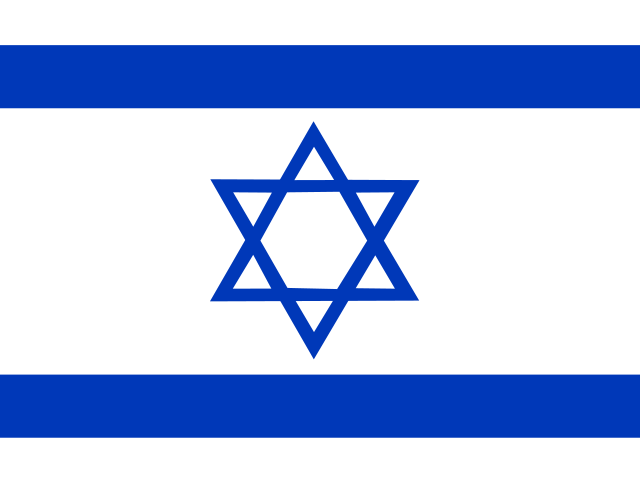
Israel is the party on the other side.
Israel has conducted military operations and continued strikes inside Lebanon despite a ceasefire agreement, and it has refused calls for action pressed by French President Emmanuel Macron.
The two sides have conflicting interests: France and Lebanon seek to uphold Lebanese sovereignty and prevent a permanent Israeli presence or displacement of civilians, while Israel has resisted those demands and continued its military campaign.
The disagreement has played out in international forums, including at the UN, where France has taken a strong stance against any form of occupation or permanent Israeli presence on Lebanese territory.
France has also intensified diplomatic, humanitarian, and military efforts to prevent a full-scale war, while the UN has documented more than 10,000 ceasefire violations.
France is now hosting security talks in Paris to discuss alternatives to UNIFIL in southern Lebanon, as discussions focus on how to maintain security and stability if the peacekeeping mission withdraws.
*AI-generated summary of publicly available data. This is not an official statement of any party.
*AI-generated summary of publicly available statements and reporting. This is not an official statement of this party.
Supporters of France and Lebanon argue that Paris talks on post-UNIFIL security must respect Lebanon's sovereignty and cultural heritage, not impose outside designs on the south.
Supporters of France and Lebanon frame the Paris talks as protecting Lebanon's sovereignty and cultural heritage, arguing outside powers should not dictate the south's future security.
Supporters of France and Lebanon counter that UNIFIL's mandate was never designed to disarm Hezbollah, so blaming the mission misreads its purpose and ignores Lebanon's own sovereignty claims.
Supporters of France and Lebanon maintain that any post-UNIFIL security arrangement must rest on Lebanon's consent and sovereign authority, since deploying forces without host-state approval would violate international law.
Supporters of France and Lebanon argue that Israel's continued attacks violate the ceasefire's legal obligations, so Paris talks must secure enforceable guarantees before any UNIFIL withdrawal.
Supporters of France and Lebanon counter that UNIFIL's mandate under Resolution 1701 already obliges Lebanon to secure its own territory, so Israel's self-defense claim cannot override that sovereign framework.
Supporters of France and Lebanon argue Paris talks let Beirut trade UNIFIL's limits for leverage, betting that hosting security talks gives France influence over southern Lebanon's fate while Israel stays overstretched.
Supporters of France and Lebanon argue Paris talks let Beirut and its allies trade UNIFIL for a force shaped by their own interests, gaining leverage over Israel while managing Hezbollah's role.
Supporters of France and Lebanon counter that Israel's strikes are the leverage—by degrading Hezbollah before any force deploys, Israel ensures the terms favor itself, not a genuine balance of power.
Supporters of France and Lebanon argue that with UNIFIL's mandate ending, the international community has a moral duty to prevent a security vacuum in southern Lebanon rather than abandon its civilians.
Supporters of France and Lebanon argue that with UNIFIL's future uncertain, France's Paris talks offer a moral path to protect Lebanese civilians and sovereignty, not a substitute for accountability.
Supporters of France and Lebanon counter that lasting security cannot rest on occupation; they argue that Lebanon's sovereignty and civilian protection must come first, since force alone has never secured the border.
Supporters of France and Lebanon argue that Paris talks must uphold Lebanon's religiously plural, sovereign order, maintaining that outside powers should respect inherited confessional stability rather than impose new security arrangements unilaterally.
Supporters of France and Lebanon argue that Paris talks must respect Lebanon's religious communities and inherited institutions, holding that stability in the south depends on traditional authorities, not outside force.
Supporters of France and Lebanon counter that scripture also charges Israel to treat the foreigner justly, so they argue that inherited promises do not license lasting control over another nation's land.
*AI-generated summary of publicly available statements and reporting. This is not an official statement of this party.
Supporters of Israel argue that past peacekeeping missions, like UNIFIL, historically failed to prevent Hezbollah's entrenchment in southern Lebanon, so France's Paris talks should prioritize Israeli security needs over repeating old models.
Supporters of Israel argue that past peacekeeping missions, like UNIFIL, failed to stop Hezbollah's entrenchment, so cultural memory of unenforced mandates justifies Israel's insistence on self-defense over foreign troops.
Supporters of Israel counter that Lebanon's sovereignty claim rings hollow while Hezbollah, an armed non-state actor, operates freely in the south, and they note that prior UNIFIL mandates failed to prevent exactly this cultural erosion of state authority.
Supporters of Israel argue that under international law, Israel has the right to self-defense against Hezbollah, so any post-UNIFIL security arrangement must ensure armed groups cannot rearm near its border.
Supporters of Israel argue that under international law, Israel retains the right to self-defense against Hezbollah, so any post-UNIFIL security framework must let Israel act against threats rather than rely on a mission they view as ineffective.
Supporters of Israel counter that UN Security Council Resolution 1701 and the 1949 Armistice Agreements already bind Lebanon to prevent armed groups in its territory, so enforcement need not await fresh host-state consent.
Supporters of Israel argue that any post-UNIFIL force must have real enforcement power, since peacekeeping without authority only lets Hezbollah rearm—so Israel keeps striking to shape terms before talks conclude.
Supporters of Israel argue Paris talks are leverage: any force replacing UNIFIL must let Israel strike Hezbollah freely, since a weak mandate only shields Israel's enemy.
Supporters of Israel counter that Hezbollah's arms, not UNIFIL's mandate, decide southern Lebanon; Paris talks grant Beirut no leverage while Israel keeps striking, so France gains process, not power.
Supporters of Israel argue that Israel has a moral right to secure its northern border against Hezbollah, and that any post-UNIFIL arrangement in southern Lebanon must guarantee that security rather than enable armed groups.
Supporters of Israel argue that sovereignty obligates Israel to secure its northern border when peacekeeping missions fail, and that market-driven defense innovation, not foreign troops, is the reliable guarantee of stability.
Supporters of Israel counter that the moral duty rests with those who let armed groups embed among civilians, arguing the security vacuum exists because UNIFIL never fulfilled its mandate to disarm them.
Supporters of Israel argue that scripture frames Lebanon as part of the promised inheritance, so they maintain that Israeli security control in the south is a biblically grounded necessity rather than occupation.
Supporters of Israel invoke scripture, arguing that Judea and Samaria and the land of Israel were granted by divine promise, and that security in the north requires maintaining a military presence rather than relying on international forces.
Supporters of Israel counter that Lebanon's confessional order has repeatedly collapsed into civil war and Hezbollah's armed entrenchment, so scripture's call for justice and secure borders outweighs appeals to inherited sectarian stability.
AI-generated summary of publicly available statements and reporting. This is not an official statement of this party.
Supporters of France and Lebanon argue that Paris talks on post-UNIFIL security must respect Lebanon's sovereignty and cultural heritage, not impose outside designs on the south.
Supporters of France and Lebanon frame the Paris talks as protecting Lebanon's sovereignty and cultural heritage, arguing outside powers should not dictate the south's future security.
Supporters of France and Lebanon counter that UNIFIL's mandate was never designed to disarm Hezbollah, so blaming the mission misreads its purpose and ignores Lebanon's own sovereignty claims.
Supporters of France and Lebanon maintain that any post-UNIFIL security arrangement must rest on Lebanon's consent and sovereign authority, since deploying forces without host-state approval would violate international law.
Supporters of France and Lebanon argue that Israel's continued attacks violate the ceasefire's legal obligations, so Paris talks must secure enforceable guarantees before any UNIFIL withdrawal.
Supporters of France and Lebanon counter that UNIFIL's mandate under Resolution 1701 already obliges Lebanon to secure its own territory, so Israel's self-defense claim cannot override that sovereign framework.
Supporters of France and Lebanon argue Paris talks let Beirut trade UNIFIL's limits for leverage, betting that hosting security talks gives France influence over southern Lebanon's fate while Israel stays overstretched.
Supporters of France and Lebanon argue Paris talks let Beirut and its allies trade UNIFIL for a force shaped by their own interests, gaining leverage over Israel while managing Hezbollah's role.
Supporters of France and Lebanon counter that Israel's strikes are the leverage—by degrading Hezbollah before any force deploys, Israel ensures the terms favor itself, not a genuine balance of power.
Supporters of France and Lebanon argue that with UNIFIL's mandate ending, the international community has a moral duty to prevent a security vacuum in southern Lebanon rather than abandon its civilians.
Supporters of France and Lebanon argue that with UNIFIL's future uncertain, France's Paris talks offer a moral path to protect Lebanese civilians and sovereignty, not a substitute for accountability.
Supporters of France and Lebanon counter that lasting security cannot rest on occupation; they argue that Lebanon's sovereignty and civilian protection must come first, since force alone has never secured the border.
Supporters of France and Lebanon argue that Paris talks must uphold Lebanon's religiously plural, sovereign order, maintaining that outside powers should respect inherited confessional stability rather than impose new security arrangements unilaterally.
Supporters of France and Lebanon argue that Paris talks must respect Lebanon's religious communities and inherited institutions, holding that stability in the south depends on traditional authorities, not outside force.
Supporters of France and Lebanon counter that scripture also charges Israel to treat the foreigner justly, so they argue that inherited promises do not license lasting control over another nation's land.
Supporters of Israel argue that past peacekeeping missions, like UNIFIL, historically failed to prevent Hezbollah's entrenchment in southern Lebanon, so France's Paris talks should prioritize Israeli security needs over repeating old models.
Supporters of Israel argue that past peacekeeping missions, like UNIFIL, failed to stop Hezbollah's entrenchment, so cultural memory of unenforced mandates justifies Israel's insistence on self-defense over foreign troops.
Supporters of Israel counter that Lebanon's sovereignty claim rings hollow while Hezbollah, an armed non-state actor, operates freely in the south, and they note that prior UNIFIL mandates failed to prevent exactly this cultural erosion of state authority.
Supporters of Israel argue that under international law, Israel has the right to self-defense against Hezbollah, so any post-UNIFIL security arrangement must ensure armed groups cannot rearm near its border.
Supporters of Israel argue that under international law, Israel retains the right to self-defense against Hezbollah, so any post-UNIFIL security framework must let Israel act against threats rather than rely on a mission they view as ineffective.
Supporters of Israel counter that UN Security Council Resolution 1701 and the 1949 Armistice Agreements already bind Lebanon to prevent armed groups in its territory, so enforcement need not await fresh host-state consent.
Supporters of Israel argue that any post-UNIFIL force must have real enforcement power, since peacekeeping without authority only lets Hezbollah rearm—so Israel keeps striking to shape terms before talks conclude.
Supporters of Israel argue Paris talks are leverage: any force replacing UNIFIL must let Israel strike Hezbollah freely, since a weak mandate only shields Israel's enemy.
Supporters of Israel counter that Hezbollah's arms, not UNIFIL's mandate, decide southern Lebanon; Paris talks grant Beirut no leverage while Israel keeps striking, so France gains process, not power.
Supporters of Israel argue that Israel has a moral right to secure its northern border against Hezbollah, and that any post-UNIFIL arrangement in southern Lebanon must guarantee that security rather than enable armed groups.
Supporters of Israel argue that sovereignty obligates Israel to secure its northern border when peacekeeping missions fail, and that market-driven defense innovation, not foreign troops, is the reliable guarantee of stability.
Supporters of Israel counter that the moral duty rests with those who let armed groups embed among civilians, arguing the security vacuum exists because UNIFIL never fulfilled its mandate to disarm them.
Supporters of Israel argue that scripture frames Lebanon as part of the promised inheritance, so they maintain that Israeli security control in the south is a biblically grounded necessity rather than occupation.
Supporters of Israel invoke scripture, arguing that Judea and Samaria and the land of Israel were granted by divine promise, and that security in the north requires maintaining a military presence rather than relying on international forces.
Supporters of Israel counter that Lebanon's confessional order has repeatedly collapsed into civil war and Hezbollah's armed entrenchment, so scripture's call for justice and secure borders outweighs appeals to inherited sectarian stability.
Security talks in Paris focusing on post-UNIFIL alternatives for southern Lebanon.
Analysis noted that France, caught between reconciliation attempts with Israel and support for Lebanese sovereignty, struggled to translate diplomatic efforts into results.
Despite the ceasefire agreement, Israel continued carrying out strikes inside Lebanon, with the UN documenting more than 10,000 ceasefire violations.
French President Emmanuel Macron called for action on Lebanon but faced refusal from Israel, as chaos and devastation swept through Lebanon and deadly clashes broke out between Shiite groups.
France intensified diplomatic, humanitarian, and military efforts to prevent Israel from launching a full-scale war on Lebanon.