Iran
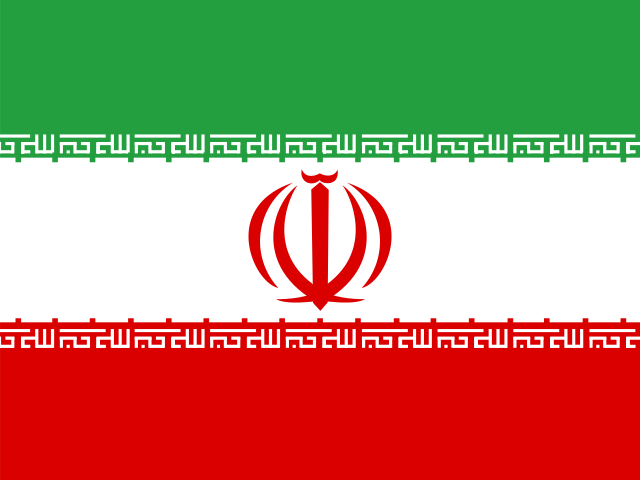
VS
G7

The G7 is a group of major advanced economies whose foreign ministers issue joint statements on international security matters.
Iran is a regional power that the G7 accuses of providing military support to the Houthis, a Yemen-based armed movement that has carried out attacks on shipping in the Red Sea and on Saudi Arabia.
The three parties are at odds over the Yemen conflict and maritime security.
The G7 has called on Iran to end its arming and support of the Houthis, describing it as a dangerous pattern, and has urged the Houthis to halt attacks on civilian shipping.
The G7 statement links Houthi military expansion to Iran and places the dispute in the context of a wider threat to maritime security and global energy supplies.
The joint statement was issued ahead of the UN General Assembly, highlighting international concern over Iran's role in the Yemen conflict and the risk that continued attacks could disrupt global energy security.
*AI-generated summary of publicly available data. This is not an official statement of any party.
*AI-generated summary of publicly available statements and reporting. This is not an official statement of this party.
Supporters of Iran argue that Western powers historically backed regional proxies during the Cold War, so the G7's condemnation reflects selective memory rather than principle.
Supporters of Iran frame the G7's demand as Western double standards, recalling colonial-era interventions in Yemen and arguing that Iran's regional ties reflect sovereign solidarity, not proxy control.
Supporters of Iran counter that arming the Houthis is a continuation of Iran's revolutionary tradition of backing regional resistance movements against foreign intervention.
Supporters of Iran argue the G7's demand lacks legal basis, since no treaty or UN resolution cited by the G7 proves Iranian arms transfers to the Houthis, and they maintain that allegations without verified evidence cannot ground legal condemnation.
Supporters of Iran argue the G7 has shown no legal evidence of arms transfers, and that supplying a non-state group is not itself unlawful absent proof of a binding treaty breach.
Supporters of Iran counter that UN Security Council Resolution 2216's arms embargo targets specific individuals and entities, not the Houthis as a whole, so the legal basis for the G7 claim is contested.
Supporters of Iran argue the G7's demand is leverage, not principle: by framing Iran as the Houthis' arms supplier, Western powers justify pressure and sanctions ahead of the UNGA while ignoring their own patrons in the conflict.
Supporters of Iran argue the G7's condemnation is leverage, not principle: Tehran sees its Houthi ties as cheap deterrence against US-allied pressure, a bargaining chip to trade at the UNGA rather than a concession to surrender.
Supporters of Iran counter that the G7’s statement is less leverage than liability: naming Tehran hands it a grievance to rally allies, while the bloc still needs Iranian restraint to keep oil routes open.
Supporters of Iran argue that Yemen's Houthis are an indigenous movement, so blaming Tehran for their strikes on Saudi Arabia and Red Sea shipping deflects from the G7's own arms sales and the war's humanitarian toll.
Supporters of Iran argue that the G7’s condemnation is a moral double standard, insisting that Yemen’s sovereignty and the Houthis’ grievances deserve equal hearing rather than selective blame.
Supporters of Iran counter that the G7's moral framing ignores its own arms sales to Gulf states, arguing that singling out Tehran while Western weapons fuel the same war reflects selective morality rather than principle.
Supporters of Iran frame the Yemen conflict through religious sovereignty, arguing that outside powers like the G7 lack the moral authority to dictate the region's affairs. They maintain that backing fellow believers against foreign interference is a sacred duty, not a violation.
Supporters of Iran argue that its regional role is a matter of sovereign and religious legitimacy, maintaining that outside powers like the G7 lack the moral authority to dictate the affairs of Muslim nations.
Supporters of Iran counter that Shia jurisprudence obligates resistance against foreign domination, so backing the Houthis upholds religious duty to defend the oppressed, not aggression.
*AI-generated summary of publicly available statements and reporting. This is not an official statement of this party.
Supporters of the G7 frame Iran's arming of the Houthis as a breach of sovereign order, arguing that established states and stable maritime norms must be upheld against destabilizing non-state actors.
Supporters of the G7 frame their stand as defense of established order: they argue that arming non-state militias and attacking shipping erodes the customary rules and stability on which global energy security depends.
Supporters of the G7 counter that cultural continuity and sovereign statehood, not Cold War precedent, anchor their position; they argue nations upholding inherited institutions and international norms deserve deference over non-state proxies.
Supporters of G7 counter that Yemen's inherited state institutions and pluralist traditions predate the Houthi movement, which they say erases that cultural continuity rather than defending it.
Supporters of G7 argue that Iran's arming of Houthis violates UN Security Council arms embargoes, and that enforcing those legal obligations is necessary to protect global energy security.
Supporters of G7 argue that Iran's arming of Houthi rebels violates international law and UN arms embargoes, and that halting these transfers is a legal obligation, not a concession.
Supporters of G7 counter that UN Security Council Resolution 2216 imposes a binding arms embargo on the Houthis, so any transfer to them breaches international law regardless of whether a separate treaty names Iran.
Supporters of G7 counter that Houthi attacks on Red Sea shipping violate UNCLOS navigational rights, so Yemeni sovereignty claims cannot legally shield strikes on third-party commerce.
Supporters of G7 frame the Yemen statement as leverage before the UN General Assembly: naming Iran's arms flow and Houthi Red Sea strikes lets the bloc cast itself as guardian of energy security while pressuring Tehran.
Supporters of G7 argue that naming Iran's arms flows and Houthi attacks on Saudi Arabia and Red Sea shipping serves leverage, framing the UN General Assembly as the venue to impose costs on Tehran before it gains ground.
G7 supporters counter that leverage runs both ways: naming Iran as supplier forces Tehran to defend its role before UNGA, shifting scrutiny onto its own regional clients rather than the G7's.
Supporters of G7 counter that leverage only matters if it is sustainable: the Houthis' Red Sea attacks invite airstrikes that erode their military capacity, so coercion without a viable exit yields not recognition but attrition.
Supporters of the G7 frame Iran's arming of the Houthis as a moral failure: outside powers, they argue, should not prolong Yemen's war or endanger civilian shipping, and those who do bear responsibility for the suffering that follows.
Supporters of G7 argue that arming the Houthis violates international norms and endangers civilians, so Iran bears a moral duty to stop; they maintain that protecting global shipping and Saudi territory is a legitimate responsibility, not aggression.
Supporters of G7 counter that Iran's own history—arming and directing proxies from Lebanon to Iraq—shows the Houthis are not merely indigenous, and that Tehran bears moral responsibility for extending the war beyond Yemen's borders.
Supporters of the G7 counter that the Houthis' strikes on civilian shipping amount to piracy, not solidarity; moral duty cannot justify attacking neutral vessels and seafarers.
Supporters of G7 invoke a moral duty to protect innocent life and global order, arguing that arming Houthi attacks on Saudi Arabia and Red Sea shipping violates the peace and stewardship their faith traditions commend.
Supporters of the G7 invoke just-war tradition—defending innocent life and safe passage—to argue that arming Houthi attacks violates the moral duty to protect civilians and preserve peace.
Supporters of the G7 counter that faith cannot sanctify attacks on civilians or shipping, and that just war tradition holds all nations, including believers, to restraint under divine law.
Supporters of G7 counter that framing omits the Houthis' own offensives and arms, and note that just war tradition holds belligerents accountable for their own acts, not only foreign ones.
AI-generated summary of publicly available statements and reporting. This is not an official statement of this party.
Supporters of Iran argue that Western powers historically backed regional proxies during the Cold War, so the G7's condemnation reflects selective memory rather than principle.
Supporters of Iran frame the G7's demand as Western double standards, recalling colonial-era interventions in Yemen and arguing that Iran's regional ties reflect sovereign solidarity, not proxy control.
Supporters of Iran counter that arming the Houthis is a continuation of Iran's revolutionary tradition of backing regional resistance movements against foreign intervention.
Supporters of Iran argue the G7's demand lacks legal basis, since no treaty or UN resolution cited by the G7 proves Iranian arms transfers to the Houthis, and they maintain that allegations without verified evidence cannot ground legal condemnation.
Supporters of Iran argue the G7 has shown no legal evidence of arms transfers, and that supplying a non-state group is not itself unlawful absent proof of a binding treaty breach.
Supporters of Iran counter that UN Security Council Resolution 2216's arms embargo targets specific individuals and entities, not the Houthis as a whole, so the legal basis for the G7 claim is contested.
Supporters of Iran argue the G7's demand is leverage, not principle: by framing Iran as the Houthis' arms supplier, Western powers justify pressure and sanctions ahead of the UNGA while ignoring their own patrons in the conflict.
Supporters of Iran argue the G7's condemnation is leverage, not principle: Tehran sees its Houthi ties as cheap deterrence against US-allied pressure, a bargaining chip to trade at the UNGA rather than a concession to surrender.
Supporters of Iran counter that the G7’s statement is less leverage than liability: naming Tehran hands it a grievance to rally allies, while the bloc still needs Iranian restraint to keep oil routes open.
Supporters of Iran argue that Yemen's Houthis are an indigenous movement, so blaming Tehran for their strikes on Saudi Arabia and Red Sea shipping deflects from the G7's own arms sales and the war's humanitarian toll.
Supporters of Iran argue that the G7’s condemnation is a moral double standard, insisting that Yemen’s sovereignty and the Houthis’ grievances deserve equal hearing rather than selective blame.
Supporters of Iran counter that the G7's moral framing ignores its own arms sales to Gulf states, arguing that singling out Tehran while Western weapons fuel the same war reflects selective morality rather than principle.
Supporters of Iran frame the Yemen conflict through religious sovereignty, arguing that outside powers like the G7 lack the moral authority to dictate the region's affairs. They maintain that backing fellow believers against foreign interference is a sacred duty, not a violation.
Supporters of Iran argue that its regional role is a matter of sovereign and religious legitimacy, maintaining that outside powers like the G7 lack the moral authority to dictate the affairs of Muslim nations.
Supporters of Iran counter that Shia jurisprudence obligates resistance against foreign domination, so backing the Houthis upholds religious duty to defend the oppressed, not aggression.
Supporters of the G7 frame Iran's arming of the Houthis as a breach of sovereign order, arguing that established states and stable maritime norms must be upheld against destabilizing non-state actors.
Supporters of the G7 frame their stand as defense of established order: they argue that arming non-state militias and attacking shipping erodes the customary rules and stability on which global energy security depends.
Supporters of the G7 counter that cultural continuity and sovereign statehood, not Cold War precedent, anchor their position; they argue nations upholding inherited institutions and international norms deserve deference over non-state proxies.
Supporters of G7 counter that Yemen's inherited state institutions and pluralist traditions predate the Houthi movement, which they say erases that cultural continuity rather than defending it.
Supporters of G7 argue that Iran's arming of Houthis violates UN Security Council arms embargoes, and that enforcing those legal obligations is necessary to protect global energy security.
Supporters of G7 argue that Iran's arming of Houthi rebels violates international law and UN arms embargoes, and that halting these transfers is a legal obligation, not a concession.
Supporters of G7 counter that UN Security Council Resolution 2216 imposes a binding arms embargo on the Houthis, so any transfer to them breaches international law regardless of whether a separate treaty names Iran.
Supporters of G7 counter that Houthi attacks on Red Sea shipping violate UNCLOS navigational rights, so Yemeni sovereignty claims cannot legally shield strikes on third-party commerce.
Supporters of G7 frame the Yemen statement as leverage before the UN General Assembly: naming Iran's arms flow and Houthi Red Sea strikes lets the bloc cast itself as guardian of energy security while pressuring Tehran.
Supporters of G7 argue that naming Iran's arms flows and Houthi attacks on Saudi Arabia and Red Sea shipping serves leverage, framing the UN General Assembly as the venue to impose costs on Tehran before it gains ground.
G7 supporters counter that leverage runs both ways: naming Iran as supplier forces Tehran to defend its role before UNGA, shifting scrutiny onto its own regional clients rather than the G7's.
Supporters of G7 counter that leverage only matters if it is sustainable: the Houthis' Red Sea attacks invite airstrikes that erode their military capacity, so coercion without a viable exit yields not recognition but attrition.
Supporters of the G7 frame Iran's arming of the Houthis as a moral failure: outside powers, they argue, should not prolong Yemen's war or endanger civilian shipping, and those who do bear responsibility for the suffering that follows.
Supporters of G7 argue that arming the Houthis violates international norms and endangers civilians, so Iran bears a moral duty to stop; they maintain that protecting global shipping and Saudi territory is a legitimate responsibility, not aggression.
Supporters of G7 counter that Iran's own history—arming and directing proxies from Lebanon to Iraq—shows the Houthis are not merely indigenous, and that Tehran bears moral responsibility for extending the war beyond Yemen's borders.
Supporters of the G7 counter that the Houthis' strikes on civilian shipping amount to piracy, not solidarity; moral duty cannot justify attacking neutral vessels and seafarers.
Supporters of G7 invoke a moral duty to protect innocent life and global order, arguing that arming Houthi attacks on Saudi Arabia and Red Sea shipping violates the peace and stewardship their faith traditions commend.
Supporters of the G7 invoke just-war tradition—defending innocent life and safe passage—to argue that arming Houthi attacks violates the moral duty to protect civilians and preserve peace.
Supporters of the G7 counter that faith cannot sanctify attacks on civilians or shipping, and that just war tradition holds all nations, including believers, to restraint under divine law.
Supporters of G7 counter that framing omits the Houthis' own offensives and arms, and note that just war tradition holds belligerents accountable for their own acts, not only foreign ones.
Ministers demand an end to maritime shipping attacks and urge Iran to stop arming the Yemeni group.
The G7 calls on Iran to stop arming Houthis and condemns Houthi attacks on Saudi Arabia.
Upcoming UN General Assembly where the issue is expected to be discussed.
The foreign ministers of G7 nations called on Iran to end its arming and support of the Houthis in Yemen, which they said constituted a dangerous pattern, and urged the Houthis to halt attacks on civilian shipping.
The G7 statement placed the dispute in the context of the wider threat to maritime security, directly linking Houthi military expansion to Iran.