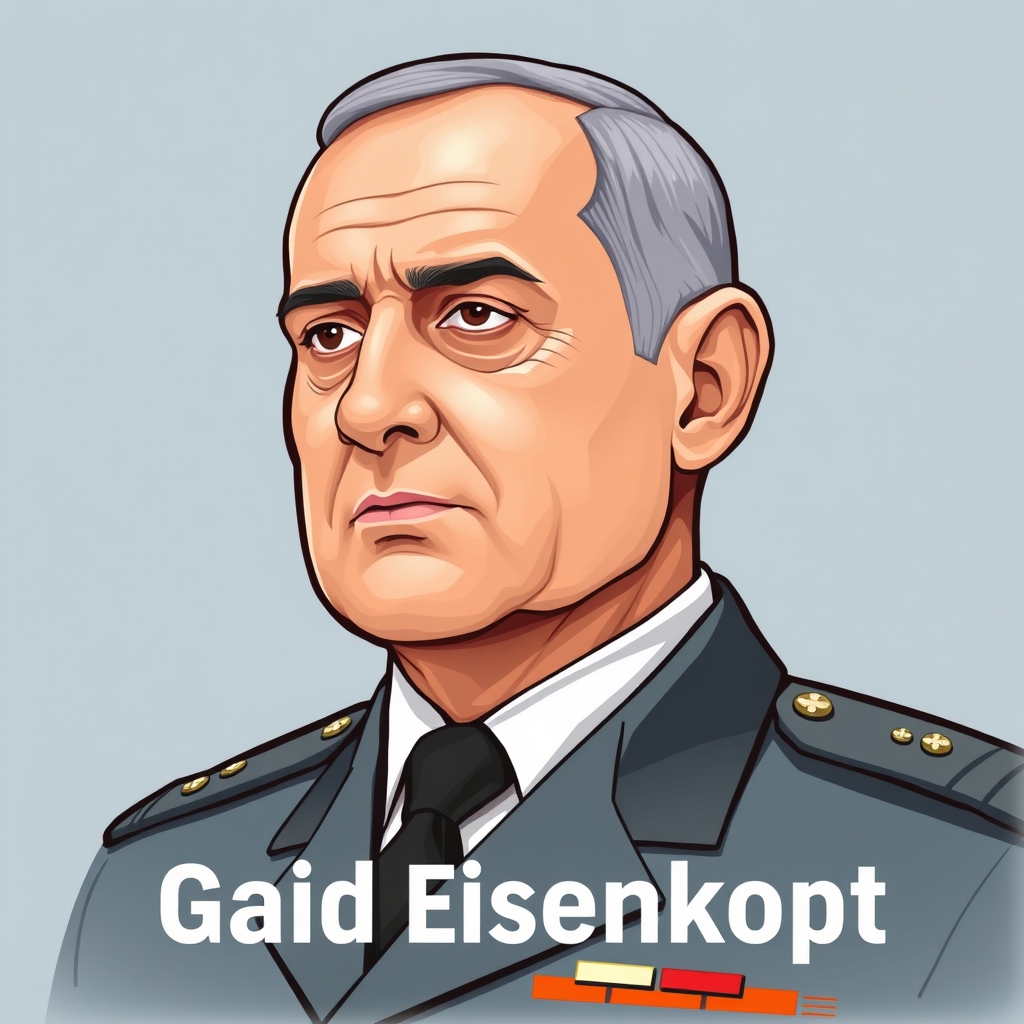
Gadi Eisenkot
VS
Divided opposition
?
No actors in this side.
No actors in this side.
After an inconclusive Israeli election, former military chief Gadi Eisenkot has been given the opportunity to form a government.
The question is whether he can succeed given a divided opposition.
*AI-generated summary of publicly available data. This is not an official statement of any party.
*AI-generated summary of publicly available statements and reporting. This is not an official statement of this party.
Supporters of Gadi Eisenkot argue that Israel's history of fractured coalition politics shows divided oppositions can still unite around a single figure, and they point to Eisenkot's military credibility as the cultural glue that past leaders lacked.
Supporters of Gadi Eisenkot argue that Israel's fractured politics reflect a deeper cultural shift away from bloc loyalty, and they maintain that his security record offers a unifying civic symbol that divided parties can rally around.
Supporters of Gadi Eisenkot counter that cultural continuity is sustained by shared civic practice, not by a single camp's inherited commitments, pointing to Israel's history of absorbing diverse communities into a common public life.
Supporters of Gadi Eisenkot argue that the mandate to form a government gives him the legal authority to seek a coalition, and that a divided opposition does not diminish that lawful process.
Supporters of Gadi Eisenkot argue that the mandate to form a government is legally his to exercise, and that coalition-building through negotiated agreements is the lawful route to a workable majority.
Supporters of Gadi Eisenkot counter that Israeli coalition formation is governed by the Basic Law: The Government, which assigns the mandate to form a government to a Knesset member after consultations—so rivals bear legal weight too.
Supporters of Gadi Eisenkot argue that a divided opposition is leverage, not a barrier: they maintain that Eisenkot, as a former military chief, can play factions against each other and consolidate power from the center.
Supporters of Gadi Eisenkot argue that a divided opposition is leverage, not an obstacle: they maintain that fragmented rivals can be picked off one by one with portfolios and concessions, and point to the inconclusive result as proof that Eisenkot's mandate lets him dictate term.
Supporters of Gadi Eisenkot counter that leverage without a unified bloc collapses at the moment of decision, since rival factions bidding separately let the coalition pick its partner and set terms, making fragmentation a concession, not a price.
Supporters of Gadi Eisenkot argue that a divided opposition owes voters a moral duty to set aside factional differences, since the inconclusive election gave no bloc a mandate and coalition-building, not rivalry, best honors the electorate's will.
Supporters of Gadi Eisenkot argue that, given an inconclusive election result with no clear winner, he holds the legitimate mandate to form a government and coalition-building should proceed on that basis.
Supporters of Gadi Eisenkot counter that a moral mandate rests on accountability, not title: a leader who accepts responsibility for hard decisions offers a clearer ethical choice than factions that negotiate without owning outcomes.
Supporters of Gadi Eisenkot argue that forming a government is a moral duty rooted in faith, since scripture calls for pursuing peace and repairing the world, and they maintain that overcoming division serves that sacred obligation.
Supporters of Gadi Eisenkot argue that forming a government is a moral duty rooted in faith, since scripture commands pursuing peace and the common good over factional strife.
Supporters of Gadi Eisenkot counter that Jewish tradition also honors the righteous leader who acts decisively in times of danger, citing the biblical judges raised to deliver the community when collective consensus failed.
*AI-generated summary of publicly available statements and reporting. This is not an official statement of this party.
Supporters of Divided opposition contend that a fragmented camp cannot safeguard cultural continuity, arguing that without shared inherited commitments, Eisenkot's coalition would erode the stable social order.
Supporters of Divided opposition argue that coalition-building should honor distinct cultural and religious constituencies rather than submerge them, contending that preserving each faction's inherited identity safeguards social cohesion.
Supporters of Divided opposition counter that shared military credentials don't forge cultural cohesion—they note that Israel's fractured camps are divided by deep religious and communal identities that a single general's record cannot bridge.
Supporters of Divided opposition argue that no legal mandate requires fragmented parties to coalesce behind Eisenkot, and they maintain that coalition-building obligations rest with the designated former military chief, not rival factions.
Supporters of Divided opposition argue that no coalition can lawfully claim a mandate while its constituent parties remain publicly opposed on core issues, contending that legally durable government requires disclosed, binding agreements rather than post-election arithmetic.
Supporters of Divided opposition counter that a mandate confers only the authority to attempt coalition-building, not to override the Knesset's confidence requirement, so a fragmented opposition legally retains the votes needed to withhold confidence.
Supporters of Divided opposition argue Eisenkot's mandate is leverage, not legitimacy: a fragmented Knesset lets rival blocs extract concessions, so they maintain the coalition's price, not its survival, decides the outcome.
Supporters of Divided opposition argue that Eisenkot’s mandate is leverage, not consensus: fragmented blocs will trade support only for portfolios and policy concessions, so they maintain that his coalition survives by paying rivals more than they fear him.
Supporters of Divided opposition counter that a former military chief lacks the political base to play factions against each other—fragmented blocs extract concessions rather than yield, so leverage flows to whoever holds seats, not to a centrist broker without one.
Supporters of Divided opposition argue that no single leader should claim a moral mandate from an inconclusive vote; in their view, liberty requires that competing factions negotiate voluntarily rather than cede authority to one former general.
Supporters of Divided opposition argue that a mandate handed to Gadi Eisenkot without a clear electoral winner lacks a genuine moral mandate from voters, and that imposing a government on a divided electorate disrespects their consent.
Supporters of the Divided opposition counter that no election obligates parties to dissolve their principles into another's coalition; honoring voters means preserving the distinct choices they cast, not trading them away for seats.
Supporters of Divided opposition argue that Jewish religious tradition warns against relying on a single strongman, and they contend that coalition-building grounded in shared covenantal values, not one leader’s mandate, better preserves communal continuity.
Supporters of the divided opposition argue that Eisenkot's mandate lacks the religious legitimacy a governing coalition needs, maintaining that a government without broad Torah-observant consensus cannot claim to speak for Israel's sacred national destiny.
Supporters of Divided opposition counter that tikkun olam cannot be invoked to sanctify a coalition that accommodates those who would weaken Torah observance, arguing that guarding the faith's communal character takes precedence over the mere act of governing.
AI-generated summary of publicly available statements and reporting. This is not an official statement of this party.
Supporters of Gadi Eisenkot argue that Israel's history of fractured coalition politics shows divided oppositions can still unite around a single figure, and they point to Eisenkot's military credibility as the cultural glue that past leaders lacked.
Supporters of Gadi Eisenkot argue that Israel's fractured politics reflect a deeper cultural shift away from bloc loyalty, and they maintain that his security record offers a unifying civic symbol that divided parties can rally around.
Supporters of Gadi Eisenkot counter that cultural continuity is sustained by shared civic practice, not by a single camp's inherited commitments, pointing to Israel's history of absorbing diverse communities into a common public life.
Supporters of Gadi Eisenkot argue that the mandate to form a government gives him the legal authority to seek a coalition, and that a divided opposition does not diminish that lawful process.
Supporters of Gadi Eisenkot argue that the mandate to form a government is legally his to exercise, and that coalition-building through negotiated agreements is the lawful route to a workable majority.
Supporters of Gadi Eisenkot counter that Israeli coalition formation is governed by the Basic Law: The Government, which assigns the mandate to form a government to a Knesset member after consultations—so rivals bear legal weight too.
Supporters of Gadi Eisenkot argue that a divided opposition is leverage, not a barrier: they maintain that Eisenkot, as a former military chief, can play factions against each other and consolidate power from the center.
Supporters of Gadi Eisenkot argue that a divided opposition is leverage, not an obstacle: they maintain that fragmented rivals can be picked off one by one with portfolios and concessions, and point to the inconclusive result as proof that Eisenkot's mandate lets him dictate term.
Supporters of Gadi Eisenkot counter that leverage without a unified bloc collapses at the moment of decision, since rival factions bidding separately let the coalition pick its partner and set terms, making fragmentation a concession, not a price.
Supporters of Gadi Eisenkot argue that a divided opposition owes voters a moral duty to set aside factional differences, since the inconclusive election gave no bloc a mandate and coalition-building, not rivalry, best honors the electorate's will.
Supporters of Gadi Eisenkot argue that, given an inconclusive election result with no clear winner, he holds the legitimate mandate to form a government and coalition-building should proceed on that basis.
Supporters of Gadi Eisenkot counter that a moral mandate rests on accountability, not title: a leader who accepts responsibility for hard decisions offers a clearer ethical choice than factions that negotiate without owning outcomes.
Supporters of Gadi Eisenkot argue that forming a government is a moral duty rooted in faith, since scripture calls for pursuing peace and repairing the world, and they maintain that overcoming division serves that sacred obligation.
Supporters of Gadi Eisenkot argue that forming a government is a moral duty rooted in faith, since scripture commands pursuing peace and the common good over factional strife.
Supporters of Gadi Eisenkot counter that Jewish tradition also honors the righteous leader who acts decisively in times of danger, citing the biblical judges raised to deliver the community when collective consensus failed.
Supporters of Divided opposition contend that a fragmented camp cannot safeguard cultural continuity, arguing that without shared inherited commitments, Eisenkot's coalition would erode the stable social order.
Supporters of Divided opposition argue that coalition-building should honor distinct cultural and religious constituencies rather than submerge them, contending that preserving each faction's inherited identity safeguards social cohesion.
Supporters of Divided opposition counter that shared military credentials don't forge cultural cohesion—they note that Israel's fractured camps are divided by deep religious and communal identities that a single general's record cannot bridge.
Supporters of Divided opposition argue that no legal mandate requires fragmented parties to coalesce behind Eisenkot, and they maintain that coalition-building obligations rest with the designated former military chief, not rival factions.
Supporters of Divided opposition argue that no coalition can lawfully claim a mandate while its constituent parties remain publicly opposed on core issues, contending that legally durable government requires disclosed, binding agreements rather than post-election arithmetic.
Supporters of Divided opposition counter that a mandate confers only the authority to attempt coalition-building, not to override the Knesset's confidence requirement, so a fragmented opposition legally retains the votes needed to withhold confidence.
Supporters of Divided opposition argue Eisenkot's mandate is leverage, not legitimacy: a fragmented Knesset lets rival blocs extract concessions, so they maintain the coalition's price, not its survival, decides the outcome.
Supporters of Divided opposition argue that Eisenkot’s mandate is leverage, not consensus: fragmented blocs will trade support only for portfolios and policy concessions, so they maintain that his coalition survives by paying rivals more than they fear him.
Supporters of Divided opposition counter that a former military chief lacks the political base to play factions against each other—fragmented blocs extract concessions rather than yield, so leverage flows to whoever holds seats, not to a centrist broker without one.
Supporters of Divided opposition argue that no single leader should claim a moral mandate from an inconclusive vote; in their view, liberty requires that competing factions negotiate voluntarily rather than cede authority to one former general.
Supporters of Divided opposition argue that a mandate handed to Gadi Eisenkot without a clear electoral winner lacks a genuine moral mandate from voters, and that imposing a government on a divided electorate disrespects their consent.
Supporters of the Divided opposition counter that no election obligates parties to dissolve their principles into another's coalition; honoring voters means preserving the distinct choices they cast, not trading them away for seats.
Supporters of Divided opposition argue that Jewish religious tradition warns against relying on a single strongman, and they contend that coalition-building grounded in shared covenantal values, not one leader’s mandate, better preserves communal continuity.
Supporters of the divided opposition argue that Eisenkot's mandate lacks the religious legitimacy a governing coalition needs, maintaining that a government without broad Torah-observant consensus cannot claim to speak for Israel's sacred national destiny.
Supporters of Divided opposition counter that tikkun olam cannot be invoked to sanctify a coalition that accommodates those who would weaken Torah observance, arguing that guarding the faith's communal character takes precedence over the mere act of governing.
An election in Israel produced no clear winner, leading to the opportunity for Gadi Eisenkot to attempt to form a government.
Former military chief Gadi Eisenkot was given the opportunity to form a government after the inconclusive election.
No impact analysis has been generated for this conflict yet.