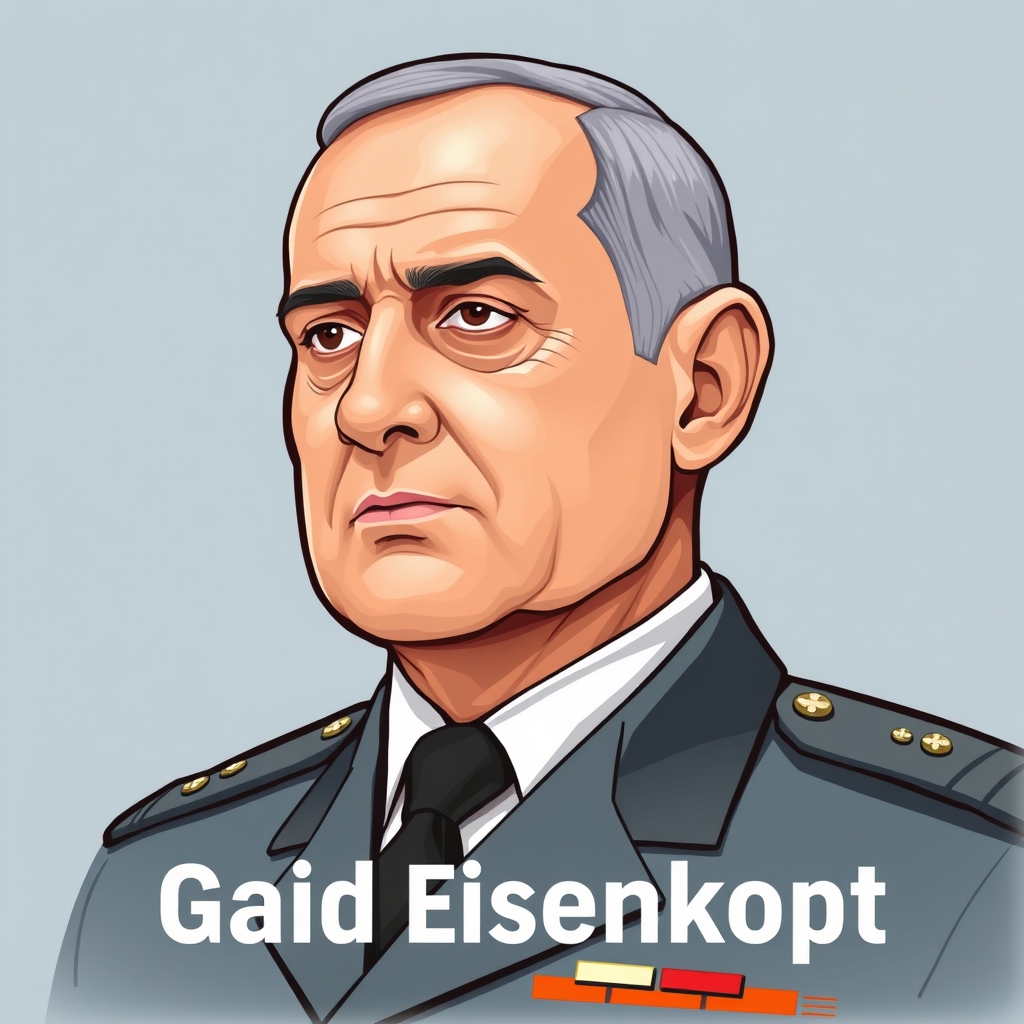
Gadi Eisenkot
VS
Ra'am and Democrats


Arab-majority party Ra'am and the Democrats have backed Gadi Eisenkot in a bid to form Israel's next government, setting up a contested political effort over who should lead the country.
*AI-generated summary of publicly available data. This is not an official statement of any party.
*AI-generated summary of publicly available statements and reporting. This is not an official statement of this party.
Supporters of Gadi Eisenkot argue that broad backing from Ra'am and the Democrats reflects a shared cultural commitment to national unity and civic responsibility over sectarian division.
Supporters of Gadi Eisenkot argue that a broad coalition anchored in established institutions, including Ra'am's participation, preserves national unity and continuity over disruptive change.
Supporters of Gadi Eisenkot counter that civic partnership cannot substitute for the cultural continuity of a Jewish democratic state, arguing that coalition ties with Ra'am risk eroding the shared heritage and majority identity that underpin national cohesion.
Supporters of Gadi Eisenkot argue that Ra'am and the Democrats' formal backing gives his bid for forming the next government a legitimate legal mandate grounded in Israel's coalition process.
Supporters of Gadi Eisenkot argue that Ra'am and the Democrats' endorsement gives his bid for the premiership a legitimate parliamentary mandate, and they maintain that coalition backing from elected parties is the proper legal path to forming Israel's next government.
Supporters of Gadi Eisenkot counter that Knesset confidence alone does not resolve the legal question, since reliance on Ra'am and Democrats would hinge on agreements whose lawful basis they argue remains untested.
Supporters of Gadi Eisenkot argue that Ra'am and the Democrats' backing is leverage, not alliance: they maintain that Eisenkot's security record gives him cover to accept Arab-party support without conceding policy, turning numbers into governing power on his terms.
Supporters of Gadi Eisenkot argue that Ra'am and the Democrats back him because his security record makes Arab-majority partnership politically survivable, letting him claim the center while opponents are left without a governing coalition.
Supporters of Gadi Eisenkot counter that leverage without an enforcement mechanism is illusion: a coalition partner who cannot threaten exit credibly gets concessions revoked once the votes are counted.
Supporters of Gadi Eisenkot argue that a broad coalition uniting Ra'am, the Democrats, and Eisenkot carries a moral duty to prioritize ecological stewardship, treating environmental protection as a shared obligation that transcends sectarian divides.
Supporters of Gadi Eisenkot argue that a broad coalition uniting Ra'am, the Democrats, and other factions carries a moral duty to safeguard Israel's shared environment, treating ecological stewardship as a core obligation of governance.
Supporters of Gadi Eisenkot counter that equal voice carries a moral duty to protect the most vulnerable, and they argue that any coalition leverage must be weighed against safeguarding civilians and upholding the laws of armed conflict.
Supporters of Gadi Eisenkot, including Ra'am and the Democrats, argue that backing his bid for government honors the pursuit of peace and justice, values they see as rooted in religious duty and shared moral obligation.
Supporters of Gadi Eisenkot, citing scripture's mandate to pursue justice and peace, argue that Ra'am and the Democrats' backing reflects a moral duty to heal divisions and uphold the dignity of all communities.
Supporters of Gadi Eisenkot counter that religious tradition obligates a leader to act on conscience and accountability, arguing that stability achieved by deferring to coalition partners risks moral compromise rather than honoring communal life.
*AI-generated summary of publicly available statements and reporting. This is not an official statement of this party.
Supporters of Ra'am and Democrats argue their backing of Eisenkot reflects a shared cultural commitment to civic partnership across communities, framing coalition-building as a way to protect minority life and identity within the national framework.
Supporters of Ra'am and Democrats argue their backing of Eisenkot reflects a cultural claim to full belonging in the national political process, insisting Arab citizens' votes should shape who leads the country.
Supporters of Ra'am and Democrats counter that Arab citizens' cultural identity and historic ties to the land are not subsumed into a unity framed by the majority, arguing that civic responsibility does not require erasing distinct national culture.
Supporters of Ra'am and Democrats argue that backing Eisenkot to form a government is legally sound, since coalition-building rests on parliamentary arithmetic and any resulting government would need Knesset confidence to hold office.
Supporters of Ra'am and Democrats argue their endorsement of Eisenkot is a legitimate exercise of coalition and voter-mandate rights, and that backing a candidate who can command a Knesset majority is what the law requires.
Supporters of Ra'am and the Democrats counter that a signed coalition mandate is legally meaningless without a Knesset majority, since Basic Law: The Government requires 61 MKs to confirm any government.
Supporters of Ra'am and Democrats argue backing Eisenkot is leverage, not loyalty: securing a governing coalition gives the Arab-majority party real bargaining power and policy concessions that opposition never delivers.
Supporters of Ra'am and Democrats argue that backing Eisenkot is leverage politics: a former general's security credibility buys their constituents protection and budget concessions no rival bloc would offer.
Supporters of Ra'am and Democrats counter that leverage without concessions is illusory: they argue backing that yields no policy costs them legitimacy with their base while Eisenkot banks the votes, so they hold the power to withhold.
Supporters of Ra'am and Democrats argue that backing Eisenkot honors the moral principle of equal political voice for Arab citizens, treating their endorsement as legitimate coalition leverage rather than something to be excluded.
Supporters of Ra'am and Democrats argue that backing Eisenkot honors the moral duty to give Arab citizens a genuine voice in governance, treating their votes as equal and their consent as essential to any government's legitimacy.
Supporters of Ra'am and Democrats counter that moral duty cannot be invoked to override the voluntary consent of communities most affected, arguing that ecological obligations imposed top-down without their agreement lack legitimacy.
Supporters of Ra'am and Democrats argue that backing Eisenkot reflects a religiously grounded commitment to preserving communal life and social cohesion, prioritizing stable governance over ideology.
Supporters of Ra'am and Democrats frame backing Eisenkot as a religious duty to preserve civic peace and protect holy places, arguing that shared governance safeguards the community's faith life better than exclusion.
Supporters of Ra'am and Democrats counter that religious duty is grounded in halakhic precedent and communal continuity, not in aligning with a secular general's coalition; they argue that inherited religious wisdom, not shared moral slogans, must guide such political backing.
AI-generated summary of publicly available statements and reporting. This is not an official statement of this party.
Supporters of Gadi Eisenkot argue that broad backing from Ra'am and the Democrats reflects a shared cultural commitment to national unity and civic responsibility over sectarian division.
Supporters of Gadi Eisenkot argue that a broad coalition anchored in established institutions, including Ra'am's participation, preserves national unity and continuity over disruptive change.
Supporters of Gadi Eisenkot counter that civic partnership cannot substitute for the cultural continuity of a Jewish democratic state, arguing that coalition ties with Ra'am risk eroding the shared heritage and majority identity that underpin national cohesion.
Supporters of Gadi Eisenkot argue that Ra'am and the Democrats' formal backing gives his bid for forming the next government a legitimate legal mandate grounded in Israel's coalition process.
Supporters of Gadi Eisenkot argue that Ra'am and the Democrats' endorsement gives his bid for the premiership a legitimate parliamentary mandate, and they maintain that coalition backing from elected parties is the proper legal path to forming Israel's next government.
Supporters of Gadi Eisenkot counter that Knesset confidence alone does not resolve the legal question, since reliance on Ra'am and Democrats would hinge on agreements whose lawful basis they argue remains untested.
Supporters of Gadi Eisenkot argue that Ra'am and the Democrats' backing is leverage, not alliance: they maintain that Eisenkot's security record gives him cover to accept Arab-party support without conceding policy, turning numbers into governing power on his terms.
Supporters of Gadi Eisenkot argue that Ra'am and the Democrats back him because his security record makes Arab-majority partnership politically survivable, letting him claim the center while opponents are left without a governing coalition.
Supporters of Gadi Eisenkot counter that leverage without an enforcement mechanism is illusion: a coalition partner who cannot threaten exit credibly gets concessions revoked once the votes are counted.
Supporters of Gadi Eisenkot argue that a broad coalition uniting Ra'am, the Democrats, and Eisenkot carries a moral duty to prioritize ecological stewardship, treating environmental protection as a shared obligation that transcends sectarian divides.
Supporters of Gadi Eisenkot argue that a broad coalition uniting Ra'am, the Democrats, and other factions carries a moral duty to safeguard Israel's shared environment, treating ecological stewardship as a core obligation of governance.
Supporters of Gadi Eisenkot counter that equal voice carries a moral duty to protect the most vulnerable, and they argue that any coalition leverage must be weighed against safeguarding civilians and upholding the laws of armed conflict.
Supporters of Gadi Eisenkot, including Ra'am and the Democrats, argue that backing his bid for government honors the pursuit of peace and justice, values they see as rooted in religious duty and shared moral obligation.
Supporters of Gadi Eisenkot, citing scripture's mandate to pursue justice and peace, argue that Ra'am and the Democrats' backing reflects a moral duty to heal divisions and uphold the dignity of all communities.
Supporters of Gadi Eisenkot counter that religious tradition obligates a leader to act on conscience and accountability, arguing that stability achieved by deferring to coalition partners risks moral compromise rather than honoring communal life.
Supporters of Ra'am and Democrats argue their backing of Eisenkot reflects a shared cultural commitment to civic partnership across communities, framing coalition-building as a way to protect minority life and identity within the national framework.
Supporters of Ra'am and Democrats argue their backing of Eisenkot reflects a cultural claim to full belonging in the national political process, insisting Arab citizens' votes should shape who leads the country.
Supporters of Ra'am and Democrats counter that Arab citizens' cultural identity and historic ties to the land are not subsumed into a unity framed by the majority, arguing that civic responsibility does not require erasing distinct national culture.
Supporters of Ra'am and Democrats argue that backing Eisenkot to form a government is legally sound, since coalition-building rests on parliamentary arithmetic and any resulting government would need Knesset confidence to hold office.
Supporters of Ra'am and Democrats argue their endorsement of Eisenkot is a legitimate exercise of coalition and voter-mandate rights, and that backing a candidate who can command a Knesset majority is what the law requires.
Supporters of Ra'am and the Democrats counter that a signed coalition mandate is legally meaningless without a Knesset majority, since Basic Law: The Government requires 61 MKs to confirm any government.
Supporters of Ra'am and Democrats argue backing Eisenkot is leverage, not loyalty: securing a governing coalition gives the Arab-majority party real bargaining power and policy concessions that opposition never delivers.
Supporters of Ra'am and Democrats argue that backing Eisenkot is leverage politics: a former general's security credibility buys their constituents protection and budget concessions no rival bloc would offer.
Supporters of Ra'am and Democrats counter that leverage without concessions is illusory: they argue backing that yields no policy costs them legitimacy with their base while Eisenkot banks the votes, so they hold the power to withhold.
Supporters of Ra'am and Democrats argue that backing Eisenkot honors the moral principle of equal political voice for Arab citizens, treating their endorsement as legitimate coalition leverage rather than something to be excluded.
Supporters of Ra'am and Democrats argue that backing Eisenkot honors the moral duty to give Arab citizens a genuine voice in governance, treating their votes as equal and their consent as essential to any government's legitimacy.
Supporters of Ra'am and Democrats counter that moral duty cannot be invoked to override the voluntary consent of communities most affected, arguing that ecological obligations imposed top-down without their agreement lack legitimacy.
Supporters of Ra'am and Democrats argue that backing Eisenkot reflects a religiously grounded commitment to preserving communal life and social cohesion, prioritizing stable governance over ideology.
Supporters of Ra'am and Democrats frame backing Eisenkot as a religious duty to preserve civic peace and protect holy places, arguing that shared governance safeguards the community's faith life better than exclusion.
Supporters of Ra'am and Democrats counter that religious duty is grounded in halakhic precedent and communal continuity, not in aligning with a secular general's coalition; they argue that inherited religious wisdom, not shared moral slogans, must guide such political backing.
Arab-majority party Ra'am and the Democrats back Gadi Eisenkot in a bid to form Israel's next government.