Serbia's ruling party
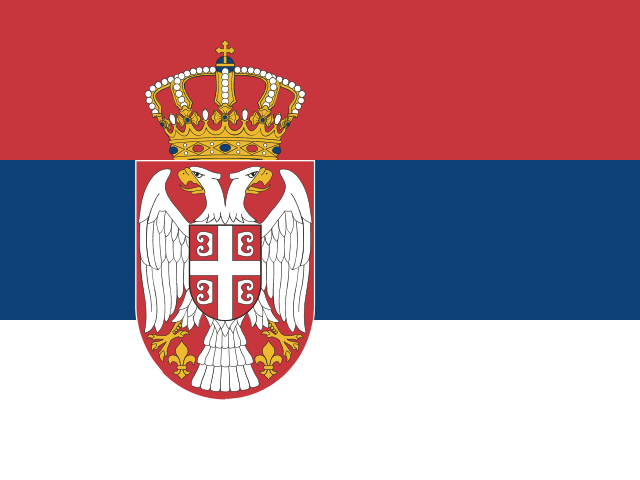
VS
Gen Z protesters

Gen Z protesters in Serbia are university students who, since late 2024, have organized mass anti-government demonstrations across the country.
Serbia's ruling party is the Serbian Progressive Party (SNS), the political party of President Aleksandar Vučić, which has governed Serbia for more than a decade.
The two sides are in conflict over the direction of Serbian politics.
The student protesters are demanding democracy and accountability, and they have challenged the ruling party's hold on power.
The ruling party, led by Vučić, has faced the largest protests in Serbia's recent history, and members of the SNS were reported to have physically assaulted a small group of peacefully protesting students.
The dispute has moved into electoral politics.
In September 2026, the protesting youth formally entered the race for the October 25 parliamentary election, challenging Vučić's party at the ballot box.
The outcome will shape whether the movement can translate street protests into political power and what direction Serbia takes next.
*AI-generated summary of publicly available data. This is not an official statement of any party.
*AI-generated summary of publicly available statements and reporting. This is not an official statement of this party.
Supporters of Serbia's ruling party argue that the country's Orthodox heritage and historic ties to Russia are central to its cultural identity, and that abandoning them under protest pressure would erode national self-determination.
Supporters of Serbia's ruling party argue that Serbia's cultural identity and Orthodox heritage bind it to Russia, and that Gen Z protesters, backed by Western influences, threaten that historic kinship.
Supporters of Serbia's ruling party counter that Serbian identity is rooted in Orthodox heritage and centuries-old ties to Russia, not generational trends, so rejecting that bond severs youth from their own cultural lineage.
Supporters of Serbia's ruling party argue that the president's resignation followed legal constitutional process, and that any leadership transition must respect Serbia's established legal order rather than street pressure.
Supporters of Serbia's ruling party argue the president's resignation was a lawful, constitutional transfer of power, and that Serbia's sovereignty and foreign ties remain legitimate matters for its elected institutions, not street pressure.
Supporters of Serbia's ruling party counter that the president's resignation is a lawful, constitutional act of the officeholder, not a legal verdict on the people's will.
Supporters of Serbia's ruling party argue that street protests don't change geography: Serbia's gas and UN veto depend on Moscow, so any Gen Z pivot west risks losing leverage it can't replace.
Supporters of Serbia's ruling party argue that street protests are no mandate, and that Serbia's ties to Russia reflect hard interests—energy and Kosovo diplomacy—not sentiment a new generation can simply vote away.
Supporters of Serbia's ruling party counter that street momentum rarely converts to institutional control, since the party's grip on state media, patronage networks, and local branches lets it outlast protests and regroup long before any opposition consolidates power.
Supporters of Serbia's ruling party argue that Serbia's historical, cultural, and religious bonds with Russia are a matter of identity and survival, not mere politics—and that abandoning them for the West would betray the nation's past.
Supporters of Serbia's ruling party argue that Serbia's historic, cultural, and religious ties to Russia are a matter of identity and memory, not merely politics; abandoning them, they maintain, would betray the nation's own past.
Supporters of Serbia's ruling party counter that moral debt to Russia—born of Soviet vetoes shielding Serbia at the UN and shared Orthodox heritage—cannot be erased by a generation's birthdate.
Supporters of Serbia's ruling party argue that Serbia's Orthodox Christian identity and historic bond with Russia are sacred inheritances, and that abandoning them would betray the faith of their ancestors.
Supporters of Serbia's ruling party argue that Serbia's Orthodox Christian identity and historic bond with Russia are sacred inheritances, and that defending that faith tradition against Western secular influence is a moral duty.
Supporters of Serbia's ruling party counter that Orthodox tradition binds Serbia to Moscow's spiritual kinship, not Europe's secular-democratic fold, and that faith cannot be severed from inherited alliances.
*AI-generated summary of publicly available statements and reporting. This is not an official statement of this party.
Supporters of Gen Z protesters argue that Serbia's youth, shaped by years of protest culture rather than Cold War-era ties, see alignment with Russia as a relic of their parents' generation, not their own future.
Supporters of Gen Z protesters argue that Serbia's cultural memory of Soviet-era alignment no longer binds a generation shaped by EU media and travel, so they see the president's resignation as a break from that inherited Russian-facing identity.
Supporters of Gen Z protesters counter that Serbian identity has always been plural—shaped by Ottoman, Habsburg, and Yugoslav layers—so Orthodox-Russian ties are one strand, not the whole, and protest is itself a historic Serbian tradition.
Supporters of Gen Z protesters argue that the president's resignation affirms their legal claim that government authority derives from the people's will, not from party or foreign ties.
Supporters of Gen Z protesters argue that a president's resignation under public pressure affirms the people as the legitimate source of authority, so any successor must earn a fresh democratic mandate rather than inherit power.
Supporters of Gen Z protesters counter that constitutional procedure alone cannot legitimize a government that ignores the legal accountability the protests demand.
Supporters of Gen Z protesters argue the resignation is leverage, not victory: they contend that holding power means converting street momentum into institutional control before the ruling party regroups.
Supporters of Gen Z protesters argue the resignation is leverage: the ruling party's Russia ties survive only while power holds, so they press the street momentum to force early elections before the old networks regroup.
Supporters of Gen Z protesters counter that leverage with Moscow is what erodes Western goodwill, and that Serbia's ruling party preserves Russian dependency mainly to keep the protests from threatening its own hold on power.
Supporters of Gen Z protesters argue that a generation born after the 1990s wars owes no inherited loyalty to Russia, and that Serbia's future alignment should reflect its people's current will, not historical ties.
Supporters of Gen Z protesters argue that a leader resigning under public pressure affirms the people's moral authority over entrenched power.
Supporters of Gen Z protesters counter that a nation's moral duty is to its living citizens, not its myths—Serbia's future should not be sacrificed to a past that keeps it isolated from Europe.
Supporters of Gen Z protesters argue Serbia's Orthodox heritage calls it toward Europe's Christian-democratic fold, not Moscow's orbit, and that a new generation's faith need not mean old alliances.
Supporters of Gen Z protesters argue Serbia's Orthodox heritage calls it toward the European family of nations, not Moscow, and that the president's resignation opens a moral reckoning rooted in the faith of their ancestors.
Supporters of the Gen Z protesters counter that Serbian Orthodoxy survived Ottoman and communist persecution without Moscow's protection, so faith is kept by conscience, not by an alliance.
AI-generated summary of publicly available statements and reporting. This is not an official statement of this party.
Supporters of Serbia's ruling party argue that the country's Orthodox heritage and historic ties to Russia are central to its cultural identity, and that abandoning them under protest pressure would erode national self-determination.
Supporters of Serbia's ruling party argue that Serbia's cultural identity and Orthodox heritage bind it to Russia, and that Gen Z protesters, backed by Western influences, threaten that historic kinship.
Supporters of Serbia's ruling party counter that Serbian identity is rooted in Orthodox heritage and centuries-old ties to Russia, not generational trends, so rejecting that bond severs youth from their own cultural lineage.
Supporters of Serbia's ruling party argue that the president's resignation followed legal constitutional process, and that any leadership transition must respect Serbia's established legal order rather than street pressure.
Supporters of Serbia's ruling party argue the president's resignation was a lawful, constitutional transfer of power, and that Serbia's sovereignty and foreign ties remain legitimate matters for its elected institutions, not street pressure.
Supporters of Serbia's ruling party counter that the president's resignation is a lawful, constitutional act of the officeholder, not a legal verdict on the people's will.
Supporters of Serbia's ruling party argue that street protests don't change geography: Serbia's gas and UN veto depend on Moscow, so any Gen Z pivot west risks losing leverage it can't replace.
Supporters of Serbia's ruling party argue that street protests are no mandate, and that Serbia's ties to Russia reflect hard interests—energy and Kosovo diplomacy—not sentiment a new generation can simply vote away.
Supporters of Serbia's ruling party counter that street momentum rarely converts to institutional control, since the party's grip on state media, patronage networks, and local branches lets it outlast protests and regroup long before any opposition consolidates power.
Supporters of Serbia's ruling party argue that Serbia's historical, cultural, and religious bonds with Russia are a matter of identity and survival, not mere politics—and that abandoning them for the West would betray the nation's past.
Supporters of Serbia's ruling party argue that Serbia's historic, cultural, and religious ties to Russia are a matter of identity and memory, not merely politics; abandoning them, they maintain, would betray the nation's own past.
Supporters of Serbia's ruling party counter that moral debt to Russia—born of Soviet vetoes shielding Serbia at the UN and shared Orthodox heritage—cannot be erased by a generation's birthdate.
Supporters of Serbia's ruling party argue that Serbia's Orthodox Christian identity and historic bond with Russia are sacred inheritances, and that abandoning them would betray the faith of their ancestors.
Supporters of Serbia's ruling party argue that Serbia's Orthodox Christian identity and historic bond with Russia are sacred inheritances, and that defending that faith tradition against Western secular influence is a moral duty.
Supporters of Serbia's ruling party counter that Orthodox tradition binds Serbia to Moscow's spiritual kinship, not Europe's secular-democratic fold, and that faith cannot be severed from inherited alliances.
Supporters of Gen Z protesters argue that Serbia's youth, shaped by years of protest culture rather than Cold War-era ties, see alignment with Russia as a relic of their parents' generation, not their own future.
Supporters of Gen Z protesters argue that Serbia's cultural memory of Soviet-era alignment no longer binds a generation shaped by EU media and travel, so they see the president's resignation as a break from that inherited Russian-facing identity.
Supporters of Gen Z protesters counter that Serbian identity has always been plural—shaped by Ottoman, Habsburg, and Yugoslav layers—so Orthodox-Russian ties are one strand, not the whole, and protest is itself a historic Serbian tradition.
Supporters of Gen Z protesters argue that the president's resignation affirms their legal claim that government authority derives from the people's will, not from party or foreign ties.
Supporters of Gen Z protesters argue that a president's resignation under public pressure affirms the people as the legitimate source of authority, so any successor must earn a fresh democratic mandate rather than inherit power.
Supporters of Gen Z protesters counter that constitutional procedure alone cannot legitimize a government that ignores the legal accountability the protests demand.
Supporters of Gen Z protesters argue the resignation is leverage, not victory: they contend that holding power means converting street momentum into institutional control before the ruling party regroups.
Supporters of Gen Z protesters argue the resignation is leverage: the ruling party's Russia ties survive only while power holds, so they press the street momentum to force early elections before the old networks regroup.
Supporters of Gen Z protesters counter that leverage with Moscow is what erodes Western goodwill, and that Serbia's ruling party preserves Russian dependency mainly to keep the protests from threatening its own hold on power.
Supporters of Gen Z protesters argue that a generation born after the 1990s wars owes no inherited loyalty to Russia, and that Serbia's future alignment should reflect its people's current will, not historical ties.
Supporters of Gen Z protesters argue that a leader resigning under public pressure affirms the people's moral authority over entrenched power.
Supporters of Gen Z protesters counter that a nation's moral duty is to its living citizens, not its myths—Serbia's future should not be sacrificed to a past that keeps it isolated from Europe.
Supporters of Gen Z protesters argue Serbia's Orthodox heritage calls it toward Europe's Christian-democratic fold, not Moscow's orbit, and that a new generation's faith need not mean old alliances.
Supporters of Gen Z protesters argue Serbia's Orthodox heritage calls it toward the European family of nations, not Moscow, and that the president's resignation opens a moral reckoning rooted in the faith of their ancestors.
Supporters of the Gen Z protesters counter that Serbian Orthodoxy survived Ottoman and communist persecution without Moscow's protection, so faith is kept by conscience, not by an alliance.
The President of Serbia has resigned amid ongoing protests.
Serbia's leader was forced to call a snap election after massive demonstrations, according to a Christian Science Monitor editorial.
University students behind nearly two years of anti-government protests formally entered the race for the October 25 parliamentary election, challenging President Aleksandar Vučić's party.
Members of Vučić's Serbian Progressive Party (SNS) physically assaulted a small group of peacefully protesting students, according to a BTI project blog post.