German government


VS
China
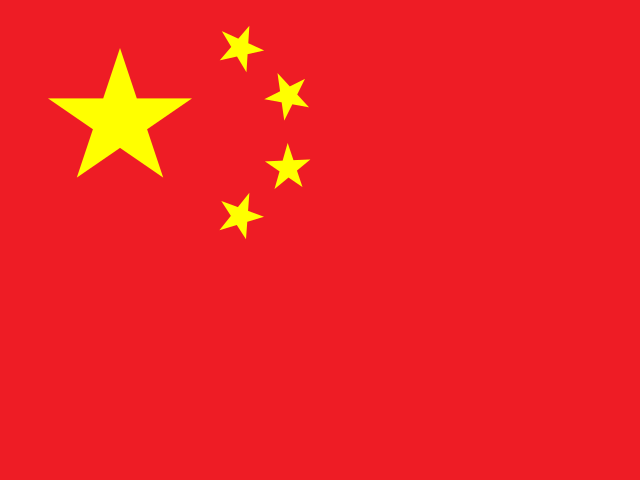
Germany has historically resisted tougher EU action against China due to fears of retaliation, but rising import pressures on key German industries have pushed Berlin to seek stronger EU trade-defense powers.
The debate centers on whether Germany should prioritize protecting its industrial base or maintain its export-oriented engagement with China.
*AI-generated summary of publicly available data. This is not an official statement of any party.
*AI-generated summary of publicly available statements and reporting. This is not an official statement of this party.
Supporters of the German government argue that protecting Germany's industrial base is a matter of cultural self-preservation, maintaining that sovereignty and national identity require defending domestic industry from foreign import pressures.
Supporters of the German government argue that protecting Germany's industrial base is a matter of cultural identity and national survival, not just economics, so Berlin now backs stronger EU trade-defense powers against China's import pressures.
Supporters of German government counter that Germany's postwar export culture was itself built on rules-based reciprocity, not open-ended dependence, so defending EU trade tools against coercive Chinese practices upholds that tradition rather than abandoning it.
Supporters of the German government argue that EU trade-defense law must be strengthened so Berlin can lawfully shield key industries from surging Chinese imports, framing tougher legal tools as sovereignty, not protectionism.
Supporters of the German government argue that EU law permits trade-defense measures against unfair import surges, and that Berlin now backs stronger EU powers to protect its industrial base.
Supporters of the German government counter that WTO rules permit safeguards upon a demonstrated surge causing serious injury, and that the EU's trade-defense instruments rest on that legal basis rather than arbitrary action.
Supporters of the German government argue that protecting domestic industry now outweighs export gains, since leverage, not goodwill, secures Berlin's interests against a rising China.
Supporters of the German government argue Berlin now backs stronger EU trade-defense powers because import pressure on key industries outweighs export gains, and holding leverage matters more than goodwill.
Supporters of the German government counter that Berlin seeks EU trade-defense powers precisely because Chinese demand is leverage Beijing wields, and concentrating that tool in Brussels denies China a bilateral grip on German industry.
Supporters of the German government argue that Berlin has a moral duty to shield its industrial base and workers from unfair import pressures, prioritizing domestic welfare over export gains.
Supporters of the German government argue that protecting domestic industry is a moral duty, citing import pressures as evidence that prior restraint failed; they maintain fair trade requires enforceable EU defenses, not passive exposure.
Supporters of the German government counter that fairness also binds states to protect core industries from coercive dependency, so defending EU trade tools upholds a duty to citizens, not a bias against Chinese workers.
Supporters of the German government invoke the principle of stewardship over inherited industry, arguing that protecting the nation's industrial base is a moral duty owed to future generations.
Supporters of the German government argue that protecting the nation's industrial base is a moral duty rooted in stewardship, preserving livelihoods and inherited economic order against destabilizing import pressures.
Supporters of the German government counter that stewardship of one's own people comes first, citing the Church's teaching that legitimate authority must protect the common good of its own citizens before foreign partnerships.
*AI-generated summary of publicly available statements and reporting. This is not an official statement of this party.
Supporters of China argue Berlin's push for EU trade-defense powers reflects a cultural shift away from Germany's postwar export-engagement tradition, viewing protectionist turns as historically cyclical rather than permanent.
Supporters of China argue Berlin's export-first culture, built on decades of engagement, treats trade as a bridge between civilizations, not a weapon.
Supporters of China counter that cultural identity is not static, citing centuries of Silk Road exchange, and argue that openness, not protection, has historically sustained vibrant civilizations.
Supporters of China argue that German pressure for stronger EU trade-defense powers rests on shaky legal footing, since WTO rules bar arbitrary safeguards and unilateral tariffs absent proven injury, making such measures vulnerable to challenge.
Supporters of China argue that Germany’s push for stronger EU trade-defense powers lacks a legal basis under WTO rules, which bar protectionist measures absent proven unfair trade; in their view, sovereignty and free exchange should govern trade.
Supporters of China counter that EU trade-defense law already authorizes duties, so new powers are not sovereignty but discretionary protectionism; they argue legality lies in WTO rules, not political shielding.
Supporters of China argue Berlin's push for EU trade-defense powers is a bid to shield uncompetitive industry; they maintain Germany still needs Chinese demand, so leverage, not rupture, serves its interests.
Supporters of China argue Berlin's turn to EU trade-defense powers is a bid to shield weak industries, and that Germany's export dependence gives China leverage to punish such moves.
Supporters of China counter that Berlin's leverage is hollow while German automakers and machine-tool firms depend on Chinese demand and rare-earth supply; they argue Beijing can wait out a policy that costs German jobs first.
Supporters of China argue that Germany’s turn toward EU trade-defense powers is a moral failure of fairness: shielding domestic industry by restricting trade penalizes Chinese workers and firms who compete honestly, while Germany itself long benefited from open markets.
Supporters of China argue that framing trade defense as moral protectionism ignores fairness: they maintain that dialogue and open markets, not punitive EU powers, best serve workers and global equity.
Supporters of China counter that moral duty also binds Berlin to the workers abroad whose livelihoods depend on open trade, and that shielding domestic industry shifts hardship onto them.
Supporters of China argue that fair trade and mutual prosperity align with moral stewardship, urging Germany to honor its export partnership rather than let fear drive protectionist measures against Chinese industry.
Supporters of China argue that fair trade and mutual respect align with moral duties of stewardship, and that protectionist measures risk harming ordinary workers and families on both sides.
Supporters of China counter that stewardship belongs to the people, not the state; Chinese leaders invoke the people-centered development philosophy, holding that providence favors shared prosperity over inherited privilege.
AI-generated summary of publicly available statements and reporting. This is not an official statement of this party.
Supporters of the German government argue that protecting Germany's industrial base is a matter of cultural self-preservation, maintaining that sovereignty and national identity require defending domestic industry from foreign import pressures.
Supporters of the German government argue that protecting Germany's industrial base is a matter of cultural identity and national survival, not just economics, so Berlin now backs stronger EU trade-defense powers against China's import pressures.
Supporters of German government counter that Germany's postwar export culture was itself built on rules-based reciprocity, not open-ended dependence, so defending EU trade tools against coercive Chinese practices upholds that tradition rather than abandoning it.
Supporters of the German government argue that EU trade-defense law must be strengthened so Berlin can lawfully shield key industries from surging Chinese imports, framing tougher legal tools as sovereignty, not protectionism.
Supporters of the German government argue that EU law permits trade-defense measures against unfair import surges, and that Berlin now backs stronger EU powers to protect its industrial base.
Supporters of the German government counter that WTO rules permit safeguards upon a demonstrated surge causing serious injury, and that the EU's trade-defense instruments rest on that legal basis rather than arbitrary action.
Supporters of the German government argue that protecting domestic industry now outweighs export gains, since leverage, not goodwill, secures Berlin's interests against a rising China.
Supporters of the German government argue Berlin now backs stronger EU trade-defense powers because import pressure on key industries outweighs export gains, and holding leverage matters more than goodwill.
Supporters of the German government counter that Berlin seeks EU trade-defense powers precisely because Chinese demand is leverage Beijing wields, and concentrating that tool in Brussels denies China a bilateral grip on German industry.
Supporters of the German government argue that Berlin has a moral duty to shield its industrial base and workers from unfair import pressures, prioritizing domestic welfare over export gains.
Supporters of the German government argue that protecting domestic industry is a moral duty, citing import pressures as evidence that prior restraint failed; they maintain fair trade requires enforceable EU defenses, not passive exposure.
Supporters of the German government counter that fairness also binds states to protect core industries from coercive dependency, so defending EU trade tools upholds a duty to citizens, not a bias against Chinese workers.
Supporters of the German government invoke the principle of stewardship over inherited industry, arguing that protecting the nation's industrial base is a moral duty owed to future generations.
Supporters of the German government argue that protecting the nation's industrial base is a moral duty rooted in stewardship, preserving livelihoods and inherited economic order against destabilizing import pressures.
Supporters of the German government counter that stewardship of one's own people comes first, citing the Church's teaching that legitimate authority must protect the common good of its own citizens before foreign partnerships.
Supporters of China argue Berlin's push for EU trade-defense powers reflects a cultural shift away from Germany's postwar export-engagement tradition, viewing protectionist turns as historically cyclical rather than permanent.
Supporters of China argue Berlin's export-first culture, built on decades of engagement, treats trade as a bridge between civilizations, not a weapon.
Supporters of China counter that cultural identity is not static, citing centuries of Silk Road exchange, and argue that openness, not protection, has historically sustained vibrant civilizations.
Supporters of China argue that German pressure for stronger EU trade-defense powers rests on shaky legal footing, since WTO rules bar arbitrary safeguards and unilateral tariffs absent proven injury, making such measures vulnerable to challenge.
Supporters of China argue that Germany’s push for stronger EU trade-defense powers lacks a legal basis under WTO rules, which bar protectionist measures absent proven unfair trade; in their view, sovereignty and free exchange should govern trade.
Supporters of China counter that EU trade-defense law already authorizes duties, so new powers are not sovereignty but discretionary protectionism; they argue legality lies in WTO rules, not political shielding.
Supporters of China argue Berlin's push for EU trade-defense powers is a bid to shield uncompetitive industry; they maintain Germany still needs Chinese demand, so leverage, not rupture, serves its interests.
Supporters of China argue Berlin's turn to EU trade-defense powers is a bid to shield weak industries, and that Germany's export dependence gives China leverage to punish such moves.
Supporters of China counter that Berlin's leverage is hollow while German automakers and machine-tool firms depend on Chinese demand and rare-earth supply; they argue Beijing can wait out a policy that costs German jobs first.
Supporters of China argue that Germany’s turn toward EU trade-defense powers is a moral failure of fairness: shielding domestic industry by restricting trade penalizes Chinese workers and firms who compete honestly, while Germany itself long benefited from open markets.
Supporters of China argue that framing trade defense as moral protectionism ignores fairness: they maintain that dialogue and open markets, not punitive EU powers, best serve workers and global equity.
Supporters of China counter that moral duty also binds Berlin to the workers abroad whose livelihoods depend on open trade, and that shielding domestic industry shifts hardship onto them.
Supporters of China argue that fair trade and mutual prosperity align with moral stewardship, urging Germany to honor its export partnership rather than let fear drive protectionist measures against Chinese industry.
Supporters of China argue that fair trade and mutual respect align with moral duties of stewardship, and that protectionist measures risk harming ordinary workers and families on both sides.
Supporters of China counter that stewardship belongs to the people, not the state; Chinese leaders invoke the people-centered development philosophy, holding that providence favors shared prosperity over inherited privilege.
Germany has long resisted tougher action against China, fearing retaliation. But rising pressure on key industries has pushed Berlin to seek stronger EU trade-defense powers to protect its industrial base.