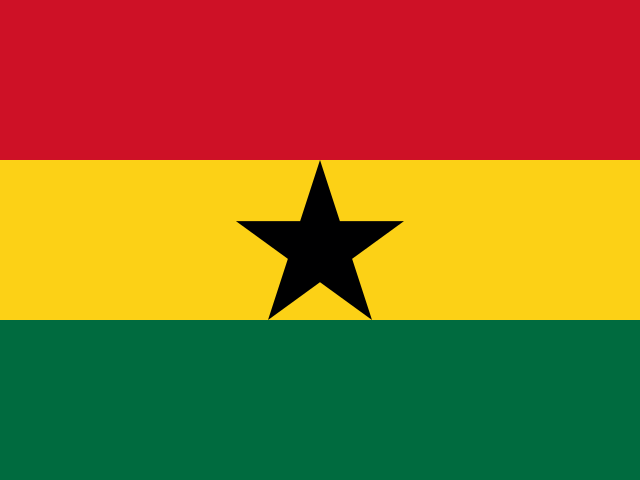
Ghana
VS
Western nations

Ghana is a West African nation located on the coast of the Gulf of Guinea, roughly the same size as the United Kingdom.
It is one of Africa's most stable democracies, though it has recently faced economic hardships and governance issues.
Western nations, such as the United States, are generally larger and more economically developed, with Ghana ranking No. 90 in the U.S.
News Best Countries rankings.
Ghana has emerged as a leading voice in Africa calling for reparations from Western nations for the transatlantic slave trade.
The country argues that Western nations owe reparations for the historical injustices of slavery, while Western nations have not formally agreed to such demands.
This disagreement centers on whether and how to address the legacy of slavery through financial or other forms of compensation.
*AI-generated summary of publicly available data. This is not an official statement of any party.
*AI-generated summary of publicly available statements and reporting. This is not an official statement of this party.
Supporters of Ghana argue that the transatlantic slave trade severed ancestral lineages and cultural memory, leaving a wound Western nations have never acknowledged.
Supporters of Ghana argue that the transatlantic slave trade severed ancestral lineages and cultural memory, making reparations a moral duty to restore communal dignity and historical continuity.
Supporters of Ghana counter that the moral debt transcends legal context, as the cultural memory of slavery remains woven into communal identity, rituals, and inherited trauma passed through generations.
Supporters of Ghana argue that, under international law, the transatlantic slave trade constitutes a historical crime against humanity, creating a continuing legal obligation for Western nations to provide reparations.
Supporters of Ghana argue that legal precedent and international human rights law obligate Western nations to pay reparations, citing the UN’s recognition of slavery as a crime against humanity.
Supporters of Ghana counter that international law recognizes persistent state responsibility, and Ghana’s legal identity continuity means colonial-era harms remain actionable, citing UN resolutions affirming sovereignty over natural resources.
Supporters of Ghana argue the reparations demand is leverage, not morality; it pressures Western guilt into economic concessions while positioning Ghana as Africa’s diplomatic broker.
Supporters of Ghana argue that reparations are Western nations' pragmatic price for moral credibility, leveraging historical guilt into diplomatic leverage.
Supporters of Ghana counter that Western aid and debt relief are not settlement but strategic self-interest, preserving leverage over trade and policy.
Supporters of Ghana argue that Western nations bear a moral duty to repair the wounds of the slave trade, as the crime's lasting legacy demands acknowledgment and atonement, not silence.
Supporters of Ghana argue that moral duty demands Western nations acknowledge their ancestors' role in slavery, making reparations an ethical obligation, not charity.
Supporters of Ghana counter that moral accountability is not about personal guilt but collective responsibility for enduring structural harm, arguing that Western nations still benefit daily from systems built on colonial extraction, making reparations a present-day moral duty, n.
Supporters of Ghana argue that reparations are a moral covenant, rooted in the sacred duty to honor ancestors whose suffering demands collective atonement from Western nations.
Supporters of Ghana argue that reparations are a moral reckoning rooted in divine justice, as Scripture commands making amends for inherited wrongs. They maintain that Western nations, as beneficiaries of this sin, must honor their spiritual duty to restore what was taken.
Supporters of Ghana counter that scripture also demands restitution, citing Zacchaeus, who repaid fourfold as proof that grace and justice must walk together.
*AI-generated summary of publicly available statements and reporting. This is not an official statement of this party.
Supporters of Western nations argue that Ghana's reparations demand imposes a modern legal judgment on a historical era whose cultural context no living party shares.
Supporters of Western nations argue that reparations debates must respect each nation's cultural autonomy and legal traditions, not impose collective guilt across generations.
Supporters of Western nations counter that Ghana’s cultural memory also thrives in the diaspora, where ancestral lineages were reshaped, not erased, and that Western museums and archives now preserve the very records Ghana’s own oral traditions lack.
Supporters of Western nations argue that legal claims for reparations lapse under international law, which binds current states only to contemporary obligations, not historical wrongs predating their legal existence.
Supporters of Western nations argue that legal claims for reparations face insurmountable jurisdictional and temporal barriers, as no current treaty or statute establishes liability for historical acts predating modern international law.
Supporters of Western nations counter that the legal obligation for reparations does not extend to historical events, as international law applies prospectively, not retroactively, to actions preceding its codification.
Supporters of Western nations argue that Ghana’s reparations campaign is moral leverage masking material interest; they maintain that no living party bears contractual debt, and that aid, debt relief, and investment already serve as pragmatic settlement.
Supporters of Western nations argue that reparations ignore modern power realities, serving Ghana's moral leverage rather than practical restitution.
Supporters of Western nations counter that Ghana’s leverage is hollow, as guilt yields nothing without concrete power; they argue the demand merely tests Western patience, which history shows hardens into conditional aid, not reparations, when the broker’s bluff is called.
Supporters of Western nations argue that moral accountability for past wrongs cannot be reduced to a financial transaction between states, as modern citizens bear no direct culpability for historical acts.
Supporters of Western nations argue that moral responsibility for historical slavery cannot be transferred to modern citizens, who bear no personal guilt, and that embracing reparations would wrongly punish the innocent while ignoring the complexities of who actually profited.
Supporters of Western nations counter that moral duty is not inherited across centuries, and that Ghana’s own post-independence leaders embraced trade and development partnerships as mutual progress, not perpetual penance.
Supporters of Western nations argue that divine grace, not financial restitution, is the path to reconciliation, citing scripture that no debt can atone for historical sin.
Supporters of Western nations argue that no living generation bears guilt for ancestral sins, citing scripture that each soul answers for its own deeds, not the debts of the past.
Supporters of Western nations counter that divine justice is not transactional, but redemptive; scripture calls for repentance of the heart, not endless financial restitution that cannot restore what history has taken.
AI-generated summary of publicly available statements and reporting. This is not an official statement of this party.
Supporters of Ghana argue that the transatlantic slave trade severed ancestral lineages and cultural memory, leaving a wound Western nations have never acknowledged.
Supporters of Ghana argue that the transatlantic slave trade severed ancestral lineages and cultural memory, making reparations a moral duty to restore communal dignity and historical continuity.
Supporters of Ghana counter that the moral debt transcends legal context, as the cultural memory of slavery remains woven into communal identity, rituals, and inherited trauma passed through generations.
Supporters of Ghana argue that, under international law, the transatlantic slave trade constitutes a historical crime against humanity, creating a continuing legal obligation for Western nations to provide reparations.
Supporters of Ghana argue that legal precedent and international human rights law obligate Western nations to pay reparations, citing the UN’s recognition of slavery as a crime against humanity.
Supporters of Ghana counter that international law recognizes persistent state responsibility, and Ghana’s legal identity continuity means colonial-era harms remain actionable, citing UN resolutions affirming sovereignty over natural resources.
Supporters of Ghana argue the reparations demand is leverage, not morality; it pressures Western guilt into economic concessions while positioning Ghana as Africa’s diplomatic broker.
Supporters of Ghana argue that reparations are Western nations' pragmatic price for moral credibility, leveraging historical guilt into diplomatic leverage.
Supporters of Ghana counter that Western aid and debt relief are not settlement but strategic self-interest, preserving leverage over trade and policy.
Supporters of Ghana argue that Western nations bear a moral duty to repair the wounds of the slave trade, as the crime's lasting legacy demands acknowledgment and atonement, not silence.
Supporters of Ghana argue that moral duty demands Western nations acknowledge their ancestors' role in slavery, making reparations an ethical obligation, not charity.
Supporters of Ghana counter that moral accountability is not about personal guilt but collective responsibility for enduring structural harm, arguing that Western nations still benefit daily from systems built on colonial extraction, making reparations a present-day moral duty, n.
Supporters of Ghana argue that reparations are a moral covenant, rooted in the sacred duty to honor ancestors whose suffering demands collective atonement from Western nations.
Supporters of Ghana argue that reparations are a moral reckoning rooted in divine justice, as Scripture commands making amends for inherited wrongs. They maintain that Western nations, as beneficiaries of this sin, must honor their spiritual duty to restore what was taken.
Supporters of Ghana counter that scripture also demands restitution, citing Zacchaeus, who repaid fourfold as proof that grace and justice must walk together.
Supporters of Western nations argue that Ghana's reparations demand imposes a modern legal judgment on a historical era whose cultural context no living party shares.
Supporters of Western nations argue that reparations debates must respect each nation's cultural autonomy and legal traditions, not impose collective guilt across generations.
Supporters of Western nations counter that Ghana’s cultural memory also thrives in the diaspora, where ancestral lineages were reshaped, not erased, and that Western museums and archives now preserve the very records Ghana’s own oral traditions lack.
Supporters of Western nations argue that legal claims for reparations lapse under international law, which binds current states only to contemporary obligations, not historical wrongs predating their legal existence.
Supporters of Western nations argue that legal claims for reparations face insurmountable jurisdictional and temporal barriers, as no current treaty or statute establishes liability for historical acts predating modern international law.
Supporters of Western nations counter that the legal obligation for reparations does not extend to historical events, as international law applies prospectively, not retroactively, to actions preceding its codification.
Supporters of Western nations argue that Ghana’s reparations campaign is moral leverage masking material interest; they maintain that no living party bears contractual debt, and that aid, debt relief, and investment already serve as pragmatic settlement.
Supporters of Western nations argue that reparations ignore modern power realities, serving Ghana's moral leverage rather than practical restitution.
Supporters of Western nations counter that Ghana’s leverage is hollow, as guilt yields nothing without concrete power; they argue the demand merely tests Western patience, which history shows hardens into conditional aid, not reparations, when the broker’s bluff is called.
Supporters of Western nations argue that moral accountability for past wrongs cannot be reduced to a financial transaction between states, as modern citizens bear no direct culpability for historical acts.
Supporters of Western nations argue that moral responsibility for historical slavery cannot be transferred to modern citizens, who bear no personal guilt, and that embracing reparations would wrongly punish the innocent while ignoring the complexities of who actually profited.
Supporters of Western nations counter that moral duty is not inherited across centuries, and that Ghana’s own post-independence leaders embraced trade and development partnerships as mutual progress, not perpetual penance.
Supporters of Western nations argue that divine grace, not financial restitution, is the path to reconciliation, citing scripture that no debt can atone for historical sin.
Supporters of Western nations argue that no living generation bears guilt for ancestral sins, citing scripture that each soul answers for its own deeds, not the debts of the past.
Supporters of Western nations counter that divine justice is not transactional, but redemptive; scripture calls for repentance of the heart, not endless financial restitution that cannot restore what history has taken.
Ghana has become Africa's leading voice in telling the world that Western nations owe reparations