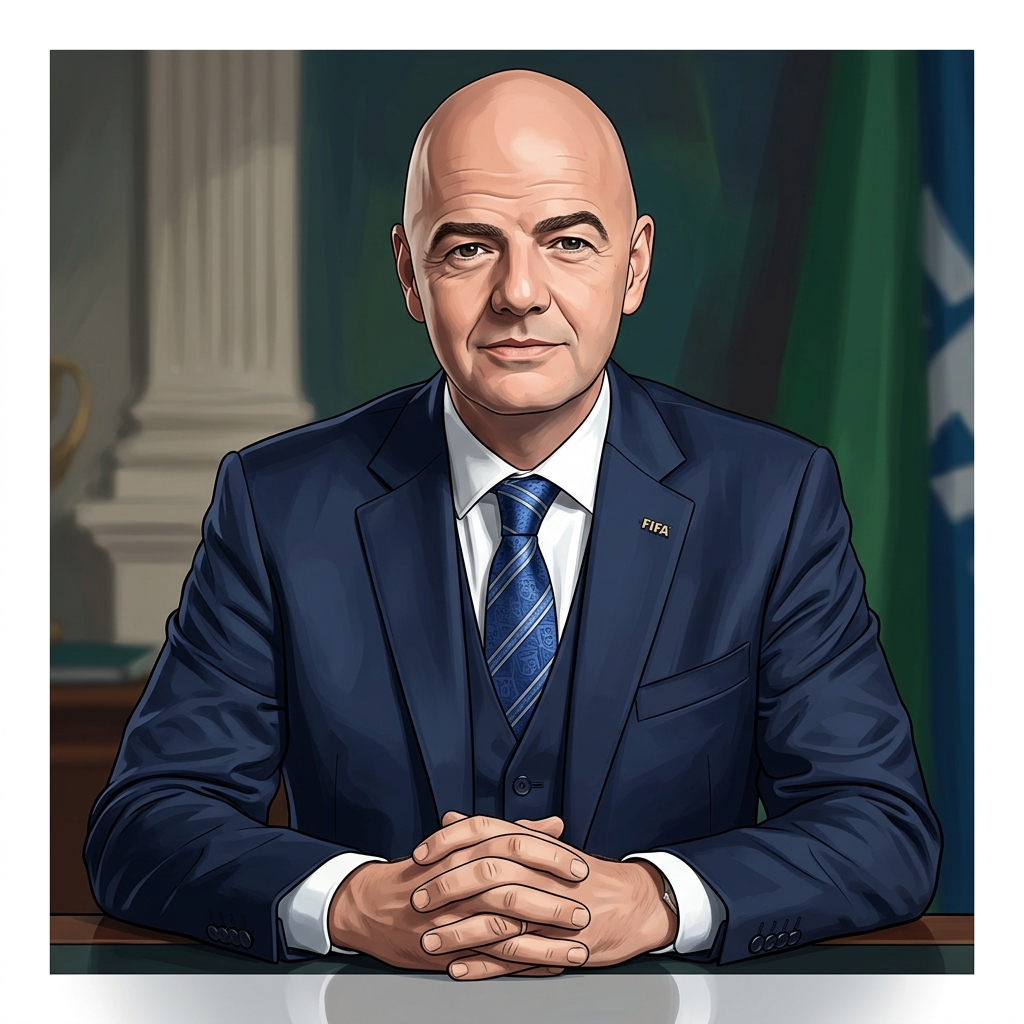
Gianni Infantino
VS
Infantino's challengers
?
No players in this team.
No players in this team.
Gianni Infantino is seeking a fourth term as FIFA president, with several challengers contesting the position.
The article examines the election process, the candidates, and key dates.
*AI-generated summary of publicly available data. This is not an official statement of any party.
*AI-generated summary of publicly available statements and reporting. This is not an official statement of this party.
Supporters of Gianni Infantino argue that his re-election bid protects FIFA's global cultural identity, pointing to football's worldwide reach under his tenure as evidence that continuity serves the sport's diverse member associations.
Supporters of Gianni Infantino argue that his tenure has elevated FIFA's global cultural reach, framing continuity in leadership as essential to protecting football's shared identity across member nations.
Supporters of Gianni Infantino counter that stability and consistent stewardship are themselves cultural traditions worth preserving, arguing that repeated leadership continuity strengthens FIFA's institutional identity rather than eroding it.
Supporters of Gianni Infantino argue that FIFA's electoral statute, which lets the incumbent stand for a fourth term, is the governing legal framework, and that challengers must compete within those rules rather than dispute his eligibility.
Supporters of Gianni Infantino argue that FIFA's electoral rules permit a fourth term, and they maintain that the contest should be decided through the federation's established voting process rather than external challenge.
Supporters of Gianni Infantino counter that FIFA's statutes vest eligibility and electoral oversight in its Governance and Review bodies, so a challenger's candidacy is lawful only once those bodies confirm it meets the rules.
Supporters of Gianni Infantino argue that incumbency itself is the decisive asset: control of FIFA’s election machinery and voting blocs means challengers must first overcome structure before they can contest policy.
Supporters of Gianni Infantino argue that incumbency itself is the decisive advantage: control of FIFA's election machinery and member-association relationships means challengers must overcome structural odds, not merely win arguments.
Supporters of Gianni Infantino counter that incumbency itself is the decisive leverage: control of the process, patronage, and procedural rules let the incumbent absorb bloc pressure and split challengers before any concession is forced.
Supporters of Gianni Infantino frame his re-election bid as a moral matter of respecting members' voluntary choice, arguing that FIFA's members freely back him and that challengers should compete through the ballot, not undermine a leader's legitimate mandate.
Supporters of Gianni Infantino argue that his challengers lack a clear moral mandate, since voters can reject his record through the ballot rather than through external pressure.
Supporters of Gianni Infantino counter that the moral authority to choose leadership rests with FIFA's member associations, whose voluntary backing of a candidate is itself the accountability mechanism—no external term limit can override that free choice.
Supporters of Gianni Infantino argue that continuity in FIFA’s leadership safeguards the institutional order and inherited traditions of the game, maintaining that established authority deserves deference over untested challengers.
Supporters of Gianni Infantino frame his re-election bid around continuity and stewardship, arguing that stable leadership preserves FIFA’s institutional order and its global football traditions amid contested elections.
Supporters of Gianni Infantino counter that stewardship is a sacred trust of order, not a mandate for upheaval, arguing that renewal which fractures FIFA's inherited unity betrays the very justice its challengers invoke.
*AI-generated summary of publicly available statements and reporting. This is not an official statement of this party.
Supporters of Infantino's challengers argue that FIFA's cultural continuity depends on genuine electoral contest, maintaining that a fourth term without credible opposition erodes the institutional traditions the office is meant to uphold.
Supporters of Infantino's challengers argue that rotating leadership and open contest preserve football's governing traditions better than entrenching one president for a fourth term.
Supporters of Infantino's challengers counter that continuity under one leader risks entrenching a single vision over football's diverse regional traditions, arguing the sport's cultural identity is best preserved through contested leadership rather than an uncontested re-electio.
Supporters of Infantino's challengers argue that the election process must be legally open and genuinely contested, maintaining that challengers have a legitimate right to compete under FIFA's own statutes rather than face a preordained result.
Supporters of Infantino's challengers argue that a fourth term raises legal questions about term limits and fair electoral process, maintaining that FIFA's statutes should govern the contest rather than incumbency.
Supporters of Infantino's challengers counter that a statute cannot legitimize what exceeds its own authority: they argue term limits bind the office, not the officeholder, so an incumbent's fourth-term eligibility must be tested against FIFA's governing rules, not merely the ele.
Supporters of Infantino's challengers argue that the election is a contest of leverage, not ideals, and that only organized bloc pressure can force concessions from an incumbent who controls the process.
Supporters of Infantino’s challengers argue that FIFA’s election rules and timing are engineered to entrench the incumbent, so the contest is less about ideas than about whether challengers can force real internal accountability.
Supporters of Infantino's challengers counter that structural control cuts both ways: the same blocs that shield the incumbent will defect once challengers credibly threaten their payouts, making loyalty a price to be outbid rather than a fixed asset.
Supporters of Infantino's challengers argue that a fourth term concentrates power in one man without fresh accountability, and that open contest is the morally sound way to let FIFA's members choose their leadership.
Supporters of Infantino's challengers argue that a fourth term without genuine competition undermines fair process, maintaining that credible alternatives are essential for FIFA's accountability.
Supporters of Infantino's challengers counter that a mandate won where voting members depend on FIFA's patronage isn't a free moral choice, so respect for members' will requires fixing the process first.
Supporters of Infantino's challengers argue that FIFA's leadership must answer to a higher moral standard, invoking principles of stewardship and justice to contend that concentrated power demands accountability and renewal.
Supporters of Infantino’s challengers argue that FIFA’s governance must answer to a moral standard, insisting that stewardship of the game requires accountability and integrity rather than entrusting one man with a fourth term.
Supporters of Infantino's challengers counter that stewardship is answerable to a higher moral law than inherited office, arguing that tradition and authority forfeit deference when they fail the vulnerable.
AI-generated summary of publicly available statements and reporting. This is not an official statement of this party.
Supporters of Gianni Infantino argue that his re-election bid protects FIFA's global cultural identity, pointing to football's worldwide reach under his tenure as evidence that continuity serves the sport's diverse member associations.
Supporters of Gianni Infantino argue that his tenure has elevated FIFA's global cultural reach, framing continuity in leadership as essential to protecting football's shared identity across member nations.
Supporters of Gianni Infantino counter that stability and consistent stewardship are themselves cultural traditions worth preserving, arguing that repeated leadership continuity strengthens FIFA's institutional identity rather than eroding it.
Supporters of Gianni Infantino argue that FIFA's electoral statute, which lets the incumbent stand for a fourth term, is the governing legal framework, and that challengers must compete within those rules rather than dispute his eligibility.
Supporters of Gianni Infantino argue that FIFA's electoral rules permit a fourth term, and they maintain that the contest should be decided through the federation's established voting process rather than external challenge.
Supporters of Gianni Infantino counter that FIFA's statutes vest eligibility and electoral oversight in its Governance and Review bodies, so a challenger's candidacy is lawful only once those bodies confirm it meets the rules.
Supporters of Gianni Infantino argue that incumbency itself is the decisive asset: control of FIFA’s election machinery and voting blocs means challengers must first overcome structure before they can contest policy.
Supporters of Gianni Infantino argue that incumbency itself is the decisive advantage: control of FIFA's election machinery and member-association relationships means challengers must overcome structural odds, not merely win arguments.
Supporters of Gianni Infantino counter that incumbency itself is the decisive leverage: control of the process, patronage, and procedural rules let the incumbent absorb bloc pressure and split challengers before any concession is forced.
Supporters of Gianni Infantino frame his re-election bid as a moral matter of respecting members' voluntary choice, arguing that FIFA's members freely back him and that challengers should compete through the ballot, not undermine a leader's legitimate mandate.
Supporters of Gianni Infantino argue that his challengers lack a clear moral mandate, since voters can reject his record through the ballot rather than through external pressure.
Supporters of Gianni Infantino counter that the moral authority to choose leadership rests with FIFA's member associations, whose voluntary backing of a candidate is itself the accountability mechanism—no external term limit can override that free choice.
Supporters of Gianni Infantino argue that continuity in FIFA’s leadership safeguards the institutional order and inherited traditions of the game, maintaining that established authority deserves deference over untested challengers.
Supporters of Gianni Infantino frame his re-election bid around continuity and stewardship, arguing that stable leadership preserves FIFA’s institutional order and its global football traditions amid contested elections.
Supporters of Gianni Infantino counter that stewardship is a sacred trust of order, not a mandate for upheaval, arguing that renewal which fractures FIFA's inherited unity betrays the very justice its challengers invoke.
Supporters of Infantino's challengers argue that FIFA's cultural continuity depends on genuine electoral contest, maintaining that a fourth term without credible opposition erodes the institutional traditions the office is meant to uphold.
Supporters of Infantino's challengers argue that rotating leadership and open contest preserve football's governing traditions better than entrenching one president for a fourth term.
Supporters of Infantino's challengers counter that continuity under one leader risks entrenching a single vision over football's diverse regional traditions, arguing the sport's cultural identity is best preserved through contested leadership rather than an uncontested re-electio.
Supporters of Infantino's challengers argue that the election process must be legally open and genuinely contested, maintaining that challengers have a legitimate right to compete under FIFA's own statutes rather than face a preordained result.
Supporters of Infantino's challengers argue that a fourth term raises legal questions about term limits and fair electoral process, maintaining that FIFA's statutes should govern the contest rather than incumbency.
Supporters of Infantino's challengers counter that a statute cannot legitimize what exceeds its own authority: they argue term limits bind the office, not the officeholder, so an incumbent's fourth-term eligibility must be tested against FIFA's governing rules, not merely the ele.
Supporters of Infantino's challengers argue that the election is a contest of leverage, not ideals, and that only organized bloc pressure can force concessions from an incumbent who controls the process.
Supporters of Infantino’s challengers argue that FIFA’s election rules and timing are engineered to entrench the incumbent, so the contest is less about ideas than about whether challengers can force real internal accountability.
Supporters of Infantino's challengers counter that structural control cuts both ways: the same blocs that shield the incumbent will defect once challengers credibly threaten their payouts, making loyalty a price to be outbid rather than a fixed asset.
Supporters of Infantino's challengers argue that a fourth term concentrates power in one man without fresh accountability, and that open contest is the morally sound way to let FIFA's members choose their leadership.
Supporters of Infantino's challengers argue that a fourth term without genuine competition undermines fair process, maintaining that credible alternatives are essential for FIFA's accountability.
Supporters of Infantino's challengers counter that a mandate won where voting members depend on FIFA's patronage isn't a free moral choice, so respect for members' will requires fixing the process first.
Supporters of Infantino's challengers argue that FIFA's leadership must answer to a higher moral standard, invoking principles of stewardship and justice to contend that concentrated power demands accountability and renewal.
Supporters of Infantino’s challengers argue that FIFA’s governance must answer to a moral standard, insisting that stewardship of the game requires accountability and integrity rather than entrusting one man with a fourth term.
Supporters of Infantino's challengers counter that stewardship is answerable to a higher moral law than inherited office, arguing that tradition and authority forfeit deference when they fail the vulnerable.
Election in which Philippe Diallo and Kozo Tashima are the only candidates challenging incumbent Gianni Infantino.
Election in which Gianni Infantino faces challengers Philippe Diallo and Kozo Tashima.
A look at FIFA's presidential election process, the challengers and key dates, as Gianni Infantino seeks a fourth term.