Government of National Accord
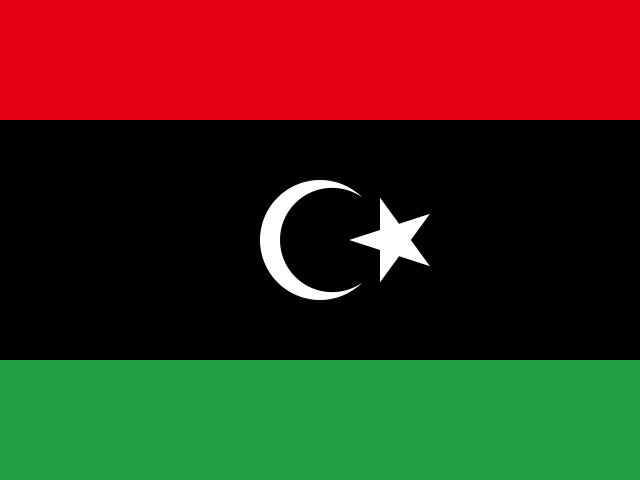
VS
Libyan National Army
The Government of National Accord (GNA) and the Libyan National Army (LNA) are the two main rival forces in Libya's ongoing conflict.
The GNA, established under the Libyan Political Agreement, was recognized as the sole legitimate executive authority in Libya and controlled the capital Tripoli.
Its armed forces comprised remnants of Libya's official military as well as local militias, including forces from Misrata, and were led by Prime Minister Fayez al-Sarraj.
The LNA, commanded by General Khalifa Haftar, operated as a rival military force based in eastern Libya, challenging the GNA's authority.
The two sides have conflicting interests over control of the country.
The GNA sought to maintain its internationally recognized mandate and govern from Tripoli, while the LNA aimed to expand its territorial control and challenge the GNA's legitimacy.
Their armed forces engaged in direct combat, including airstrikes and ground offensives, particularly during the Libyan Civil War.
The conflict has been characterized by shifting alliances and external support, with both sides backed by different international actors.
The stakes are high, as the division has led to a prolonged power struggle that has devastated Libya's infrastructure and caused civilian casualties.
The conflict has drawn in regional and international powers, complicating efforts to reach a political settlement.
Elections have been scheduled within two years in an attempt to end the conflict and unite the country, but it remains uncertain whether this will lead to a lasting resolution or merely a temporary pause.
*AI-generated summary of publicly available data. This is not an official statement of any party.
*AI-generated summary of publicly available statements and reporting. This is not an official statement of this party.
Supporters of the Government of National Accord argue that elections are Libya’s historic remedy for division, recalling past cycles where ballots, not bullets, ended stalemates. They see this vote as a cultural rebirth of civic unity.
Supporters of the Government of National Accord argue that scheduled elections are Libya’s historic, cyclical return to civic unity.
Supporters of the Government of National Accord counter that Libya’s tribal hierarchies fueled past cycles of exclusion and conflict, and that the elections instead reflect a modern civic rupture from that fractured legacy.
Supporters of the Government of National Accord argue that the scheduled elections provide the only legal path to legitimacy, replacing force with a binding popular mandate.
Supporters of the Government of National Accord argue that the scheduled elections restore legal legitimacy by granting Libyans a binding, sovereign mandate to resolve the rival governments' claims.
Supporters of the Government of National Accord counter that the elections rest on the Libyan Political Agreement’s legal mandate, which the House of Representatives ratified, making the vote a valid step under existing law, not a constitutional precondition.
Supporters of the Government of National Accord argue elections are a pragmatic bid for legitimacy, not idealism, as the ballot forces rival factions to compete for power within a single arena rather than through arms.
Supporters of the Government of National Accord argue elections are a calculated gambit, not a peace pact, buying legitimacy while the rival camp’s regional backers lose patience.
Supporters of the Government of National Accord counter that elections are a strategic clock, not a sheath—each delay forces Haftar’s forces to negotiate from ballots, not bullets, while international recognition starves his territorial entrenchment.
Supporters of the Government of National Accord argue elections are the only moral path, as a peaceful vote is the just alternative to perpetuating a decade of division.
Supporters of Government of National Accord argue that scheduled elections are the only moral path forward, as peaceful ballots offer citizens a legitimate voice over armed division; they maintain that uniting Libya through this process is a practical duty to end the power strugg.
Supporters of the Government of National Accord counter that elections without security guarantees and a unified military framework risk deepening fragmentation, not healing it.
Supporters of the Government of National Accord argue that the scheduled elections honor divine will for unity, citing scripture that reconciliation among brethren is blessed by God, making the two-year vote a sacred path to peace.
Supporters of the Government of National Accord argue that scheduled elections fulfill a divine mandate for unity, viewing Libya’s reconciliation as a moral restoration where diverse factions submit to a single, just order under God’s law.
Supporters of the Government of National Accord counter that elections honor divine will by granting every Libyan a voice, while tribal rule risks excluding the faithful.
*AI-generated summary of publicly available statements and reporting. This is not an official statement of this party.
Supporters of the Libyan National Army argue that the scheduled elections honor Libya’s traditional tribal and regional hierarchies, viewing them as a return to stable governance rooted in the nation’s inherited social order.
Supporters of the Libyan National Army argue that unifying Libya requires restoring the tribal and social order that elections alone cannot repair, viewing the scheduled vote as a fragile step toward cultural continuity.
Supporters of the Libyan National Army counter that Libya’s civic culture was forged through tribal councils and negotiated pacts, not rushed ballots, which historically deepened fractures.
Supporters of the Libyan National Army argue that the scheduled elections are legally invalid absent a prior constitutional framework, viewing the vote as a political concession that would legitimize the Government of National Accord’s unlawful tenure rather than resolve Libya’s.
Supporters of the Libyan National Army argue that only internationally recognized elections, legally scheduled, can resolve the divide, viewing the vote as the lawful path to unify state institutions.
Supporters of the Libyan National Army counter that the GNA’s elections, absent a ratified constitution or unified legal framework, lack enforceable legal standing, whereas the LNA’s mandate rests on Security Council Resolution 1970 and the political agreement’s own recognition o.
Supporters of Libyan National Army argue elections are Derna’s dagger sheathed, not buried—the Government of National Accord’s timetable simply buys Haftar’s forces time to entrench territorial gains.
Supporters of the Libyan National Army view the election deadline as a tactical concession by rivals, not a genuine peace offer, arguing that scheduled votes merely let the Government of National Accord save face while Haftar’s forces consolidate territorial leverage, making the.
Supporters of the Libyan National Army counter that elections merely mask existing power asymmetries, allowing the GNA’s urban elite to weaponize ballots against rural, tribal strongholds that lack organized turnout.
Supporters of the Libyan National Army argue that national reconciliation requires a unified, sovereign state, viewing the scheduled elections as a moral imperative to end foreign-imposed division and restore Libya’s rightful self-determination.
Supporters of the Libyan National Army argue that the scheduled elections represent a moral obligation to restore national unity, viewing the Government of National Accord as a fragmented entity that has failed Libya's people.
Supporters of the Libyan National Army counter that elections without first dismantling militias and securing a unified army are a moral illusion, as the GNA’s rushed vote would merely legitimize armed factions and deepen the very division a just peace must first heal.
Supporters of the Libyan National Army see scheduled elections as a threat to Libya’s religious and social fabric, arguing that only a return to traditional tribal and Islamic governance can restore true unity.
Supporters of the Libyan National Army argue that restoring national unity requires grounding governance in Libya's traditional Islamic values and established tribal order, which they see as the true foundation for lasting stability.
Supporters of the Libyan National Army counter that divine will favors order, not mere ballots, recalling scripture where justice and security precede peace; they argue elections without disarmament defy sacred duty to protect the faithful from chaos.
AI-generated summary of publicly available statements and reporting. This is not an official statement of this party.
Supporters of the Government of National Accord argue that elections are Libya’s historic remedy for division, recalling past cycles where ballots, not bullets, ended stalemates. They see this vote as a cultural rebirth of civic unity.
Supporters of the Government of National Accord argue that scheduled elections are Libya’s historic, cyclical return to civic unity.
Supporters of the Government of National Accord counter that Libya’s tribal hierarchies fueled past cycles of exclusion and conflict, and that the elections instead reflect a modern civic rupture from that fractured legacy.
Supporters of the Government of National Accord argue that the scheduled elections provide the only legal path to legitimacy, replacing force with a binding popular mandate.
Supporters of the Government of National Accord argue that the scheduled elections restore legal legitimacy by granting Libyans a binding, sovereign mandate to resolve the rival governments' claims.
Supporters of the Government of National Accord counter that the elections rest on the Libyan Political Agreement’s legal mandate, which the House of Representatives ratified, making the vote a valid step under existing law, not a constitutional precondition.
Supporters of the Government of National Accord argue elections are a pragmatic bid for legitimacy, not idealism, as the ballot forces rival factions to compete for power within a single arena rather than through arms.
Supporters of the Government of National Accord argue elections are a calculated gambit, not a peace pact, buying legitimacy while the rival camp’s regional backers lose patience.
Supporters of the Government of National Accord counter that elections are a strategic clock, not a sheath—each delay forces Haftar’s forces to negotiate from ballots, not bullets, while international recognition starves his territorial entrenchment.
Supporters of the Government of National Accord argue elections are the only moral path, as a peaceful vote is the just alternative to perpetuating a decade of division.
Supporters of Government of National Accord argue that scheduled elections are the only moral path forward, as peaceful ballots offer citizens a legitimate voice over armed division; they maintain that uniting Libya through this process is a practical duty to end the power strugg.
Supporters of the Government of National Accord counter that elections without security guarantees and a unified military framework risk deepening fragmentation, not healing it.
Supporters of the Government of National Accord argue that the scheduled elections honor divine will for unity, citing scripture that reconciliation among brethren is blessed by God, making the two-year vote a sacred path to peace.
Supporters of the Government of National Accord argue that scheduled elections fulfill a divine mandate for unity, viewing Libya’s reconciliation as a moral restoration where diverse factions submit to a single, just order under God’s law.
Supporters of the Government of National Accord counter that elections honor divine will by granting every Libyan a voice, while tribal rule risks excluding the faithful.
Supporters of the Libyan National Army argue that the scheduled elections honor Libya’s traditional tribal and regional hierarchies, viewing them as a return to stable governance rooted in the nation’s inherited social order.
Supporters of the Libyan National Army argue that unifying Libya requires restoring the tribal and social order that elections alone cannot repair, viewing the scheduled vote as a fragile step toward cultural continuity.
Supporters of the Libyan National Army counter that Libya’s civic culture was forged through tribal councils and negotiated pacts, not rushed ballots, which historically deepened fractures.
Supporters of the Libyan National Army argue that the scheduled elections are legally invalid absent a prior constitutional framework, viewing the vote as a political concession that would legitimize the Government of National Accord’s unlawful tenure rather than resolve Libya’s.
Supporters of the Libyan National Army argue that only internationally recognized elections, legally scheduled, can resolve the divide, viewing the vote as the lawful path to unify state institutions.
Supporters of the Libyan National Army counter that the GNA’s elections, absent a ratified constitution or unified legal framework, lack enforceable legal standing, whereas the LNA’s mandate rests on Security Council Resolution 1970 and the political agreement’s own recognition o.
Supporters of Libyan National Army argue elections are Derna’s dagger sheathed, not buried—the Government of National Accord’s timetable simply buys Haftar’s forces time to entrench territorial gains.
Supporters of the Libyan National Army view the election deadline as a tactical concession by rivals, not a genuine peace offer, arguing that scheduled votes merely let the Government of National Accord save face while Haftar’s forces consolidate territorial leverage, making the.
Supporters of the Libyan National Army counter that elections merely mask existing power asymmetries, allowing the GNA’s urban elite to weaponize ballots against rural, tribal strongholds that lack organized turnout.
Supporters of the Libyan National Army argue that national reconciliation requires a unified, sovereign state, viewing the scheduled elections as a moral imperative to end foreign-imposed division and restore Libya’s rightful self-determination.
Supporters of the Libyan National Army argue that the scheduled elections represent a moral obligation to restore national unity, viewing the Government of National Accord as a fragmented entity that has failed Libya's people.
Supporters of the Libyan National Army counter that elections without first dismantling militias and securing a unified army are a moral illusion, as the GNA’s rushed vote would merely legitimize armed factions and deepen the very division a just peace must first heal.
Supporters of the Libyan National Army see scheduled elections as a threat to Libya’s religious and social fabric, arguing that only a return to traditional tribal and Islamic governance can restore true unity.
Supporters of the Libyan National Army argue that restoring national unity requires grounding governance in Libya's traditional Islamic values and established tribal order, which they see as the true foundation for lasting stability.
Supporters of the Libyan National Army counter that divine will favors order, not mere ballots, recalling scripture where justice and security precede peace; they argue elections without disarmament defy sacred duty to protect the faithful from chaos.
The North African country has been divided between two rival governments for more than a decade. Countrywide elections could finally end the split and reunite Libya.
Elections are scheduled within two years to end the rivalry and unite the country.
A report published on June 18, 2020, noted that the GNA's armed forces comprised the remains of Libya's official military as well as local militias, with more than thirty thousand fighters.
As of 2019, the internationally recognized Government of National Accord retained formal control of the militias nominally constituting the Libyan Army.
The Libyan Political Agreement was signed, establishing the Government of National Accord as the sole legitimate government in Libya.