Greek Cypriots
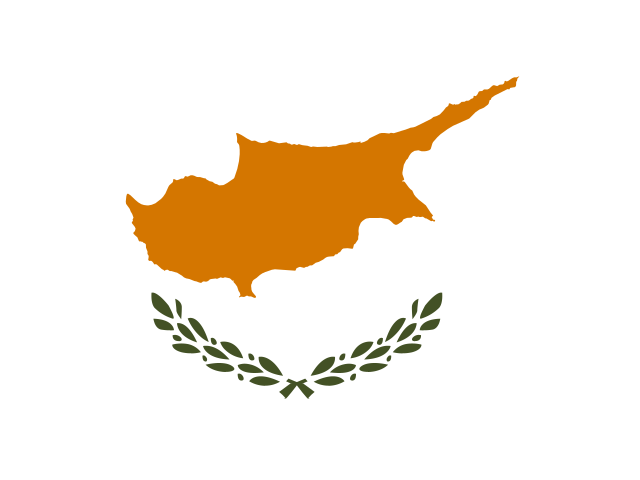
VS
Turkish Cypriots

Greek Cypriots and Turkish Cypriots are the two main communities on the island of Cyprus.
Greek Cypriots are predominantly adherents of the Greek Orthodox Church, while Turkish Cypriots are mainly Muslims.
The island lies about 40 miles from the coast of Turkey, and the two communities have coexisted for centuries, though relations have sometimes been hostile.
The core disagreement stems from the division of the island since 1974, when Cyprus was split between the Greek Cypriot and Turkish Cypriot communities.
Greek Cypriots argue that Turkish Cypriots withdrew to form their own administration, while Turkish Cypriots maintain that the issue is with the Greek Cypriots.
The conflict over political rights is rooted in a long history of ethnic division and conflict on the island.
The division has persisted for decades, with about 100,000 Turkish Cypriots living in the north and Greek Cypriots in the south.
The dispute remains a significant obstacle to regional stability, and various diplomatic efforts, including recent initiatives by the UN Secretary-General, have sought to restart negotiations between the two sides.
*AI-generated summary of publicly available data. This is not an official statement of any party.
*AI-generated summary of publicly available statements and reporting. This is not an official statement of this party.
Supporters of Greek Cypriots argue that their cultural heritage, rooted in millennia of Hellenic identity on the island, must remain the foundation of any settlement, rejecting federal models that dilute this legacy.
Supporters of Greek Cypriots argue that Cyprus's Hellenic cultural heritage, from ancient city-kingdoms to Byzantine Orthodoxy, anchors its European identity, and they maintain that any settlement must preserve this continuity as the island's core.
Supporters of Greek Cypriots counter that shared heritage—churches, music, and village life—predates partition, and separate governance never erased Turkish Cypriot identity, only divided families. They argue that unity preserves, not erases, culture by restoring common ground.
Supporters of Greek Cypriots argue that UN-mediated talks must proceed on the established legal framework of a single, sovereign state with one international personality, rejecting any partition or separate sovereignty for Turkish Cypriots.
Supporters of Greek Cypriots argue that any resolution must uphold the Republic of Cyprus’s legal sovereignty and territorial integrity, as recognized by UN resolutions, rejecting alternative sovereignty models.
Supporters of Greek Cypriots counter that the 1960 Treaty of Guarantee upholds the Republic of Cyprus as a single, sovereign state, not a partnership of two equal peoples, and that Turkish Cypriot claims to separate sovereignty contradict the treaty's own text and UN Security.
Supporters of Greek Cypriots argue the UN initiative is leverage, not compromise, as decades of Turkish occupation and military presence leave Nicosia holding the weaker hand. They maintain that only international pressure, not goodwill, can force concessions from Ankara.
Supporters of Greek Cypriots argue the UN initiative is a useful lever, but they warn that Turkey’s military presence and Ankara’s leverage over the north make any real deal contingent on power, not goodwill. They see Guterres’ push as a chance to lock in the Republic’s.
Supporters of Greek Cypriots counter that recognition follows legitimacy, not occupation, and Ankara’s guarantees merely entrench division, rewarding force over law. They argue realpolitik cuts both ways—without EU leverage and international isolation, Turkish Cypriots lose the.
Supporters of Greek Cypriots argue that a just resolution must uphold the moral principle of restoring displaced communities' rights, citing UN parameters for a bi-zonal federation as the only ethical framework.
Supporters of Greek Cypriots argue that a just settlement must uphold international law and the rights of all displaced persons, viewing reunification as a moral imperative grounded in UN resolutions and human rights principles.
Supporters of Greek Cypriots counter that political equality cannot override the moral right of the displaced majority to return to ancestral homes, a principle rooted in international law and shared by both communities.
Supporters of Greek Cypriots argue that the island's Orthodox Christian heritage, with its ancient churches and monasteries, anchors their claim to cultural continuity and unity, viewing the UN initiative as a path to restore sacred sites and communal worship.
Supporters of Greek Cypriots maintain that Cyprus's Orthodox Christian heritage anchors its identity, and they argue any settlement must preserve the island's historic ecclesiastical sites and traditions, which they see as vital to regional stability.
Supporters of Greek Cypriots counter that Orthodox Christian tradition equally sanctifies the island’s unity, viewing the Church’s centuries-old presence as a divine mandate for territorial integrity, not division.
*AI-generated summary of publicly available statements and reporting. This is not an official statement of this party.
Supporters of Turkish Cypriots argue that any resolution must honor their community's distinct cultural identity, citing decades of separate governance as evidence that imposed unity erases their heritage. They maintain that Guterres' initiative risks repeating past failures.
Supporters of Turkish Cypriots argue that their community’s distinct cultural identity and history of coexistence predate the island’s division, which they see as a painful rupture, not a natural state.
Supporters of Turkish Cypriots counter that the island’s cultural fabric has always been bi-communal, citing Ottoman-era cohabitation and shared traditions, which a Greek-centric foundation would erase. They argue that federalism preserves both legacies, not dilutes them, as.
Supporters of Turkish Cypriots argue that any legal settlement must recognize their community's equal sovereign status, not subordinate it to Greek Cypriot majority rule. They insist that international law, including the 1960 Treaty of Guarantee, affirms their right to.
Supporters of Turkish Cypriots argue that any settlement must legally recognize their community’s equal sovereign status, not absorb it into a Greek Cypriot majority. They point to the 1960 treaty guarantees and the right to self-determination as grounds for a bi-zonal.
Supporters of Turkish Cypriots counter that the 1960 treaties guarantee their communal political equality, not subordination to a Greek Cypriot majority, and that any settlement must preserve their inherent right to self-government.
Supporters of Turkish Cypriots argue the UN push is realpolitik: recognition flows to those who hold ground, and Ankara’s guarantees remain the only leverage that forces Greek Cypriots to negotiate.
Supporters of Turkish Cypriots argue that Guterres’ initiative is just another power play, where recognition and security guarantees hinge on leverage, not goodwill. They maintain that decades of deadlock prove the Greek Cypriot side stalls unless forced by hard incentives, so.
Supporters of Turkish Cypriots counter that Nicosia’s leverage is illusory, as Ankara’s military guarantees and the island’s de facto partition make international pressure a blunt tool that only hardens Turkish resolve. They argue the UN initiative offers the only pragmatic.
Supporters of Turkish Cypriots argue that reunification must honor the moral right of both communities to political equality, not impose a majority's will.
Supporters of Turkish Cypriots argue that a just settlement must morally recognize their community's equal political status, not absorb it into Greek Cypriot majority rule, as past rejections of federation proposals have shown.
Supporters of Turkish Cypriots counter that the moral principle of restoring rights cannot be selectively applied, as it ignores the equal moral claim of Turkish Cypriots displaced by intercommunal violence, whose homes and property remain unresolved under the same UN parameters.
Supporters of Turkish Cypriots argue that their community’s faith underscores a divine right to self-determination, viewing the island’s division as a protected religious identity under Islamic tradition, not merely a political dispute.
Supporters of Turkish Cypriots invoke faith as a moral foundation for their claim to equal sovereignty, arguing that divine law affirms the right of their community to self-determination and protection under the UN initiative.
Supporters of Turkish Cypriots counter that Ottoman-era mosques and tekkes equally anchor their heritage, noting that the UN plan must preserve both faiths' sites, not prioritize one tradition over the other.
AI-generated summary of publicly available statements and reporting. This is not an official statement of this party.
Supporters of Greek Cypriots argue that their cultural heritage, rooted in millennia of Hellenic identity on the island, must remain the foundation of any settlement, rejecting federal models that dilute this legacy.
Supporters of Greek Cypriots argue that Cyprus's Hellenic cultural heritage, from ancient city-kingdoms to Byzantine Orthodoxy, anchors its European identity, and they maintain that any settlement must preserve this continuity as the island's core.
Supporters of Greek Cypriots counter that shared heritage—churches, music, and village life—predates partition, and separate governance never erased Turkish Cypriot identity, only divided families. They argue that unity preserves, not erases, culture by restoring common ground.
Supporters of Greek Cypriots argue that UN-mediated talks must proceed on the established legal framework of a single, sovereign state with one international personality, rejecting any partition or separate sovereignty for Turkish Cypriots.
Supporters of Greek Cypriots argue that any resolution must uphold the Republic of Cyprus’s legal sovereignty and territorial integrity, as recognized by UN resolutions, rejecting alternative sovereignty models.
Supporters of Greek Cypriots counter that the 1960 Treaty of Guarantee upholds the Republic of Cyprus as a single, sovereign state, not a partnership of two equal peoples, and that Turkish Cypriot claims to separate sovereignty contradict the treaty's own text and UN Security.
Supporters of Greek Cypriots argue the UN initiative is leverage, not compromise, as decades of Turkish occupation and military presence leave Nicosia holding the weaker hand. They maintain that only international pressure, not goodwill, can force concessions from Ankara.
Supporters of Greek Cypriots argue the UN initiative is a useful lever, but they warn that Turkey’s military presence and Ankara’s leverage over the north make any real deal contingent on power, not goodwill. They see Guterres’ push as a chance to lock in the Republic’s.
Supporters of Greek Cypriots counter that recognition follows legitimacy, not occupation, and Ankara’s guarantees merely entrench division, rewarding force over law. They argue realpolitik cuts both ways—without EU leverage and international isolation, Turkish Cypriots lose the.
Supporters of Greek Cypriots argue that a just resolution must uphold the moral principle of restoring displaced communities' rights, citing UN parameters for a bi-zonal federation as the only ethical framework.
Supporters of Greek Cypriots argue that a just settlement must uphold international law and the rights of all displaced persons, viewing reunification as a moral imperative grounded in UN resolutions and human rights principles.
Supporters of Greek Cypriots counter that political equality cannot override the moral right of the displaced majority to return to ancestral homes, a principle rooted in international law and shared by both communities.
Supporters of Greek Cypriots argue that the island's Orthodox Christian heritage, with its ancient churches and monasteries, anchors their claim to cultural continuity and unity, viewing the UN initiative as a path to restore sacred sites and communal worship.
Supporters of Greek Cypriots maintain that Cyprus's Orthodox Christian heritage anchors its identity, and they argue any settlement must preserve the island's historic ecclesiastical sites and traditions, which they see as vital to regional stability.
Supporters of Greek Cypriots counter that Orthodox Christian tradition equally sanctifies the island’s unity, viewing the Church’s centuries-old presence as a divine mandate for territorial integrity, not division.
Supporters of Turkish Cypriots argue that any resolution must honor their community's distinct cultural identity, citing decades of separate governance as evidence that imposed unity erases their heritage. They maintain that Guterres' initiative risks repeating past failures.
Supporters of Turkish Cypriots argue that their community’s distinct cultural identity and history of coexistence predate the island’s division, which they see as a painful rupture, not a natural state.
Supporters of Turkish Cypriots counter that the island’s cultural fabric has always been bi-communal, citing Ottoman-era cohabitation and shared traditions, which a Greek-centric foundation would erase. They argue that federalism preserves both legacies, not dilutes them, as.
Supporters of Turkish Cypriots argue that any legal settlement must recognize their community's equal sovereign status, not subordinate it to Greek Cypriot majority rule. They insist that international law, including the 1960 Treaty of Guarantee, affirms their right to.
Supporters of Turkish Cypriots argue that any settlement must legally recognize their community’s equal sovereign status, not absorb it into a Greek Cypriot majority. They point to the 1960 treaty guarantees and the right to self-determination as grounds for a bi-zonal.
Supporters of Turkish Cypriots counter that the 1960 treaties guarantee their communal political equality, not subordination to a Greek Cypriot majority, and that any settlement must preserve their inherent right to self-government.
Supporters of Turkish Cypriots argue the UN push is realpolitik: recognition flows to those who hold ground, and Ankara’s guarantees remain the only leverage that forces Greek Cypriots to negotiate.
Supporters of Turkish Cypriots argue that Guterres’ initiative is just another power play, where recognition and security guarantees hinge on leverage, not goodwill. They maintain that decades of deadlock prove the Greek Cypriot side stalls unless forced by hard incentives, so.
Supporters of Turkish Cypriots counter that Nicosia’s leverage is illusory, as Ankara’s military guarantees and the island’s de facto partition make international pressure a blunt tool that only hardens Turkish resolve. They argue the UN initiative offers the only pragmatic.
Supporters of Turkish Cypriots argue that reunification must honor the moral right of both communities to political equality, not impose a majority's will.
Supporters of Turkish Cypriots argue that a just settlement must morally recognize their community's equal political status, not absorb it into Greek Cypriot majority rule, as past rejections of federation proposals have shown.
Supporters of Turkish Cypriots counter that the moral principle of restoring rights cannot be selectively applied, as it ignores the equal moral claim of Turkish Cypriots displaced by intercommunal violence, whose homes and property remain unresolved under the same UN parameters.
Supporters of Turkish Cypriots argue that their community’s faith underscores a divine right to self-determination, viewing the island’s division as a protected religious identity under Islamic tradition, not merely a political dispute.
Supporters of Turkish Cypriots invoke faith as a moral foundation for their claim to equal sovereignty, arguing that divine law affirms the right of their community to self-determination and protection under the UN initiative.
Supporters of Turkish Cypriots counter that Ottoman-era mosques and tekkes equally anchor their heritage, noting that the UN plan must preserve both faiths' sites, not prioritize one tradition over the other.
UN chief Antonio Guterres considers a resolution to the Cyprus issue to be vital for regional stability and has initiated a new diplomatic effort. What are the prospects for its success?
The International Crisis Group published a report highlighting the ongoing division of Cyprus between the Greek Cypriot and Turkish Cypriot communities, noting the presence of about 100,000 Turkish Cypriots in the north.
The island of Cyprus was divided between the Greek Cypriot and Turkish Cypriot communities, leading to a partition that persists today.