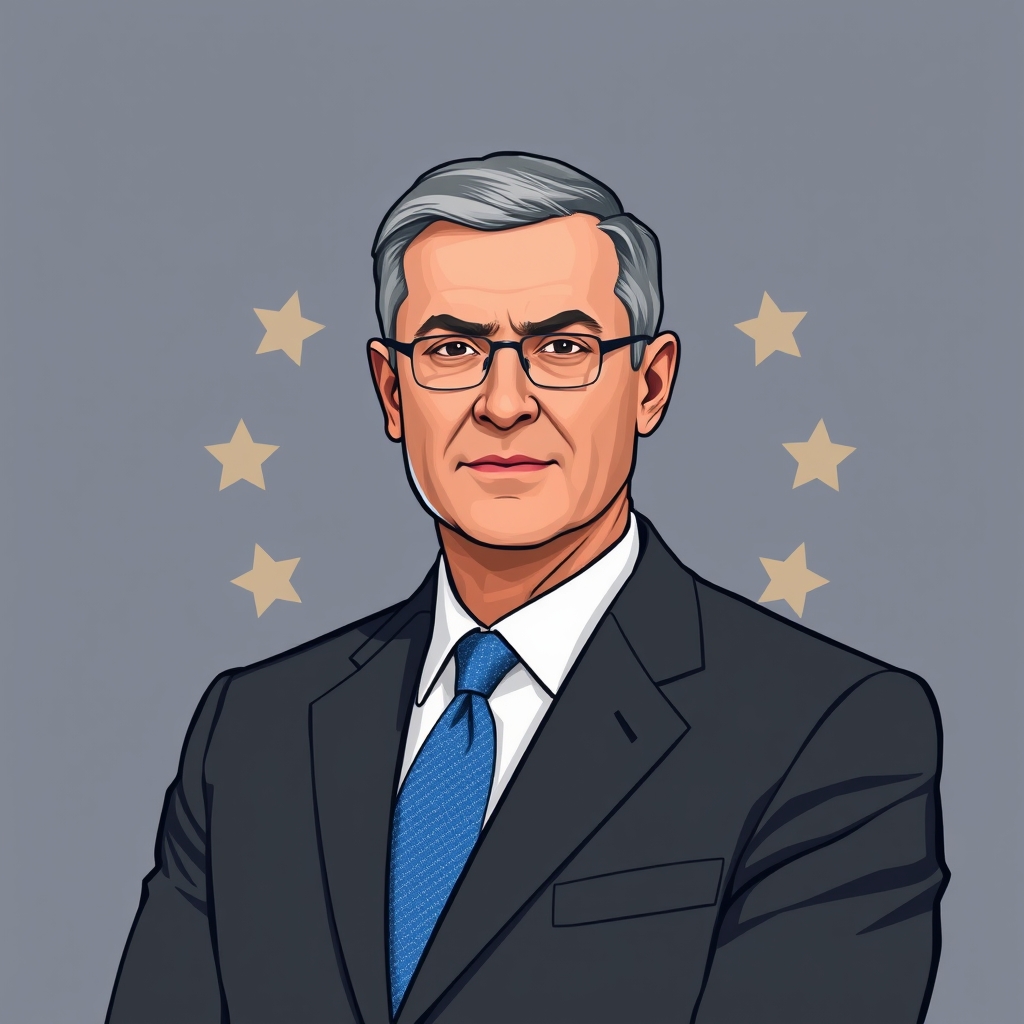
Grzegorz Braun
VS
Ukrainian nationalists
Grzegorz Braun is a Polish far-right politician and filmmaker, born in 1967, who served as a member of the Sejm for Rzeszów from 2019 to 2024 and later became a member of the European Parliament.
He leads the far-right Confederation of the Polish Crown party and has been described as anti-Ukrainian and pro-Russian, gaining attention during Poland's recent presidential elections.
The Ukrainian Insurgent Army (UPA) was a Ukrainian nationalist military formation whose memorials in Poland commemorate soldiers that many Poles associate with the massacres of Poles during World War II.
Ukrainian nationalists and their supporters view these monuments as honoring their historical fighters, while Braun and like-minded Polish figures reject their presence in Poland.
This clash over historical memory and commemoration has fueled tensions between Poland and Ukraine.
Braun published a video of himself using a hammer to attack a monument in Poland dedicated to UPA soldiers, an act that highlights the broader dispute over how the two countries remember and honor controversial wartime figures.
*AI-generated summary of publicly available data. This is not an official statement of any party.
*AI-generated summary of publicly available statements and reporting. This is not an official statement of this party.
Supporters of Grzegorz Braun argue honoring Ukrainian nationalists tied to WWII massacres of Poles desecrates memory of victims, and that commemoration must reckon with that history.
Supporters of Grzegorz Braun argue that honoring WWII-era Ukrainian nationalists tied to massacres of Poles erases Polish victims' memory, so they see his protest as defending cultural remembrance.
Supporters of Grzegorz Braun counter that honoring the OUN/UPA is not neutral self-determination but a cultural choice to glorify ethnic cleansing, since the same figures presided over the Volhynian massacres of Poles.
Supporters of Grzegorz Braun argue that honoring perpetrators of the WWII massacres of Poles violates Polish law against glorifying crimes, so removing such memorials is a lawful act, not vandalism.
Supporters of Grzegorz Braun argue that honoring WWII Ukrainian nationalist leaders tied to massacres of Poles is legally indefensible, and that removing such memorials is a legitimate demand for accountability.
Supporters of Grzegorz Braun counter that dismantling a monument lacks legal authority, so the defenders' claim to a legal right of memory does not shield a structure from lawful removal procedures.
Supporters of Grzegorz Braun argue that attacking the memorial was a calculated bid to rally nationalist voters by casting him as defender of Polish victims, trading diplomatic friction for domestic political gain.
Supporters of Grzegorz Braun argue that attacking the memorial was a calculated bid to rally nationalist voters by casting him as defender of Polish victims, trading diplomatic friction with Ukraine for domestic political gain.
Supporters of Grzegorz Braun counter that unity built on glorifying men who massacred Poles is no unity at all, and that Warsaw brands his stunt "proving Poland's agenda" precisely to avoid the cost of naming the crime.
Supporters of Grzegorz Braun argue that honoring perpetrators of the WWII massacres of Poles is a moral affront, so they defend his memorial protest as conscientious resistance to whitewashing historical crimes.
Supporters of Grzegorz Braun argue that honoring perpetrators of the WWII massacres of Poles is a moral affront, so disrupting such memorials is a defensible act of remembrance for victims.
Supporters of Grzegorz Braun argue that honoring a movement whose heroes carried out ethnic cleansing morally implicates the commemorators, since glorifying such figures signals indifference to the victims.
Supporters of Grzegorz Braun argue that honoring perpetrators of the WWII massacres of Poles profanes the memory of the dead and violates the moral duty to render justice to victims.
Supporters of Grzegorz Braun argue that honoring perpetrators of WWII massacres violates the moral duty to remember victims, and that Scripture's call for justice makes such memorials an offense against truth.
Supporters of Grzegorz Braun counter that honoring fallen fighters as a sacred duty conflicts with divine law when the cause involved documented atrocities, since true religious duty cannot sanctify unjust killing.
*AI-generated summary of publicly available statements and reporting. This is not an official statement of this party.
Supporters of Ukrainian nationalists argue their heroes fought for an independent Ukraine, and they maintain that honoring that struggle is a matter of national identity and self-determination, not an endorsement of wartime atrocities.
Supporters of Ukrainian nationalists argue that commemorating figures tied to WWII-era massacres of Poles expresses a distinct national identity and sovereignty, and they maintain that such memorials honor their own historical narrative rather than endorse past violence.
Supporters of Ukrainian nationalists counter that honoring figures like Bandera reflects a distinct cultural memory of anti-Soviet resistance, and that Poland's own commemorative lens should not dictate Ukraine's internal identity.
Supporters of Ukrainian nationalists argue that commemorating their fallen is a legal right of memory and self-determination, and that Braun's attack on a memorial, not the commemoration itself, is the act that violates law and dignity.
Supporters of Ukrainian nationalists argue that Braun's attack on the memorial was unlawful, maintaining that commemoration disputes must be resolved through legal and diplomatic channels, not vandalism.
Supporters of Ukrainian nationalists counter that the memorials honor figures Poland's own courts never convicted, so Braun's "glorification" claim lacks a legal basis under Polish law.
Supporters of Ukrainian nationalists argue that wartime leaders like Bandera are national heroes who fought Soviet and Polish domination, so commemorating them serves Ukraine's postwar unity; Braun's stunt, in their view, just proves Poland's agenda.
Supporters of Ukrainian nationalists argue that wartime heroes are their state's founding myth; they see Braun's stunt as proof that outsiders weaponize history to weaken Kyiv's sovereignty, so they back commemorations as a tool of national survival.
Supporters of Ukrainian nationalists counter that Braun's memorial stunt is less a calculated bid for Polish votes than a predictable provocation: Ukrainian memory politics treats such gestures as proof Poland's far right prizes domestic theater over alliance leverage.
Supporters of Ukrainian nationalists argue that commemorating their fight for independence is a moral right of a people to honor those who sought self-rule, not an endorsement of atrocities.
Supporters of Ukrainian nationalists argue that honoring those who fought for Ukrainian statehood is a moral debt owed to the dead, and that outsiders attacking such memorials violate the community's autonomy to bury its own heroes.
Supporters of Ukrainian nationalists counter that a nation honoring its own dead, however contested, is a sovereign moral right, and that outsiders disrupting memorials only deepens the grievance.
Supporters of Ukrainian nationalists argue their cause is a sacred national liberation struggle, and they maintain that commemorating fallen fighters is a religious duty to honor the dead, not an endorsement of past atrocities.
Supporters of Ukrainian nationalists argue their fallen are honored as defenders of national survival, and that commemorating them falls under religious and cultural rights to mourn one's dead.
Ukrainian nationalists counter that their church blesses these fighters as defenders of the faith against Soviet atheism, so honoring them is a religious duty, not a profanation of Polish memory.
AI-generated summary of publicly available statements and reporting. This is not an official statement of this party.
Supporters of Grzegorz Braun argue honoring Ukrainian nationalists tied to WWII massacres of Poles desecrates memory of victims, and that commemoration must reckon with that history.
Supporters of Grzegorz Braun argue that honoring WWII-era Ukrainian nationalists tied to massacres of Poles erases Polish victims' memory, so they see his protest as defending cultural remembrance.
Supporters of Grzegorz Braun counter that honoring the OUN/UPA is not neutral self-determination but a cultural choice to glorify ethnic cleansing, since the same figures presided over the Volhynian massacres of Poles.
Supporters of Grzegorz Braun argue that honoring perpetrators of the WWII massacres of Poles violates Polish law against glorifying crimes, so removing such memorials is a lawful act, not vandalism.
Supporters of Grzegorz Braun argue that honoring WWII Ukrainian nationalist leaders tied to massacres of Poles is legally indefensible, and that removing such memorials is a legitimate demand for accountability.
Supporters of Grzegorz Braun counter that dismantling a monument lacks legal authority, so the defenders' claim to a legal right of memory does not shield a structure from lawful removal procedures.
Supporters of Grzegorz Braun argue that attacking the memorial was a calculated bid to rally nationalist voters by casting him as defender of Polish victims, trading diplomatic friction for domestic political gain.
Supporters of Grzegorz Braun argue that attacking the memorial was a calculated bid to rally nationalist voters by casting him as defender of Polish victims, trading diplomatic friction with Ukraine for domestic political gain.
Supporters of Grzegorz Braun counter that unity built on glorifying men who massacred Poles is no unity at all, and that Warsaw brands his stunt "proving Poland's agenda" precisely to avoid the cost of naming the crime.
Supporters of Grzegorz Braun argue that honoring perpetrators of the WWII massacres of Poles is a moral affront, so they defend his memorial protest as conscientious resistance to whitewashing historical crimes.
Supporters of Grzegorz Braun argue that honoring perpetrators of the WWII massacres of Poles is a moral affront, so disrupting such memorials is a defensible act of remembrance for victims.
Supporters of Grzegorz Braun argue that honoring a movement whose heroes carried out ethnic cleansing morally implicates the commemorators, since glorifying such figures signals indifference to the victims.
Supporters of Grzegorz Braun argue that honoring perpetrators of the WWII massacres of Poles profanes the memory of the dead and violates the moral duty to render justice to victims.
Supporters of Grzegorz Braun argue that honoring perpetrators of WWII massacres violates the moral duty to remember victims, and that Scripture's call for justice makes such memorials an offense against truth.
Supporters of Grzegorz Braun counter that honoring fallen fighters as a sacred duty conflicts with divine law when the cause involved documented atrocities, since true religious duty cannot sanctify unjust killing.
Supporters of Ukrainian nationalists argue their heroes fought for an independent Ukraine, and they maintain that honoring that struggle is a matter of national identity and self-determination, not an endorsement of wartime atrocities.
Supporters of Ukrainian nationalists argue that commemorating figures tied to WWII-era massacres of Poles expresses a distinct national identity and sovereignty, and they maintain that such memorials honor their own historical narrative rather than endorse past violence.
Supporters of Ukrainian nationalists counter that honoring figures like Bandera reflects a distinct cultural memory of anti-Soviet resistance, and that Poland's own commemorative lens should not dictate Ukraine's internal identity.
Supporters of Ukrainian nationalists argue that commemorating their fallen is a legal right of memory and self-determination, and that Braun's attack on a memorial, not the commemoration itself, is the act that violates law and dignity.
Supporters of Ukrainian nationalists argue that Braun's attack on the memorial was unlawful, maintaining that commemoration disputes must be resolved through legal and diplomatic channels, not vandalism.
Supporters of Ukrainian nationalists counter that the memorials honor figures Poland's own courts never convicted, so Braun's "glorification" claim lacks a legal basis under Polish law.
Supporters of Ukrainian nationalists argue that wartime leaders like Bandera are national heroes who fought Soviet and Polish domination, so commemorating them serves Ukraine's postwar unity; Braun's stunt, in their view, just proves Poland's agenda.
Supporters of Ukrainian nationalists argue that wartime heroes are their state's founding myth; they see Braun's stunt as proof that outsiders weaponize history to weaken Kyiv's sovereignty, so they back commemorations as a tool of national survival.
Supporters of Ukrainian nationalists counter that Braun's memorial stunt is less a calculated bid for Polish votes than a predictable provocation: Ukrainian memory politics treats such gestures as proof Poland's far right prizes domestic theater over alliance leverage.
Supporters of Ukrainian nationalists argue that commemorating their fight for independence is a moral right of a people to honor those who sought self-rule, not an endorsement of atrocities.
Supporters of Ukrainian nationalists argue that honoring those who fought for Ukrainian statehood is a moral debt owed to the dead, and that outsiders attacking such memorials violate the community's autonomy to bury its own heroes.
Supporters of Ukrainian nationalists counter that a nation honoring its own dead, however contested, is a sovereign moral right, and that outsiders disrupting memorials only deepens the grievance.
Supporters of Ukrainian nationalists argue their cause is a sacred national liberation struggle, and they maintain that commemorating fallen fighters is a religious duty to honor the dead, not an endorsement of past atrocities.
Supporters of Ukrainian nationalists argue their fallen are honored as defenders of national survival, and that commemorating them falls under religious and cultural rights to mourn one's dead.
Ukrainian nationalists counter that their church blesses these fighters as defenders of the faith against Soviet atheism, so honoring them is a religious duty, not a profanation of Polish memory.
Polish MEP Grzegorz Braun attacked a memorial honoring Ukrainian nationalists responsible for massacring Poles during WWII.
Grzegorz Braun became one of the main sensations of Poland's recent presidential elections, a politician long known as a radical.
Russian propaganda has tried to frighten Poles with the catchphrase "Ukrainization" of their country, a term used and promoted by MP Grzegorz Braun.