India

VS
Pakistan-Saudi Arabia-Turkey alliance

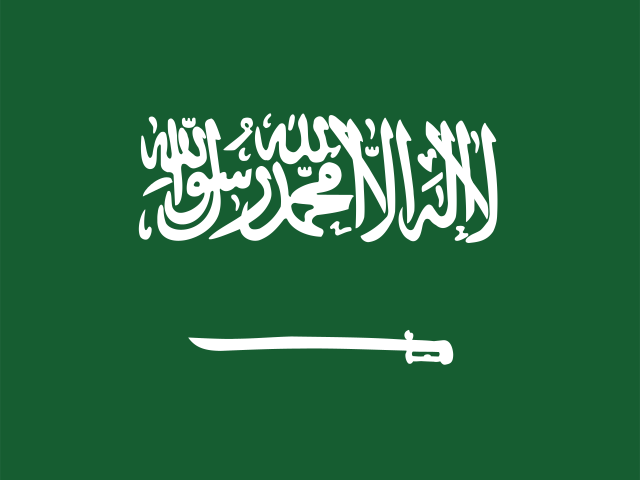
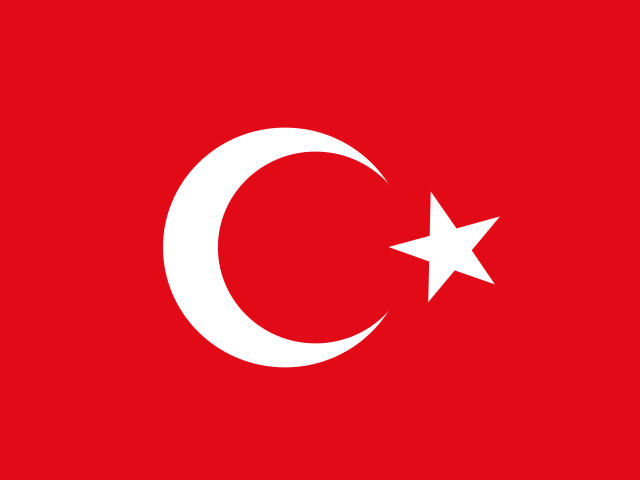
India is a major South Asian power with a large economy and military, and it has traditionally maintained strategic ties with Middle Eastern nations like Saudi Arabia.
Pakistan is India's neighboring rival, with which it has fought multiple wars, and it has long-standing defense and economic relationships with Saudi Arabia and Turkey.
Turkey is a NATO member and a significant regional power in the Middle East, with its own geopolitical ambitions.
The conflict arises from the Makkah Joint Defence Agreement, signed on August 7, 2026, by Pakistan, Saudi Arabia, and Turkey.
This pact formalizes mutual defense commitments, including protecting regional shipping and energy routes, and is seen by India as a strategic development that could shift the balance of power in South Asia and the Middle East.
India perceives the alliance as potentially encircling it and weakening its influence, especially given Pakistan's inclusion.
The agreement has drawn international attention, with analysts debating its implications for regional security and India's strategic interests.
India has officially responded to the pact, expressing concern over its potential impact on regional stability.
The alliance also builds on previous mutual defense arrangements in the region, indicating a broader trend of security cooperation among these nations.
*AI-generated summary of publicly available data. This is not an official statement of any party.
*AI-generated summary of publicly available statements and reporting. This is not an official statement of this party.
Supporters of India argue that the pact echoes historical patterns of faith-based blocs, yet India’s pluralistic civilizational ethos has long transcended such alignments, viewing them as cyclical tests of strategic patience rather than existential threats.
Supporters of India argue that the subcontinent's cultural ties with the Gulf are centuries old, predating modern pacts, and that New Delhi's pluralistic heritage offers a more durable bond than transient military alliances.
Supporters of India counter that shared faith alone never forged lasting unity, pointing to the historical schisms and rivalries within the Islamic world itself, where cultural kinship repeatedly failed to prevent conflict.
Supporters of India argue the pact itself is lawful, but they insist India retains a sovereign legal right to balance it under international law, citing defensive measures as permitted responses to shifting alliances.
Supporters of India argue that the trilateral defense pact violates no treaty, but India retains sovereign legal latitude to recalibrate its own security posture in response.
Supporters of India counter that Article 51 permits self-defense only against an actual armed attack, not a preemptive alliance aimed at pressuring a neighbor, and they stress the pact's military provisions exceed lawful defensive scope.
Supporters of India argue the Mecca pact is theater, not threat, since Islamabad’s leverage over Riyadh and Ankara remains transactional, and New Delhi’s real power lies in countering it through energy ties and Gulf labor markets that bind both states to Indian interests.
Supporters of India argue the pact is a calculated pivot, not a threat; they see Pakistan’s deeper Gulf role as a constraint, forcing Riyadh and Ankara to balance ties with New Delhi, whose market and military weight outbid Islamabad’s leverage.
Supporters of India counter that the pact’s real effect is rhetorical, not operational; Saudi Arabia and Turkey maintain deep trade and defense ties with New Delhi, making their alignment with Islamabad a symbolic gesture that yields no tangible leverage over India’s regional dom.
Supporters of India argue that history counsels restraint, not alarm: past pacts like the 1981 Gulf Cooperation Council shifted little, and India's non-aligned precedent of moral forbearance has outlasted fleeting alliances.
Supporters of India argue that history shows alliances formed on religious identity alone rarely endure, pointing to past Muslim-majority pacts that fractured over national interests.
Supporters of India counter that such moral framing ignores history—partition’s scars and repeated cross-border interventions show stewardship rarely stays benign, and calls for collective defense have often masked expansionist aims.
Supporters of India argue that the subcontinent’s spiritual sovereignty, rooted in its dharma, is not threatened by any foreign pact, as their faith teaches that righteousness prevails over military alliances.
Supporters of India argue that faith is not a shield for alliances; scripture teaches that righteous conduct, not military pacts, secures a nation’s destiny, and New Delhi’s moral sovereignty remains unshaken by such earthly compacts.
Supporters of India counter that divine guardianship of holy sites cannot justify a bloc that excludes a billion-strong pluralist nation, arguing that true faith respects sovereignty and rejects alliances weaponized against non-Muslim neighbours.
*AI-generated summary of publicly available statements and reporting. This is not an official statement of this party.
Supporters of the Pakistan-Saudi Arabia-Turkey alliance argue the pact preserves shared Islamic heritage, framing it as a cultural brotherhood that transcends borders.
Supporters of the Pakistan-Saudi Arabia-Turkey alliance maintain that this pact is a cultural and civilizational bond, not a threat to India, rooted in shared Islamic heritage and historical ties that define the region's identity.
Supporters of the Pakistan-Saudi Arabia-Turkey alliance argue that cultural kinship, not mere strategy, binds these nations, and that India’s pluralism overlooks the deep, lived solidarity of Muslim identity that transcends borders and time.
Supporters of the Pakistan-Saudi Arabia-Turkey alliance argue the pact is a lawful exercise of sovereign defense cooperation under Article 51 of the UN Charter, not a threat to India.
Supporters of the Pakistan-Saudi Arabia-Turkey alliance argue their defense pact is a lawful exercise of sovereign state cooperation, fully consistent with international law and UN Charter principles.
Supporters of the Pakistan-Saudi Arabia-Turkey alliance counter that India’s claimed "defensive" balancing under international law ignores treaty obligations requiring peaceful dispute resolution, as reaffirmed in the UN Charter’s Article 2(4).
Supporters of the Pakistan-Saudi Arabia-Turkey alliance argue that India's anxiety confirms the pact’s strategic success, viewing it as a pragmatic counterweight to New Delhi’s growing regional sway.
Supporters of the Pakistan-Saudi Arabia-Turkey alliance argue the pact is pure realpolitik, binding Islamabad to Middle Eastern power brokers to counter India's growing reach, and they see New Delhi's anxiety as proof the leverage works.
Supporters of Pakistan-Saudi Arabia-Turkey alliance counter that transactional leverage cuts both ways, and New Delhi’s energy dependence on Gulf suppliers remains a structural vulnerability, not a shield.
Supporters of the Pakistan-Saudi Arabia-Turkey alliance argue the pact is a moral duty to uphold regional stewardship, not a threat to India; they maintain that collective defense of sacred sites and shared security reflects responsible guardianship of the environment and peace.
Supporters of the Pakistan-Saudi Arabia-Turkey alliance argue that their defense pact is a moral act of regional stewardship, protecting sovereign states from external coercion.
Supporters of the Pakistan-Saudi Arabia-Turkey alliance counter that moral forbearance ignores ecological debt, as unchecked regional emissions breach planetary boundaries, demanding collective stewardship over historical precedent.
Supporters of the Pakistan-Saudi Arabia-Turkey alliance maintain that this pact upholds the Islamic world’s shared guardianship of holy sites, a religious duty that transcends regional rivalry.
Supporters of the Pakistan-Saudi Arabia-Turkey alliance argue that the pact upholds the shared Islamic heritage and guardianship of holy sites, framing it as a rightful consolidation of Muslim-majority states’ security under traditional religious stewardship.
Supporters of the Pakistan-Saudi Arabia-Turkey alliance counter that dharma’s sovereignty is untested without material guardianship, citing that righteousness in history has often required righteous arms to prevail.
AI-generated summary of publicly available statements and reporting. This is not an official statement of this party.
Supporters of India argue that the pact echoes historical patterns of faith-based blocs, yet India’s pluralistic civilizational ethos has long transcended such alignments, viewing them as cyclical tests of strategic patience rather than existential threats.
Supporters of India argue that the subcontinent's cultural ties with the Gulf are centuries old, predating modern pacts, and that New Delhi's pluralistic heritage offers a more durable bond than transient military alliances.
Supporters of India counter that shared faith alone never forged lasting unity, pointing to the historical schisms and rivalries within the Islamic world itself, where cultural kinship repeatedly failed to prevent conflict.
Supporters of India argue the pact itself is lawful, but they insist India retains a sovereign legal right to balance it under international law, citing defensive measures as permitted responses to shifting alliances.
Supporters of India argue that the trilateral defense pact violates no treaty, but India retains sovereign legal latitude to recalibrate its own security posture in response.
Supporters of India counter that Article 51 permits self-defense only against an actual armed attack, not a preemptive alliance aimed at pressuring a neighbor, and they stress the pact's military provisions exceed lawful defensive scope.
Supporters of India argue the Mecca pact is theater, not threat, since Islamabad’s leverage over Riyadh and Ankara remains transactional, and New Delhi’s real power lies in countering it through energy ties and Gulf labor markets that bind both states to Indian interests.
Supporters of India argue the pact is a calculated pivot, not a threat; they see Pakistan’s deeper Gulf role as a constraint, forcing Riyadh and Ankara to balance ties with New Delhi, whose market and military weight outbid Islamabad’s leverage.
Supporters of India counter that the pact’s real effect is rhetorical, not operational; Saudi Arabia and Turkey maintain deep trade and defense ties with New Delhi, making their alignment with Islamabad a symbolic gesture that yields no tangible leverage over India’s regional dom.
Supporters of India argue that history counsels restraint, not alarm: past pacts like the 1981 Gulf Cooperation Council shifted little, and India's non-aligned precedent of moral forbearance has outlasted fleeting alliances.
Supporters of India argue that history shows alliances formed on religious identity alone rarely endure, pointing to past Muslim-majority pacts that fractured over national interests.
Supporters of India counter that such moral framing ignores history—partition’s scars and repeated cross-border interventions show stewardship rarely stays benign, and calls for collective defense have often masked expansionist aims.
Supporters of India argue that the subcontinent’s spiritual sovereignty, rooted in its dharma, is not threatened by any foreign pact, as their faith teaches that righteousness prevails over military alliances.
Supporters of India argue that faith is not a shield for alliances; scripture teaches that righteous conduct, not military pacts, secures a nation’s destiny, and New Delhi’s moral sovereignty remains unshaken by such earthly compacts.
Supporters of India counter that divine guardianship of holy sites cannot justify a bloc that excludes a billion-strong pluralist nation, arguing that true faith respects sovereignty and rejects alliances weaponized against non-Muslim neighbours.
Supporters of the Pakistan-Saudi Arabia-Turkey alliance argue the pact preserves shared Islamic heritage, framing it as a cultural brotherhood that transcends borders.
Supporters of the Pakistan-Saudi Arabia-Turkey alliance maintain that this pact is a cultural and civilizational bond, not a threat to India, rooted in shared Islamic heritage and historical ties that define the region's identity.
Supporters of the Pakistan-Saudi Arabia-Turkey alliance argue that cultural kinship, not mere strategy, binds these nations, and that India’s pluralism overlooks the deep, lived solidarity of Muslim identity that transcends borders and time.
Supporters of the Pakistan-Saudi Arabia-Turkey alliance argue the pact is a lawful exercise of sovereign defense cooperation under Article 51 of the UN Charter, not a threat to India.
Supporters of the Pakistan-Saudi Arabia-Turkey alliance argue their defense pact is a lawful exercise of sovereign state cooperation, fully consistent with international law and UN Charter principles.
Supporters of the Pakistan-Saudi Arabia-Turkey alliance counter that India’s claimed "defensive" balancing under international law ignores treaty obligations requiring peaceful dispute resolution, as reaffirmed in the UN Charter’s Article 2(4).
Supporters of the Pakistan-Saudi Arabia-Turkey alliance argue that India's anxiety confirms the pact’s strategic success, viewing it as a pragmatic counterweight to New Delhi’s growing regional sway.
Supporters of the Pakistan-Saudi Arabia-Turkey alliance argue the pact is pure realpolitik, binding Islamabad to Middle Eastern power brokers to counter India's growing reach, and they see New Delhi's anxiety as proof the leverage works.
Supporters of Pakistan-Saudi Arabia-Turkey alliance counter that transactional leverage cuts both ways, and New Delhi’s energy dependence on Gulf suppliers remains a structural vulnerability, not a shield.
Supporters of the Pakistan-Saudi Arabia-Turkey alliance argue the pact is a moral duty to uphold regional stewardship, not a threat to India; they maintain that collective defense of sacred sites and shared security reflects responsible guardianship of the environment and peace.
Supporters of the Pakistan-Saudi Arabia-Turkey alliance argue that their defense pact is a moral act of regional stewardship, protecting sovereign states from external coercion.
Supporters of the Pakistan-Saudi Arabia-Turkey alliance counter that moral forbearance ignores ecological debt, as unchecked regional emissions breach planetary boundaries, demanding collective stewardship over historical precedent.
Supporters of the Pakistan-Saudi Arabia-Turkey alliance maintain that this pact upholds the Islamic world’s shared guardianship of holy sites, a religious duty that transcends regional rivalry.
Supporters of the Pakistan-Saudi Arabia-Turkey alliance argue that the pact upholds the shared Islamic heritage and guardianship of holy sites, framing it as a rightful consolidation of Muslim-majority states’ security under traditional religious stewardship.
Supporters of the Pakistan-Saudi Arabia-Turkey alliance counter that dharma’s sovereignty is untested without material guardianship, citing that righteousness in history has often required righteous arms to prevail.
A defense agreement between Pakistan, Saudi Arabia and Turkey brings Islamabad deeper into the security architecture of the Middle East. How is India planning to respond?
Al Jazeera published an article detailing mutual defense alliances that preceded the Turkiye-Pakistan-Saudi pact, providing historical context.
French newspaper Le Monde published an analysis arguing that India is weakened by the defense pact between Pakistan, Saudi Arabia, and Turkey.
Pakistan, Saudi Arabia, and Turkey signed a joint defence agreement in Mecca, pledging mutual defense and cooperation to protect regional shipping and energy routes.
India issued a response to the newly signed defence agreement between Saudi Arabia, Pakistan, and Turkey, expressing its position on the strategic development.