Indian government
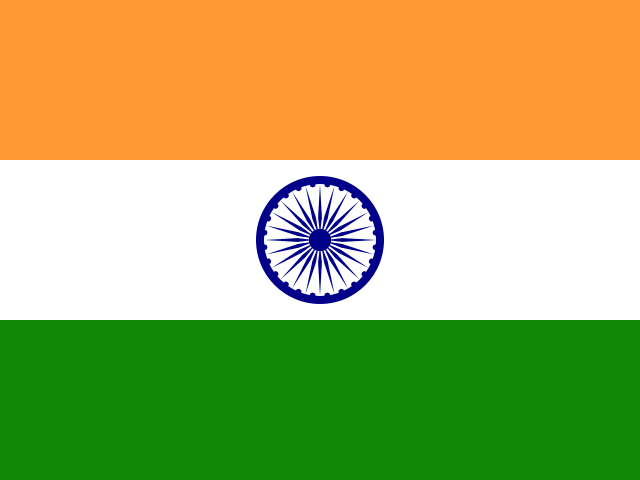
VS
Government critics and media


The article describes the Indian government's crackdown on critics, including young protesters and the media, framing it as a conflict between the government and those it targets.
*AI-generated summary of publicly available data. This is not an official statement of any party.
*AI-generated summary of publicly available statements and reporting. This is not an official statement of this party.
Supporters of Indian government argue that maintaining social order and respect for institutions is a cultural duty, and they frame criticism of the state as a destabilizing force that undermines inherited civic traditions.
Supporters of Indian government argue that maintaining social order and respect for institutions preserves cultural continuity, and they frame criticism of the state as destabilizing to inherited civic traditions.
Supporters of the Indian government counter that preserving cultural continuity and public order is itself part of India's democratic tradition, and they frame lawful limits on dissent as protecting inherited civic norms rather than silencing cultural voices.
Supporters of the Indian government argue that law enforcement actions against protesters and media are lawful exercises of statutory authority, not a crackdown, and maintain that due process safeguards apply to those charged.
Supporters of the Indian government argue that legal action against critics and media follows statutory procedures and judicial oversight, not political targeting, and maintain that lawful dissent remains protected.
Supporters of the Indian government counter that free expression under Article 19(2) is subject to reasonable restrictions, and that courts, not the executive, already review such actions—so the call for new oversight duplicates existing judicial remedies.
Supporters of the Indian government argue that critics and media framing the crackdown as repression ignore the state's need to preserve order and its own authority against destabilizing dissent.
Supporters of Indian government argue that consolidating control over media and dissent is a pragmatic necessity, since unruly critics and cameras threaten state stability more than bad press does.
Supporters of the Indian government counter that order is the prior claim: they argue that visible enforcement against unrest and unverified reporting deters escalation, and that states which tolerate disorder lose authority faster than those seen to act decisively.
Supporters of the Indian government argue that maintaining public order and national security justifies firm action, and they maintain that critics and media framing overlook the state's duty to protect citizens.
Supporters of the Indian government argue that maintaining public order and national security is a moral duty, and they frame enforcement against protesters and media as necessary to protect stability.
Supporters of the Indian government counter that maintaining public order and protecting citizens is itself a moral duty, arguing that temporary restrictions on assembly serve the greater good when safety is at stake.
Supporters of Indian government argue that preserving social order and inherited cultural authority is a religious duty, and that a state defending stability against disruptive critics acts in line with traditional values.
Supporters of the Indian government argue that upholding civic order and respect for national institutions is a duty rooted in tradition, and they maintain that preserving social harmony and inherited values justifies firm measures against voices seen as undermining them.
Supporters of the Indian government counter that dharma binds rulers to preserve social order, and that press and protest, like all institutions, remain answerable to lawful authority rather than standing above it.
*AI-generated summary of publicly available statements and reporting. This is not an official statement of this party.
Supporters of Government critics and media argue the crackdown targets cultural voices—young protesters and journalists—treating dissent as disloyalty rather than a legitimate part of India's democratic identity.
Supporters of Government critics and media contend that a state targeting young protesters and journalists threatens the cultural tradition of dissent and free expression, framing the crackdown as an attack on civic identity itself.
Supporters of Government critics and media counter that dissent is itself an inherited civic tradition, citing India's anti-colonial movements, and argue that deference to state authority is not the same as cultural respect.
Supporters of Government critics and media argue that targeting protesters and journalists violates constitutional free-expression guarantees, and they call for independent judicial oversight to protect these legal rights.
Supporters of Government critics and media argue that silencing protesters and journalists violates constitutional free-expression guarantees, and that a government at war with its critics undermines the legal accountability a democracy requires.
Supporters of Government critics and media counter that due process is undermined when bail delays and broad sedition charges keep journalists and protesters detained, and they argue that statutory authority cannot justify restrictions that exceed constitutional speech protection.
Supporters of Government critics and media argue that New Delhi’s crackdown is calculated control, not justice—targeting protesters and press to silence scrutiny and consolidate power before dissent spreads.
Supporters of Government critics and media argue the crackdown is less about order than power: silencing protesters and the press protects incumbents, so they frame every detained critic as proof the state fears scrutiny more than dissent.
Supporters of Government critics and media counter that "order" is the government's own justification for silencing rivals, since those holding power define what counts as destabilizing to shield themselves from scrutiny.
Supporters of Government critics and media argue that suppressing protesters and journalists is morally wrong, since a government silencing dissent abandons its duty to answer to the public it governs.
Supporters of Government critics and media argue that suppressing young protesters and the press is morally indefensible, since silencing those who speak for vulnerable communities and ecosystems betrays the public trust.
Supporters of Government critics and media counter that a state's moral duty to protect citizens cannot justify silencing the watchdogs who expose harm, arguing that public order claims must never eclipse accountability to the public.
Supporters of Government critics and media invoke the theological principle that lawful authority must govern with justice and restraint, arguing that silencing protesters and the press betrays the moral duty rulers owe under divine law.
Supporters of Government critics and media invoke the principle of ahimsa and the moral duty to protect the vulnerable, arguing that a government silencing young protesters and journalists betrays the ethical stewardship faith traditions demand of rulers.
Supporters of Government critics and media counter that scripture consistently commands justice, truth, and care for the vulnerable, so state stability invoked against critics cannot override the higher religious duty of fair and truthful governance.
AI-generated summary of publicly available statements and reporting. This is not an official statement of this party.
Supporters of Indian government argue that maintaining social order and respect for institutions is a cultural duty, and they frame criticism of the state as a destabilizing force that undermines inherited civic traditions.
Supporters of Indian government argue that maintaining social order and respect for institutions preserves cultural continuity, and they frame criticism of the state as destabilizing to inherited civic traditions.
Supporters of the Indian government counter that preserving cultural continuity and public order is itself part of India's democratic tradition, and they frame lawful limits on dissent as protecting inherited civic norms rather than silencing cultural voices.
Supporters of the Indian government argue that law enforcement actions against protesters and media are lawful exercises of statutory authority, not a crackdown, and maintain that due process safeguards apply to those charged.
Supporters of the Indian government argue that legal action against critics and media follows statutory procedures and judicial oversight, not political targeting, and maintain that lawful dissent remains protected.
Supporters of the Indian government counter that free expression under Article 19(2) is subject to reasonable restrictions, and that courts, not the executive, already review such actions—so the call for new oversight duplicates existing judicial remedies.
Supporters of the Indian government argue that critics and media framing the crackdown as repression ignore the state's need to preserve order and its own authority against destabilizing dissent.
Supporters of Indian government argue that consolidating control over media and dissent is a pragmatic necessity, since unruly critics and cameras threaten state stability more than bad press does.
Supporters of the Indian government counter that order is the prior claim: they argue that visible enforcement against unrest and unverified reporting deters escalation, and that states which tolerate disorder lose authority faster than those seen to act decisively.
Supporters of the Indian government argue that maintaining public order and national security justifies firm action, and they maintain that critics and media framing overlook the state's duty to protect citizens.
Supporters of the Indian government argue that maintaining public order and national security is a moral duty, and they frame enforcement against protesters and media as necessary to protect stability.
Supporters of the Indian government counter that maintaining public order and protecting citizens is itself a moral duty, arguing that temporary restrictions on assembly serve the greater good when safety is at stake.
Supporters of Indian government argue that preserving social order and inherited cultural authority is a religious duty, and that a state defending stability against disruptive critics acts in line with traditional values.
Supporters of the Indian government argue that upholding civic order and respect for national institutions is a duty rooted in tradition, and they maintain that preserving social harmony and inherited values justifies firm measures against voices seen as undermining them.
Supporters of the Indian government counter that dharma binds rulers to preserve social order, and that press and protest, like all institutions, remain answerable to lawful authority rather than standing above it.
Supporters of Government critics and media argue the crackdown targets cultural voices—young protesters and journalists—treating dissent as disloyalty rather than a legitimate part of India's democratic identity.
Supporters of Government critics and media contend that a state targeting young protesters and journalists threatens the cultural tradition of dissent and free expression, framing the crackdown as an attack on civic identity itself.
Supporters of Government critics and media counter that dissent is itself an inherited civic tradition, citing India's anti-colonial movements, and argue that deference to state authority is not the same as cultural respect.
Supporters of Government critics and media argue that targeting protesters and journalists violates constitutional free-expression guarantees, and they call for independent judicial oversight to protect these legal rights.
Supporters of Government critics and media argue that silencing protesters and journalists violates constitutional free-expression guarantees, and that a government at war with its critics undermines the legal accountability a democracy requires.
Supporters of Government critics and media counter that due process is undermined when bail delays and broad sedition charges keep journalists and protesters detained, and they argue that statutory authority cannot justify restrictions that exceed constitutional speech protection.
Supporters of Government critics and media argue that New Delhi’s crackdown is calculated control, not justice—targeting protesters and press to silence scrutiny and consolidate power before dissent spreads.
Supporters of Government critics and media argue the crackdown is less about order than power: silencing protesters and the press protects incumbents, so they frame every detained critic as proof the state fears scrutiny more than dissent.
Supporters of Government critics and media counter that "order" is the government's own justification for silencing rivals, since those holding power define what counts as destabilizing to shield themselves from scrutiny.
Supporters of Government critics and media argue that suppressing protesters and journalists is morally wrong, since a government silencing dissent abandons its duty to answer to the public it governs.
Supporters of Government critics and media argue that suppressing young protesters and the press is morally indefensible, since silencing those who speak for vulnerable communities and ecosystems betrays the public trust.
Supporters of Government critics and media counter that a state's moral duty to protect citizens cannot justify silencing the watchdogs who expose harm, arguing that public order claims must never eclipse accountability to the public.
Supporters of Government critics and media invoke the theological principle that lawful authority must govern with justice and restraint, arguing that silencing protesters and the press betrays the moral duty rulers owe under divine law.
Supporters of Government critics and media invoke the principle of ahimsa and the moral duty to protect the vulnerable, arguing that a government silencing young protesters and journalists betrays the ethical stewardship faith traditions demand of rulers.
Supporters of Government critics and media counter that scripture consistently commands justice, truth, and care for the vulnerable, so state stability invoked against critics cannot override the higher religious duty of fair and truthful governance.
A government at war with its critics - from young protesters to the media.