Indian government
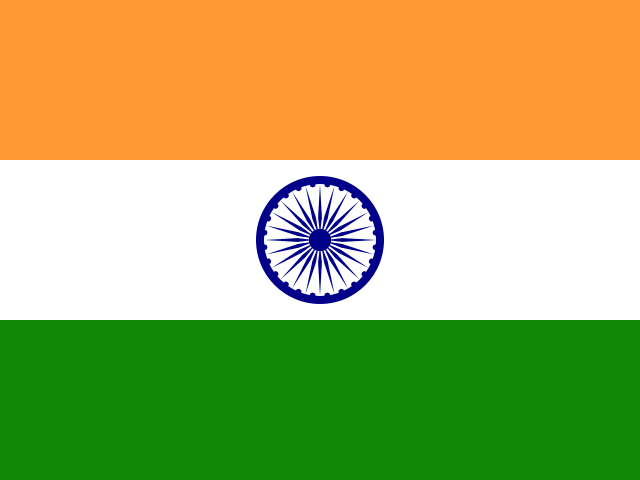
VS
Indian artists and critics
?
No actors in this side.
No actors in this side.
The Indian government is accused of silencing dissent through new rules that remove satirical content and online critiques.
Artists and critics argue this suppresses free speech, while authorities claim the measures are necessary for public order.
*AI-generated summary of publicly available data. This is not an official statement of any party.
*AI-generated summary of publicly available statements and reporting. This is not an official statement of this party.
Supporters of the Indian government frame satire restrictions as cultural self-respect, arguing that past civilizations regulated public speech to preserve social harmony and order over individual expression.
Supporters of the Indian government argue that satire has historically been used to inflame communal tensions in India, and that the new rules echo past precedents where the state curbed cultural expression to preserve public order.
Supporters of the Indian government counter that India's cultural traditions also prize restraint and social harmony, and that inherited civic space has always been bounded by community norms, not an unlimited license to offend.
Supporters of the Indian government argue the new rules are a lawful exercise of public-order powers, not censorship, and that restricting satirical content is legally justified to prevent unrest.
Supporters of the Indian government argue the new rules are a lawful exercise of state power to preserve public order, maintaining that speech restrictions are legally justified when authorities deem content threatening to stability.
Supporters of the Indian government counter that the rules derive from statutory authority and existing public-order provisions, so they rest on a valid legal basis rather than an arbitrary standard.
Supporters of Indian government argue that removing satirical and critical content is a calculated necessity: order preserved outweighs dissent, and control of the narrative is itself a form of governance.
Supporters of Indian government argue order outranks satire: removing critical content is a calculated move to deny opponents a rallying symbol, since stability, not applause, preserves power.
Supporters of Indian government counter that timing proves nothing: the state moves when order is threatened, not when satire stings, and every government secures its authority first—artists mistake their own visibility for political cause.
Supporters of the Indian government argue that curbing satirical and critical content is a moral duty to preserve public order and national unity, insisting that free speech carries responsibilities, not a license to incite unrest.
Supporters of Indian government argue that curbing satirical and critical content is a moral duty to preserve public order and national harmony, maintaining that free speech carries limits when it threatens social stability.
Supporters of Indian government counter that free expression carries moral limits, and the state bears a duty to shield citizens from speech that incites harm, not to silence legitimate dissent.
Supporters of the Indian government invoke religious tradition, arguing that sacred beliefs and public order deserve legal protection, and that preserving communal harmony is a duty older than any individual satire.
Supporters of Indian government argue that faith traditions teach that speech carries moral duties, so curbing satirical attacks preserves social harmony and respect for authority.
Supporters of the Indian government counter that religious traditions teach that speech owes a duty to social harmony, and that protecting the sacred from mockery is itself a God-given obligation.
*AI-generated summary of publicly available statements and reporting. This is not an official statement of this party.
Supporters of Indian artists and critics argue that satire is a cultural tradition of dissent, and that removing it erodes the inherited civic space where criticism has long checked power.
Supporters of Indian artists and critics argue satire is a cultural inheritance, not a public-order threat, and that silencing it severs India from its own traditions of dissent.
Supporters of Indian artists and critics counter that India's classical traditions of open debate—from Sanskrit drama to folk performance—were never uniformly censored, so appeals to inherited wisdom misread that heritage.
Supporters of Indian artists and critics argue the new rules lack a clear legal standard, letting authorities remove satire without proving a genuine public-order threat, which they say exceeds constitutional free-speech limits.
Supporters of Indian artists and critics argue the new rules are legally overbroad, lacking narrow tailoring or due process, and thus fail constitutional scrutiny on free expression.
Supporters of Indian artists and critics counter that vague public-order powers lack the narrow tailoring India's Supreme Court requires under Article 19(2), so the rules fail legal scrutiny.
Supporters of Indian artists and critics argue the timing of the new rules reveals intent: removing satire as anti-Modi protests grow shows the measures target power's critics, not public order.
Supporters of Indian artists and critics argue that censorship rules are less about public order than about protecting power, since satire that cannot be answered is simply deleted.
Supporters of Indian artists and critics counter that narrative control is not free: suppressing satire cedes the story to rumor and exile, and a government that must silence critics reveals weakness, not command.
Supporters of Indian artists and critics argue the new rules are morally wrong because removing satire and online critiques silences dissent rather than protecting public order, and they maintain that a democracy must let citizens question power freely.
Supporters of Indian artists and critics argue that removing satire and online critique is morally wrong because it punishes peaceful expression, not disorder.
Supporters of Indian artists and critics counter that a moral duty to preserve order cannot justify silencing dissent, since suppressing satire erodes the very democratic accountability that gives the state its moral legitimacy.
Supporters of Indian artists and critics argue that suppressing satirical and critical voices violates the God-given dignity of conscience and speech, which they hold is owed to truth and the common good.
Supporters of Indian artists and critics argue that silencing satire violates the God-given dignity of conscience and speech, holding that truth-telling, even through humor, is a moral duty that no earthly authority may rightly suppress.
Supporters of Indian artists and critics counter that satire has deep roots in Hindu bhakti and folk traditions, where saints and poets used humor to challenge orthodoxy, so faith and free expression need not be opposed.
AI-generated summary of publicly available statements and reporting. This is not an official statement of this party.
Supporters of the Indian government frame satire restrictions as cultural self-respect, arguing that past civilizations regulated public speech to preserve social harmony and order over individual expression.
Supporters of the Indian government argue that satire has historically been used to inflame communal tensions in India, and that the new rules echo past precedents where the state curbed cultural expression to preserve public order.
Supporters of the Indian government counter that India's cultural traditions also prize restraint and social harmony, and that inherited civic space has always been bounded by community norms, not an unlimited license to offend.
Supporters of the Indian government argue the new rules are a lawful exercise of public-order powers, not censorship, and that restricting satirical content is legally justified to prevent unrest.
Supporters of the Indian government argue the new rules are a lawful exercise of state power to preserve public order, maintaining that speech restrictions are legally justified when authorities deem content threatening to stability.
Supporters of the Indian government counter that the rules derive from statutory authority and existing public-order provisions, so they rest on a valid legal basis rather than an arbitrary standard.
Supporters of Indian government argue that removing satirical and critical content is a calculated necessity: order preserved outweighs dissent, and control of the narrative is itself a form of governance.
Supporters of Indian government argue order outranks satire: removing critical content is a calculated move to deny opponents a rallying symbol, since stability, not applause, preserves power.
Supporters of Indian government counter that timing proves nothing: the state moves when order is threatened, not when satire stings, and every government secures its authority first—artists mistake their own visibility for political cause.
Supporters of the Indian government argue that curbing satirical and critical content is a moral duty to preserve public order and national unity, insisting that free speech carries responsibilities, not a license to incite unrest.
Supporters of Indian government argue that curbing satirical and critical content is a moral duty to preserve public order and national harmony, maintaining that free speech carries limits when it threatens social stability.
Supporters of Indian government counter that free expression carries moral limits, and the state bears a duty to shield citizens from speech that incites harm, not to silence legitimate dissent.
Supporters of the Indian government invoke religious tradition, arguing that sacred beliefs and public order deserve legal protection, and that preserving communal harmony is a duty older than any individual satire.
Supporters of Indian government argue that faith traditions teach that speech carries moral duties, so curbing satirical attacks preserves social harmony and respect for authority.
Supporters of the Indian government counter that religious traditions teach that speech owes a duty to social harmony, and that protecting the sacred from mockery is itself a God-given obligation.
Supporters of Indian artists and critics argue that satire is a cultural tradition of dissent, and that removing it erodes the inherited civic space where criticism has long checked power.
Supporters of Indian artists and critics argue satire is a cultural inheritance, not a public-order threat, and that silencing it severs India from its own traditions of dissent.
Supporters of Indian artists and critics counter that India's classical traditions of open debate—from Sanskrit drama to folk performance—were never uniformly censored, so appeals to inherited wisdom misread that heritage.
Supporters of Indian artists and critics argue the new rules lack a clear legal standard, letting authorities remove satire without proving a genuine public-order threat, which they say exceeds constitutional free-speech limits.
Supporters of Indian artists and critics argue the new rules are legally overbroad, lacking narrow tailoring or due process, and thus fail constitutional scrutiny on free expression.
Supporters of Indian artists and critics counter that vague public-order powers lack the narrow tailoring India's Supreme Court requires under Article 19(2), so the rules fail legal scrutiny.
Supporters of Indian artists and critics argue the timing of the new rules reveals intent: removing satire as anti-Modi protests grow shows the measures target power's critics, not public order.
Supporters of Indian artists and critics argue that censorship rules are less about public order than about protecting power, since satire that cannot be answered is simply deleted.
Supporters of Indian artists and critics counter that narrative control is not free: suppressing satire cedes the story to rumor and exile, and a government that must silence critics reveals weakness, not command.
Supporters of Indian artists and critics argue the new rules are morally wrong because removing satire and online critiques silences dissent rather than protecting public order, and they maintain that a democracy must let citizens question power freely.
Supporters of Indian artists and critics argue that removing satire and online critique is morally wrong because it punishes peaceful expression, not disorder.
Supporters of Indian artists and critics counter that a moral duty to preserve order cannot justify silencing dissent, since suppressing satire erodes the very democratic accountability that gives the state its moral legitimacy.
Supporters of Indian artists and critics argue that suppressing satirical and critical voices violates the God-given dignity of conscience and speech, which they hold is owed to truth and the common good.
Supporters of Indian artists and critics argue that silencing satire violates the God-given dignity of conscience and speech, holding that truth-telling, even through humor, is a moral duty that no earthly authority may rightly suppress.
Supporters of Indian artists and critics counter that satire has deep roots in Hindu bhakti and folk traditions, where saints and poets used humor to challenge orthodoxy, so faith and free expression need not be opposed.
New Delhi accused of silencing dissent as satirical content and online critiques are removed under new rules.