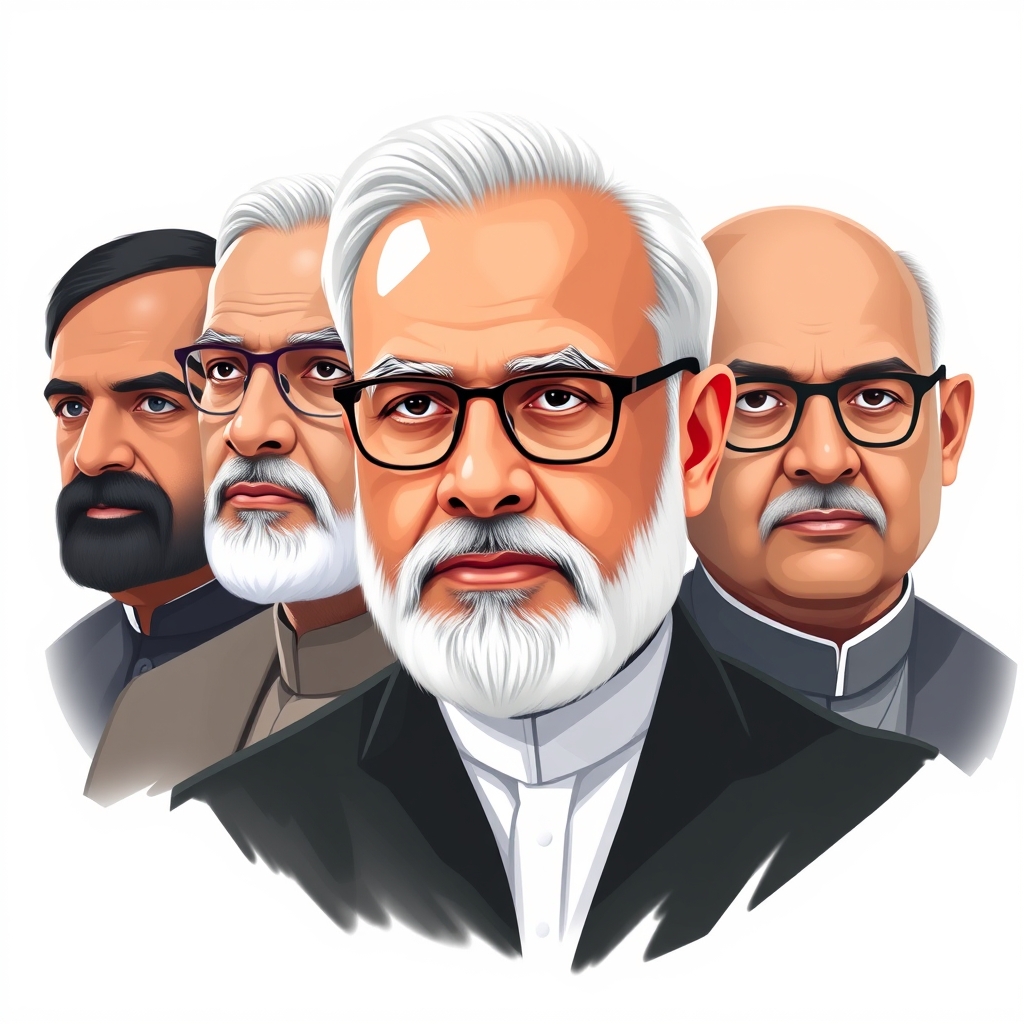
Indian opposition leaders
VS
Indian police
Indian opposition leaders were detained during a protest outside the Election Commission in New Delhi.
The protest concerned voter lists, with opposition parties disputing the integrity of the electoral rolls.
*AI-generated summary of publicly available data. This is not an official statement of any party.
*AI-generated summary of publicly available statements and reporting. This is not an official statement of this party.
Supporters of Indian opposition leaders argue the detention flouts India's inherited democratic customs, where peaceful protest near the Election Commission has long been a legitimate ritual of electoral accountability.
Supporters of Indian opposition leaders argue the detention outside the Election Commission reflects a cultural disregard for dissent, maintaining that protest is an inherited civic tradition and that disputing voter rolls is a legitimate democratic duty.
Supporters of Indian opposition leaders counter that India's cultural tradition of dissent and nonviolent protest long predates the current government, so invoking cultural stability to justify detention inverts that inherited legacy.
Supporters of Indian opposition leaders argue the detention was legally baseless, citing a constitutional right to peaceful assembly and no evidence of violence, making the arrests arbitrary.
Supporters of Indian opposition leaders argue that detaining protesters outside the Election Commission is legally unjustified, since peaceful assembly and challenges to voter-roll integrity are protected rights.
Supporters of Indian opposition leaders counter that preventive detention requires documented, imminent threats, and that courts have repeatedly quashed similar detentions when the state failed to show lawful grounds beyond blocking access.
Supporters of Indian opposition leaders argue the arrests were theater: detaining rivals over voter rolls signals weakness, not strength, since power that must silence protest fears the count.
Supporters of Indian opposition leaders argue the detentions were a calculated show of force, since controlling the voter rolls—and who may contest them—matters more than the protest itself.
Supporters of Indian opposition leaders counter that "lawful crowd control" is the cover story: with elections near, the real incentive is clearing rivals from the EC's doorstep before cameras arrive.
Supporters of Indian opposition leaders argue that detaining protesters outside the Election Commission is a moral wrong, since disputing voter-roll integrity is a legitimate democratic act that peaceful assembly should protect.
Supporters of Indian opposition leaders argue that detaining peaceful protesters outside the Election Commission is a moral failure, since disputing voter-roll integrity is a legitimate democratic act, not a crime.
Supporters of Indian opposition leaders counter that equal enforcement rings hollow when detention rules are invoked selectively against protesters while powerful allies go untouched, making the law an instrument of control rather than a moral standard.
Supporters of Indian opposition leaders argue that protecting the integrity of voter rolls is a sacred moral duty, and that their protest reflects longstanding religious teachings on justice and truth.
Supporters of Indian opposition leaders argue that detention outside the Election Commission violates the sacred democratic duty to safeguard free and fair elections, a trust they see as a moral obligation before the nation.
Supporters of Indian opposition leaders counter that scripture also commands obedience to God over unjust rulers, so religious duty cannot be claimed by one side alone.
*AI-generated summary of publicly available statements and reporting. This is not an official statement of this party.
Supporters of Indian police argue the detention upholds the nation's electoral integrity and rule of law, maintaining that protecting state institutions from disruptive protest preserves India's democratic and cultural stability.
Supporters of Indian police argue that enforcing order at the Election Commission protects the nation's electoral integrity and sovereignty, maintaining that rule of law must apply equally regardless of political stature.
Supporters of Indian police counter that India's democratic customs also include respect for law and order, and that cultural traditions of protest do not override the legal authority of the state to regulate access to the Election Commission.
Supporters of Indian police argue the detentions were lawful, citing legal authority to detain protesters blocking access to a government building; they maintain enforcement, not politics, drove the action.
Supporters of Indian police argue the detentions were lawful, citing legal authority to detain protesters who obstruct public order or exceed permitted assembly limits near the Election Commission.
Supporters of Indian police counter that detention was lawful under statutory preventive provisions, not arbitrary, since procedural rules permit custody absent immediate violence evidence.
Supporters of Indian police argue detention was lawful crowd control, not politics: they maintain public order and the Election Commission's authority must be upheld, and unauthorized protest near a constitutional body invites exactly this response.
Supporters of Indian police argue the timing of detentions, not their legality, is the real contest—order restored before cameras, opposition cast as disruptors, and the voter-roll dispute buried under a procedural arrest narrative.
Supporters of Indian police counter that timing arrests before elections is standard leverage, not fear—detention shapes the field while legal, and rivals silenced now cannot mobilize later.
Supporters of Indian police argue that enforcing detention rules equally, regardless of status, upholds the moral principle that no one is above the law and that order at public institutions must be preserved impartially.
Supporters of Indian police argue that enforcing detention during an unpermitted protest is a neutral, lawful duty protecting public order, not a political act. They maintain that no group's status places it above rules applied equally to all.
Supporters of the Indian police counter that moral legitimacy rests on lawful conduct, not on claimed intent; they argue that preventing unlawful assembly near the Election Commission upholds the rule of law and equal treatment for all citizens.
Supporters of Indian police argue that upholding election law is a moral duty before God, citing scripture that believers must obey governing authorities and that order reflects divine justice.
Supporters of Indian police invoke the duty to keep public order, citing scripture that lawful authority is ordained by God to restrain disorder, and argue that detaining protesters outside the Election Commission upheld justice and peace.
Supporters of Indian police counter that scripture also commands obedience to lawful authority, so maintaining order during electoral disputes is itself a moral duty, not merely a procedural one.
AI-generated summary of publicly available statements and reporting. This is not an official statement of this party.
Supporters of Indian opposition leaders argue the detention flouts India's inherited democratic customs, where peaceful protest near the Election Commission has long been a legitimate ritual of electoral accountability.
Supporters of Indian opposition leaders argue the detention outside the Election Commission reflects a cultural disregard for dissent, maintaining that protest is an inherited civic tradition and that disputing voter rolls is a legitimate democratic duty.
Supporters of Indian opposition leaders counter that India's cultural tradition of dissent and nonviolent protest long predates the current government, so invoking cultural stability to justify detention inverts that inherited legacy.
Supporters of Indian opposition leaders argue the detention was legally baseless, citing a constitutional right to peaceful assembly and no evidence of violence, making the arrests arbitrary.
Supporters of Indian opposition leaders argue that detaining protesters outside the Election Commission is legally unjustified, since peaceful assembly and challenges to voter-roll integrity are protected rights.
Supporters of Indian opposition leaders counter that preventive detention requires documented, imminent threats, and that courts have repeatedly quashed similar detentions when the state failed to show lawful grounds beyond blocking access.
Supporters of Indian opposition leaders argue the arrests were theater: detaining rivals over voter rolls signals weakness, not strength, since power that must silence protest fears the count.
Supporters of Indian opposition leaders argue the detentions were a calculated show of force, since controlling the voter rolls—and who may contest them—matters more than the protest itself.
Supporters of Indian opposition leaders counter that "lawful crowd control" is the cover story: with elections near, the real incentive is clearing rivals from the EC's doorstep before cameras arrive.
Supporters of Indian opposition leaders argue that detaining protesters outside the Election Commission is a moral wrong, since disputing voter-roll integrity is a legitimate democratic act that peaceful assembly should protect.
Supporters of Indian opposition leaders argue that detaining peaceful protesters outside the Election Commission is a moral failure, since disputing voter-roll integrity is a legitimate democratic act, not a crime.
Supporters of Indian opposition leaders counter that equal enforcement rings hollow when detention rules are invoked selectively against protesters while powerful allies go untouched, making the law an instrument of control rather than a moral standard.
Supporters of Indian opposition leaders argue that protecting the integrity of voter rolls is a sacred moral duty, and that their protest reflects longstanding religious teachings on justice and truth.
Supporters of Indian opposition leaders argue that detention outside the Election Commission violates the sacred democratic duty to safeguard free and fair elections, a trust they see as a moral obligation before the nation.
Supporters of Indian opposition leaders counter that scripture also commands obedience to God over unjust rulers, so religious duty cannot be claimed by one side alone.
Supporters of Indian police argue the detention upholds the nation's electoral integrity and rule of law, maintaining that protecting state institutions from disruptive protest preserves India's democratic and cultural stability.
Supporters of Indian police argue that enforcing order at the Election Commission protects the nation's electoral integrity and sovereignty, maintaining that rule of law must apply equally regardless of political stature.
Supporters of Indian police counter that India's democratic customs also include respect for law and order, and that cultural traditions of protest do not override the legal authority of the state to regulate access to the Election Commission.
Supporters of Indian police argue the detentions were lawful, citing legal authority to detain protesters blocking access to a government building; they maintain enforcement, not politics, drove the action.
Supporters of Indian police argue the detentions were lawful, citing legal authority to detain protesters who obstruct public order or exceed permitted assembly limits near the Election Commission.
Supporters of Indian police counter that detention was lawful under statutory preventive provisions, not arbitrary, since procedural rules permit custody absent immediate violence evidence.
Supporters of Indian police argue detention was lawful crowd control, not politics: they maintain public order and the Election Commission's authority must be upheld, and unauthorized protest near a constitutional body invites exactly this response.
Supporters of Indian police argue the timing of detentions, not their legality, is the real contest—order restored before cameras, opposition cast as disruptors, and the voter-roll dispute buried under a procedural arrest narrative.
Supporters of Indian police counter that timing arrests before elections is standard leverage, not fear—detention shapes the field while legal, and rivals silenced now cannot mobilize later.
Supporters of Indian police argue that enforcing detention rules equally, regardless of status, upholds the moral principle that no one is above the law and that order at public institutions must be preserved impartially.
Supporters of Indian police argue that enforcing detention during an unpermitted protest is a neutral, lawful duty protecting public order, not a political act. They maintain that no group's status places it above rules applied equally to all.
Supporters of the Indian police counter that moral legitimacy rests on lawful conduct, not on claimed intent; they argue that preventing unlawful assembly near the Election Commission upholds the rule of law and equal treatment for all citizens.
Supporters of Indian police argue that upholding election law is a moral duty before God, citing scripture that believers must obey governing authorities and that order reflects divine justice.
Supporters of Indian police invoke the duty to keep public order, citing scripture that lawful authority is ordained by God to restrain disorder, and argue that detaining protesters outside the Election Commission upheld justice and peace.
Supporters of Indian police counter that scripture also commands obedience to lawful authority, so maintaining order during electoral disputes is itself a moral duty, not merely a procedural one.
Police detained Indian opposition leaders during a protest outside the Election Commission in New Delhi.