India's Gen Z protesters
VS
Indian authorities
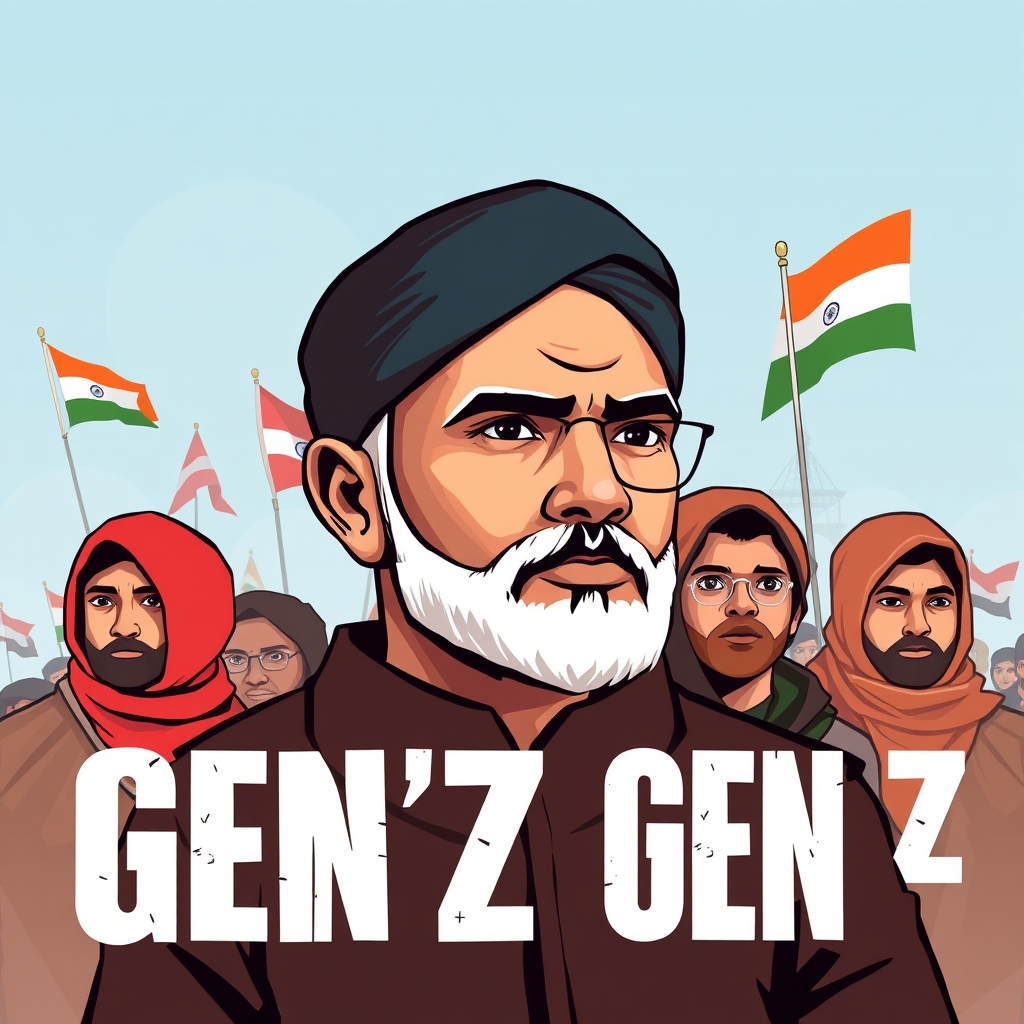
A wave of youth dissent and online satire emerged in India during the summer, with Gen Z protesters facing uncertainty as winter approaches.
The article describes the movement's origins in frustration and irreverent online expression.
*AI-generated summary of publicly available data. This is not an official statement of any party.
*AI-generated summary of publicly available statements and reporting. This is not an official statement of this party.
Supporters of India's Gen Z protesters argue that irreverent online satire is a legitimate cultural voice for a generation expressing frustration, and that this youth-driven dissent reflects a distinctly Indian generational identity.
Supporters of India's Gen Z protesters argue that irreverent online satire is a legitimate form of cultural expression, giving young Indians a shared voice and identity when frustration with authorities leaves little room for conventional dissent.
Supporters of India's Gen Z protesters counter that cultural continuity is itself contested and evolving, and that satirical online expression is a legitimate civic voice, not an outside threat to inherited order.
Supporters of India's Gen Z protesters argue that peaceful online satire is expression protected under law, and that authorities should answer dissent with legal process rather than pressure.
Supporters of India's Gen Z protesters argue that satire and online dissent are protected expression, and they maintain that authorities must meet such speech with legal justification rather than suppression.
Supporters of India's Gen Z protesters counter that citing public order and existing laws sidesteps the constitutional scrutiny such restrictions must face, arguing that enforcement measures burdening assembly and speech require courts to test them against proportionality, not me.
Supporters of India's Gen Z protesters argue that satire is leverage: the movement's real power is exposing authority's thin skin, forcing the government to react and reveal its hand.
Supporters of India's Gen Z protesters argue that irreverent online satire is leverage: with no institutional power, mockery is how the young impose costs on authorities and force attention before winter erodes momentum.
Supporters of India's Gen Z protesters counter that waiting rewards the state only if the movement needs permission to persist; decentralized satire regenerates without leaders to arrest, so the government's inaction cedes the narrative rather than defusing it.
Supporters of India's Gen Z protesters argue that a generation inheriting polluted air and depleted resources has a moral duty to demand accountability from those in power.
Supporters of India's Gen Z protesters argue that a generation inheriting polluted air and a warming planet has a moral duty to speak up, and that satirical dissent is legitimate stewardship.
Supporters of India's Gen Z protesters counter that invoking "vulnerable" groups to justify censorship is a moral inversion—satire exposes those harming the vulnerable, and silencing youth voices protects power, not people.
Supporters of India's Gen Z protesters argue that the movement's demand for accountability echoes the scriptural call to pursue justice and speak truth to power, holding that moral duty to the vulnerable outweighs deference to authority.
Supporters of India's Gen Z protesters argue that the movement's satire echoes a moral, faith-rooted demand for justice, maintaining that irreverent expression can voice a prophetic call for accountability from those in power.
Supporters of India's Gen Z protesters counter that scripture itself models irreverent challenge to worldly authority—recalling prophetic voices and bhakti saints who mocked hypocrisy—so satire can serve reverence rather than erode it.
*AI-generated summary of publicly available statements and reporting. This is not an official statement of this party.
Supporters of Indian authorities argue that cultural continuity and inherited social order deserve protection against a movement they see as rooted in irreverent online satire rather than established civic tradition.
Supporters of Indian authorities argue that irreverent online satire erodes the civic respect and shared cultural norms that hold society together, and they maintain that inherited traditions and social order deserve deference over youthful mockery.
Supporters of Indian authorities counter that satire detached from inherited cultural norms and civic duty does not represent a distinctly Indian identity, arguing that genuine cultural continuity rests on respect for institutions, not on irreverent online ridicule.
Supporters of Indian authorities argue that maintaining public order and enforcing existing laws is a legitimate legal duty, and they maintain that lawful dissent is protected while authorities act within constitutional bounds.
Supporters of Indian authorities argue that lawful expression is protected, but that maintaining public order under existing statutes is the government's legitimate legal duty when online dissent escalates.
Supporters of Indian authorities counter that online content is still subject to statutory limits, and that lawful process—not blanket immunity—governs expression, so satire falling outside legal bounds can be addressed through the courts.
Supporters of Indian authorities argue that satire without organization or leverage is noise, and that a movement which peaked online in summer will fade by winter—so the state's safest course is to wait it out rather than overreact.
Supporters of Indian authorities argue that satire without organization or leverage is noise, and that the movement's irreverence signals weakness, not threat—so they see little incentive to concede before winter tests the protesters' resolve.
Supporters of Indian authorities counter that exposure cuts both ways: a movement whose only leverage is provocation hands the state the pretext to act, and reaction reveals the protesters' hand just as much as the government's.
Supporters of Indian authorities argue that maintaining public order is a moral duty, contending that unregulated online satire can inflame division and that lawful limits protect society's most vulnerable.
Supporters of Indian authorities argue that lawful limits on speech protect public order and democratic stability, maintaining that accountability under the law applies equally to all.
Supporters of Indian authorities counter that accountability runs both ways: a generation demanding stewardship of shared resources also owes deference to lawful process, arguing moral duty is honored through civic institutions, not street confrontation.
Supporters of Indian authorities argue that religious tradition and inherited moral order have long sustained social stability, and they view irreverent online satire as a force that erodes the reverence binding communities together.
Supporters of Indian authorities argue that religious tradition and inherited moral order are the bedrock of national stability, and they maintain that irreverent online satire targeting sacred institutions risks eroding the cultural continuity that binds communities together.
Supporters of Indian authorities counter that scripture also commands respect for lawful authority, citing verses urging obedience to rulers as divinely ordained, and argue that order and inherited duty, not protest, sustain dharma.
AI-generated summary of publicly available statements and reporting. This is not an official statement of this party.
Supporters of India's Gen Z protesters argue that irreverent online satire is a legitimate cultural voice for a generation expressing frustration, and that this youth-driven dissent reflects a distinctly Indian generational identity.
Supporters of India's Gen Z protesters argue that irreverent online satire is a legitimate form of cultural expression, giving young Indians a shared voice and identity when frustration with authorities leaves little room for conventional dissent.
Supporters of India's Gen Z protesters counter that cultural continuity is itself contested and evolving, and that satirical online expression is a legitimate civic voice, not an outside threat to inherited order.
Supporters of India's Gen Z protesters argue that peaceful online satire is expression protected under law, and that authorities should answer dissent with legal process rather than pressure.
Supporters of India's Gen Z protesters argue that satire and online dissent are protected expression, and they maintain that authorities must meet such speech with legal justification rather than suppression.
Supporters of India's Gen Z protesters counter that citing public order and existing laws sidesteps the constitutional scrutiny such restrictions must face, arguing that enforcement measures burdening assembly and speech require courts to test them against proportionality, not me.
Supporters of India's Gen Z protesters argue that satire is leverage: the movement's real power is exposing authority's thin skin, forcing the government to react and reveal its hand.
Supporters of India's Gen Z protesters argue that irreverent online satire is leverage: with no institutional power, mockery is how the young impose costs on authorities and force attention before winter erodes momentum.
Supporters of India's Gen Z protesters counter that waiting rewards the state only if the movement needs permission to persist; decentralized satire regenerates without leaders to arrest, so the government's inaction cedes the narrative rather than defusing it.
Supporters of India's Gen Z protesters argue that a generation inheriting polluted air and depleted resources has a moral duty to demand accountability from those in power.
Supporters of India's Gen Z protesters argue that a generation inheriting polluted air and a warming planet has a moral duty to speak up, and that satirical dissent is legitimate stewardship.
Supporters of India's Gen Z protesters counter that invoking "vulnerable" groups to justify censorship is a moral inversion—satire exposes those harming the vulnerable, and silencing youth voices protects power, not people.
Supporters of India's Gen Z protesters argue that the movement's demand for accountability echoes the scriptural call to pursue justice and speak truth to power, holding that moral duty to the vulnerable outweighs deference to authority.
Supporters of India's Gen Z protesters argue that the movement's satire echoes a moral, faith-rooted demand for justice, maintaining that irreverent expression can voice a prophetic call for accountability from those in power.
Supporters of India's Gen Z protesters counter that scripture itself models irreverent challenge to worldly authority—recalling prophetic voices and bhakti saints who mocked hypocrisy—so satire can serve reverence rather than erode it.
Supporters of Indian authorities argue that cultural continuity and inherited social order deserve protection against a movement they see as rooted in irreverent online satire rather than established civic tradition.
Supporters of Indian authorities argue that irreverent online satire erodes the civic respect and shared cultural norms that hold society together, and they maintain that inherited traditions and social order deserve deference over youthful mockery.
Supporters of Indian authorities counter that satire detached from inherited cultural norms and civic duty does not represent a distinctly Indian identity, arguing that genuine cultural continuity rests on respect for institutions, not on irreverent online ridicule.
Supporters of Indian authorities argue that maintaining public order and enforcing existing laws is a legitimate legal duty, and they maintain that lawful dissent is protected while authorities act within constitutional bounds.
Supporters of Indian authorities argue that lawful expression is protected, but that maintaining public order under existing statutes is the government's legitimate legal duty when online dissent escalates.
Supporters of Indian authorities counter that online content is still subject to statutory limits, and that lawful process—not blanket immunity—governs expression, so satire falling outside legal bounds can be addressed through the courts.
Supporters of Indian authorities argue that satire without organization or leverage is noise, and that a movement which peaked online in summer will fade by winter—so the state's safest course is to wait it out rather than overreact.
Supporters of Indian authorities argue that satire without organization or leverage is noise, and that the movement's irreverence signals weakness, not threat—so they see little incentive to concede before winter tests the protesters' resolve.
Supporters of Indian authorities counter that exposure cuts both ways: a movement whose only leverage is provocation hands the state the pretext to act, and reaction reveals the protesters' hand just as much as the government's.
Supporters of Indian authorities argue that maintaining public order is a moral duty, contending that unregulated online satire can inflame division and that lawful limits protect society's most vulnerable.
Supporters of Indian authorities argue that lawful limits on speech protect public order and democratic stability, maintaining that accountability under the law applies equally to all.
Supporters of Indian authorities counter that accountability runs both ways: a generation demanding stewardship of shared resources also owes deference to lawful process, arguing moral duty is honored through civic institutions, not street confrontation.
Supporters of Indian authorities argue that religious tradition and inherited moral order have long sustained social stability, and they view irreverent online satire as a force that erodes the reverence binding communities together.
Supporters of Indian authorities argue that religious tradition and inherited moral order are the bedrock of national stability, and they maintain that irreverent online satire targeting sacred institutions risks eroding the cultural continuity that binds communities together.
Supporters of Indian authorities counter that scripture also commands respect for lawful authority, citing verses urging obedience to rulers as divinely ordained, and argue that order and inherited duty, not protest, sustain dharma.
A new wave of youth dissent swept India during the summer, fuelled by frustration and irreverent online satire.