Infantino
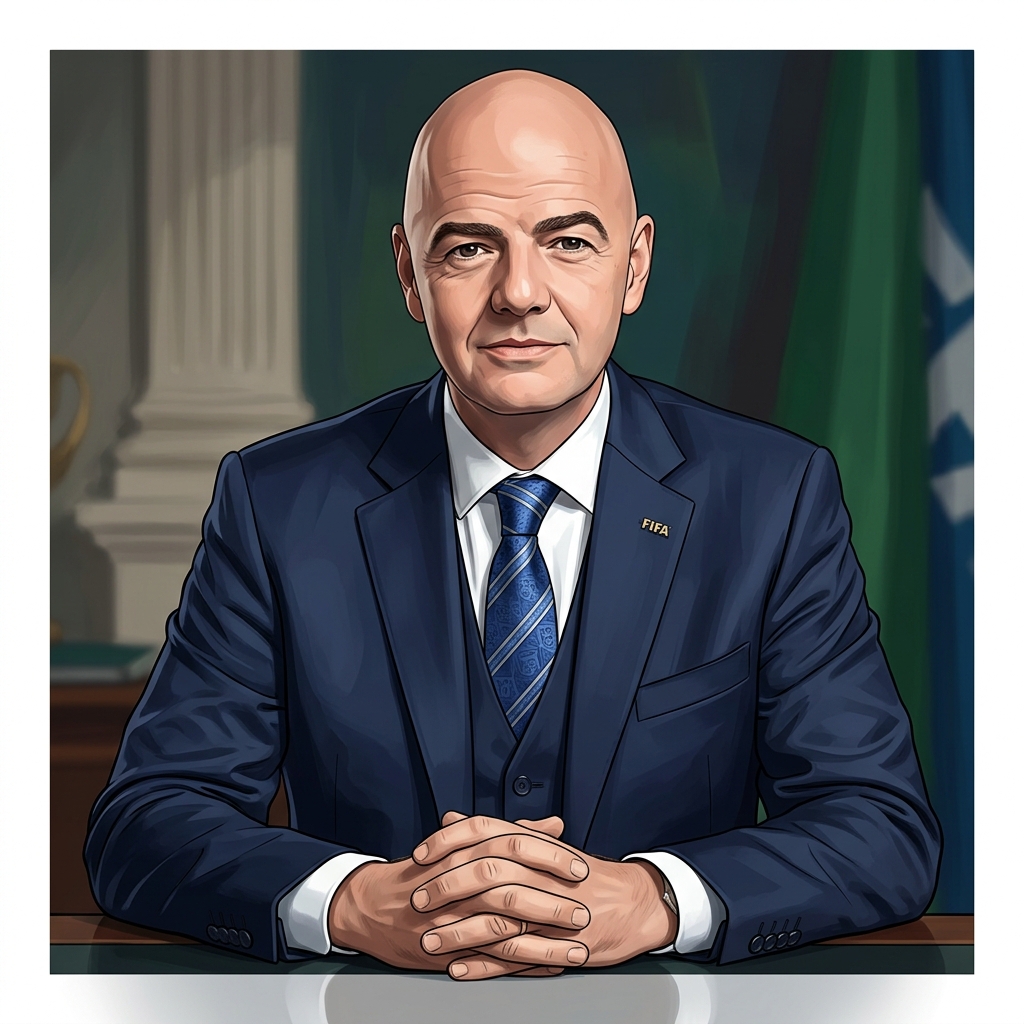
VS
Critics


The article discusses the mounting pressure on FIFA president Gianni Infantino following the failure of a controversial World Cup investment plan, raising questions about his ability to remain in office.
It highlights internal and external criticism of his leadership and the organization's governance.
In response, Infantino has publicly lashed out at critics, accusing them of spreading 'hate and false rumors' about the 2026 World Cup and its leadership.
His remarks, made in an Instagram post and other statements, have intensified the debate over FIFA's governance and the tournament's legacy.
*AI-generated summary of publicly available data. This is not an official statement of any party.
*AI-generated summary of publicly available statements and reporting. This is not an official statement of this party.
Supporters of Infantino argue that his critics, driven by institutional jealousy, ignore his defense of football’s unifying cultural ritual, pointing to his calls for prayer and match-watching as a plea for shared tradition over relentless political attack.
Supporters of Infantino argue that his critics, driven by institutional resentment, ignore the cultural unity the 2026 World Cup fostered across nations, viewing his defense of tradition and order as a stand against destabilizing attacks.
Supporters of Infantino counter that the remarks reflect a cultural call for unity, urging critics to engage with football as a shared tradition that bridges divides, not a dismissal of host communities.
Supporters of Infantino argue that critics have no legal standing to demand his resignation, as FIFA statutes grant the president authority until the next congress vote, and the failed investment plan remains a commercial matter outside governance violations.
Supporters of Infantino argue that FIFA’s statutes and Swiss law presume a president’s legitimacy until a formal vote, and critics’ calls for resignation bypass due process. They maintain that private investment plans fall within FIFA’s commercial autonomy, and that hostile.
Supporters of Infantino counter that FIFA’s statutes grant the president broad discretionary authority, and neutrality claims misapply governance rules meant for member associations, not internal leadership disputes. They argue the privatisation plan is a lawful exercise of.
Supporters of Infantino argue his critics weaponize failed investment plans to mask a power grab, while he alone sustains FIFA’s momentum. They point to his defiant counterattacks—calling rivals ‘consumed by hate’—as evidence that survival demands neutralizing threats, not.
Supporters of Infantino argue his critics exploit the failed investment plan to mask a power grab, weaponizing governance disputes to oust a president who delivered a profitable, peaceful 2026 World Cup. They maintain his blunt rebuttals, like urging opponents to 'pray or watch.
Supporters of Infantino counter that the outbursts are calculated leverage, not panic, as the Trump alliance and European patience remain assets to be played, not liabilities. For them, the rhetoric signals resolve to rivals, exposing critics’ wishful reading of a leader still.
Supporters of Infantino argue that his moral duty is to shield FIFA from a mob of unaccountable critics whose "hate" distorts the tournament's peace-building legacy, making his defiant defense a principled stand for institutional integrity over procedural capitulation.
Supporters of Infantino argue that the moral duty of FIFA’s president is to shield the game from unverified attacks, treating critics’ claims as harmful speculation rather than evidence-based governance.
Supporters of Infantino argue that his critics conflate procedural critique with personal moral failure, and that his “hate” framing reflects a genuine response to unfounded attacks on his integrity, not an inversion of accountability.
Supporters of Infantino argue his call for critics to 'meditate, pray or watch a football match' reflects a spiritual appeal to unity, framing the tournament as a moment of peace that transcends worldly discord.
Supporters of Infantino argue that his call for critics to 'meditate, pray or watch a football match' reflects a moral duty to preserve unity, viewing the World Cup as a sacred global communion that transcends political attacks.
Supporters of Infantino counter that the call to ‘meditate, pray or watch a match’ reflects a humble invitation to transcend partisan noise, not mockery—framing dissent within a tradition of spiritual reflection and communal unity, as scripture urges quiet trust over endless.
*AI-generated summary of publicly available statements and reporting. This is not an official statement of this party.
Supporters of Critics argue that Infantino's dismissive remarks, telling opponents to 'meditate, pray or watch a football match,' reveal a cultural arrogance that disrespects the tournament's diverse host communities and erodes FIFA's legitimacy.
Supporters of the critics argue that Infantino’s dismissive remarks, telling them to ‘meditate, pray or watch a football match,’ reveal a cultural arrogance that reduces legitimate governance concerns to mere noise, eroding FIFA’s institutional integrity and the tournament’s.
Critics counter that Infantino’s call for shared prayer and match-watching masks a deeper cultural erasure, as these rituals ignore the diverse national identities football once celebrated. They argue his framing reduces local traditions to a single, homogenized spectacle.
Supporters of Critics argue that Infantino’s rule violates FIFA’s own legal duty of neutrality, as his attacks on dissenters and the privatisation plan breach governance statutes requiring accountability. They maintain that non-cooperation is a lawful remedy against a president.
Supporters of Critics argue FIFA’s governance rules oblige Infantino to answer for the failed investment plan, and his dismissive responses evade legal accountability for fiduciary duties.
Critics counter that FIFA’s own statutes require compliance with Swiss law and good governance, and a failed commercial deal involving fiduciary duties is not exempt from oversight, as the Code of Ethics applies to presidential conduct.
Critics argue Infantino's outbursts betray a ruler sensing his grip slipping, as loyalty now hinges on the Trump lifeline and European federations' patience. They see his "hate" rhetoric as a weak man's deflection from a failed privatization gamble, not a leader's strength.
Critics argue Infantino mistakes survival for strength, but his Trump gambit and England FA revolt expose a leader trading institutional credibility for borrowed power, a deal that buys time, not loyalty.
Critics counter that Infantino’s “momentum” is merely self-preservation, and his attacks on rivals expose a leader who equates dissent with disloyalty—a classic move to consolidate control by framing every challenge as existential.
Supporters of the critics argue that Infantino's moral authority is shattered when he dismisses legitimate governance concerns as 'hate,' inverting accountability into victimhood.
Critics of Infantino argue that his dismissive attacks, urging prayer and meditation, betray a leadership morally unaccountable to the very institutions he serves, and they point to his privatization scheme and insults as evidence that his pursuit of personal power undermines.
Supporters of Infantino’s critics counter that shielding FIFA from scrutiny betrays the moral duty to protect the game’s integrity, not the institution’s image. They argue that dismissing valid concerns as "hate" evades accountability, undermining the very peace-building legacy.
Supporters of Critics argue that Infantino's dismissive call to 'meditate, pray or watch a match' mocks the moral stewardship expected of a governing body, treating dissent as heresy rather than accountability.
Supporters of Critics argue that Infantino’s defensive tirades, urging prayer and invoking peace, pervert spiritual language to shield unaccountable power, citing scripture on humility and servant leadership as evidence that his governance betrays the tournament’s stated moral.
Critics of the proposal counter that faith cannot be invoked to silence dissent, arguing that prayer and scripture demand justice, not passive acceptance of worldly authority.
AI-generated summary of publicly available statements and reporting. This is not an official statement of this party.
Supporters of Infantino argue that his critics, driven by institutional jealousy, ignore his defense of football’s unifying cultural ritual, pointing to his calls for prayer and match-watching as a plea for shared tradition over relentless political attack.
Supporters of Infantino argue that his critics, driven by institutional resentment, ignore the cultural unity the 2026 World Cup fostered across nations, viewing his defense of tradition and order as a stand against destabilizing attacks.
Supporters of Infantino counter that the remarks reflect a cultural call for unity, urging critics to engage with football as a shared tradition that bridges divides, not a dismissal of host communities.
Supporters of Infantino argue that critics have no legal standing to demand his resignation, as FIFA statutes grant the president authority until the next congress vote, and the failed investment plan remains a commercial matter outside governance violations.
Supporters of Infantino argue that FIFA’s statutes and Swiss law presume a president’s legitimacy until a formal vote, and critics’ calls for resignation bypass due process. They maintain that private investment plans fall within FIFA’s commercial autonomy, and that hostile.
Supporters of Infantino counter that FIFA’s statutes grant the president broad discretionary authority, and neutrality claims misapply governance rules meant for member associations, not internal leadership disputes. They argue the privatisation plan is a lawful exercise of.
Supporters of Infantino argue his critics weaponize failed investment plans to mask a power grab, while he alone sustains FIFA’s momentum. They point to his defiant counterattacks—calling rivals ‘consumed by hate’—as evidence that survival demands neutralizing threats, not.
Supporters of Infantino argue his critics exploit the failed investment plan to mask a power grab, weaponizing governance disputes to oust a president who delivered a profitable, peaceful 2026 World Cup. They maintain his blunt rebuttals, like urging opponents to 'pray or watch.
Supporters of Infantino counter that the outbursts are calculated leverage, not panic, as the Trump alliance and European patience remain assets to be played, not liabilities. For them, the rhetoric signals resolve to rivals, exposing critics’ wishful reading of a leader still.
Supporters of Infantino argue that his moral duty is to shield FIFA from a mob of unaccountable critics whose "hate" distorts the tournament's peace-building legacy, making his defiant defense a principled stand for institutional integrity over procedural capitulation.
Supporters of Infantino argue that the moral duty of FIFA’s president is to shield the game from unverified attacks, treating critics’ claims as harmful speculation rather than evidence-based governance.
Supporters of Infantino argue that his critics conflate procedural critique with personal moral failure, and that his “hate” framing reflects a genuine response to unfounded attacks on his integrity, not an inversion of accountability.
Supporters of Infantino argue his call for critics to 'meditate, pray or watch a football match' reflects a spiritual appeal to unity, framing the tournament as a moment of peace that transcends worldly discord.
Supporters of Infantino argue that his call for critics to 'meditate, pray or watch a football match' reflects a moral duty to preserve unity, viewing the World Cup as a sacred global communion that transcends political attacks.
Supporters of Infantino counter that the call to ‘meditate, pray or watch a match’ reflects a humble invitation to transcend partisan noise, not mockery—framing dissent within a tradition of spiritual reflection and communal unity, as scripture urges quiet trust over endless.
Supporters of Critics argue that Infantino's dismissive remarks, telling opponents to 'meditate, pray or watch a football match,' reveal a cultural arrogance that disrespects the tournament's diverse host communities and erodes FIFA's legitimacy.
Supporters of the critics argue that Infantino’s dismissive remarks, telling them to ‘meditate, pray or watch a football match,’ reveal a cultural arrogance that reduces legitimate governance concerns to mere noise, eroding FIFA’s institutional integrity and the tournament’s.
Critics counter that Infantino’s call for shared prayer and match-watching masks a deeper cultural erasure, as these rituals ignore the diverse national identities football once celebrated. They argue his framing reduces local traditions to a single, homogenized spectacle.
Supporters of Critics argue that Infantino’s rule violates FIFA’s own legal duty of neutrality, as his attacks on dissenters and the privatisation plan breach governance statutes requiring accountability. They maintain that non-cooperation is a lawful remedy against a president.
Supporters of Critics argue FIFA’s governance rules oblige Infantino to answer for the failed investment plan, and his dismissive responses evade legal accountability for fiduciary duties.
Critics counter that FIFA’s own statutes require compliance with Swiss law and good governance, and a failed commercial deal involving fiduciary duties is not exempt from oversight, as the Code of Ethics applies to presidential conduct.
Critics argue Infantino's outbursts betray a ruler sensing his grip slipping, as loyalty now hinges on the Trump lifeline and European federations' patience. They see his "hate" rhetoric as a weak man's deflection from a failed privatization gamble, not a leader's strength.
Critics argue Infantino mistakes survival for strength, but his Trump gambit and England FA revolt expose a leader trading institutional credibility for borrowed power, a deal that buys time, not loyalty.
Critics counter that Infantino’s “momentum” is merely self-preservation, and his attacks on rivals expose a leader who equates dissent with disloyalty—a classic move to consolidate control by framing every challenge as existential.
Supporters of the critics argue that Infantino's moral authority is shattered when he dismisses legitimate governance concerns as 'hate,' inverting accountability into victimhood.
Critics of Infantino argue that his dismissive attacks, urging prayer and meditation, betray a leadership morally unaccountable to the very institutions he serves, and they point to his privatization scheme and insults as evidence that his pursuit of personal power undermines.
Supporters of Infantino’s critics counter that shielding FIFA from scrutiny betrays the moral duty to protect the game’s integrity, not the institution’s image. They argue that dismissing valid concerns as "hate" evades accountability, undermining the very peace-building legacy.
Supporters of Critics argue that Infantino's dismissive call to 'meditate, pray or watch a match' mocks the moral stewardship expected of a governing body, treating dissent as heresy rather than accountability.
Supporters of Critics argue that Infantino’s defensive tirades, urging prayer and invoking peace, pervert spiritual language to shield unaccountable power, citing scripture on humility and servant leadership as evidence that his governance betrays the tournament’s stated moral.
Critics of the proposal counter that faith cannot be invoked to silence dissent, arguing that prayer and scripture demand justice, not passive acceptance of worldly authority.
In a scathing interview, French great Michel Platini accuses Infantino of always loving 'money and power'.
Election for the FIFA presidency, with Infantino seeking re-election against challengers.
Kevin Lamour publicly criticized Infantino's proposal, saying FIFA staff were 'deceived'.
Statement comes after Infantino denies UEFA paid off his alleged lover while he was the body's general secretary.
Pressure is mounting on the FIFA president Gianni Infantino after plans to sell a stake in the World Cup collapsed and fresh allegations emerged relating to his time at UEFA.
Fifa strongly criticises what it calls a "concerted and ongoing effort" to "undermine" the organisation and its president Gianni Infantino.
Norway’s football federation has called on Gianni Infantino to resign.
The head of the football governing body has faced multiple calls to quit after his aborted attempt to sell private stakes in the World Cup.
Gianni Infantino is staying on as FIFA president despite growing pressure to step down. So who is football's most powerful man, why did UEFA and others turn against him, and how did he reassert his authority?
FIFA President Gianni Infantino survived a crisis meeting over his leadership.
Fallout from failed FIFA World Cup selloff continues, as Jordan FA president joins list of Gianni Infantino detractors.
Five influential African football leaders back Gianni Infantino amid World Cup private investment row.
FIFA boss Gianni Infantino turned to Donald Trump to save his job amid revolt against World Cup privatisation plan.
Opponents of Fifa president Gianni Infantino are threatening "non co-operation" with the governing body unless he steps down, according to senior Uefa sources.
England FA is tipped to formally withdraw support for Gianni Infantino's re-election bid.
Pressure is building on Gianni Infantino. Can he survive as Fifa president after the implosion of the controversial World Cup investment plan?
In an open letter, Infantino hit back at World Cup critics, accusing them of spreading hate and false narratives about the tournament.
FIFA president Gianni Infantino posted on Instagram that critics of his leadership should 'meditate, pray or watch a football match,' responding to criticism of the 2026 World Cup.
Infantino issued a blistering attack on critics, saying they were 'consumed by hate' during the 39-day tournament, and insisted the event brought 'peace.'