International Criminal Court

VS
Taliban
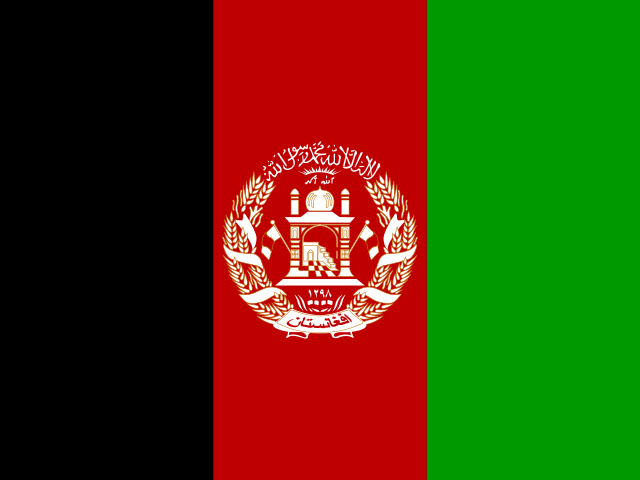
The International Criminal Court unsealed arrest warrants for four Taliban leaders accused of the crime against humanity of gender persecution against women, girls, and the LGBTQ+ community.
The Taliban rejected the warrants, denying the court's jurisdiction and the allegations.
*AI-generated summary of publicly available data. This is not an official statement of any party.
*AI-generated summary of publicly available statements and reporting. This is not an official statement of this party.
Supporters of the International Criminal Court frame the Taliban warrants as a cultural turning point, arguing that gender persecution is finally treated as a crime against humanity rather than a private local custom beyond outside scrutiny.
Supporters of the International Criminal Court argue that prosecuting gender persecution affirms a cultural shift: international law now treats systematic oppression of women as a crime against humanity, not a domestic matter shielded by sovereignty.
Supporters of the ICC counter that gender persecution was prosecuted at Nuremberg and in Rwanda and Yugoslavia, so the norm predates and transcends any single culture, and Afghan women's own testimony anchors the case.
Supporters of the ICC argue its warrants are legally grounded in the Rome Statute, which grants jurisdiction over gender persecution as a crime against humanity, binding parties regardless of Taliban rejection.
Supporters of the ICC argue that its arrest warrants for Taliban leaders are legally grounded in the Rome Statute, which grants jurisdiction over gender persecution as a crime against humanity.
Supporters of the ICC counter that Afghanistan deposited its instrument of accession to the Rome Statute in 2003, so the Court's jurisdiction is grounded in treaty law, not Taliban consent.
Supporters of the ICC argue the Taliban’s jurisdiction denial is a power play: warrants reframe Afghan gender persecution as a global legal offense, pressuring states to enforce accountability regardless of Taliban consent.
Supporters of the International Criminal Court argue the warrants are leverage, not justice: they aim to brand the Taliban as outlaws, denying the regime legitimacy and raising the cost of its rule.
Supporters of the ICC counter that jurisdiction flows from Afghanistan's 2003 Rome Statute ratification, not Taliban consent, so non-recognition changes nothing; the court wields leverage regardless of who governs Kabul.
Supporters of the International Criminal Court argue that gender persecution is a crime against humanity, and that no government can claim sovereignty as a shield against accountability for systematically oppressing women, girls, and LGBTQ+ people.
Supporters of the International Criminal Court argue that gender persecution is a crime against humanity, and that moral accountability for systemic oppression of women and girls must not stop at any border.
Supporters of the ICC counter that sovereignty cannot shield conduct from moral accountability, since some acts—like persecution of women and girls—offend universal norms that no local institution may legitimately excuse.
Supporters of the International Criminal Court argue that the Taliban's treatment of women and girls violates a moral law they hold above any earthly authority, and that the court acts on this shared conviction.
Supporters of the International Criminal Court argue that the Taliban's gender persecution violates universal religious principles of human dignity, contending that no interpretation of sharia justifies denying women and girls their God-given rights.
ICC supporters counter that the Taliban's own religious scholars note sharia's principles of justice and accountability, and that the ICC's complementarity principle respects local courts—only acting when those courts fail.
*AI-generated summary of publicly available statements and reporting. This is not an official statement of this party.
Supporters of the Taliban argue the ICC's gender persecution charges impose foreign cultural values on Afghanistan, insisting only Afghans may define their own governance under sovereignty and Islamic tradition.
Supporters of the Taliban argue that the ICC's cultural framework is foreign to Afghan society, and they maintain that only Afghan institutions, grounded in local religious and cultural traditions, hold legitimate authority over the nation's affairs.
Supporters of the Taliban counter that the ICC's framing imposes an external cultural standard, arguing that Afghanistan's governance and family norms are rooted in its own traditions and should not be recast as crimes by outside courts.
Supporters of the Taliban argue the ICC lacks jurisdiction since Afghanistan never ratified the Rome Statute, so the warrants are legally void.
Supporters of the Taliban argue the ICC lacks jurisdiction since Afghanistan is not a court member, so the warrants are legally void under treaty law.
Supporters of the Taliban counter that the Rome Statute binds only states that ratify it, and Afghanistan's ICC membership was voided after the 2021 transition, so the court lacks legal jurisdiction over the Taliban.
Supporters of the Taliban argue the ICC has no jurisdiction over Afghanistan, so the warrants are illegitimate pressure from powers that never recognized their government, not law.
Supporters of the Taliban argue the ICC has no jurisdiction over Afghanistan, so the warrants are illegitimate pressure from foreign powers, not law.
Supporters of the Taliban counter that the warrants are leverage, not law: states enforce accountability only when interests align, so Kabul trades compliance for recognition and aid while courts lack any means to compel it.
Supporters of the Taliban argue the ICC lacks jurisdiction over Afghanistan, so its warrants are illegitimate; they maintain only Afghan institutions may judge their governance, and reject outside courts imposing foreign moral standards on Afghan sovereignty.
Supporters of the Taliban argue the ICC has no jurisdiction over Afghanistan, so its warrants are illegitimate and disrespectful of Afghan sovereignty.
Supporters of the Taliban counter that moral authority rests on divine law and local tradition, not a distant court, so outside judgments on gender policy are seen as illegitimate impositions on Afghan self-rule.
Supporters of the Taliban argue the ICC lacks jurisdiction under Islamic law, maintaining that their governance of women and girls follows divine decree, not international courts.
Supporters of the Taliban argue the ICC lacks jurisdiction, maintaining that only their own interpretation of Islamic law governs the country and that outside courts cannot judge their religious order.
Supporters of Taliban counter that divine law, not the court's secular moral framework, governs their society, and that the ICC lacks authority to judge a system rooted in their own religious tradition.
AI-generated summary of publicly available statements and reporting. This is not an official statement of this party.
Supporters of the International Criminal Court frame the Taliban warrants as a cultural turning point, arguing that gender persecution is finally treated as a crime against humanity rather than a private local custom beyond outside scrutiny.
Supporters of the International Criminal Court argue that prosecuting gender persecution affirms a cultural shift: international law now treats systematic oppression of women as a crime against humanity, not a domestic matter shielded by sovereignty.
Supporters of the ICC counter that gender persecution was prosecuted at Nuremberg and in Rwanda and Yugoslavia, so the norm predates and transcends any single culture, and Afghan women's own testimony anchors the case.
Supporters of the ICC argue its warrants are legally grounded in the Rome Statute, which grants jurisdiction over gender persecution as a crime against humanity, binding parties regardless of Taliban rejection.
Supporters of the ICC argue that its arrest warrants for Taliban leaders are legally grounded in the Rome Statute, which grants jurisdiction over gender persecution as a crime against humanity.
Supporters of the ICC counter that Afghanistan deposited its instrument of accession to the Rome Statute in 2003, so the Court's jurisdiction is grounded in treaty law, not Taliban consent.
Supporters of the ICC argue the Taliban’s jurisdiction denial is a power play: warrants reframe Afghan gender persecution as a global legal offense, pressuring states to enforce accountability regardless of Taliban consent.
Supporters of the International Criminal Court argue the warrants are leverage, not justice: they aim to brand the Taliban as outlaws, denying the regime legitimacy and raising the cost of its rule.
Supporters of the ICC counter that jurisdiction flows from Afghanistan's 2003 Rome Statute ratification, not Taliban consent, so non-recognition changes nothing; the court wields leverage regardless of who governs Kabul.
Supporters of the International Criminal Court argue that gender persecution is a crime against humanity, and that no government can claim sovereignty as a shield against accountability for systematically oppressing women, girls, and LGBTQ+ people.
Supporters of the International Criminal Court argue that gender persecution is a crime against humanity, and that moral accountability for systemic oppression of women and girls must not stop at any border.
Supporters of the ICC counter that sovereignty cannot shield conduct from moral accountability, since some acts—like persecution of women and girls—offend universal norms that no local institution may legitimately excuse.
Supporters of the International Criminal Court argue that the Taliban's treatment of women and girls violates a moral law they hold above any earthly authority, and that the court acts on this shared conviction.
Supporters of the International Criminal Court argue that the Taliban's gender persecution violates universal religious principles of human dignity, contending that no interpretation of sharia justifies denying women and girls their God-given rights.
ICC supporters counter that the Taliban's own religious scholars note sharia's principles of justice and accountability, and that the ICC's complementarity principle respects local courts—only acting when those courts fail.
Supporters of the Taliban argue the ICC's gender persecution charges impose foreign cultural values on Afghanistan, insisting only Afghans may define their own governance under sovereignty and Islamic tradition.
Supporters of the Taliban argue that the ICC's cultural framework is foreign to Afghan society, and they maintain that only Afghan institutions, grounded in local religious and cultural traditions, hold legitimate authority over the nation's affairs.
Supporters of the Taliban counter that the ICC's framing imposes an external cultural standard, arguing that Afghanistan's governance and family norms are rooted in its own traditions and should not be recast as crimes by outside courts.
Supporters of the Taliban argue the ICC lacks jurisdiction since Afghanistan never ratified the Rome Statute, so the warrants are legally void.
Supporters of the Taliban argue the ICC lacks jurisdiction since Afghanistan is not a court member, so the warrants are legally void under treaty law.
Supporters of the Taliban counter that the Rome Statute binds only states that ratify it, and Afghanistan's ICC membership was voided after the 2021 transition, so the court lacks legal jurisdiction over the Taliban.
Supporters of the Taliban argue the ICC has no jurisdiction over Afghanistan, so the warrants are illegitimate pressure from powers that never recognized their government, not law.
Supporters of the Taliban argue the ICC has no jurisdiction over Afghanistan, so the warrants are illegitimate pressure from foreign powers, not law.
Supporters of the Taliban counter that the warrants are leverage, not law: states enforce accountability only when interests align, so Kabul trades compliance for recognition and aid while courts lack any means to compel it.
Supporters of the Taliban argue the ICC lacks jurisdiction over Afghanistan, so its warrants are illegitimate; they maintain only Afghan institutions may judge their governance, and reject outside courts imposing foreign moral standards on Afghan sovereignty.
Supporters of the Taliban argue the ICC has no jurisdiction over Afghanistan, so its warrants are illegitimate and disrespectful of Afghan sovereignty.
Supporters of the Taliban counter that moral authority rests on divine law and local tradition, not a distant court, so outside judgments on gender policy are seen as illegitimate impositions on Afghan self-rule.
Supporters of the Taliban argue the ICC lacks jurisdiction under Islamic law, maintaining that their governance of women and girls follows divine decree, not international courts.
Supporters of the Taliban argue the ICC lacks jurisdiction, maintaining that only their own interpretation of Islamic law governs the country and that outside courts cannot judge their religious order.
Supporters of Taliban counter that divine law, not the court's secular moral framework, governs their society, and that the ICC lacks authority to judge a system rooted in their own religious tradition.
The International Criminal Court unsealed arrest warrants for four Taliban leaders accused of gender persecution.