Investigators

VS
Suspect

Investigators are the authorities—such as detectives, criminal investigators, and federal prosecutors—who conduct criminal investigations, gather evidence, and determine whether to charge individuals.
Suspects are individuals whom investigators believe may have committed a crime, but who have not yet been formally charged, as charging requires sufficient evidence.
The relationship between investigators and suspects is central to criminal justice systems, where investigators work to establish facts and suspects may be questioned or subjected to scrutiny.
The conflict between investigators and suspects arises from their opposing interests: investigators aim to uncover evidence and potentially build a case, while suspects may seek to avoid incrimination or protect their rights.
This dynamic is shaped by legal distinctions, such as the difference between a 'subject' (whose conduct is within the scope of an investigation) and a 'target' (who is likely to be charged), and by procedural rules that govern how evidence is shared and how suspects are treated.
The stakes include the fairness of the investigation, the protection of suspects' rights, and the integrity of the criminal justice process.
*AI-generated summary of publicly available data. This is not an official statement of any party.
*AI-generated summary of publicly available statements and reporting. This is not an official statement of this party.
Supporters of Investigators argue the arrest reflects a historical pattern where accountability follows sabotage, citing past state-linked attacks that demanded international investigation and legal resolution.
Supporters of Investigators argue that the arrest marks a historic precedent, echoing past maritime sabotage cases where accountability was demanded to deter future attacks on critical infrastructure.
Supporters of Investigators counter that historical cycles show swift accountability, not blame, restores public trust, and note that cultural assumptions of innocence have often shielded systemic failures from scrutiny.
Supporters of Investigators argue that arrest and prosecution are the sole lawful path to accountability for the 2022 sabotage, grounding jurisdiction in universal legal norms against infrastructure attacks.
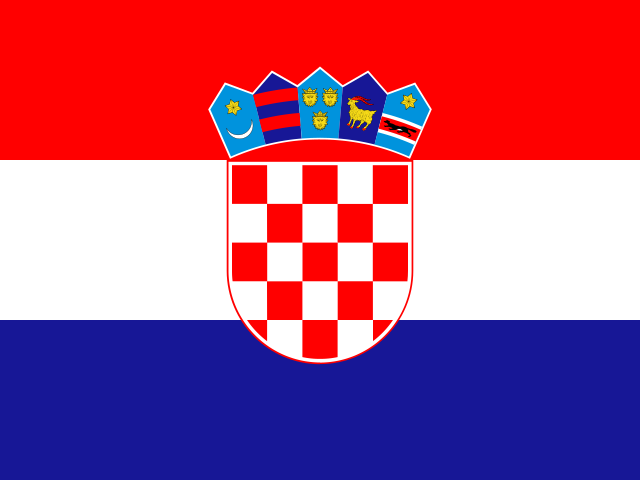
Supporters of Investigators argue that Croatia's arrest of the Ukrainian diver is a lawful step toward legal accountability, grounding the sabotage case in evidentiary procedure and due process, not speculation.
Supporters of Investigators counter that Croatian arrest warrants meet the legal threshold of probable cause, not proof, and that presumption of innocence applies at trial, not pre-charge investigation.
Supporters of Investigators argue the arrest is leverage, not justice: a quiet signal to Kyiv that Western patience has limits, and a bargaining chip to force accountability without igniting a wider NATO rupture.
Investigators argue the arrest is leverage, not justice: holding one diver lets authorities pressure networks for bigger targets, while dangling accountability as a bargaining chip to expose state backers.
Supporters of Investigators counter that the arrest is a tactical lever, not a scapegoat, exposing the suspect’s direct operational role while powerful states remain untouchable—pragmatic targeting, not deflection.
Supporters of Investigators argue that pursuing accountability for the Nord Stream sabotage is a moral duty to protect shared environmental and energy infrastructure, treating the suspect's arrest as a necessary step toward justice and stewardship of the Baltic Sea.
Supporters of Investigators argue that holding the suspect accountable is a moral duty to protect shared environmental infrastructure, as the explosions violated planetary stewardship by risking ecological harm in the Baltic Sea.
Supporters of Investigators counter that moral accountability extends to environmental stewardship, arguing that the 2022 explosions’ ecological damage demands urgent protective action, not passive legal delay.
Supporters of the Investigators argue that uncovering the saboteurs honors a divine order where truth and justice prevail over chaos, viewing the arrest as a righteous step toward restoring moral accountability.
Supporters of the investigators argue that the arrest upholds a sacred duty to uncover truth and deliver justice, viewing accountability as a moral order that transcends politics.
Supporters of the Investigators counter that scripture also mandates human diligence in uncovering truth, arguing that earthly courts are a divinely ordained instrument for order, not a flawed substitute for divine judgment.
*AI-generated summary of publicly available statements and reporting. This is not an official statement of this party.
Supporters of the suspect argue that the arrest reflects a rush to assign blame that undermines established legal precedent, casting doubt on the reliability of investigations that challenge cultural assumptions of innocence.
Supporters of the suspect argue that the arrest reflects a rush to judgment against a convenient foreign scapegoat, ignoring the broader cultural and geopolitical context that complicates any single-nation narrative.
Supporters of the Suspect counter that inherited traditions of communal mediation, not external legalism, have long resolved local disputes, and they challenge the claim that foreign precedent applies to a culturally distinct context.
Supporters of the suspect argue that Croatia's arrest lacks legal foundation, as the 2022 explosions remain unproven in any court, and the suspect's alleged role as a diver is unsubstantiated by public evidence, violating presumption of innocence under Croatian law.
Supporters of the suspect argue that Croatian arrest procedures must strictly follow legal standards, ensuring fair trial rights and presumption of innocence until proven guilty in a court of law.
Supporters of the Suspect counter that universal legal norms do not mandate prosecution absent a binding treaty or Security Council resolution, and that the 2022 incident falls under sovereign immunity, leaving arbitration or diplomatic remedy as the only lawful recourse.
Supporters of the suspect argue the arrest is a convenient scapegoat, shifting focus from powerful states that fund such covert operations and benefit from energy disruption.
Supporters of the suspect argue the arrest is a convenient political scapegoat, diverting attention from powerful states that funded the sabotage, while a low-level diver takes the fall for a covert operation he could not have orchestrated alone.
Supporters of the Suspect counter that the arrest is raw power projection, not leverage—Kyiv reads it as a threat to deter future defiance, and the West’s “patience” is just a euphemism for coercive control.
Supporters of the suspect argue that moral accountability demands proof of intent, not assumption of guilt, citing the 2022 explosions as a moment where justice, not blame, must await a fair trial.
Supporters of the suspect argue that the arrest presumes guilt without proven evidence, violating the moral principle of innocence until proven otherwise in a case clouded by geopolitical narratives.
Supporters of the suspect counter that selective accountability, ignoring Western-backed precedents of infrastructure sabotage, turns justice into a political tool rather than a moral duty.
Supporters of the suspect argue that divine justice, not human courts, ultimately judges intent, and they point to scripture as evidence that truth will emerge beyond flawed earthly investigations.
Supporters of the suspect argue that divine justice, not human courts, will ultimately reveal the truth behind the 2022 Nord Stream explosions, viewing the arrest as a mortal judgment that ignores the moral complexity of accountability.
Supporters of the accused counter that divine order is not served by haste, for scripture warns against condemning the innocent, and true justice awaits full revelation of truth beyond human judgment.
AI-generated summary of publicly available statements and reporting. This is not an official statement of this party.
Supporters of Investigators argue the arrest reflects a historical pattern where accountability follows sabotage, citing past state-linked attacks that demanded international investigation and legal resolution.
Supporters of Investigators argue that the arrest marks a historic precedent, echoing past maritime sabotage cases where accountability was demanded to deter future attacks on critical infrastructure.
Supporters of Investigators counter that historical cycles show swift accountability, not blame, restores public trust, and note that cultural assumptions of innocence have often shielded systemic failures from scrutiny.
Supporters of Investigators argue that arrest and prosecution are the sole lawful path to accountability for the 2022 sabotage, grounding jurisdiction in universal legal norms against infrastructure attacks.
Supporters of Investigators argue that Croatia's arrest of the Ukrainian diver is a lawful step toward legal accountability, grounding the sabotage case in evidentiary procedure and due process, not speculation.
Supporters of Investigators counter that Croatian arrest warrants meet the legal threshold of probable cause, not proof, and that presumption of innocence applies at trial, not pre-charge investigation.
Supporters of Investigators argue the arrest is leverage, not justice: a quiet signal to Kyiv that Western patience has limits, and a bargaining chip to force accountability without igniting a wider NATO rupture.
Investigators argue the arrest is leverage, not justice: holding one diver lets authorities pressure networks for bigger targets, while dangling accountability as a bargaining chip to expose state backers.
Supporters of Investigators counter that the arrest is a tactical lever, not a scapegoat, exposing the suspect’s direct operational role while powerful states remain untouchable—pragmatic targeting, not deflection.
Supporters of Investigators argue that pursuing accountability for the Nord Stream sabotage is a moral duty to protect shared environmental and energy infrastructure, treating the suspect's arrest as a necessary step toward justice and stewardship of the Baltic Sea.
Supporters of Investigators argue that holding the suspect accountable is a moral duty to protect shared environmental infrastructure, as the explosions violated planetary stewardship by risking ecological harm in the Baltic Sea.
Supporters of Investigators counter that moral accountability extends to environmental stewardship, arguing that the 2022 explosions’ ecological damage demands urgent protective action, not passive legal delay.
Supporters of the Investigators argue that uncovering the saboteurs honors a divine order where truth and justice prevail over chaos, viewing the arrest as a righteous step toward restoring moral accountability.
Supporters of the investigators argue that the arrest upholds a sacred duty to uncover truth and deliver justice, viewing accountability as a moral order that transcends politics.
Supporters of the Investigators counter that scripture also mandates human diligence in uncovering truth, arguing that earthly courts are a divinely ordained instrument for order, not a flawed substitute for divine judgment.
Supporters of the suspect argue that the arrest reflects a rush to assign blame that undermines established legal precedent, casting doubt on the reliability of investigations that challenge cultural assumptions of innocence.
Supporters of the suspect argue that the arrest reflects a rush to judgment against a convenient foreign scapegoat, ignoring the broader cultural and geopolitical context that complicates any single-nation narrative.
Supporters of the Suspect counter that inherited traditions of communal mediation, not external legalism, have long resolved local disputes, and they challenge the claim that foreign precedent applies to a culturally distinct context.
Supporters of the suspect argue that Croatia's arrest lacks legal foundation, as the 2022 explosions remain unproven in any court, and the suspect's alleged role as a diver is unsubstantiated by public evidence, violating presumption of innocence under Croatian law.
Supporters of the suspect argue that Croatian arrest procedures must strictly follow legal standards, ensuring fair trial rights and presumption of innocence until proven guilty in a court of law.
Supporters of the Suspect counter that universal legal norms do not mandate prosecution absent a binding treaty or Security Council resolution, and that the 2022 incident falls under sovereign immunity, leaving arbitration or diplomatic remedy as the only lawful recourse.
Supporters of the suspect argue the arrest is a convenient scapegoat, shifting focus from powerful states that fund such covert operations and benefit from energy disruption.
Supporters of the suspect argue the arrest is a convenient political scapegoat, diverting attention from powerful states that funded the sabotage, while a low-level diver takes the fall for a covert operation he could not have orchestrated alone.
Supporters of the Suspect counter that the arrest is raw power projection, not leverage—Kyiv reads it as a threat to deter future defiance, and the West’s “patience” is just a euphemism for coercive control.
Supporters of the suspect argue that moral accountability demands proof of intent, not assumption of guilt, citing the 2022 explosions as a moment where justice, not blame, must await a fair trial.
Supporters of the suspect argue that the arrest presumes guilt without proven evidence, violating the moral principle of innocence until proven otherwise in a case clouded by geopolitical narratives.
Supporters of the suspect counter that selective accountability, ignoring Western-backed precedents of infrastructure sabotage, turns justice into a political tool rather than a moral duty.
Supporters of the suspect argue that divine justice, not human courts, ultimately judges intent, and they point to scripture as evidence that truth will emerge beyond flawed earthly investigations.
Supporters of the suspect argue that divine justice, not human courts, will ultimately reveal the truth behind the 2022 Nord Stream explosions, viewing the arrest as a mortal judgment that ignores the moral complexity of accountability.
Supporters of the accused counter that divine order is not served by haste, for scripture warns against condemning the innocent, and true justice awaits full revelation of truth beyond human judgment.
Explosions damaged the Nord Stream pipelines in the Baltic Sea.