Iran
VS
Analysts

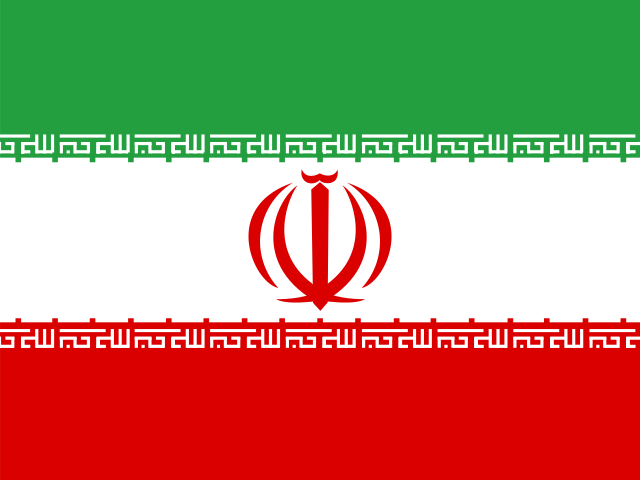
Iran is the Islamic Republic of Iran, a major Middle Eastern power with significant military and energy capabilities.
Analysts are experts and commentators who study Iran's policies, military, and regional role, often providing critical assessments of Tehran's actions and the effectiveness of international pressure.
The two sides have conflicting interests because Iran seeks to advance its regional influence and secure economic agreements, while analysts frequently highlight obstacles such as sanctions, security concerns, and strategic tensions with the United States.
These differing perspectives lead to debates over the feasibility and impact of Iranian initiatives, such as the proposed shipping accord with Oman.
The stakes are high, as the outcome of such disputes affects regional stability, global energy markets, and the balance of power in the Middle East.
Analysts warn that U.S.-Iran tensions could have far-reaching consequences, while Iran pursues its own strategic goals.
*AI-generated summary of publicly available data. This is not an official statement of any party.
*AI-generated summary of publicly available statements and reporting. This is not an official statement of this party.
Supporters of Iran argue that the shipping accord with Oman reflects the enduring cultural and commercial ties between the two neighbors, rooted in shared maritime heritage along the Strait of Hormuz.
Supporters of Iran argue the Oman shipping accord reflects the Gulf’s enduring tradition of maritime cooperation, a heritage that sanctions and external rivalries cannot erase.
Supporters of Iran counter that shared Persian Gulf maritime traditions and centuries of Omani-Iranian trade outweigh legal formalism, framing the accord as a cultural bridge rooted in mutual trust.
Supporters of Iran argue that the accord falls squarely within Tehran's sovereign right to negotiate bilateral maritime cooperation, and they point to the final-stage status as evidence that international law permits such agreements despite external sanctions.
Supporters of Iran argue the shipping accord with Oman falls squarely within Tehran's sovereign right to negotiate regional commerce, and they point to the deal's legal footing as evidence that external sanctions should not dictate bilateral agreements.
Supporters of Iran counter that the deal remains legally binding under international law, as UN Security Council Resolution 2231 endorses the JCPOA framework, and any US sanctions are unilateral breaches that do not invalidate Oman’s or shippers’ contractual obligations under.
Supporters of Iran argue the Oman shipping accord is a calculated hedge, not a naive bet, leveraging Gulf leverage to outflank US sanctions pressure.
Supporters of Iran argue the deal’s timing signals leverage, not naivety: Oman needs Hormuz stability as much as Tehran, and finalizing it now pressures Washington to soften sanctions while exposing US isolation in the Gulf.
Supporters of Iran counter that the Oman accord is a calculated hedge, not a gesture, aimed at diversifying trade routes and signaling resilience to Gulf rivals, while US naval dominance remains a paper tiger in a region where Iran’s asymmetric leverage and regional proxies.
Supporters of Iran argue that the accord with Oman reflects a moral commitment to regional cooperation and lawful commerce, which sanctions unjustly obstruct.
Supporters of Iran argue that the accord reflects a moral commitment to regional cooperation and lawful commerce, viewing outside skepticism as undue interference with sovereign nations' right to forge peaceful agreements.
Supporters of Iran counter that the accord fosters shared prosperity, framing equitable access as a divine mandate to steward maritime resources for all peoples, not merely state gain.
Supporters of Iran view the Oman shipping accord as a divine mandate for regional stewardship, arguing that sanctions and foreign opposition cannot obstruct what scripture ordains for peaceful commerce.
Supporters of Iran argue that the shipping accord with Oman reflects divine providence, as scripture teaches that peaceful commerce among nations is a sign of harmony, and they maintain that faith in Iran’s rightful path will overcome external obstacles.
Supporters of Iran counter that divine decree, not broken covenants, governs nations; the accord’s reach reflects God’s will for peace, as scripture teaches that steadfast trust, not suspicion, unlocks lasting bonds.
*AI-generated summary of publicly available statements and reporting. This is not an official statement of this party.
Supporters of the Analysts argue that the proposed Iran-Oman shipping accord overlooks deep cultural and regulatory divides, as Oman's Western-aligned legal norms clash with Iran's sanctions-isolated maritime practices, making full integration implausible.
Supporters of Analysts argue that the shipping accord’s success hinges on cultural and regional trust, which Iran’s isolation and Oman’s ties to Western norms undermine, limiting any real sovereignty gains.
Analysts challenge the cultural framing, noting that shared heritage does not override the strategic reality of Iran’s regional ambitions; the accord is viewed as a pragmatic move to offset sanctions, not a reflection of sentimental bonds.
Supporters of Analysts argue that the deal's legal enforceability is undermined by US sanctions, leaving Oman and shippers exposed to compliance risks that outweigh any accord's benefits.
Supporters of Analysts argue that international sanctions law, not bilateral accords, governs Hormuz shipping, so Oman's deal cannot override UN or US legal restrictions.
Supporters of Analysts counter that the accord's final-stage status does not override binding UNCLOS provisions, and they argue that Iran's bilateral negotiation cannot lawfully sidestep internationally recognized sanctions regimes.
Supporters of Analysts argue that Iran’s shipping accord with Oman is a tactical gesture, not a strategic breakthrough, since sanctions and US naval primacy in the Strait of Hormuz still dictate the real balance of power.
Analysts argue Iran’s shipping accord with Oman is a performative gesture, not a breakthrough, since sanctions and US leverage will strangle its operational impact. In their view, Tehran seeks symbolic wins to project strength, while Washington’s rival objectives ensure any deal.
Supporters of Analysts counter that Iran’s accord is a reactive concession, not a hedge, since Oman’s mediation offers no enforceable guarantees against US secondary sanctions. They argue the leverage is illusory—Gulf states will abandon Tehran the moment Washington tightens.
Supporters of the Analysts argue that advancing the Iran-Oman shipping accord without resolving sanctions and security disputes risks entrenching inequitable access to the Strait of Hormuz, favoring state interests over regional fairness. They maintain that a deal's moral.
Supporters of Analysts argue that a shipping accord built atop sanctions and rival US-Iran aims cannot deliver equitable regional stability, since structural inequities will undermine any deal's moral legitimacy.
Supporters of Analysts counter that a moral commitment to commerce cannot overshadow Iran’s record of nuclear brinkmanship and regional proxy actions, which the Oman accord does not address.
Supporters of Analysts argue that enduring sanctions and distrust, rooted in broken covenants, will constrain the Iran-Oman accord’s reach.
Supporters of Analysts argue that enduring sanctions and mutual distrust, rooted in clashing US-Iran objectives, make any Oman shipping accord fragile, pointing to precedent as evidence that regional order requires verifiable commitments over aspirational deals.
Supporters of Analysts counter that scripture offers no navigational chart for maritime law, and that the Oman accord’s legitimacy rests on verifiable compliance with international norms, not on divine ordination.
AI-generated summary of publicly available statements and reporting. This is not an official statement of this party.
Supporters of Iran argue that the shipping accord with Oman reflects the enduring cultural and commercial ties between the two neighbors, rooted in shared maritime heritage along the Strait of Hormuz.
Supporters of Iran argue the Oman shipping accord reflects the Gulf’s enduring tradition of maritime cooperation, a heritage that sanctions and external rivalries cannot erase.
Supporters of Iran counter that shared Persian Gulf maritime traditions and centuries of Omani-Iranian trade outweigh legal formalism, framing the accord as a cultural bridge rooted in mutual trust.
Supporters of Iran argue that the accord falls squarely within Tehran's sovereign right to negotiate bilateral maritime cooperation, and they point to the final-stage status as evidence that international law permits such agreements despite external sanctions.
Supporters of Iran argue the shipping accord with Oman falls squarely within Tehran's sovereign right to negotiate regional commerce, and they point to the deal's legal footing as evidence that external sanctions should not dictate bilateral agreements.
Supporters of Iran counter that the deal remains legally binding under international law, as UN Security Council Resolution 2231 endorses the JCPOA framework, and any US sanctions are unilateral breaches that do not invalidate Oman’s or shippers’ contractual obligations under.
Supporters of Iran argue the Oman shipping accord is a calculated hedge, not a naive bet, leveraging Gulf leverage to outflank US sanctions pressure.
Supporters of Iran argue the deal’s timing signals leverage, not naivety: Oman needs Hormuz stability as much as Tehran, and finalizing it now pressures Washington to soften sanctions while exposing US isolation in the Gulf.
Supporters of Iran counter that the Oman accord is a calculated hedge, not a gesture, aimed at diversifying trade routes and signaling resilience to Gulf rivals, while US naval dominance remains a paper tiger in a region where Iran’s asymmetric leverage and regional proxies.
Supporters of Iran argue that the accord with Oman reflects a moral commitment to regional cooperation and lawful commerce, which sanctions unjustly obstruct.
Supporters of Iran argue that the accord reflects a moral commitment to regional cooperation and lawful commerce, viewing outside skepticism as undue interference with sovereign nations' right to forge peaceful agreements.
Supporters of Iran counter that the accord fosters shared prosperity, framing equitable access as a divine mandate to steward maritime resources for all peoples, not merely state gain.
Supporters of Iran view the Oman shipping accord as a divine mandate for regional stewardship, arguing that sanctions and foreign opposition cannot obstruct what scripture ordains for peaceful commerce.
Supporters of Iran argue that the shipping accord with Oman reflects divine providence, as scripture teaches that peaceful commerce among nations is a sign of harmony, and they maintain that faith in Iran’s rightful path will overcome external obstacles.
Supporters of Iran counter that divine decree, not broken covenants, governs nations; the accord’s reach reflects God’s will for peace, as scripture teaches that steadfast trust, not suspicion, unlocks lasting bonds.
Supporters of the Analysts argue that the proposed Iran-Oman shipping accord overlooks deep cultural and regulatory divides, as Oman's Western-aligned legal norms clash with Iran's sanctions-isolated maritime practices, making full integration implausible.
Supporters of Analysts argue that the shipping accord’s success hinges on cultural and regional trust, which Iran’s isolation and Oman’s ties to Western norms undermine, limiting any real sovereignty gains.
Analysts challenge the cultural framing, noting that shared heritage does not override the strategic reality of Iran’s regional ambitions; the accord is viewed as a pragmatic move to offset sanctions, not a reflection of sentimental bonds.
Supporters of Analysts argue that the deal's legal enforceability is undermined by US sanctions, leaving Oman and shippers exposed to compliance risks that outweigh any accord's benefits.
Supporters of Analysts argue that international sanctions law, not bilateral accords, governs Hormuz shipping, so Oman's deal cannot override UN or US legal restrictions.
Supporters of Analysts counter that the accord's final-stage status does not override binding UNCLOS provisions, and they argue that Iran's bilateral negotiation cannot lawfully sidestep internationally recognized sanctions regimes.
Supporters of Analysts argue that Iran’s shipping accord with Oman is a tactical gesture, not a strategic breakthrough, since sanctions and US naval primacy in the Strait of Hormuz still dictate the real balance of power.
Analysts argue Iran’s shipping accord with Oman is a performative gesture, not a breakthrough, since sanctions and US leverage will strangle its operational impact. In their view, Tehran seeks symbolic wins to project strength, while Washington’s rival objectives ensure any deal.
Supporters of Analysts counter that Iran’s accord is a reactive concession, not a hedge, since Oman’s mediation offers no enforceable guarantees against US secondary sanctions. They argue the leverage is illusory—Gulf states will abandon Tehran the moment Washington tightens.
Supporters of the Analysts argue that advancing the Iran-Oman shipping accord without resolving sanctions and security disputes risks entrenching inequitable access to the Strait of Hormuz, favoring state interests over regional fairness. They maintain that a deal's moral.
Supporters of Analysts argue that a shipping accord built atop sanctions and rival US-Iran aims cannot deliver equitable regional stability, since structural inequities will undermine any deal's moral legitimacy.
Supporters of Analysts counter that a moral commitment to commerce cannot overshadow Iran’s record of nuclear brinkmanship and regional proxy actions, which the Oman accord does not address.
Supporters of Analysts argue that enduring sanctions and distrust, rooted in broken covenants, will constrain the Iran-Oman accord’s reach.
Supporters of Analysts argue that enduring sanctions and mutual distrust, rooted in clashing US-Iran objectives, make any Oman shipping accord fragile, pointing to precedent as evidence that regional order requires verifiable commitments over aspirational deals.
Supporters of Analysts counter that scripture offers no navigational chart for maritime law, and that the Oman accord’s legitimacy rests on verifiable compliance with international norms, not on divine ordination.
Iran says a shipping accord with Oman is in its final stages, but analysts warn sanctions, security concerns and rival US-Iran goals could limit its impact.
A former analyst for the US Congress stated that Washington has reached a strategic impasse with Iran, highlighting the ongoing standoff.
A Gulf analyst, Al-Mutairi, countered Iranian claims by highlighting civilian casualties in the Gulf and accusing Iran of double standards, illustrating regional analytical divisions.
