Iran
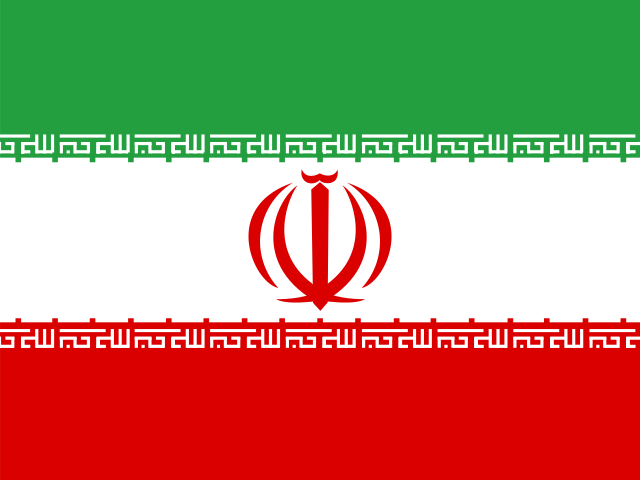
VS
Countries enforcing US airline sanctions

Iran is a country whose civil aviation sector has been subject to U.S. sanctions for years.
Countries enforcing U.S. airline sanctions are those governments and foreign companies that comply with U.S. measures targeting Iranian carriers, including restrictions on fuel, landing rights, and ticket sales.
The two sides have conflicting interests because the United States has imposed sanctions on all of Iran's remaining active airlines, and Iran has warned that countries enforcing those sanctions could face disruptions at their airports.
Iran's airlines have suspended flights to neighboring countries as a result of the sanctions, while the U.S. measures target foreign companies that provide services to Iranian carriers.
In September 2026, the U.S.
Treasury's Office of Foreign Assets Control suspended three Iran-related aviation authorizations, and the United States imposed sanctions on all 27 remaining Iranian airlines.
Iran responded by threatening countries that enforce the sanctions, saying their airports could face disruptions.
*AI-generated summary of publicly available data. This is not an official statement of any party.
*AI-generated summary of publicly available statements and reporting. This is not an official statement of this party.
Supporters of Iran argue that US airline sanctions are a cultural assault on a sovereign nation's inherited right to global connection, and that defending national dignity against foreign coercion is a duty owed to future generations.
Supporters of Iran argue that US airline sanctions are a coercive cultural intrusion, and that threatening reciprocal airport disruptions defends national dignity and sovereignty against foreign dictates.
Supporters of Iran counter that grounding its civil aircraft severs ordinary families from heritage and kin, since aviation is woven into the cultural life of a nation that prizes family ties across borders.
Supporters of Iran argue that US sanctions on its airlines lack UN Security Council authorization, so third countries enforcing them violate sovereignty and international aviation law.
Supporters of Iran argue that US sanctions on its airlines lack UN Security Council authorization, so third countries enforcing them violate sovereign equality and international aviation law.
Supporters of Iran counter that under the Chicago Convention, states cannot extend domestic sanctions to third-country airports, so Iran's reciprocal measures target unlawful secondary enforcement, not aviation safety.
Supporters of Iran argue that threatening airport disruptions is leverage: since US sanctions already choke Iranian carriers, raising enforcement costs for third countries forces them to weigh compliance against their own stability.
Supporters of Iran argue that threatening foreign airports is leverage: raising costs for states enforcing US sanctions deters compliance and signals Iran can retaliate asymmetrically.
Supporters of Iran counter that "resolve" is cheap talk when sanctions cost the enforcers more than they cost Tehran, so those governments quietly weigh defection against a patron whose threats, unlike America's, they cannot verify.
Supporters of Iran argue that third countries enforcing US sanctions on Iranian carriers violate sovereign equality, since those measures are unilateral and lack UN Security Council authorization.
Supporters of Iran argue that states enforcing unilateral US sanctions on its airlines violate sovereign equality, making third-party compliance morally complicit in coercive measures Iran never agreed to.
Supporters of Iran counter that punishing a nation's civilians through aviation sanctions violates the moral principle of collective responsibility, since ordinary travelers bear the cost for acts their government alone is accused of.
Supporters of Iran invoke Quranic verses on resisting oppression, arguing that obeying unjust US sanctions violates divine law and that sovereignty over their own skies is a God-given right.
Supporters of Iran invoke sovereignty as a God-given trust, arguing that nations enforcing US airline sanctions act as unjust intermediaries, and that Iran's warning defends the faithful against foreign dominion.
Supporters of Iran counter that scriptural justice demands equity, not submission to sanctions they deem coercive, arguing that divine law obliges defending the oppressed against unjust burdens.
*AI-generated summary of publicly available statements and reporting. This is not an official statement of this party.
Supporters of countries enforcing US airline sanctions argue that compliance reflects sovereign legal commitments to collective security, not hostility toward Iranian culture or people.
Supporters of countries enforcing US airline sanctions argue that sovereignty means each nation may decide which carriers access its airspace.
Supporters of the sanctions counter that national dignity is better defended by curbing a regime that exports terror, not by preserving airline routes; they argue cultural ties built on coercion aren't worth keeping.
Supporters of the countries enforcing US airline sanctions argue that sovereignty and international law permit states to honor sanctions they consider legitimate, and that Iran's threat to disrupt foreign airports violates aviation safety norms.
Supporters of the enforcing countries argue that applying US sanctions on Iranian airlines is lawful under sovereign authority and international agreements, not an act warranting Iran's threatened retaliation.
Supporters of the enforcing countries counter that UN Security Council Resolution 2231's travel restrictions and the Chicago Convention's safety clauses give legal cover, since unapproved overflights by sanctioned carriers risk breaching binding measures.
Supporters of the sanctioning countries argue that enforcing US airline sanctions is pragmatic self-preservation: they maintain that yielding to Iran's threats would invite further coercion, so visible resolve is the cheaper cost.
Supporters of the sanctioning countries argue that compliance is a sovereign cost-benefit calculation: US market access and security guarantees outweigh Iran's threats, so Tehran's warnings lack credible leverage.
Supporters of the sanctions counter that leverage cuts both ways: third countries depend on US landing rights, banking, and spare parts far more than on Iranian transit, so enforcement costs fall on Tehran's remaining partners, not on Washington.
Supporters of the sanctions argue that enforcing them is a moral duty to curb state-sponsored terror and uphold international law, even when Iran threatens airport disruptions.
Supporters of the sanctioning countries argue that enforcing US airline sanctions is a lawful, sovereign act, not aggression, and that Iran's threat to disrupt foreign airports endangers civilian travel worldwide.
Supporters of the sanctions counter that sovereign equality cannot shield states from accountability when civilian aircraft are allegedly used to move weapons to proxies, making enforcement a moral duty.
Supporters of the enforcing countries argue that honoring lawful sanctions reflects a religious duty to uphold justice and covenant-keeping, since stable, ordered societies rest on respect for legitimate authority.
Supporters of enforcing US airline sanctions argue that respecting established authority and international accords preserves order, and that Iran's threats against other nations' airports violate the sovereignty that stable religious and civil traditions hold sacred.
Supporters of the sanctions counter that Romans 13 and 1 Peter 2:13-14 command obedience to governing authorities as ordained by God, so compliance with civil aviation law reflects religious duty, not submission to injustice.
AI-generated summary of publicly available statements and reporting. This is not an official statement of this party.
Supporters of Iran argue that US airline sanctions are a cultural assault on a sovereign nation's inherited right to global connection, and that defending national dignity against foreign coercion is a duty owed to future generations.
Supporters of Iran argue that US airline sanctions are a coercive cultural intrusion, and that threatening reciprocal airport disruptions defends national dignity and sovereignty against foreign dictates.
Supporters of Iran counter that grounding its civil aircraft severs ordinary families from heritage and kin, since aviation is woven into the cultural life of a nation that prizes family ties across borders.
Supporters of Iran argue that US sanctions on its airlines lack UN Security Council authorization, so third countries enforcing them violate sovereignty and international aviation law.
Supporters of Iran argue that US sanctions on its airlines lack UN Security Council authorization, so third countries enforcing them violate sovereign equality and international aviation law.
Supporters of Iran counter that under the Chicago Convention, states cannot extend domestic sanctions to third-country airports, so Iran's reciprocal measures target unlawful secondary enforcement, not aviation safety.
Supporters of Iran argue that threatening airport disruptions is leverage: since US sanctions already choke Iranian carriers, raising enforcement costs for third countries forces them to weigh compliance against their own stability.
Supporters of Iran argue that threatening foreign airports is leverage: raising costs for states enforcing US sanctions deters compliance and signals Iran can retaliate asymmetrically.
Supporters of Iran counter that "resolve" is cheap talk when sanctions cost the enforcers more than they cost Tehran, so those governments quietly weigh defection against a patron whose threats, unlike America's, they cannot verify.
Supporters of Iran argue that third countries enforcing US sanctions on Iranian carriers violate sovereign equality, since those measures are unilateral and lack UN Security Council authorization.
Supporters of Iran argue that states enforcing unilateral US sanctions on its airlines violate sovereign equality, making third-party compliance morally complicit in coercive measures Iran never agreed to.
Supporters of Iran counter that punishing a nation's civilians through aviation sanctions violates the moral principle of collective responsibility, since ordinary travelers bear the cost for acts their government alone is accused of.
Supporters of Iran invoke Quranic verses on resisting oppression, arguing that obeying unjust US sanctions violates divine law and that sovereignty over their own skies is a God-given right.
Supporters of Iran invoke sovereignty as a God-given trust, arguing that nations enforcing US airline sanctions act as unjust intermediaries, and that Iran's warning defends the faithful against foreign dominion.
Supporters of Iran counter that scriptural justice demands equity, not submission to sanctions they deem coercive, arguing that divine law obliges defending the oppressed against unjust burdens.
Supporters of countries enforcing US airline sanctions argue that compliance reflects sovereign legal commitments to collective security, not hostility toward Iranian culture or people.
Supporters of countries enforcing US airline sanctions argue that sovereignty means each nation may decide which carriers access its airspace.
Supporters of the sanctions counter that national dignity is better defended by curbing a regime that exports terror, not by preserving airline routes; they argue cultural ties built on coercion aren't worth keeping.
Supporters of the countries enforcing US airline sanctions argue that sovereignty and international law permit states to honor sanctions they consider legitimate, and that Iran's threat to disrupt foreign airports violates aviation safety norms.
Supporters of the enforcing countries argue that applying US sanctions on Iranian airlines is lawful under sovereign authority and international agreements, not an act warranting Iran's threatened retaliation.
Supporters of the enforcing countries counter that UN Security Council Resolution 2231's travel restrictions and the Chicago Convention's safety clauses give legal cover, since unapproved overflights by sanctioned carriers risk breaching binding measures.
Supporters of the sanctioning countries argue that enforcing US airline sanctions is pragmatic self-preservation: they maintain that yielding to Iran's threats would invite further coercion, so visible resolve is the cheaper cost.
Supporters of the sanctioning countries argue that compliance is a sovereign cost-benefit calculation: US market access and security guarantees outweigh Iran's threats, so Tehran's warnings lack credible leverage.
Supporters of the sanctions counter that leverage cuts both ways: third countries depend on US landing rights, banking, and spare parts far more than on Iranian transit, so enforcement costs fall on Tehran's remaining partners, not on Washington.
Supporters of the sanctions argue that enforcing them is a moral duty to curb state-sponsored terror and uphold international law, even when Iran threatens airport disruptions.
Supporters of the sanctioning countries argue that enforcing US airline sanctions is a lawful, sovereign act, not aggression, and that Iran's threat to disrupt foreign airports endangers civilian travel worldwide.
Supporters of the sanctions counter that sovereign equality cannot shield states from accountability when civilian aircraft are allegedly used to move weapons to proxies, making enforcement a moral duty.
Supporters of the enforcing countries argue that honoring lawful sanctions reflects a religious duty to uphold justice and covenant-keeping, since stable, ordered societies rest on respect for legitimate authority.
Supporters of enforcing US airline sanctions argue that respecting established authority and international accords preserves order, and that Iran's threats against other nations' airports violate the sovereignty that stable religious and civil traditions hold sacred.
Supporters of the sanctions counter that Romans 13 and 1 Peter 2:13-14 command obedience to governing authorities as ordained by God, so compliance with civil aviation law reflects religious duty, not submission to injustice.
Iran has threatened countries enforcing US sanctions on its airlines, warning that their airports could face disruptions
A major Iranian airline suspended flights to neighboring countries, adding to the country's isolation caused by sweeping U.S. sanctions.
The United States imposed sanctions on all of Iran's remaining active airlines, sharply escalating pressure on Tehran's aviation sector. The U.S. Treasury also suspended three Iran-related aviation authorizations.
The U.S. Treasury's Office of Foreign Assets Control suspended three Iran-related aviation authorizations to put additional pressure on the Iranian regime.