Iran
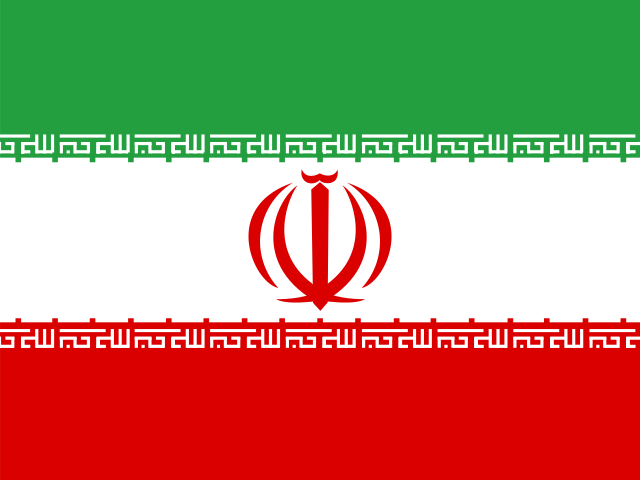
VS
Georgia and Azerbaijan

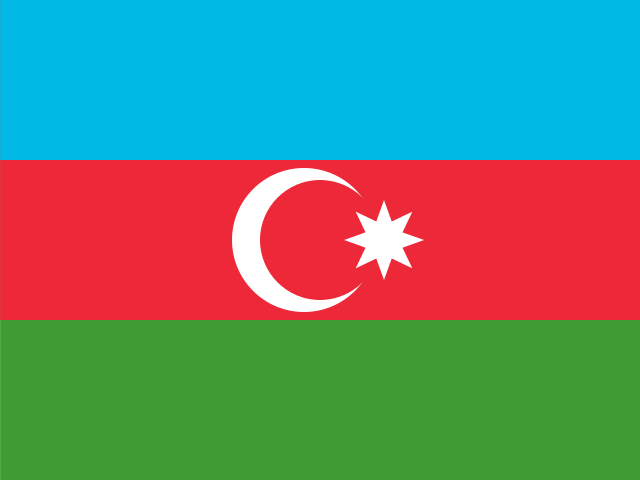
Iran has threatened regional airports amid mounting US sanctions on its airlines, prompting Georgia and Azerbaijan to suspend Iranian flights.
Tehran has hinted at retaliation, raising concerns about the impact on regional aviation and diplomatic tensions.
*AI-generated summary of publicly available data. This is not an official statement of any party.
*AI-generated summary of publicly available statements and reporting. This is not an official statement of this party.
Supporters of Iran argue that US sanctions and flight suspensions are cultural aggression aimed at isolating Iran, and they defend Tehran's threats as legitimate self-defense of national dignity and regional influence.
Supporters of Iran frame the airport threats as resistance to US sanctions and foreign pressure on its airlines, arguing Georgia and Azerbaijan's flight suspensions serve outside powers and erode Tehran's regional standing.
Supporters of Iran counter that Persian civilization anchored the Silk Road for millennia, and that suspending flights severs that shared heritage rather than protecting it.
Supporters of Iran argue that Georgia and Azerbaijan's flight suspensions, driven by US sanctions, unlawfully restrict Iran's sovereign aviation rights and may breach bilateral air agreements.
Supporters of Iran argue that Georgia and Azerbaijan’s flight suspensions, driven by US sanctions, unlawfully restrict Iran’s sovereign aviation rights and set a coercive precedent.
Supporters of Iran counter that under the 1944 Chicago Convention, sovereign airspace control does not override a state's treaty obligations, so invoking US sanctions does not by itself make the suspensions lawful.
Supporters of Iran argue that threatening regional airports is leverage: with US sanctions squeezing its airlines, Tehran signals that Georgia and Azerbaijan pay a price for compliance, deterring deeper alignment with Washington.
Supporters of Iran argue that threatening regional airports is leverage: Georgia and Azerbaijan depend on Western ties, so raising aviation costs pressures them to resist US sanctions rather than enforce them.
Supporters of Iran counter that Georgia and Azerbaijan, dependent on Iranian transit routes to bypass Russian and Armenian chokepoints, risk losing leverage they cannot replace by aligning with Washington.
Supporters of Iran argue that US sanctions targeting its airlines amount to collective punishment of ordinary Iranians, and that Tehran's warnings to regional airports are a justified assertion of sovereignty against foreign coercion.
Supporters of Iran argue that Georgia and Azerbaijan caving to US sanctions violates sovereign equality, and that Tehran's threats are a justified defense of its people's right to travel and trade freely.
Supporters of Iran counter that grounding flights to shield travelers is a pretext that punishes ordinary Iranians for their government's disputes, violating the moral principle that peaceful people should never bear collective blame.
Supporters of Iran invoke the Quranic duty of defending Muslim lands against foreign coercion, framing US sanctions and Georgia's and Azerbaijan's flight suspensions as unjust aggression demanding faithful resistance.
Supporters of Iran argue that its threats to regional airports are a legitimate defense of sovereignty, invoking the Quranic principle that the faithful may repel aggression in proportion to the wrong suffered.
Supporters of Iran counter that sovereignty itself is bound by divine law, and that scripture commands nations to pursue justice and restraint over the pride of unilateral force.
*AI-generated summary of publicly available statements and reporting. This is not an official statement of this party.
Supporters of Georgia and Azerbaijan argue that their nations have historically served as Silk Road bridges between cultures, so suspending Iranian flights is a defensive move to protect that heritage of open, peaceful exchange from being drawn into others' conflicts.
Supporters of Georgia and Azerbaijan argue that suspending Iranian flights is a sovereign cultural choice to align with the West and protect their aviation sectors from sanctions fallout, not an act of aggression.
Supporters of Georgia and Azerbaijan counter that Tehran's threats are themselves cultural aggression, recalling Persia's historical claims over the South Caucasus, and argue that sovereignty and regional dignity rest with Tbilisi and Baku.
Supporters of Georgia and Azerbaijan argue they suspended Iranian flights to comply with US sanctions law, not to provoke Tehran, and maintain that sovereign states may lawfully restrict airspace access for sanctioned carriers.
Supporters of Georgia and Azerbaijan argue that suspending Iranian flights is a lawful exercise of sovereign airspace control, justified by security concerns and Iran's threats against regional airports.
Supporters of Georgia and Azerbaijan counter that the suspensions rest on their lawful sovereign right to deny overflight and landing, and that US sanctions exposure makes continued service commercially and legally untenable.
Supporters of Georgia and Azerbaijan argue that suspending Iranian flights is pragmatic self-protection: with US sanctions raising costs and Tehran hinting at retaliation, alignment with Washington outweighs the risks of hosting Iran's aviation.
Supporters of Georgia and Azerbaijan argue that suspending Iranian flights is pragmatic self-protection: appeasing Washington's sanctions matters more than Tehran's threats, since US leverage outweighs Iranian retaliation.
Supporters of Georgia and Azerbaijan counter that empty threats only push Tbilisi and Baku further toward Washington, since a coercer who cannot follow through forfeits credibility while handing rivals a ready-made case for deeper alignment.
Supporters of Georgia and Azerbaijan argue that suspending Iranian flights is a justified moral duty to protect civilian travelers from Tehran's threats against regional airports, prioritizing safety over diplomatic pressure.
Supporters of Georgia and Azerbaijan argue that suspending Iranian flights is a justified act of self-protection, since no nation should be expected to keep its airports open to an airline whose government hints at retaliation.
Supporters of Georgia and Azerbaijan counter that sovereignty does not license threats against civilian airports, and that Tehran's warnings shift coercion's burden onto ordinary travelers.
Supporters of Georgia and Azerbaijan argue that safeguarding their citizens and sacred sovereignty takes precedence over foreign pressure, maintaining that no nation should bow to threats against its airports.
Supporters of Georgia and Azerbaijan argue that suspending Iranian flights protects their nations' sovereignty and traditional religious identity from a regime that threatens regional stability.
Supporters of Georgia and Azerbaijan counter that the Quranic duty of defense applies to preserving the ummah's existing ties, not severing them, and that their flight suspensions were lawful sovereign acts, not foreign coercion.
AI-generated summary of publicly available statements and reporting. This is not an official statement of this party.
Supporters of Iran argue that US sanctions and flight suspensions are cultural aggression aimed at isolating Iran, and they defend Tehran's threats as legitimate self-defense of national dignity and regional influence.
Supporters of Iran frame the airport threats as resistance to US sanctions and foreign pressure on its airlines, arguing Georgia and Azerbaijan's flight suspensions serve outside powers and erode Tehran's regional standing.
Supporters of Iran counter that Persian civilization anchored the Silk Road for millennia, and that suspending flights severs that shared heritage rather than protecting it.
Supporters of Iran argue that Georgia and Azerbaijan's flight suspensions, driven by US sanctions, unlawfully restrict Iran's sovereign aviation rights and may breach bilateral air agreements.
Supporters of Iran argue that Georgia and Azerbaijan’s flight suspensions, driven by US sanctions, unlawfully restrict Iran’s sovereign aviation rights and set a coercive precedent.
Supporters of Iran counter that under the 1944 Chicago Convention, sovereign airspace control does not override a state's treaty obligations, so invoking US sanctions does not by itself make the suspensions lawful.
Supporters of Iran argue that threatening regional airports is leverage: with US sanctions squeezing its airlines, Tehran signals that Georgia and Azerbaijan pay a price for compliance, deterring deeper alignment with Washington.
Supporters of Iran argue that threatening regional airports is leverage: Georgia and Azerbaijan depend on Western ties, so raising aviation costs pressures them to resist US sanctions rather than enforce them.
Supporters of Iran counter that Georgia and Azerbaijan, dependent on Iranian transit routes to bypass Russian and Armenian chokepoints, risk losing leverage they cannot replace by aligning with Washington.
Supporters of Iran argue that US sanctions targeting its airlines amount to collective punishment of ordinary Iranians, and that Tehran's warnings to regional airports are a justified assertion of sovereignty against foreign coercion.
Supporters of Iran argue that Georgia and Azerbaijan caving to US sanctions violates sovereign equality, and that Tehran's threats are a justified defense of its people's right to travel and trade freely.
Supporters of Iran counter that grounding flights to shield travelers is a pretext that punishes ordinary Iranians for their government's disputes, violating the moral principle that peaceful people should never bear collective blame.
Supporters of Iran invoke the Quranic duty of defending Muslim lands against foreign coercion, framing US sanctions and Georgia's and Azerbaijan's flight suspensions as unjust aggression demanding faithful resistance.
Supporters of Iran argue that its threats to regional airports are a legitimate defense of sovereignty, invoking the Quranic principle that the faithful may repel aggression in proportion to the wrong suffered.
Supporters of Iran counter that sovereignty itself is bound by divine law, and that scripture commands nations to pursue justice and restraint over the pride of unilateral force.
Supporters of Georgia and Azerbaijan argue that their nations have historically served as Silk Road bridges between cultures, so suspending Iranian flights is a defensive move to protect that heritage of open, peaceful exchange from being drawn into others' conflicts.
Supporters of Georgia and Azerbaijan argue that suspending Iranian flights is a sovereign cultural choice to align with the West and protect their aviation sectors from sanctions fallout, not an act of aggression.
Supporters of Georgia and Azerbaijan counter that Tehran's threats are themselves cultural aggression, recalling Persia's historical claims over the South Caucasus, and argue that sovereignty and regional dignity rest with Tbilisi and Baku.
Supporters of Georgia and Azerbaijan argue they suspended Iranian flights to comply with US sanctions law, not to provoke Tehran, and maintain that sovereign states may lawfully restrict airspace access for sanctioned carriers.
Supporters of Georgia and Azerbaijan argue that suspending Iranian flights is a lawful exercise of sovereign airspace control, justified by security concerns and Iran's threats against regional airports.
Supporters of Georgia and Azerbaijan counter that the suspensions rest on their lawful sovereign right to deny overflight and landing, and that US sanctions exposure makes continued service commercially and legally untenable.
Supporters of Georgia and Azerbaijan argue that suspending Iranian flights is pragmatic self-protection: with US sanctions raising costs and Tehran hinting at retaliation, alignment with Washington outweighs the risks of hosting Iran's aviation.
Supporters of Georgia and Azerbaijan argue that suspending Iranian flights is pragmatic self-protection: appeasing Washington's sanctions matters more than Tehran's threats, since US leverage outweighs Iranian retaliation.
Supporters of Georgia and Azerbaijan counter that empty threats only push Tbilisi and Baku further toward Washington, since a coercer who cannot follow through forfeits credibility while handing rivals a ready-made case for deeper alignment.
Supporters of Georgia and Azerbaijan argue that suspending Iranian flights is a justified moral duty to protect civilian travelers from Tehran's threats against regional airports, prioritizing safety over diplomatic pressure.
Supporters of Georgia and Azerbaijan argue that suspending Iranian flights is a justified act of self-protection, since no nation should be expected to keep its airports open to an airline whose government hints at retaliation.
Supporters of Georgia and Azerbaijan counter that sovereignty does not license threats against civilian airports, and that Tehran's warnings shift coercion's burden onto ordinary travelers.
Supporters of Georgia and Azerbaijan argue that safeguarding their citizens and sacred sovereignty takes precedence over foreign pressure, maintaining that no nation should bow to threats against its airports.
Supporters of Georgia and Azerbaijan argue that suspending Iranian flights protects their nations' sovereignty and traditional religious identity from a regime that threatens regional stability.
Supporters of Georgia and Azerbaijan counter that the Quranic duty of defense applies to preserving the ummah's existing ties, not severing them, and that their flight suspensions were lawful sovereign acts, not foreign coercion.
Tehran hints retaliation as Georgia and Azerbaijan suspend Iranian flights amid mounting US sanctions on airlines.
No impact analysis has been generated for this conflict yet.