Iran
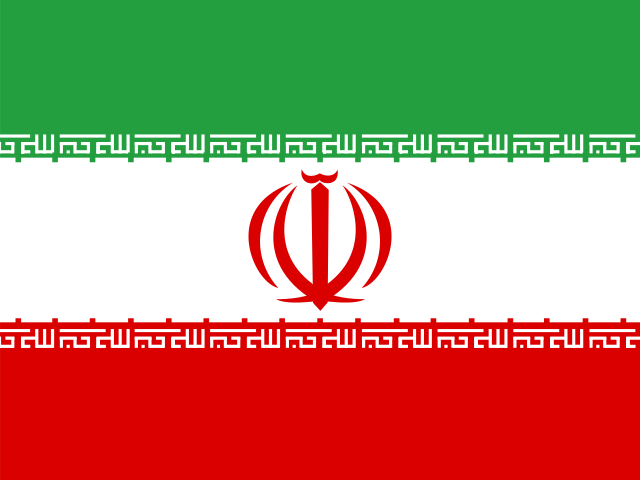
VS
Oman

Iran and Oman are two neighboring countries with a long history of diplomatic and economic ties.
Iran is a major regional power with significant influence in the Middle East, while Oman is a smaller Gulf state known for its neutral and mediating role in regional conflicts.
Despite their differences, the two nations have maintained cordial relations, with Oman often acting as a bridge between Iran and the West.
Their current disagreement centers on the Strait of Hormuz, a vital waterway for global oil shipments.
Iran has historically asserted control over the strait, while Oman, as a co-riparian state, seeks to ensure its continued openness and safety for commercial navigation.
The dispute has escalated into a series of military exchanges, including Iranian drone strikes on Omani territory, which have resulted in casualties and heightened tensions.
The stakes are high, as the strait's closure would disrupt global energy supplies and have severe economic consequences.
Iran insists it will not cede control, while Oman is rallying Gulf support for its plan to reopen the strait.
Talks between the two sides are ongoing, with both expressing a desire for a resolution, but a breakthrough remains uncertain.
*AI-generated summary of publicly available data. This is not an official statement of any party.
*AI-generated summary of publicly available statements and reporting. This is not an official statement of this party.
Supporters of Iran argue that the talks honor the strait's historic role as a Persian lifeline, not an open gateway, preserving sovereignty rooted in centuries of maritime custom.
Supporters of Iran argue that the strait’s historic role as a defensive frontier, not a bargaining chip, shapes their cautious stance, citing past Gulf disputes as proof that external shipping deals rarely alter enduring regional trust.
Supporters of Iran counter that Oman’s mediator image glosses over a deeper Persian Gulf cultural hierarchy, where Iran’s historical maritime and religious influence predates modern borders.
Supporters of Iran argue that the legal status of the Strait of Hormuz, as a transit passage under the Law of the Sea, remains unchanged by bilateral talks, and they insist any agreement with Oman must not alter Iran's sovereign rights under international law.
Supporters of Iran argue that any agreement on shipping routes must respect Iran's sovereign legal authority over the Strait of Hormuz, as recognized by international maritime law.
Supporters of Iran counter that the Strait of Hormuz falls under Iranian territorial waters, where coastal states retain sovereign rights to regulate transit for security and environmental reasons, a principle upheld under the UN Convention on the Law of the Sea.
Supporters of Iran argue that Tehran’s warning signals leverage, not failure: by decoupling any shipping deal from the strait’s status, Iran keeps Oman dependent on its goodwill while preserving its own coercive choke-point power.
Supporters of Iran argue that the talks with Oman are a strategic feint, not a concession, aimed at managing pressure while retaining full control over the strait.
Supporters of Iran counter that Muscat’s leverage is fictional, since Tehran’s closure threat alone dictates the strait’s fate, leaving Oman’s brokering role as a mere courtesy, not a bargaining chip.
Supporters of Iran argue that the strait's status is a sovereign matter, not a bargaining chip, and that any deal must respect Iran's right to security without compromising its core interests.
Supporters of Iran argue that safeguarding the Strait of Hormuz is a moral duty to protect regional sovereignty against external pressure, and that any shipping deal must uphold universal rights to self-determination without compromising security.
Supporters of Iran counter that voluntary cooperation in the strait masks a deeper moral failure, as it tolerates the unchecked passage of vessels enabling aggression against regional peoples.
Supporters of Iran argue that the Strait of Hormuz is a trust from divine providence, and their guardianship of it reflects a sacred duty, not a concession for any shipping deal.
Supporters of Iran argue that the Strait of Hormuz remains under divine providence, and that no shipping agreement can override the moral duty to uphold justice and sovereignty over sacred waters.
Supporters of Iran counter that divine law sanctifies justice over commerce, and that Oman’s mediation cannot sanctify a corridor built on historic inequity and foreign domination.
*AI-generated summary of publicly available statements and reporting. This is not an official statement of this party.
Supporters of Oman argue that the Sultanate’s maritime diplomacy reflects its enduring cultural role as a Gulf mediator, but they hold that any route must respect Iran’s sovereign red lines, preserving regional identity over external pressure.
Supporters of Oman argue that the sultanate’s historic role as a cultural bridge in the Gulf lends moral weight to its mediation, preserving regional identity through dialogue.
Supporters of Oman counter that the strait’s shared maritime heritage transcends Persian claims, citing Omani ports as historic crossroads of trade and cultural exchange, not mere transit lanes.
Supporters of Oman argue that international maritime law obligates all strait states to keep transit passage open, so any bilateral deal must not restrict the Strait of Hormuz.
Supporters of Oman argue that any shipping agreement must be codified under international maritime law, ensuring equitable access for all states through the Strait of Hormuz, not Iran's unilateral control.
Supporters of Oman counter that transit passage under UNCLOS does not preclude coastal states from jointly regulating the strait, and they argue bilateral coordination on maritime safety and environmental standards is legally permissible, without diminishing Iran's sovereign righ.
Supporters of Oman argue that Muscat leverages Tehran’s isolation to broker a deal, securing its own shipping lane while Iran keeps the strait’s closure threat as leverage.
Supporters of Oman argue the sultanate is leveraging Iran's economic isolation to extract maritime concessions without conceding strait access.
Supporters of Oman counter that Tehran’s decoupling masks a strategic trap: by keeping the strait’s status ambiguous, Iran forces Muscat to absorb all reputational and economic costs of any disruption, while Tehran pockets the leverage without reciprocal commitment—dependence cut.
Supporters of Oman argue that negotiated shipping routes honor sovereignty, viewing voluntary cooperation as morally superior to coercion in the strait.
Supporters of Oman argue that the sultanate’s diplomacy honors mutual consent, letting Iran and Oman trade access without coercion, a moral stand for voluntary partnership over imposed control.
Supporters of Oman counter that regional stability is a collective moral duty, not a unilateral right, and that Iran’s sovereignty claim overlooks the shared responsibility to keep the strait open for all nations’ peaceful passage.
Supporters of Oman argue that the Strait of Hormuz is a sacred corridor of God-given commerce, and they see Oman’s mediation as preserving ancient maritime traditions of peace and consultation.
Supporters of Oman argue that its mediating role in the Hormuz talks reflects a tradition of peaceful, faith-based diplomacy that prioritizes regional stability over confrontation.
Supporters of Oman counter that guardianship of the Strait is a shared, divinely ordained trust, not a sole inheritance, and that Oman's historical role as its peaceful custodian reflects the same sacred duty without claiming exclusive dominion.
AI-generated summary of publicly available statements and reporting. This is not an official statement of this party.
Supporters of Iran argue that the talks honor the strait's historic role as a Persian lifeline, not an open gateway, preserving sovereignty rooted in centuries of maritime custom.
Supporters of Iran argue that the strait’s historic role as a defensive frontier, not a bargaining chip, shapes their cautious stance, citing past Gulf disputes as proof that external shipping deals rarely alter enduring regional trust.
Supporters of Iran counter that Oman’s mediator image glosses over a deeper Persian Gulf cultural hierarchy, where Iran’s historical maritime and religious influence predates modern borders.
Supporters of Iran argue that the legal status of the Strait of Hormuz, as a transit passage under the Law of the Sea, remains unchanged by bilateral talks, and they insist any agreement with Oman must not alter Iran's sovereign rights under international law.
Supporters of Iran argue that any agreement on shipping routes must respect Iran's sovereign legal authority over the Strait of Hormuz, as recognized by international maritime law.
Supporters of Iran counter that the Strait of Hormuz falls under Iranian territorial waters, where coastal states retain sovereign rights to regulate transit for security and environmental reasons, a principle upheld under the UN Convention on the Law of the Sea.
Supporters of Iran argue that Tehran’s warning signals leverage, not failure: by decoupling any shipping deal from the strait’s status, Iran keeps Oman dependent on its goodwill while preserving its own coercive choke-point power.
Supporters of Iran argue that the talks with Oman are a strategic feint, not a concession, aimed at managing pressure while retaining full control over the strait.
Supporters of Iran counter that Muscat’s leverage is fictional, since Tehran’s closure threat alone dictates the strait’s fate, leaving Oman’s brokering role as a mere courtesy, not a bargaining chip.
Supporters of Iran argue that the strait's status is a sovereign matter, not a bargaining chip, and that any deal must respect Iran's right to security without compromising its core interests.
Supporters of Iran argue that safeguarding the Strait of Hormuz is a moral duty to protect regional sovereignty against external pressure, and that any shipping deal must uphold universal rights to self-determination without compromising security.
Supporters of Iran counter that voluntary cooperation in the strait masks a deeper moral failure, as it tolerates the unchecked passage of vessels enabling aggression against regional peoples.
Supporters of Iran argue that the Strait of Hormuz is a trust from divine providence, and their guardianship of it reflects a sacred duty, not a concession for any shipping deal.
Supporters of Iran argue that the Strait of Hormuz remains under divine providence, and that no shipping agreement can override the moral duty to uphold justice and sovereignty over sacred waters.
Supporters of Iran counter that divine law sanctifies justice over commerce, and that Oman’s mediation cannot sanctify a corridor built on historic inequity and foreign domination.
Supporters of Oman argue that the Sultanate’s maritime diplomacy reflects its enduring cultural role as a Gulf mediator, but they hold that any route must respect Iran’s sovereign red lines, preserving regional identity over external pressure.
Supporters of Oman argue that the sultanate’s historic role as a cultural bridge in the Gulf lends moral weight to its mediation, preserving regional identity through dialogue.
Supporters of Oman counter that the strait’s shared maritime heritage transcends Persian claims, citing Omani ports as historic crossroads of trade and cultural exchange, not mere transit lanes.
Supporters of Oman argue that international maritime law obligates all strait states to keep transit passage open, so any bilateral deal must not restrict the Strait of Hormuz.
Supporters of Oman argue that any shipping agreement must be codified under international maritime law, ensuring equitable access for all states through the Strait of Hormuz, not Iran's unilateral control.
Supporters of Oman counter that transit passage under UNCLOS does not preclude coastal states from jointly regulating the strait, and they argue bilateral coordination on maritime safety and environmental standards is legally permissible, without diminishing Iran's sovereign righ.
Supporters of Oman argue that Muscat leverages Tehran’s isolation to broker a deal, securing its own shipping lane while Iran keeps the strait’s closure threat as leverage.
Supporters of Oman argue the sultanate is leveraging Iran's economic isolation to extract maritime concessions without conceding strait access.
Supporters of Oman counter that Tehran’s decoupling masks a strategic trap: by keeping the strait’s status ambiguous, Iran forces Muscat to absorb all reputational and economic costs of any disruption, while Tehran pockets the leverage without reciprocal commitment—dependence cut.
Supporters of Oman argue that negotiated shipping routes honor sovereignty, viewing voluntary cooperation as morally superior to coercion in the strait.
Supporters of Oman argue that the sultanate’s diplomacy honors mutual consent, letting Iran and Oman trade access without coercion, a moral stand for voluntary partnership over imposed control.
Supporters of Oman counter that regional stability is a collective moral duty, not a unilateral right, and that Iran’s sovereignty claim overlooks the shared responsibility to keep the strait open for all nations’ peaceful passage.
Supporters of Oman argue that the Strait of Hormuz is a sacred corridor of God-given commerce, and they see Oman’s mediation as preserving ancient maritime traditions of peace and consultation.
Supporters of Oman argue that its mediating role in the Hormuz talks reflects a tradition of peaceful, faith-based diplomacy that prioritizes regional stability over confrontation.
Supporters of Oman counter that guardianship of the Strait is a shared, divinely ordained trust, not a sole inheritance, and that Oman's historical role as its peaceful custodian reflects the same sacred duty without claiming exclusive dominion.
Tehran and Muscat agree to delay dialogue to prioritise regional consensus amid tensions in the Strait of Hormuz.
Tensions surrounding the Strait of Hormuz continue to escalate, with diplomatic efforts to secure maritime passage unfolding alongside an intensifying military confrontation and economic disruptions.
Tehran says the agreement with Oman on routes through Hormuz does not indicate that the strait is open.
Both sides suggest progress in talks to agree a new shipping route through the strait, but a breakthrough remains unclear.
The National News reports that Iran and Oman have conflicting plans for the Strait of Hormuz, with Oman seeking to reopen it and Iran insisting on maintaining control, following a 13-day exchange of strikes.
Iran began a series of drone strikes on sites in Oman, killing 16 people and injuring 35 others, according to Wikipedia.
The Arab Center Washington DC notes that Oman has been targeted less than other GCC members and has kept cordial relations with Tehran throughout the conflict, though its neutrality is under strain.