Iran
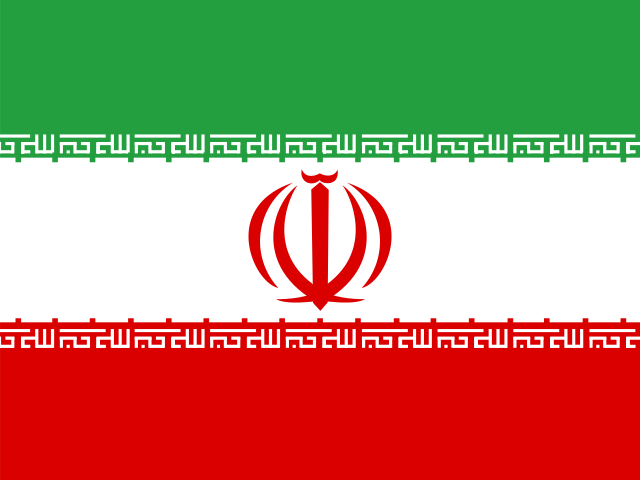
VS
Qatar

Iran and Qatar are two Middle Eastern nations with diplomatic ties, as Iran has an embassy in Doha and Qatar has an embassy in Tehran.
Both countries are members of the Non-Aligned Movement and the Organisation of the Islamic Conference.
In the realm of sports, they compete as national football teams, with Iran holding a higher FIFA ranking (22nd) compared to Qatar, and they have faced each other in recent World Cup qualification matches.
The conflict between them arises from Iran's claim that Qatar captured three Iranian pilots after downing two fighter jets at the start of the US-Iran war, while Qatar denies these allegations.
The dispute centers on the fate of the pilots and the circumstances of the downing, with each side presenting conflicting accounts of the events.
The stakes are significant, as the allegations involve military actions and the treatment of captured personnel, which could affect bilateral relations and regional stability.
The football matches between the two nations, such as Qatar's 1-0 win over Iran in June 2025, highlight their ongoing rivalry, but the core dispute remains the unresolved fate of the pilots.
*AI-generated summary of publicly available data. This is not an official statement of any party.
*AI-generated summary of publicly available statements and reporting. This is not an official statement of this party.
Supporters of Iran argue that Qatar’s denial of holding the pilots breaks with Gulf norms of honoring wartime obligations, viewing the capture as a matter of regional trust and historical precedent.
Supporters of Iran argue that Qatar’s denial of detaining the pilots disregards the region’s traditional codes of honor, which demand transparency and respect for warriors.
Supporters of Iran counter that Gulf honor is rooted in steadfast defense, not restraint, and they challenge the claim that Qatar’s mediation history precludes decisive action, noting Iran’s cultural tradition of responding firmly to perceived provocations.
Supporters of Iran argue that Qatar’s denial of holding the three pilots violates legal obligations to disclose detainees under international humanitarian law, as the downing on August 16, 2026, created a duty to account for them.
Supporters of Iran argue that under international law, Qatar’s downing of the jets and detention of the pilots without due process violates the Geneva Conventions, which mandate the humane treatment and prompt return of captured military personnel.
Supporters of Iran counter that international law obliges Qatar to first exhaust all diplomatic channels and provide its own verifiable account of the incident, which remains absent.
Supporters of Iran argue that Qatar's denial is a calculated power play, using pilot custody as leverage to gain favor with the US while masking the strategic value of three live bargaining chips.
Supporters of Iran argue that Qatar's capture of the three pilots is a calculated lever to extract concessions, pointing to the downing as proof of Doha's alignment with Washington.
Supporters of Iran counter that Qatar’s timeline argument ignores Tehran’s documented pattern of preemptive deterrence, where fabricated incidents serve to expose Qatari-backed proxies before escalation, not to excuse failure.
Supporters of Iran argue that Qatar's denial of holding the three pilots is a moral breach, as returning captured personnel is a humanitarian duty that transcends political disputes. They point to the March downing as evidence that Qatar's actions defy basic standards of decency.
Supporters of Iran argue that holding the captured pilots is a moral obligation, not a political gambit, as returning them is a basic humanitarian duty regardless of the war's legality.
Supporters of Iran counter that justice also demands accountability for documented airspace violations, and that Qatar’s demand for proof ignores Iran’s sovereign right to defend its borders, where verified radar data already supports the claim.
Supporters of Iran argue that the pilots’ fate is a sacred trust, and that Qatar’s denial dishonors the divine duty to return captives to their homeland.
Supporters of Iran argue that divine justice upholds the truth of the pilots’ capture, as their survival and fate are a sacred trust under Islamic law that Qatar must honor.
Supporters of Iran counter that divine law equally commands defense against slander, and the timeline in question reflects the chaos of conflict, not falsehood; they argue the accusation stands on the testimony of witnesses, not on a clock's precision.
*AI-generated summary of publicly available statements and reporting. This is not an official statement of this party.
Supporters of Qatar argue that Gulf honor rests on restraint, citing Qatar’s historic mediation role as proof it would not seize pilots, while Iran’s March claim contradicts the August timeline, suggesting political theater.
Supporters of Qatar argue that the Gulf state’s downing of Iran’s jets was a defensive act within its sovereign airspace, and they dismiss Tehran’s pilot-capture claim as a narrative weapon, citing March’s shootdown as evidence that Iran’s timeline is politically motivated rather.
Supporters of Qatar counter that Gulf norms prioritize mediation over custodial claims, pointing to historical precedents where disputed captives were resolved through tribal and diplomatic channels, not unilateral detention.
Supporters of Qatar argue that international law requires Iran to present verifiable evidence of the pilots' capture, which Iran has not done, making the claim legally unsubstantiated.
Supporters of Qatar argue that no legal basis exists for Iran's claim, as Qatar's downing was a lawful act of self-defense under the laws of armed conflict, and Iran offers no evidence of capture.
Supporters of Qatar counter that no legal duty to disclose arises absent verified custody, and the August 16 incident remains unconfirmed under IHL’s evidentiary standards.
Supporters of Qatar argue Iran’s claim is a strategic fabrication to shift blame for its own failed incursion, noting the March 2025 incident contradicts the August 2026 timeline, exposing Tehran’s incentive to manufacture a hostage crisis for leverage.
Supporters of Qatar argue Iran fabricated the pilot claims to rally domestic support, noting the timeline gap—downings in August, capture claims in March—exposes Tehran’s weak evidence and strategic motive to paint Doha as an enemy.
Supporters of Qatar counter that the pilots’ custody is a legal obligation, not a bargaining chip, and that leveraging them would invite US retaliation and destabilize the Gulf’s fragile security order.
Supporters of Qatar argue that justice demands proof, not presumption, and that Iran’s claim of captured pilots lacks verified evidence, making accusations harmful to truth and peace.
Supporters of Qatar argue that its denial of pilot captures reflects a moral commitment to truth and restraint, pointing to the March 2025 downing as an act of self-defense rather than provocation.
Supporters of Qatar counter that humanitarian duty cannot be judged without full context, as the pilots’ status remains legally undefined under unresolved regional protocols, and they challenge the claim that any single incident proves a moral breach.
Supporters of Qatar argue that divine law forbids false accusation, and they maintain that no capture occurred, citing the timeline discrepancy as evidence of Iran's unfounded claims against Qatari integrity.
Supporters of Qatar argue that divine justice favors the truthful, and they point to their denial as a moral stand against false accusation, maintaining that scripture commands honesty over unverified claims.
Supporters of Qatar counter that divine mercy transcends borders, and that the pilots’ welfare is honored through humanitarian care, not political return.
AI-generated summary of publicly available statements and reporting. This is not an official statement of this party.
Supporters of Iran argue that Qatar’s denial of holding the pilots breaks with Gulf norms of honoring wartime obligations, viewing the capture as a matter of regional trust and historical precedent.
Supporters of Iran argue that Qatar’s denial of detaining the pilots disregards the region’s traditional codes of honor, which demand transparency and respect for warriors.
Supporters of Iran counter that Gulf honor is rooted in steadfast defense, not restraint, and they challenge the claim that Qatar’s mediation history precludes decisive action, noting Iran’s cultural tradition of responding firmly to perceived provocations.
Supporters of Iran argue that Qatar’s denial of holding the three pilots violates legal obligations to disclose detainees under international humanitarian law, as the downing on August 16, 2026, created a duty to account for them.
Supporters of Iran argue that under international law, Qatar’s downing of the jets and detention of the pilots without due process violates the Geneva Conventions, which mandate the humane treatment and prompt return of captured military personnel.
Supporters of Iran counter that international law obliges Qatar to first exhaust all diplomatic channels and provide its own verifiable account of the incident, which remains absent.
Supporters of Iran argue that Qatar's denial is a calculated power play, using pilot custody as leverage to gain favor with the US while masking the strategic value of three live bargaining chips.
Supporters of Iran argue that Qatar's capture of the three pilots is a calculated lever to extract concessions, pointing to the downing as proof of Doha's alignment with Washington.
Supporters of Iran counter that Qatar’s timeline argument ignores Tehran’s documented pattern of preemptive deterrence, where fabricated incidents serve to expose Qatari-backed proxies before escalation, not to excuse failure.
Supporters of Iran argue that Qatar's denial of holding the three pilots is a moral breach, as returning captured personnel is a humanitarian duty that transcends political disputes. They point to the March downing as evidence that Qatar's actions defy basic standards of decency.
Supporters of Iran argue that holding the captured pilots is a moral obligation, not a political gambit, as returning them is a basic humanitarian duty regardless of the war's legality.
Supporters of Iran counter that justice also demands accountability for documented airspace violations, and that Qatar’s demand for proof ignores Iran’s sovereign right to defend its borders, where verified radar data already supports the claim.
Supporters of Iran argue that the pilots’ fate is a sacred trust, and that Qatar’s denial dishonors the divine duty to return captives to their homeland.
Supporters of Iran argue that divine justice upholds the truth of the pilots’ capture, as their survival and fate are a sacred trust under Islamic law that Qatar must honor.
Supporters of Iran counter that divine law equally commands defense against slander, and the timeline in question reflects the chaos of conflict, not falsehood; they argue the accusation stands on the testimony of witnesses, not on a clock's precision.
Supporters of Qatar argue that Gulf honor rests on restraint, citing Qatar’s historic mediation role as proof it would not seize pilots, while Iran’s March claim contradicts the August timeline, suggesting political theater.
Supporters of Qatar argue that the Gulf state’s downing of Iran’s jets was a defensive act within its sovereign airspace, and they dismiss Tehran’s pilot-capture claim as a narrative weapon, citing March’s shootdown as evidence that Iran’s timeline is politically motivated rather.
Supporters of Qatar counter that Gulf norms prioritize mediation over custodial claims, pointing to historical precedents where disputed captives were resolved through tribal and diplomatic channels, not unilateral detention.
Supporters of Qatar argue that international law requires Iran to present verifiable evidence of the pilots' capture, which Iran has not done, making the claim legally unsubstantiated.
Supporters of Qatar argue that no legal basis exists for Iran's claim, as Qatar's downing was a lawful act of self-defense under the laws of armed conflict, and Iran offers no evidence of capture.
Supporters of Qatar counter that no legal duty to disclose arises absent verified custody, and the August 16 incident remains unconfirmed under IHL’s evidentiary standards.
Supporters of Qatar argue Iran’s claim is a strategic fabrication to shift blame for its own failed incursion, noting the March 2025 incident contradicts the August 2026 timeline, exposing Tehran’s incentive to manufacture a hostage crisis for leverage.
Supporters of Qatar argue Iran fabricated the pilot claims to rally domestic support, noting the timeline gap—downings in August, capture claims in March—exposes Tehran’s weak evidence and strategic motive to paint Doha as an enemy.
Supporters of Qatar counter that the pilots’ custody is a legal obligation, not a bargaining chip, and that leveraging them would invite US retaliation and destabilize the Gulf’s fragile security order.
Supporters of Qatar argue that justice demands proof, not presumption, and that Iran’s claim of captured pilots lacks verified evidence, making accusations harmful to truth and peace.
Supporters of Qatar argue that its denial of pilot captures reflects a moral commitment to truth and restraint, pointing to the March 2025 downing as an act of self-defense rather than provocation.
Supporters of Qatar counter that humanitarian duty cannot be judged without full context, as the pilots’ status remains legally undefined under unresolved regional protocols, and they challenge the claim that any single incident proves a moral breach.
Supporters of Qatar argue that divine law forbids false accusation, and they maintain that no capture occurred, citing the timeline discrepancy as evidence of Iran's unfounded claims against Qatari integrity.
Supporters of Qatar argue that divine justice favors the truthful, and they point to their denial as a moral stand against false accusation, maintaining that scripture commands honesty over unverified claims.
Supporters of Qatar counter that divine mercy transcends borders, and that the pilots’ welfare is honored through humanitarian care, not political return.
Officials reviewed efforts to reduce war escalation and create conditions for dialogue.
Qatar says Iran’s claim it is holding missing aircrew is untrue and a “media ploy”, with Tehran yet to verify it.
Majed al-Ansari says the Iranian planes 'violated Qatar’s sovereignty' and were dealt with in accordance with the law.
Qatar downed two Iranian fighter jets at the start of the US-Iran war, leading to the alleged capture of three pilots.
Iran states that three fighter pilots were captured alive by Qatari forces after their jets were shot down.
Qatar denies the Iranian claim of holding captured pilots.
Qatar beat Iran 1-0 in a FIFA World Cup qualifying match, with Pedro Correia scoring the only goal, keeping Qatar's qualification hopes alive.
Three Iranian pilots believed to have been held captive by Qatar since March.
Iran and Qatar played to a draw in matchday 4 of the AFC Asian Qualifiers Road to 26, with Qatar squandering an early lead.