Iran
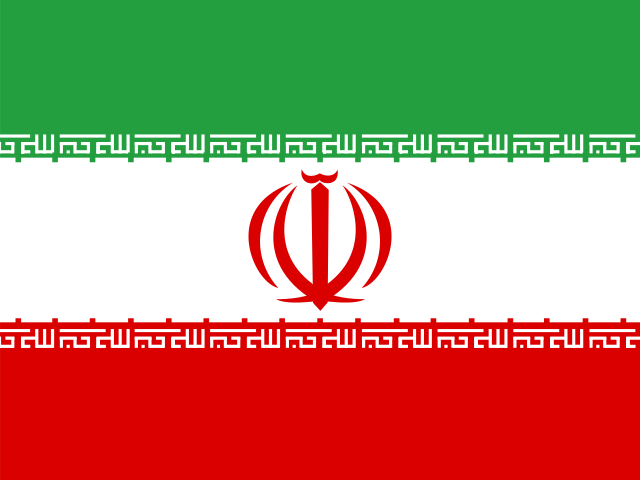
VS
UN human rights chief

Iran is the Islamic Republic governed by a clerical establishment, with a judicial system that applies Sharia law and has carried out executions for various offenses.
The UN human rights chief is Volker Türk, the United Nations High Commissioner for Human Rights, who leads the Office of the UN High Commissioner for Human Rights (OHCHR) and monitors human rights situations worldwide, including in Iran.
The conflict centers on Iran's judicial practices, particularly its use of the death penalty and its crackdown on dissent, which the UN human rights chief has repeatedly condemned as violating international human rights standards.
Türk has expressed alarm over the rise in executions, including those linked to protests, and has urged Iranian authorities to end violent repression and respect human rights.
The stakes are high, as the UN human rights chief has warned of an escalating crackdown that erodes Iranians' rights in 'harsh and brutal ways.' The issue also intersects with regional tensions, as Türk has commented on military strikes and peace deals involving Iran and the US, urging restraint and adherence to ceasefires.
*AI-generated summary of publicly available data. This is not an official statement of any party.
*AI-generated summary of publicly available statements and reporting. This is not an official statement of this party.
Supporters of Iran argue that its judicial system upholds cultural norms of collective security, rejecting foreign human rights standards as impositions on national sovereignty.
Supporters of Iran argue that national sovereignty shields its judicial system from external standards, viewing executions as a cultural defense of order against foreign-backed dissent.
Supporters of Iran counter that the cultural norm of justice prioritizes collective security over individual dissent, and the execution surge reflects a sovereign legal tradition that treats protest as a threat to national unity.
Supporters of Iran argue that its judicial system lawfully applies national security statutes, and that executions for protest-linked charges fall within sovereign legal procedures rather than violating international standards.
Supporters of Iran argue that its judiciary operates under domestic law, which treats national security charges as distinct from ordinary crimes, making UN condemnation a misapplication of external standards.
Supporters of Iran counter that its judicial process fully complies with domestic law and Islamic jurisprudence, arguing that international standards do not override national sovereignty over legal procedures.
Supporters of Iran argue that executions are a sovereign deterrent, not a rights violation, with the state prioritizing stability over UN criticism. They point to the January uprising as proof that hardline measures quell chaos, dismissing international alarm as leverage for.
Supporters of Iran argue that the UN rights chief ignores the regime's security calculus, where executions are a deterrent against foreign-backed unrest. They maintain that sovereignty trumps external moralizing, and protest-linked charges are framed as necessary countermeasures.
Supporters of Iran argue the execution surge is a deterrence tool, not theater; they contend the UN chief’s framing ignores that Tehran’s priority is regime survival, and 56 deaths are a calculated cost to prevent larger unrest. In their view, the signal is pragmatic, not.
Supporters of Iran argue that national sovereignty and internal security justify judicial actions, and that foreign criticism of executions infringes on the nation's moral right to self-determination under its own legal framework.
Supporters of Iran argue the executions uphold national sovereignty and deter threats, a moral duty rooted in protecting public order over external standards.
Supporters of Iran argue that the UN chief's moral stance ignores the state's sovereign duty to uphold justice and deter threats, viewing executions as a lawful defense of public order, not a violation of life.
Supporters of Iran argue that its judiciary upholds divine law, where executions for national security crimes are a prescribed deterrent against threats to faith and order, not a violation of human rights.
Supporters of Iran argue that its judicial system applies divine law, and executions for national security uphold the sacred duty to protect the Islamic order from those who threaten it.
Supporters of Iran counter that divine justice is not violated but upheld, as Islamic law prescribes capital punishment for specific crimes, and the sanctity of life is honored through due process under God’s revealed order.
*AI-generated summary of publicly available statements and reporting. This is not an official statement of this party.
Supporters of UN human rights chief argue that Iran’s execution surge, tied to January’s protests, erodes cultural norms of justice by conflating dissent with national security threats.
Supporters of the UN human rights chief argue that Iran’s execution surge reflects a cultural rejection of due process, undermining longstanding international legal norms.
Supporters of the UN human rights chief counter that cultural norms cannot justify state-sanctioned executions of minors, as childhood is a universal standard, not a foreign imposition. They argue that Iran's sovereignty is respected, yet collective security must include the.
Supporters of UN human rights chief argue that Iran's executions violate due process and fair-trial guarantees under international law, treating protest-related charges as a legal pretext for silencing dissent.
Supporters of UN human rights chief argue that due process is absent when national security charges drive executions, citing 56 cases since March as evidence Iran's legal system lacks fair trial safeguards.
Supporters of UN human rights chief counter that sovereign legal procedures cannot override binding international covenants, and that Iran’s national security statutes, as applied to protests, fail basic due-process guarantees under the ICCPR.
Supporters of the UN human rights chief argue that Iran’s execution surge is a calculated show of force to crush dissent, not justice; they see the 56 deaths as a signal to protesters that defiance carries a lethal price.
Supporters of the UN human rights chief argue Iran’s execution surge is a calculated show of force, not justice, aimed at chilling dissent after January’s uprising. They maintain the regime prioritizes survival over legitimacy, using national security charges as a pragmatic tool.
Supporters of UN human rights chief counter that deterrence claims mask regime survival, not stability, citing post-uprising executions as power consolidation, not chaos prevention. They argue sovereign rhetoric conveniently ignores treaty obligations, with Tehran’s leverage.
Supporters of UN human rights chief argue that executing 56 people, including 27 tied to protests, violates the moral duty to protect life and due process, as empirical data shows such suppression breeds instability, not security.
Supporters of the UN human rights chief argue that executing 56 people, including 27 tied to January’s protests, violates the moral duty to protect life and due process, viewing such state actions as punitive suppression rather than justice.
Supporters of the UN human rights chief counter that sovereignty does not shield executions of minors from universal moral law, citing treaty obligations that bind all states. They argue that self-determination cannot override the inherent dignity of children, a principle Iran.
Supporters of the UN human rights chief argue that Iran's execution surge violates the sanctity of life and divine justice, which they hold sacred.
Supporters of the UN human rights chief argue that Iran’s executions violate the sanctity of life, a principle upheld across religious traditions, and that judicial restraint honors divine mercy over state vengeance.
Supporters of UN human rights chief counter that divine law, as interpreted by human authorities, cannot override universal prohibitions against arbitrary executions, citing Iran’s own treaty obligations and the sanctity of life as a shared religious principle.
AI-generated summary of publicly available statements and reporting. This is not an official statement of this party.
Supporters of Iran argue that its judicial system upholds cultural norms of collective security, rejecting foreign human rights standards as impositions on national sovereignty.
Supporters of Iran argue that national sovereignty shields its judicial system from external standards, viewing executions as a cultural defense of order against foreign-backed dissent.
Supporters of Iran counter that the cultural norm of justice prioritizes collective security over individual dissent, and the execution surge reflects a sovereign legal tradition that treats protest as a threat to national unity.
Supporters of Iran argue that its judicial system lawfully applies national security statutes, and that executions for protest-linked charges fall within sovereign legal procedures rather than violating international standards.
Supporters of Iran argue that its judiciary operates under domestic law, which treats national security charges as distinct from ordinary crimes, making UN condemnation a misapplication of external standards.
Supporters of Iran counter that its judicial process fully complies with domestic law and Islamic jurisprudence, arguing that international standards do not override national sovereignty over legal procedures.
Supporters of Iran argue that executions are a sovereign deterrent, not a rights violation, with the state prioritizing stability over UN criticism. They point to the January uprising as proof that hardline measures quell chaos, dismissing international alarm as leverage for.
Supporters of Iran argue that the UN rights chief ignores the regime's security calculus, where executions are a deterrent against foreign-backed unrest. They maintain that sovereignty trumps external moralizing, and protest-linked charges are framed as necessary countermeasures.
Supporters of Iran argue the execution surge is a deterrence tool, not theater; they contend the UN chief’s framing ignores that Tehran’s priority is regime survival, and 56 deaths are a calculated cost to prevent larger unrest. In their view, the signal is pragmatic, not.
Supporters of Iran argue that national sovereignty and internal security justify judicial actions, and that foreign criticism of executions infringes on the nation's moral right to self-determination under its own legal framework.
Supporters of Iran argue the executions uphold national sovereignty and deter threats, a moral duty rooted in protecting public order over external standards.
Supporters of Iran argue that the UN chief's moral stance ignores the state's sovereign duty to uphold justice and deter threats, viewing executions as a lawful defense of public order, not a violation of life.
Supporters of Iran argue that its judiciary upholds divine law, where executions for national security crimes are a prescribed deterrent against threats to faith and order, not a violation of human rights.
Supporters of Iran argue that its judicial system applies divine law, and executions for national security uphold the sacred duty to protect the Islamic order from those who threaten it.
Supporters of Iran counter that divine justice is not violated but upheld, as Islamic law prescribes capital punishment for specific crimes, and the sanctity of life is honored through due process under God’s revealed order.
Supporters of UN human rights chief argue that Iran’s execution surge, tied to January’s protests, erodes cultural norms of justice by conflating dissent with national security threats.
Supporters of the UN human rights chief argue that Iran’s execution surge reflects a cultural rejection of due process, undermining longstanding international legal norms.
Supporters of the UN human rights chief counter that cultural norms cannot justify state-sanctioned executions of minors, as childhood is a universal standard, not a foreign imposition. They argue that Iran's sovereignty is respected, yet collective security must include the.
Supporters of UN human rights chief argue that Iran's executions violate due process and fair-trial guarantees under international law, treating protest-related charges as a legal pretext for silencing dissent.
Supporters of UN human rights chief argue that due process is absent when national security charges drive executions, citing 56 cases since March as evidence Iran's legal system lacks fair trial safeguards.
Supporters of UN human rights chief counter that sovereign legal procedures cannot override binding international covenants, and that Iran’s national security statutes, as applied to protests, fail basic due-process guarantees under the ICCPR.
Supporters of the UN human rights chief argue that Iran’s execution surge is a calculated show of force to crush dissent, not justice; they see the 56 deaths as a signal to protesters that defiance carries a lethal price.
Supporters of the UN human rights chief argue Iran’s execution surge is a calculated show of force, not justice, aimed at chilling dissent after January’s uprising. They maintain the regime prioritizes survival over legitimacy, using national security charges as a pragmatic tool.
Supporters of UN human rights chief counter that deterrence claims mask regime survival, not stability, citing post-uprising executions as power consolidation, not chaos prevention. They argue sovereign rhetoric conveniently ignores treaty obligations, with Tehran’s leverage.
Supporters of UN human rights chief argue that executing 56 people, including 27 tied to protests, violates the moral duty to protect life and due process, as empirical data shows such suppression breeds instability, not security.
Supporters of the UN human rights chief argue that executing 56 people, including 27 tied to January’s protests, violates the moral duty to protect life and due process, viewing such state actions as punitive suppression rather than justice.
Supporters of the UN human rights chief counter that sovereignty does not shield executions of minors from universal moral law, citing treaty obligations that bind all states. They argue that self-determination cannot override the inherent dignity of children, a principle Iran.
Supporters of the UN human rights chief argue that Iran's execution surge violates the sanctity of life and divine justice, which they hold sacred.
Supporters of the UN human rights chief argue that Iran’s executions violate the sanctity of life, a principle upheld across religious traditions, and that judicial restraint honors divine mercy over state vengeance.
Supporters of UN human rights chief counter that divine law, as interpreted by human authorities, cannot override universal prohibitions against arbitrary executions, citing Iran’s own treaty obligations and the sanctity of life as a shared religious principle.
UN human rights chief Volker Türk urged an immediate return to a ceasefire between Iran and the US as tensions escalated, warning of the consequences.
The UN human rights chief welcomed the peace deal between the United States and Iran, urging maximum restraint on all parties in the region.
The UN's top human rights official warned that Iranians' rights are being eroded in 'harsh and brutal ways,' citing a surge in executions and crackdown on dissent.
UN High Commissioner for Human Rights Volker Türk said he was horrified by the mounting violence directed by security forces in Iran and urged authorities to end violent repression.
56 people executed on national security-related charges since March, including 27 linked to January's protests.
Iran executed at least 56 people since March, according to UN rights chief.
Uprising in Iran that led to a surge in executions to suppress dissent.