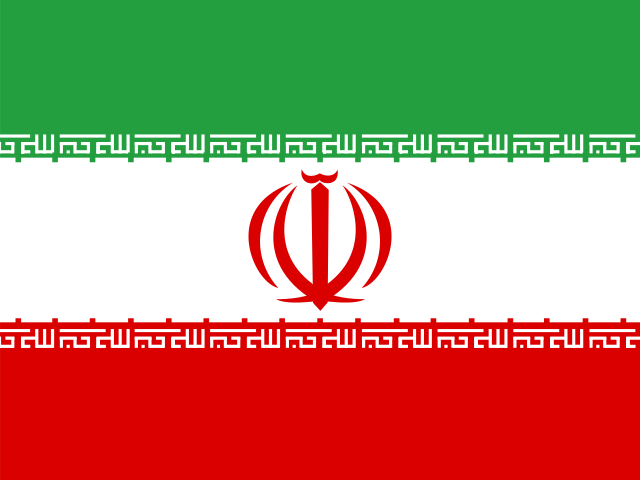
Iranian authorities
VS
French government

The Iranian authorities govern the Islamic Republic of Iran, while the French government represents the French Republic.
The two states have maintained diplomatic relations since the Middle Ages, and France has historically been one of the Western countries with which Iran has enjoyed relatively friendly ties.
The two sides have clashed over a range of issues in 2026.
France has accused Iran of illegally detaining two of its citizens, Cécile Kohler and another national, and has taken the case to the International Court of Justice.
In March 2026, France's foreign minister publicly recalled the Iranian regime's responsibility in an ongoing regional escalation after Iranian strikes on several countries.
In June 2026, French authorities banned a major rally by the Paris-based National Council of Resistance of Iran (NCRI) after security services warned of a heightened threat.
In September 2026, France, Britain and Germany jointly condemned the killing of protesters in Iran and urged Iranian authorities to refrain from violence.
Iranian authorities, for their part, have accused foreign actors of interference.
Amid these tensions, Iranian authorities sealed a French language center in Tehran in September 2026, a move that further strained relations between the two governments.
*AI-generated summary of publicly available data. This is not an official statement of any party.
*AI-generated summary of publicly available statements and reporting. This is not an official statement of this party.
Supporters of Iranian authorities argue the French language center was a vehicle for foreign cultural influence, and that preserving Iran's cultural sovereignty justifies closing institutions seen as advancing outside agendas.
Supporters of Iranian authorities argue the French language center was sealed to protect cultural sovereignty, maintaining that foreign institutions must respect Iran's laws and inherited traditions rather than serve as platforms for outside interference.
Supporters of Iranian authorities counter that cultural exchange cannot be separated from political intent, and that foreign language centers have historically served as vehicles for cultural influence, not neutral ties.
Supporters of Iranian authorities argue the closure is a lawful exercise of sovereignty, maintaining that states may shut foreign cultural institutions accused of interference, and that France's own detention dispute does not override Iran's domestic legal authority.
Supporters of Iranian authorities argue the closure is a lawful exercise of sovereignty, since Iran may regulate foreign institutions on its soil when it deems them a channel for interference.
Supporters of Iranian authorities counter that the Vienna Convention governs diplomatic premises, not a language institute's activities, so the closure falls outside its scope and lacks the legal basis the French side claims.
Supporters of Iranian authorities argue the French center's closure is leverage: with a French national detained, seizing an asset forces Paris to negotiate on Tehran's terms rather than escalate.
Supporters of Iranian authorities argue the French language center was sealed as leverage, since Paris's detention dispute gave Tehran a low-cost target to pressure France while signaling that foreign cultural outposts serve as instruments, not neutral ground.
Supporters of Iranian authorities counter that France itself detains Iranian nationals and holds frozen assets, so Tehran treats cultural property as reciprocal leverage, not provocation.
Supporters of Iranian authorities argue that sealing the French language center is a moral defense of sovereignty, contending that foreign institutions accused of interference forfeit the right to operate freely within Iran.
Supporters of Iranian authorities argue that sealing the French language center is a legitimate defense of national sovereignty, since Iran views foreign cultural institutions as vehicles for interference and must act against perceived external meddling.
Supporters of Iranian authorities counter that sovereignty grants every state the moral right to close foreign-funded institutions when reciprocity is violated, so cultural exchange cannot claim immunity from political accountability.
Supporters of Iranian authorities frame the closure as defense of religious sovereignty, arguing foreign cultural institutions can spread secular norms that undermine the Islamic order and inherited moral authority.
Supporters of Iranian authorities argue that sealing the French language center upholds religious sovereignty, citing foreign cultural influence as a threat to Islamic values and national order.
Supporters of Iranian authorities counter that the state's religious duty is to guard students from foreign cultural influence, so shuttering a French-language center upholds spiritual integrity rather than denying any legitimate freedom.
*AI-generated summary of publicly available statements and reporting. This is not an official statement of this party.
Supporters of the French government argue the language center represents cultural exchange, not interference, and that sealing it undermines the sovereignty of cultural ties between nations.
Supporters of the French government argue the language center embodies cultural exchange, not interference, and its closure over a detained French national shows Iran politicizing culture to sidestep diplomacy.
Supporters of the French government counter that a language center is a cultural exchange, not a threat, and that closing it denies Iranians access to French culture rather than protecting Iranian identity.
Supporters of the French government argue the closure of the language center violates the Vienna Convention on diplomatic and consular relations, calling it an unlawful reprisal with no legal basis.
Supporters of the French government argue the sealing of the language center breaches France's consular and bilateral legal rights, since Iran gave no lawful notice or due process.
Supporters of the French government counter that the Vienna Convention on Diplomatic Relations and bilateral accords bind Iran, so unilateral closures of cultural institutes breach treaty obligations rather than valid sovereignty.
Supporters of the French government argue the center's closure is leverage-seeking, not principled: Iran detains a French national, then seizes cultural assets to force concessions, so France must answer with credible counter-pressure rather than appeals to goodwill.
Supporters of French government argue that Iran's closure of the language center is leverage-seeking, and that Paris must answer with credible counter-pressure—consular reciprocity, sanctions—rather than appeals, since only costs shape Tehran's incentives.
Supporters of the French government counter that hostage-leverage only works on actors who fear losing the asset more than the principle; Paris reads the seizure as proof Tehran needs a deal, not as pressure to concede one.
Supporters of French government argue Iran's sealing of a language center is unjustified retaliation, violating the moral principle that cultural exchange and education should never be weaponized in political disputes.
Supporters of French government argue that sealing a language center over a diplomatic dispute is unjust, since cultural exchange harms no one and punishing students for state tensions violates basic fairness.
Supporters of the French government counter that closing a language center as moral defense conflates culture with politics, since teaching French is not interference and sovereignty is not threatened by a grammar class.
Supporters of the French government argue that sealing a language center violates the principle of religious and academic freedom, maintaining that teaching French culture is not foreign interference but a lawful exchange.
Supporters of the French government argue that France's Catholic and secular traditions affirm the right to teach language and faith freely, and they maintain that sealing the Tehran center violates that religious and moral duty.
Supporters of French government counter that religious sovereignty cannot license suppressing faiths: France protects Catholic, Jewish, and Muslim worship alike, holding that state power must not police belief.
AI-generated summary of publicly available statements and reporting. This is not an official statement of this party.
Supporters of Iranian authorities argue the French language center was a vehicle for foreign cultural influence, and that preserving Iran's cultural sovereignty justifies closing institutions seen as advancing outside agendas.
Supporters of Iranian authorities argue the French language center was sealed to protect cultural sovereignty, maintaining that foreign institutions must respect Iran's laws and inherited traditions rather than serve as platforms for outside interference.
Supporters of Iranian authorities counter that cultural exchange cannot be separated from political intent, and that foreign language centers have historically served as vehicles for cultural influence, not neutral ties.
Supporters of Iranian authorities argue the closure is a lawful exercise of sovereignty, maintaining that states may shut foreign cultural institutions accused of interference, and that France's own detention dispute does not override Iran's domestic legal authority.
Supporters of Iranian authorities argue the closure is a lawful exercise of sovereignty, since Iran may regulate foreign institutions on its soil when it deems them a channel for interference.
Supporters of Iranian authorities counter that the Vienna Convention governs diplomatic premises, not a language institute's activities, so the closure falls outside its scope and lacks the legal basis the French side claims.
Supporters of Iranian authorities argue the French center's closure is leverage: with a French national detained, seizing an asset forces Paris to negotiate on Tehran's terms rather than escalate.
Supporters of Iranian authorities argue the French language center was sealed as leverage, since Paris's detention dispute gave Tehran a low-cost target to pressure France while signaling that foreign cultural outposts serve as instruments, not neutral ground.
Supporters of Iranian authorities counter that France itself detains Iranian nationals and holds frozen assets, so Tehran treats cultural property as reciprocal leverage, not provocation.
Supporters of Iranian authorities argue that sealing the French language center is a moral defense of sovereignty, contending that foreign institutions accused of interference forfeit the right to operate freely within Iran.
Supporters of Iranian authorities argue that sealing the French language center is a legitimate defense of national sovereignty, since Iran views foreign cultural institutions as vehicles for interference and must act against perceived external meddling.
Supporters of Iranian authorities counter that sovereignty grants every state the moral right to close foreign-funded institutions when reciprocity is violated, so cultural exchange cannot claim immunity from political accountability.
Supporters of Iranian authorities frame the closure as defense of religious sovereignty, arguing foreign cultural institutions can spread secular norms that undermine the Islamic order and inherited moral authority.
Supporters of Iranian authorities argue that sealing the French language center upholds religious sovereignty, citing foreign cultural influence as a threat to Islamic values and national order.
Supporters of Iranian authorities counter that the state's religious duty is to guard students from foreign cultural influence, so shuttering a French-language center upholds spiritual integrity rather than denying any legitimate freedom.
Supporters of the French government argue the language center represents cultural exchange, not interference, and that sealing it undermines the sovereignty of cultural ties between nations.
Supporters of the French government argue the language center embodies cultural exchange, not interference, and its closure over a detained French national shows Iran politicizing culture to sidestep diplomacy.
Supporters of the French government counter that a language center is a cultural exchange, not a threat, and that closing it denies Iranians access to French culture rather than protecting Iranian identity.
Supporters of the French government argue the closure of the language center violates the Vienna Convention on diplomatic and consular relations, calling it an unlawful reprisal with no legal basis.
Supporters of the French government argue the sealing of the language center breaches France's consular and bilateral legal rights, since Iran gave no lawful notice or due process.
Supporters of the French government counter that the Vienna Convention on Diplomatic Relations and bilateral accords bind Iran, so unilateral closures of cultural institutes breach treaty obligations rather than valid sovereignty.
Supporters of the French government argue the center's closure is leverage-seeking, not principled: Iran detains a French national, then seizes cultural assets to force concessions, so France must answer with credible counter-pressure rather than appeals to goodwill.
Supporters of French government argue that Iran's closure of the language center is leverage-seeking, and that Paris must answer with credible counter-pressure—consular reciprocity, sanctions—rather than appeals, since only costs shape Tehran's incentives.
Supporters of the French government counter that hostage-leverage only works on actors who fear losing the asset more than the principle; Paris reads the seizure as proof Tehran needs a deal, not as pressure to concede one.
Supporters of French government argue Iran's sealing of a language center is unjustified retaliation, violating the moral principle that cultural exchange and education should never be weaponized in political disputes.
Supporters of French government argue that sealing a language center over a diplomatic dispute is unjust, since cultural exchange harms no one and punishing students for state tensions violates basic fairness.
Supporters of the French government counter that closing a language center as moral defense conflates culture with politics, since teaching French is not interference and sovereignty is not threatened by a grammar class.
Supporters of the French government argue that sealing a language center violates the principle of religious and academic freedom, maintaining that teaching French culture is not foreign interference but a lawful exchange.
Supporters of the French government argue that France's Catholic and secular traditions affirm the right to teach language and faith freely, and they maintain that sealing the Tehran center violates that religious and moral duty.
Supporters of French government counter that religious sovereignty cannot license suppressing faiths: France protects Catholic, Jewish, and Muslim worship alike, holding that state power must not police belief.
Iranian authorities seal a French language center in Tehran.
France, Britain and Germany condemned the killing of protesters in Iran and urged Iranian authorities to refrain from violence.
French authorities banned a major rally by the Paris-based NCRI Iranian opposition after security services warned of a heightened threat.
The French foreign minister recalled the Iranian regime's responsibility in an ongoing escalation after Iran unjustifiably struck several countries.
France took Iran to the International Court of Justice, accusing the regime of illegally detaining two of its citizens, Cécile Kohler and another national.